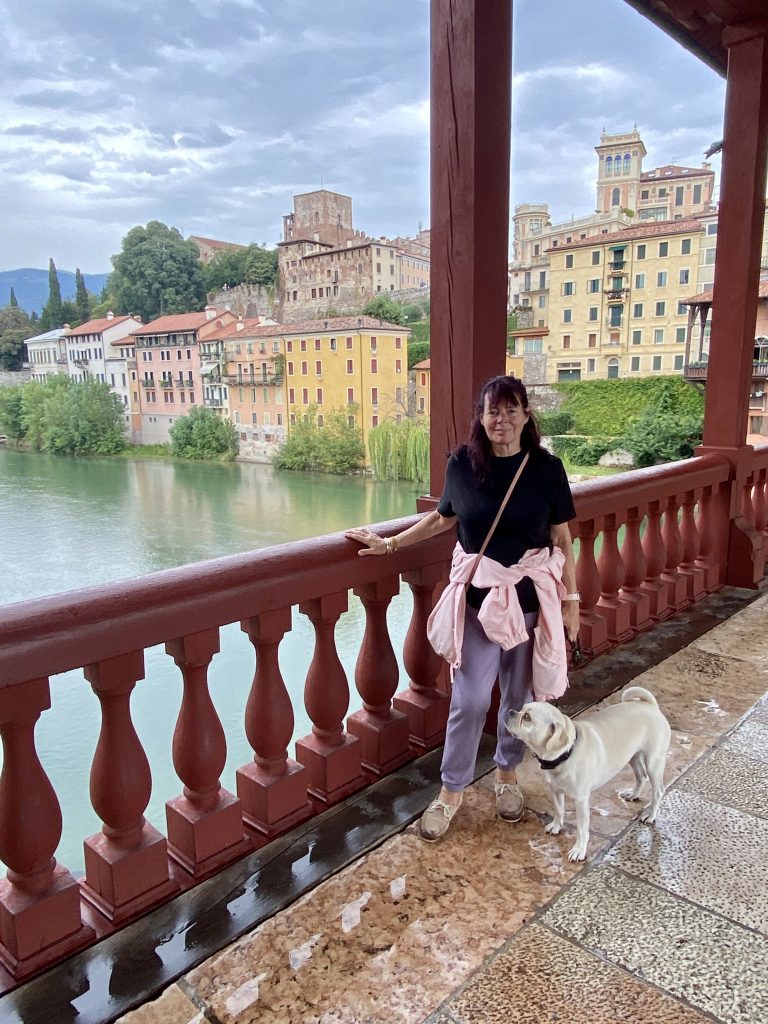
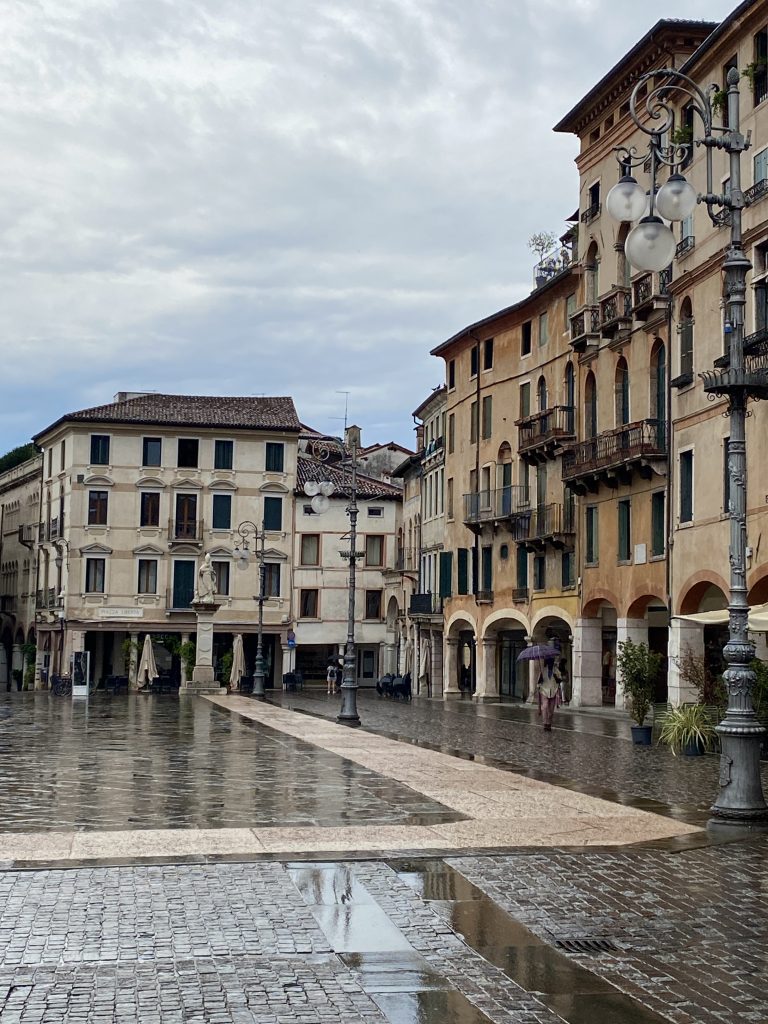
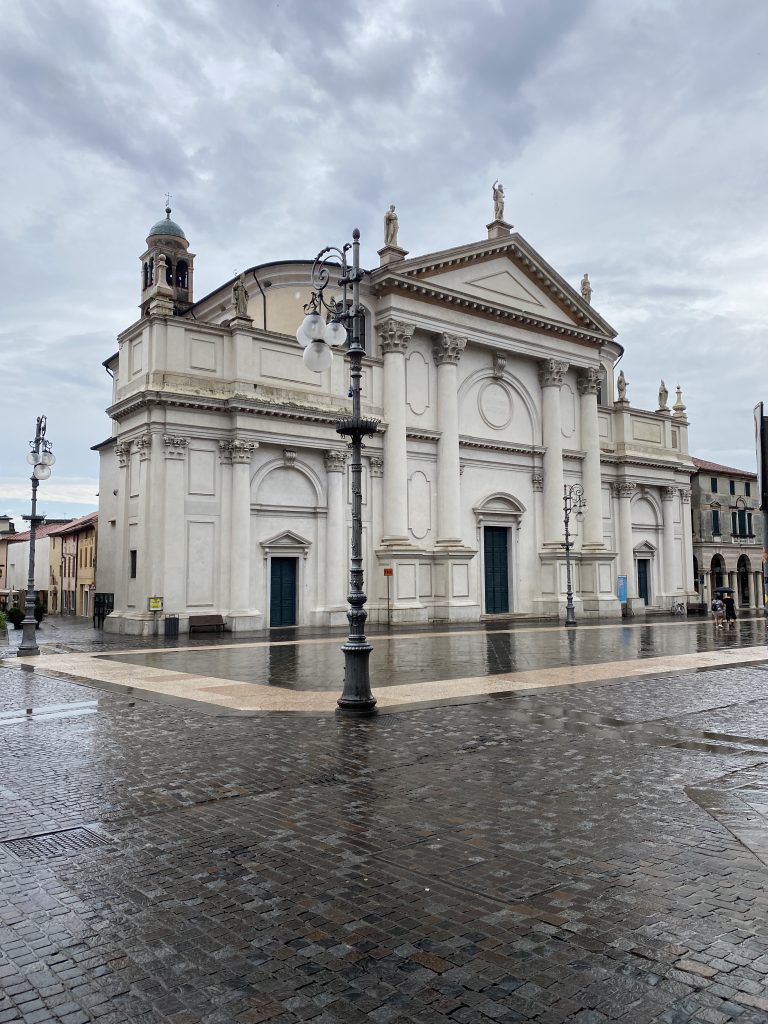
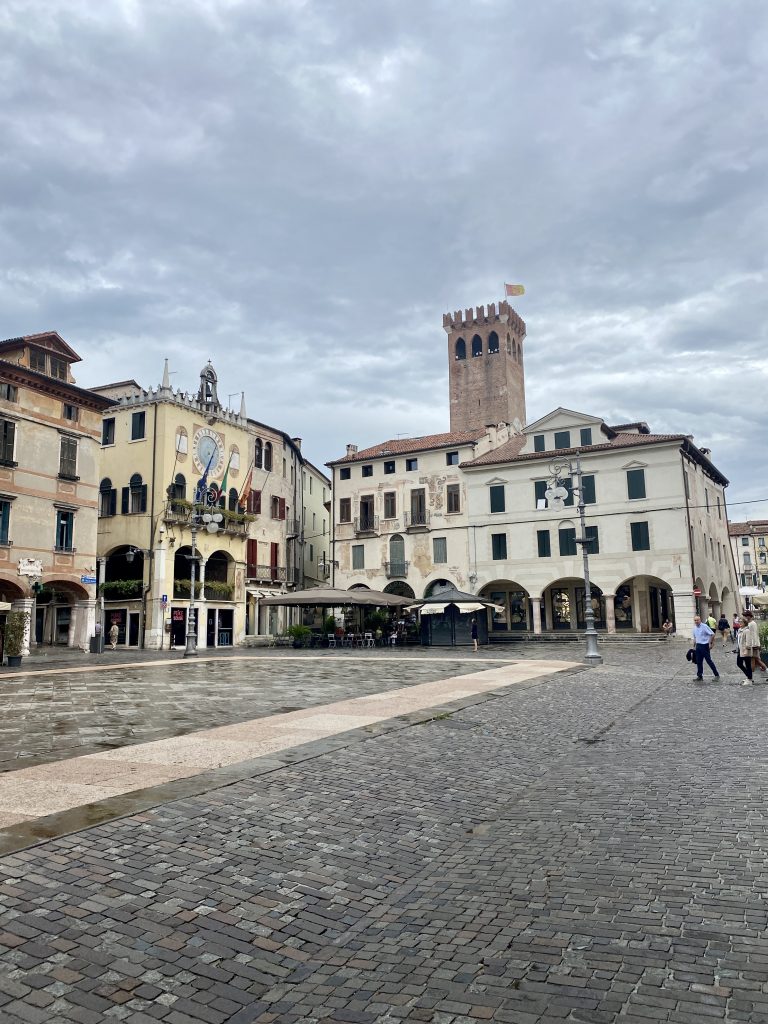
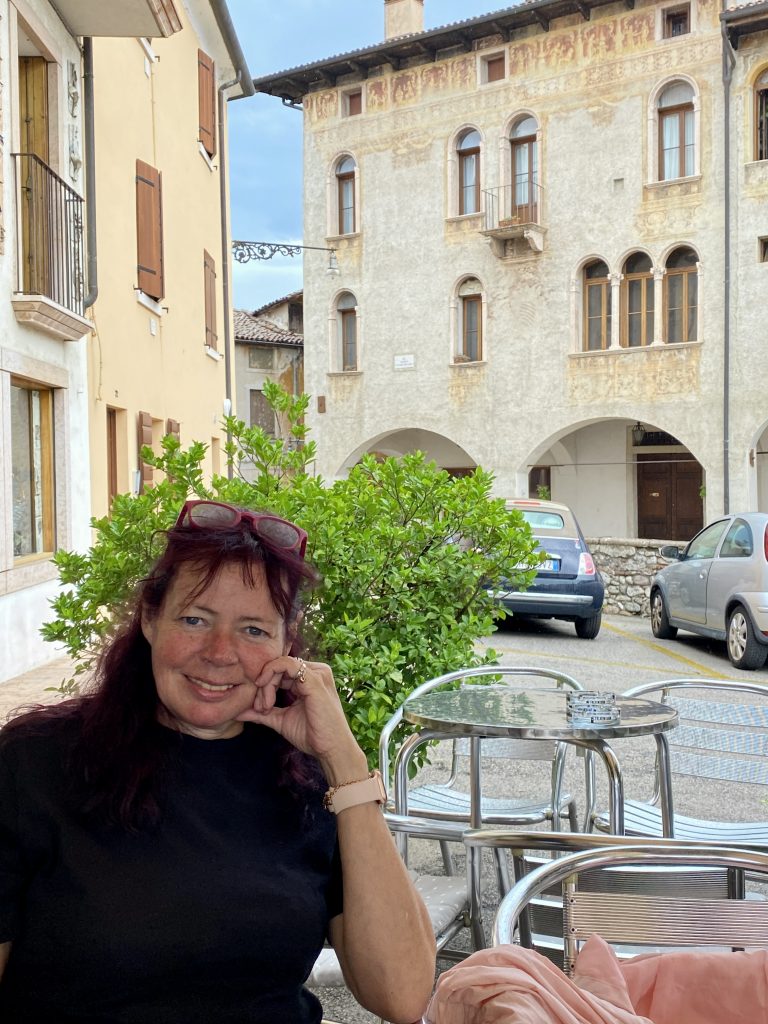
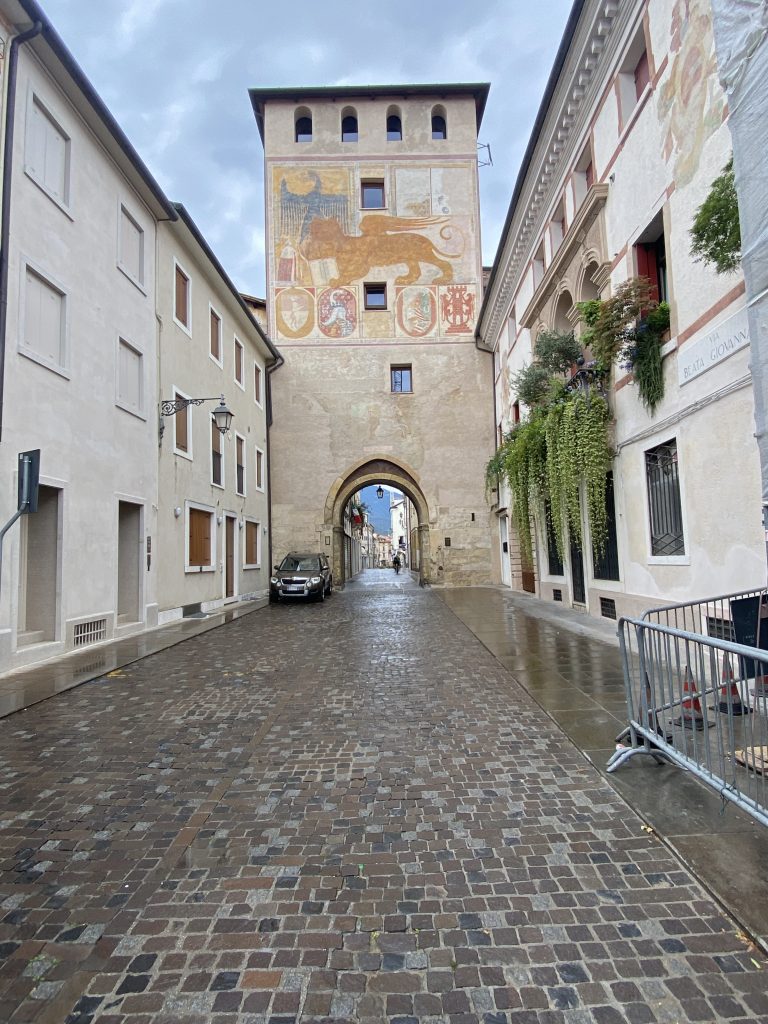
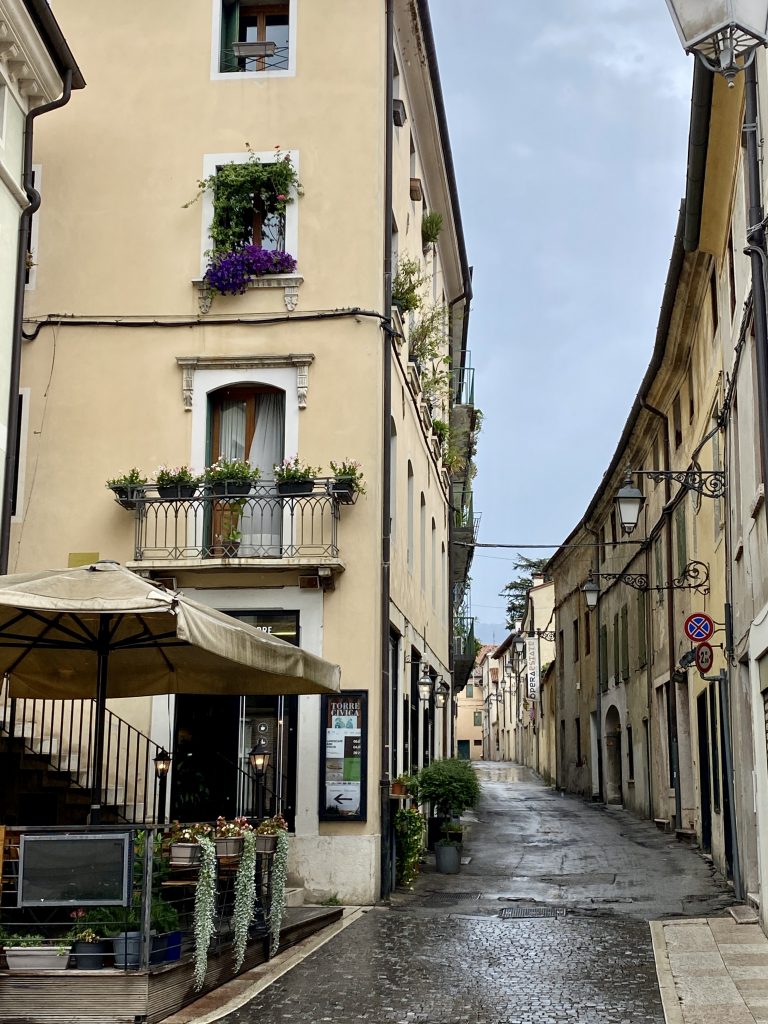
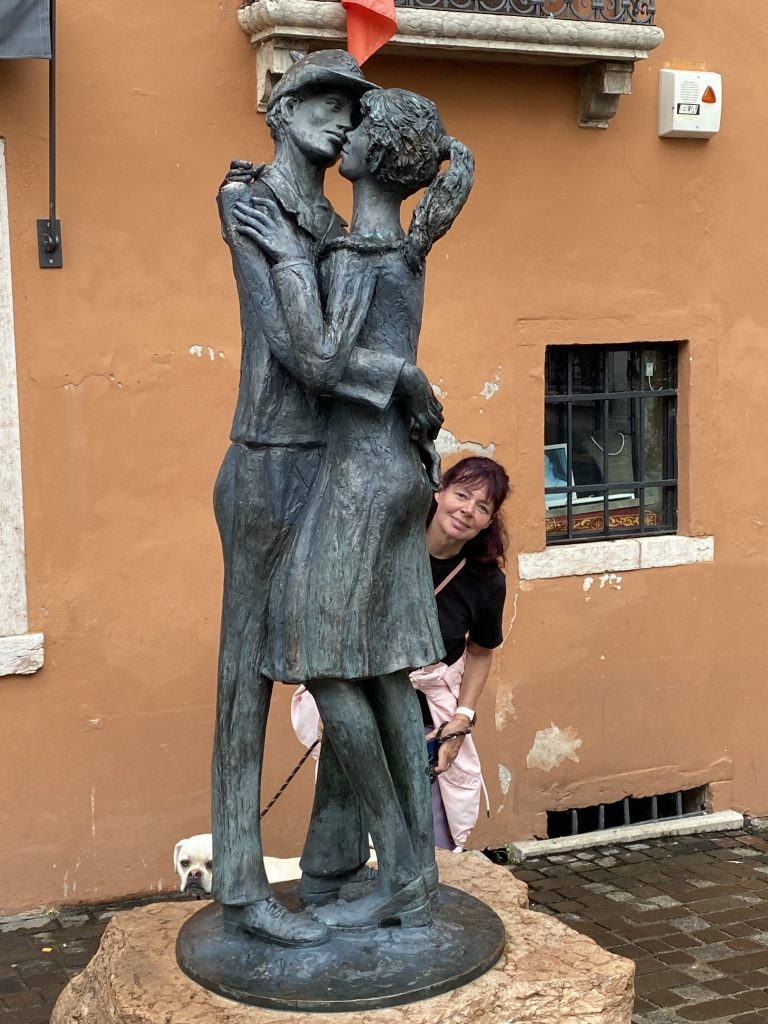
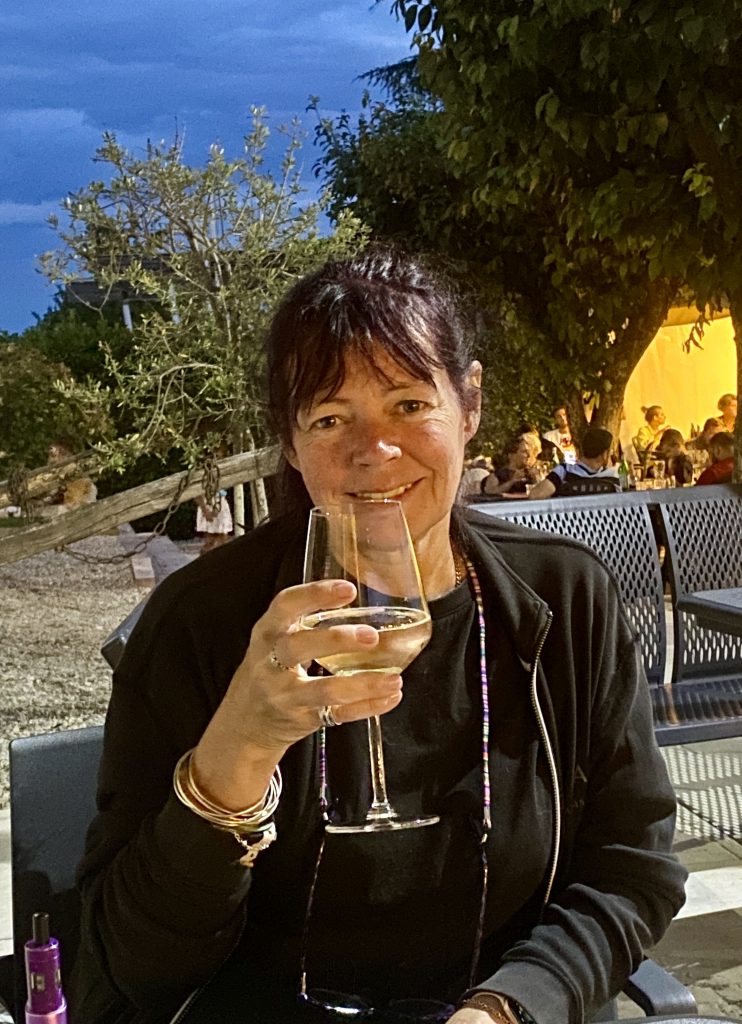
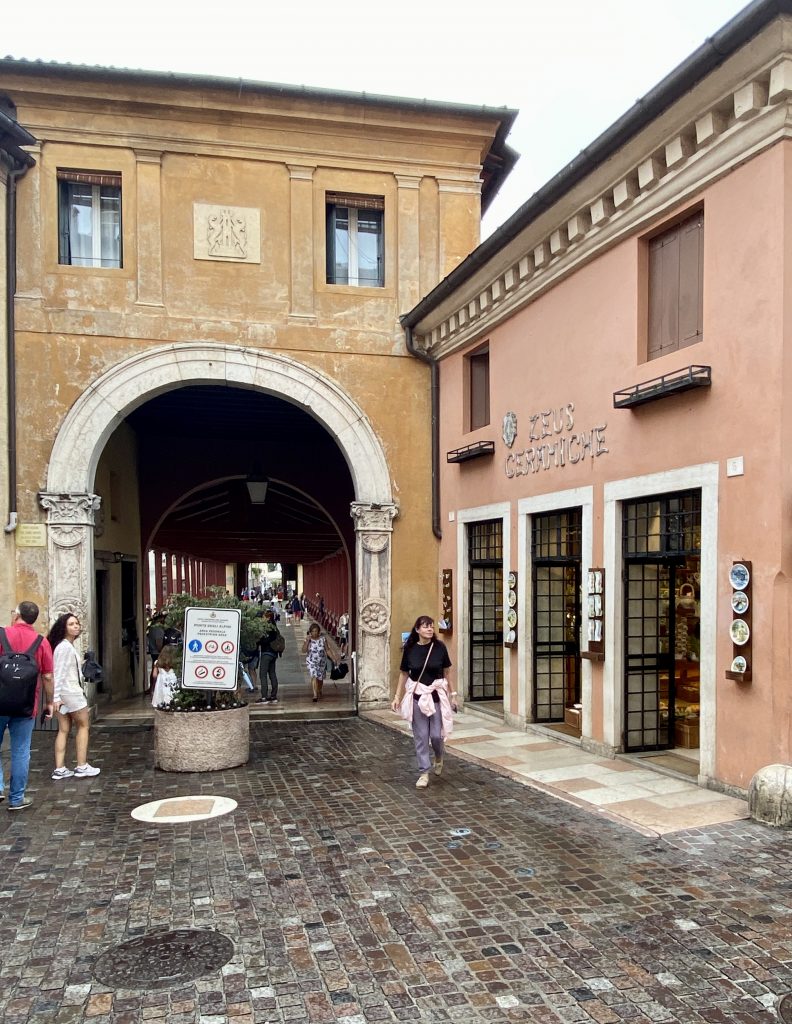
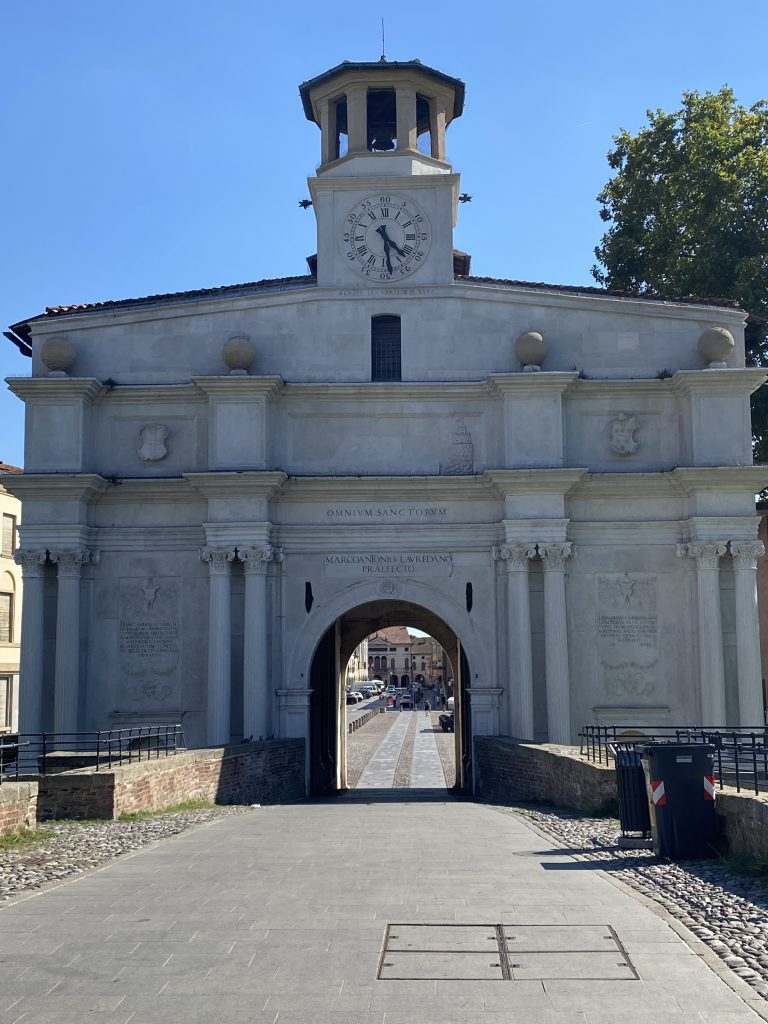
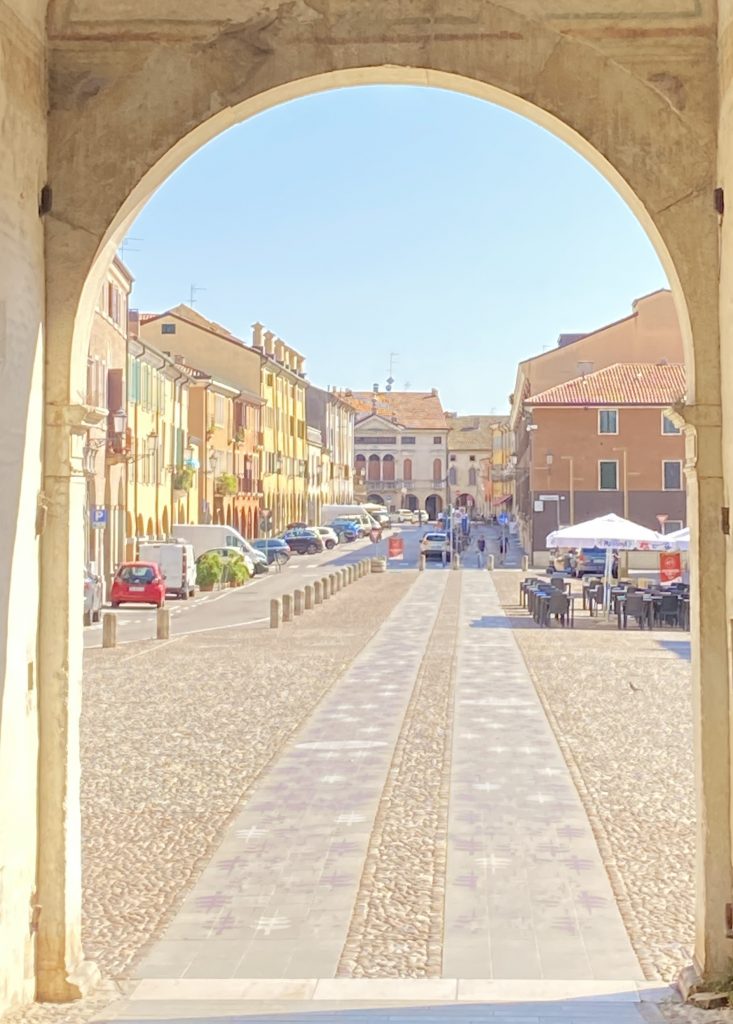
Vanya was determined to visit the Prosecco Hills (where the good Prosecco is produced) and so we packed up our things and left Padova, driving some 35 miles north to the charming town of Bassano del Grappa which sits on the River Brenta. Bassano del Grappa is not quite in the Prosecco Hills but it is a medium sized picturesque town, which deserves to be visited if only because it is where the Grappa brandy liqueur was invented and; it would serve as the perfect base from which to visit the Prosecco Hills.
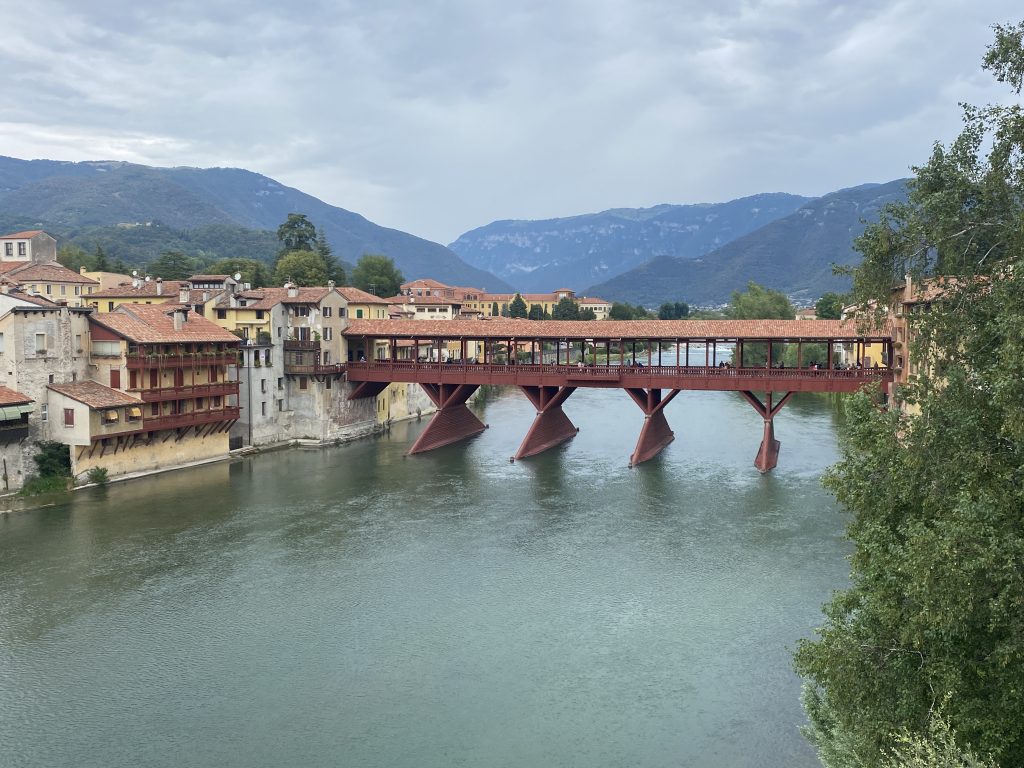
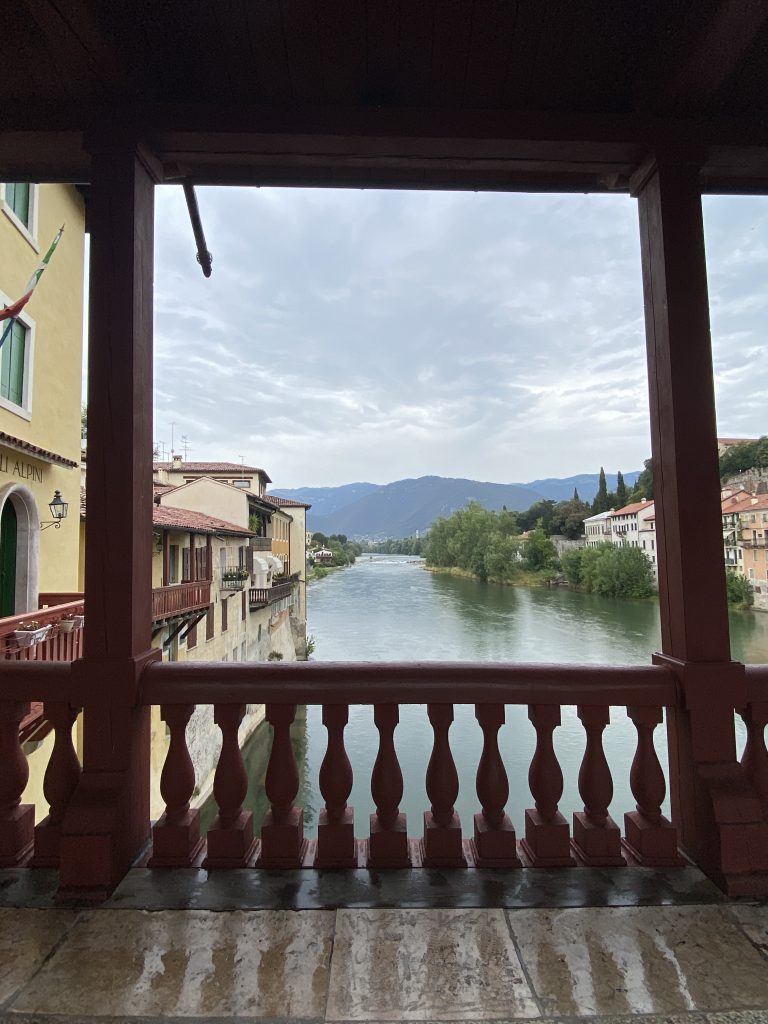
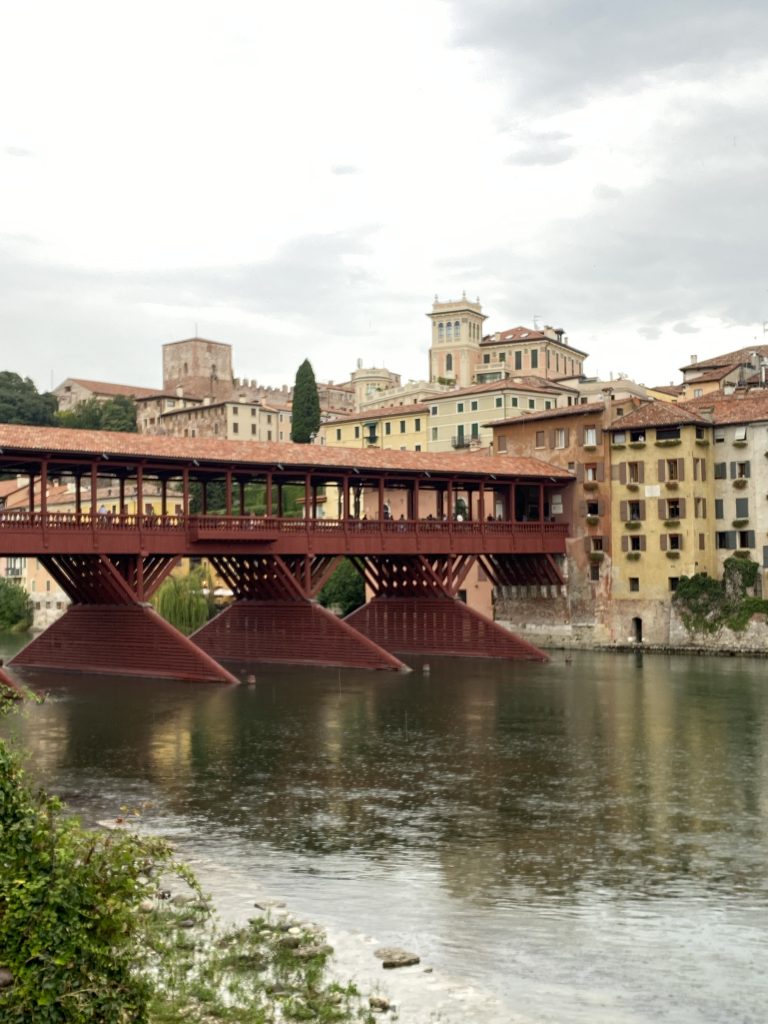
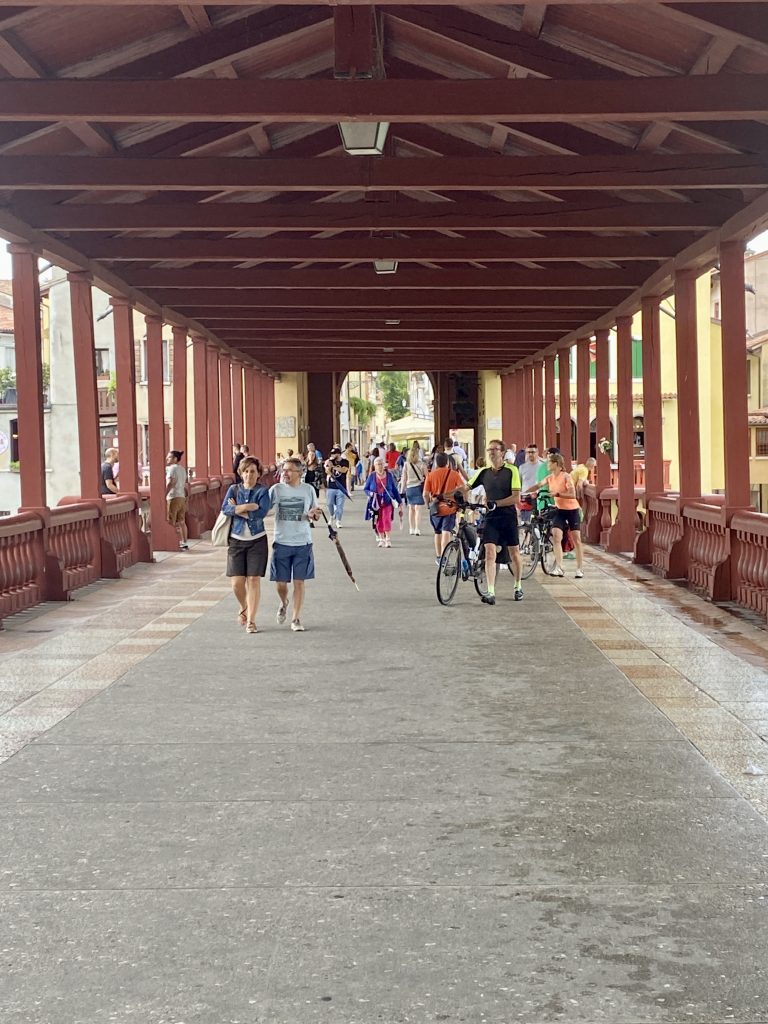
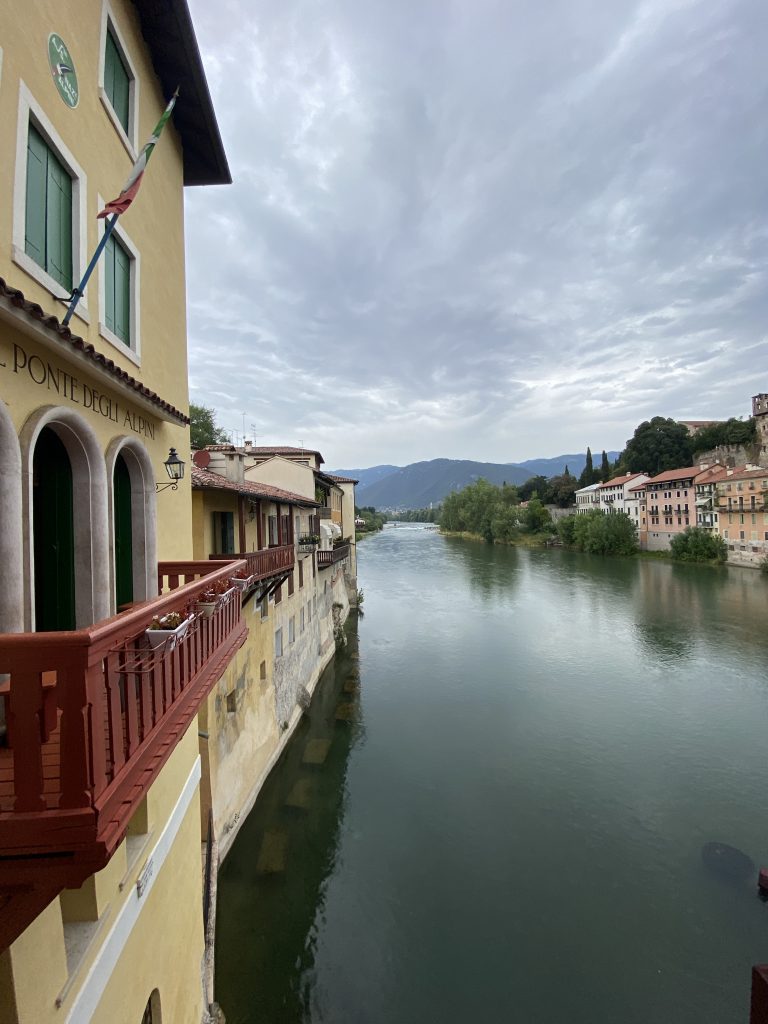
Most important, Bassano del Grappa (BDG) has a reasonably sized old town, complete with narrow streets and small piazzas and a covered wooden bridge. I mentioned already that BDG is famous for inventing Grappa; it is made from the leftovers of the winemaking process. The town is also known for it’s white asparagus and certain locally produced ceramics and; it also featured quite a bit in the Napoleonic Wars (Napoleon Bonaparte won and lost battles here) and the First and Second World Wars. However, it is the old wooden pontoon bridge, the Ponte Vecchio (also known as the Ponte degli Alpini) which is perhaps BDG’s most celebrated feature.
The Ponte Vecchio – Unique among Italian Bridges
Designed by Andrea Palladio in 1569 and built on the site of an earlier wooden bridge over the River Brenta, the Ponte Vecchio has been destroyed many times but it has always been faithfully rebuilt to the original specification. Indeed, it is sometimes referred to as the Ponte degli Alpini because it was Italian Mountain Troops (the Alpini) who rebuilt it in 1948 after it was totally destroyed during WW2. It is not the only bridge in the town but it is certainly the most pleasing to look at.
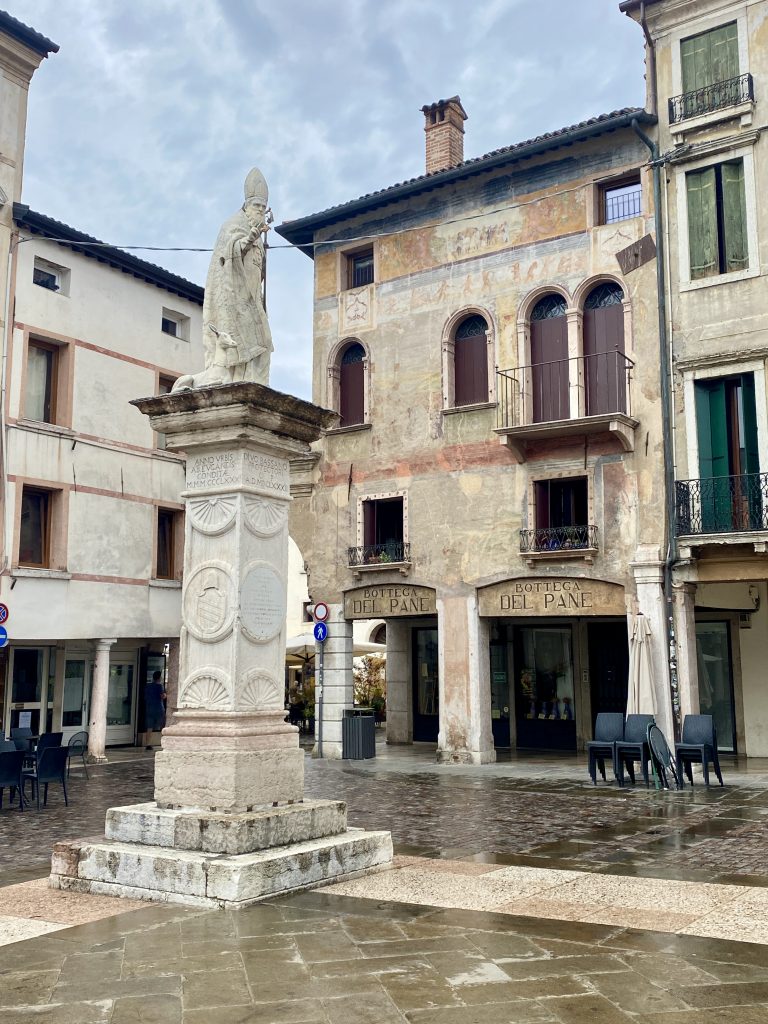
There are a few other sites worth visiting in BDG; principal among them is the 12th century Castello degli Ezzelini which surrounds the town’s cathedral (the Duomo di Santa Maria in Colle) but after the bridge, it is the old town cobbled streets and attractive linked squares (the Piazza Liberta with the San Giovanni Church & City Hall with it’s large clock and the Piazza Gaibaldi with the San Francesco Church & Civic Tower) which most fascinated me. George Sand, the French author(ess) described BDG as “one of the greatest fortunes that could ever befall a traveller”.
Piazza LibertaSan Giovanni Church and the City Hall with it’s large clockA very pretty town
I mentioned George Sands. I should perhaps also mention another much later author who stayed in Bassano del Grappa, Ernest Hemingway. He served in the area as an ambulance driver during WW1 and received shrapnel wounds on the Italian Front in 1918. He modelled his novel A Farewell to Arms on his service in the area.
A few more images… and then something about Prosecco
We’d booked into the Hotel NH Padova in the city of Padova (Padua in English) for a couple of nights. It’s a nice hotel with plenty of suitable parking and it is within easy walking distance of the old town. You need only walk through the Porta (Ognissanti) o Portello by the River Bacchiglione and you are there.
So many people talk about taking a day trip to Padua while visiting Venice (Venice being just 23 miles to the west) but, trust me, Padova is worth a great deal more than just one day.
Through Porta o Portello and into Padova
Also known as the city of St Anthony (more about him later), Padova is an ancient city, believed to have been founded by the mythical Trojan hero Antenor (although in reality the city was around long before him). Having said that, most of the city’s early architecture was destroyed either by the Longobards who razed the city to the ground in 602AD or the Hungarians who did much the same in 899AD. It wasn’t until after 1000AD that the city once again began to flourish and it has since become one of the most vibrant cities in Italy with far more than it’s fair share of art, architecture and culture.
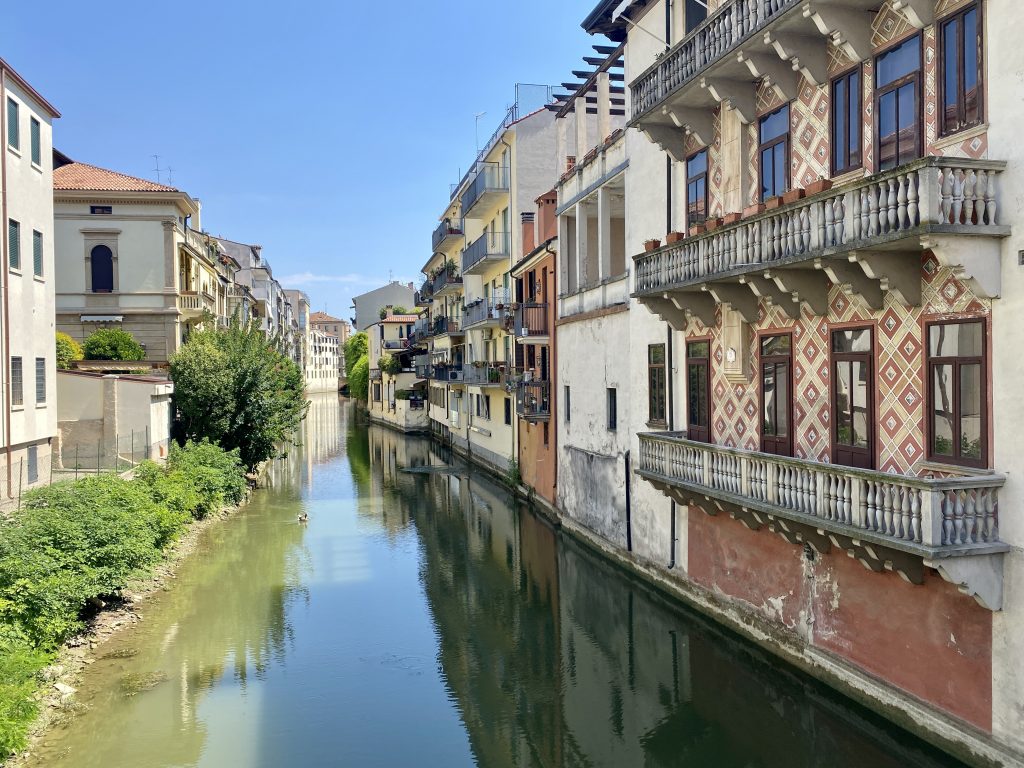
Nowadays, Padova’s old town is a mass of narrow porticoed streets and monumental squares criss-crossed by two rivers (the Bacchiglione and the Brenta) and a significant canal system (the most famous of which is the Brenta Canal which stretches all the way to Venice).
Part of Padua’s canal system
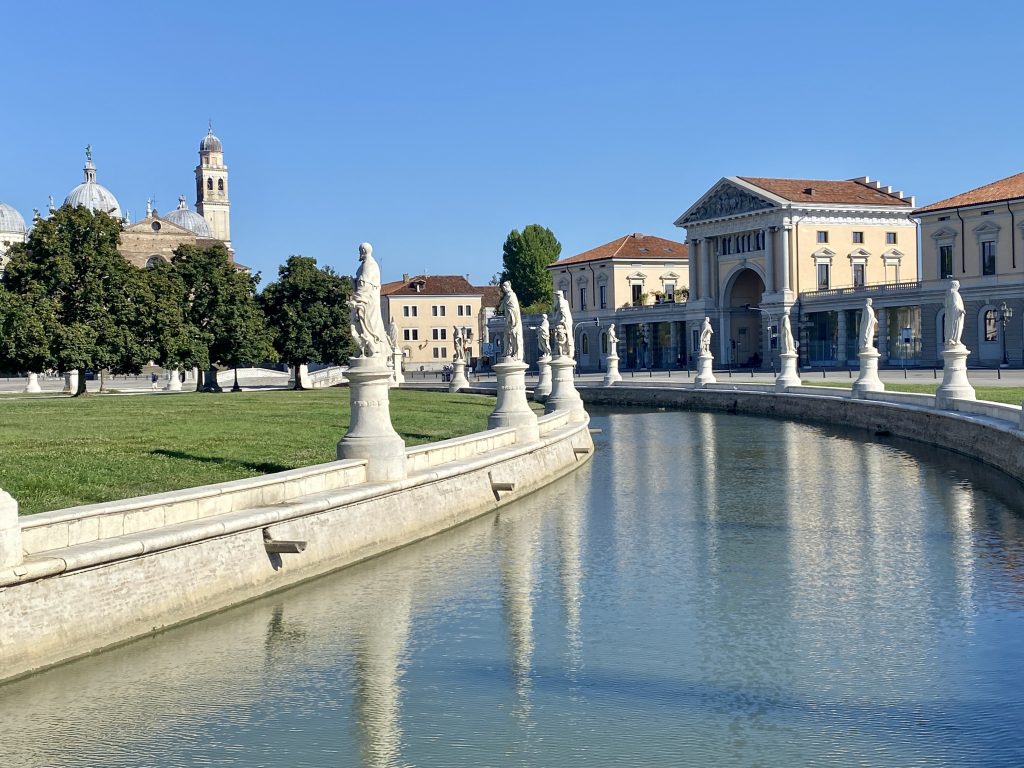
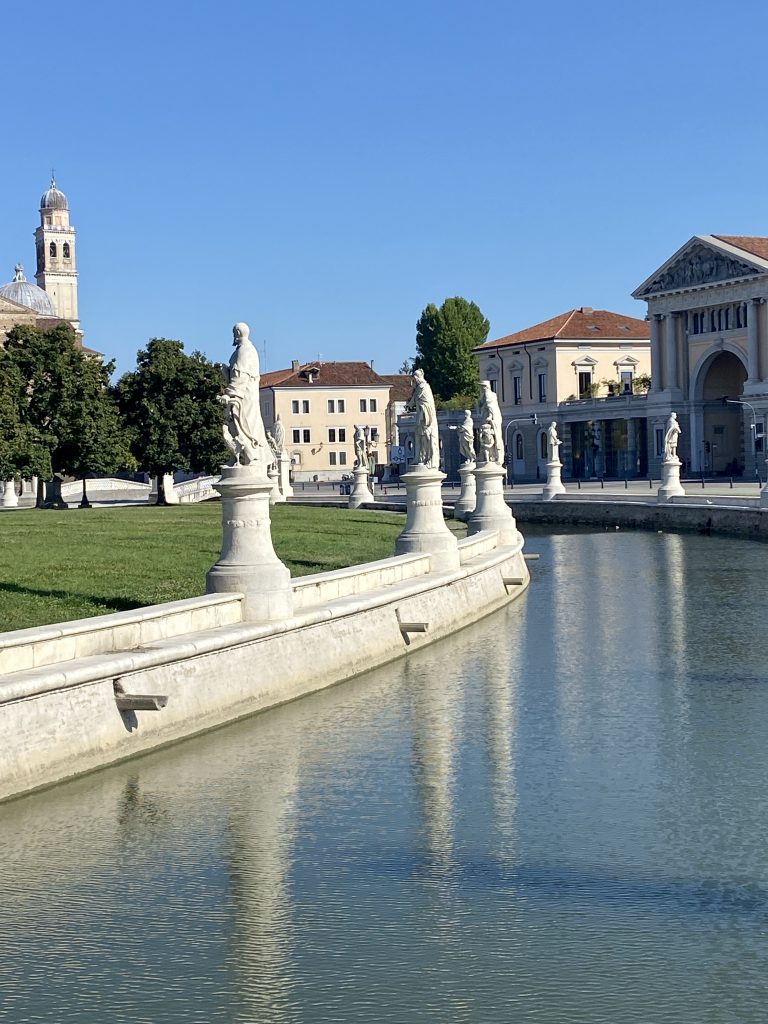
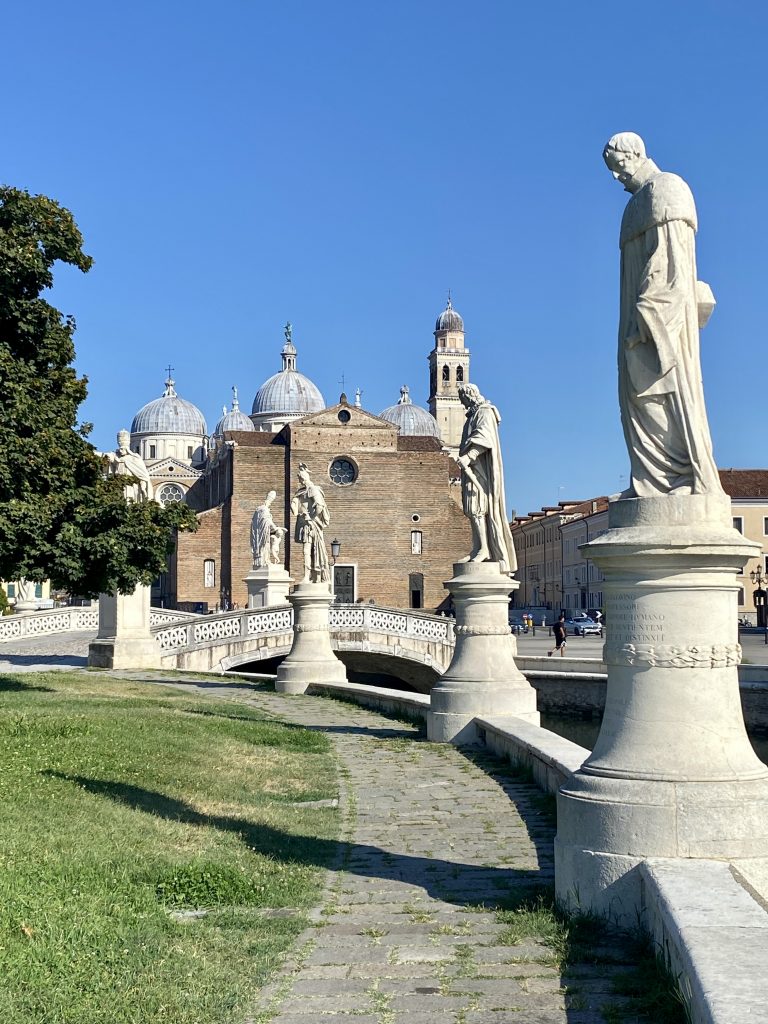
The most impressive of the squares, if an elliptical plaza can be termed a square, is the Prato della Valle (Meadow of the Valley) which at 90,000 square metres is the second largest in Europe (after Moscow’s Red Square). This truly monumental and quite beautiful square is used primarily as a public gathering place and to hold huge street markets (every Saturday) but it has also served as a sports venue (speed skating events are held here) and as a music venue and they hold at least two massive fireworks displays here every year.
The square’s centrepiece is a fountain which sits in a large dark green lawn. The lawn is surrounded by a moat and the resulting island, which can be reached by any one of four ornate bridges, is bordered on both sides by 78 marble statues of illustrious men associated with Padova. It doesn’t end there; the whole island is then circled by a seriously wide road which makes for one of the largest and best looking roundabouts in the world.
Prato della Valle: the green island in the centre is known as Isola Memmia after the square’s designer, Andrea Memmo… and if I didn’t mention it beforehand the whole kit and caboodle is then enclosed by some very large and impressive buildings
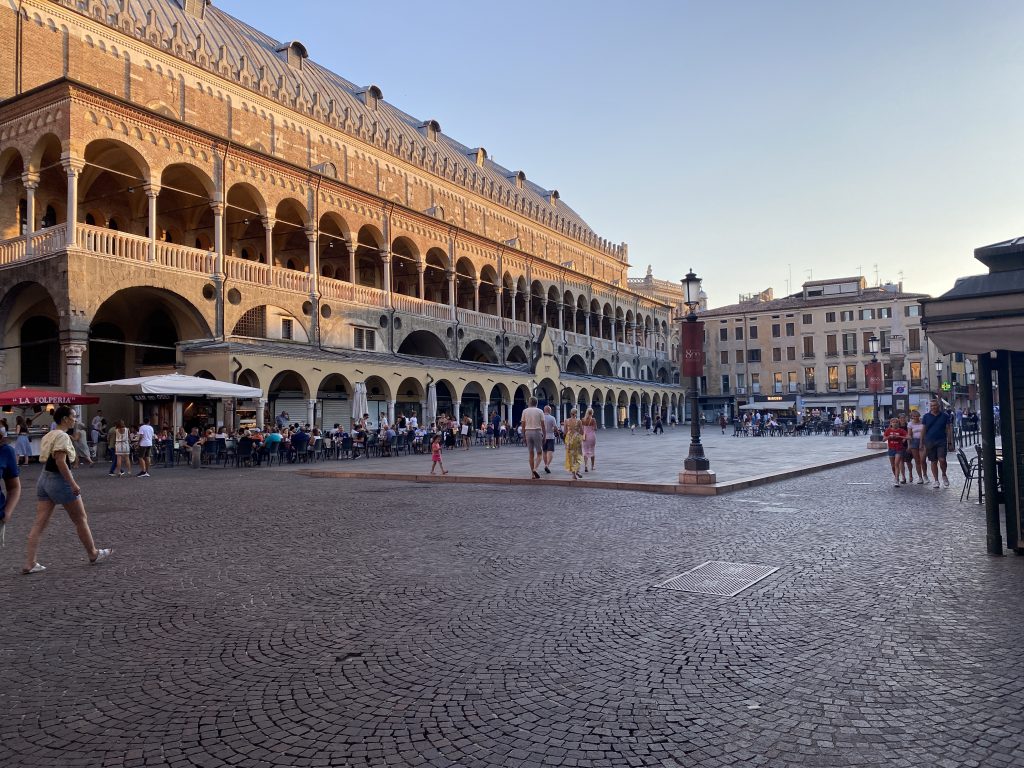
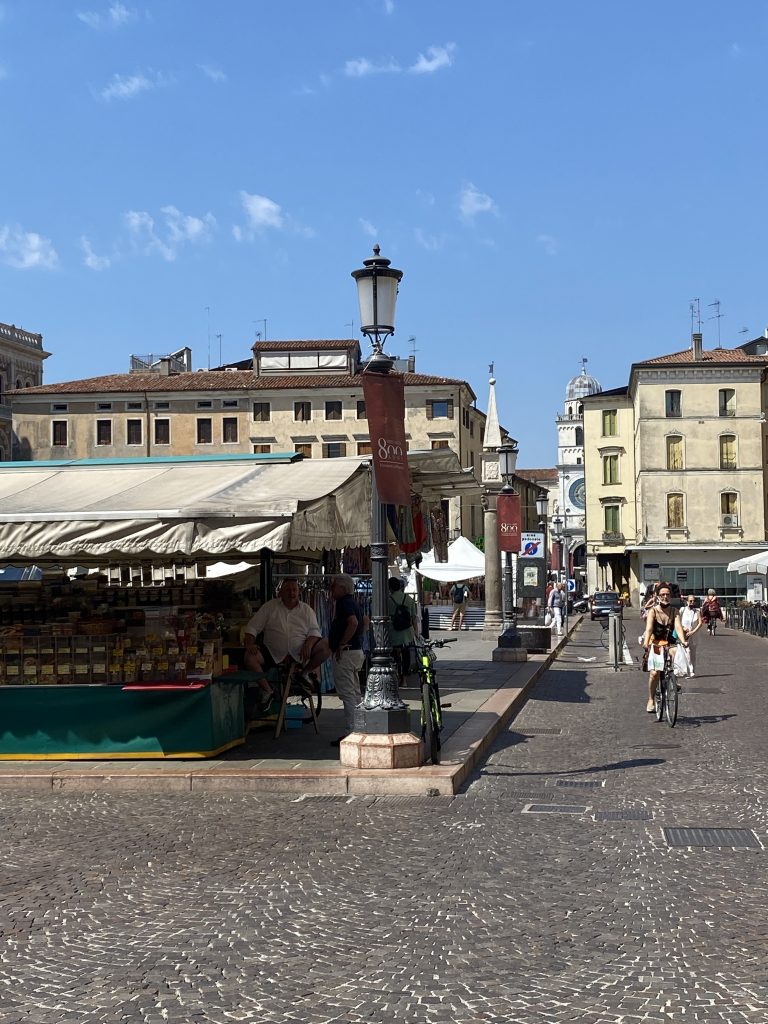
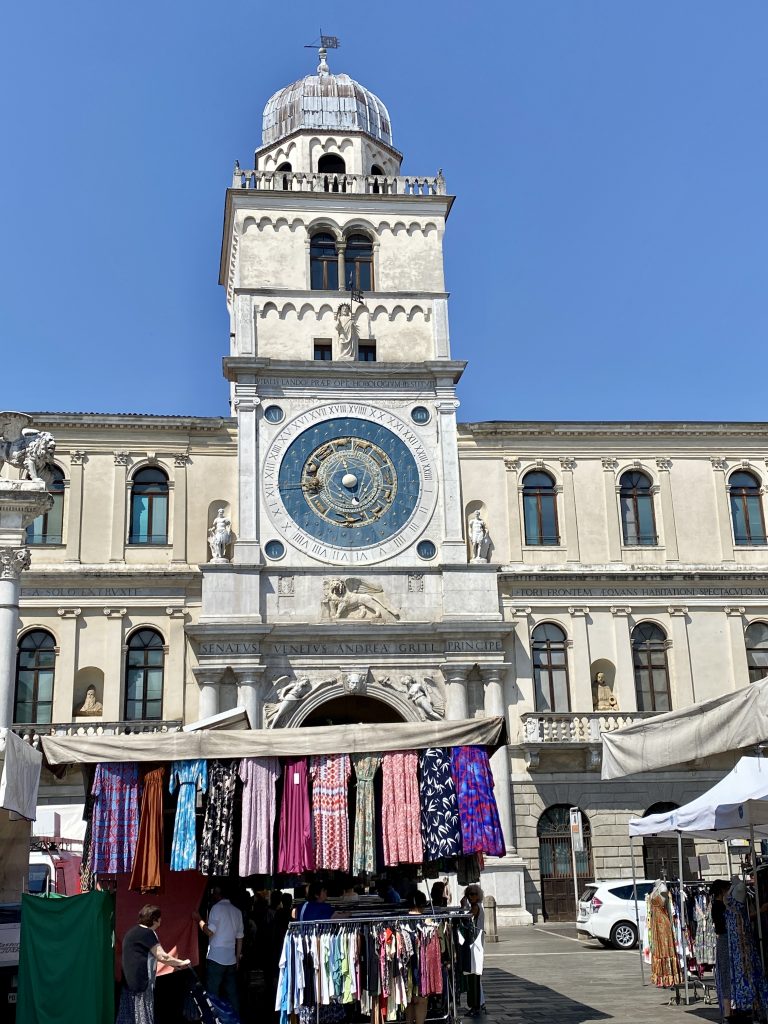
Other squares not to be missed during a visit to to the old town are the Piazza dei Frutti, the Piazze delle Erbe and the Piazza dei Signori which are all very close to each other. The Piazza dei Frutti and the Piazze delle Erbe are separated only by the Palazzo della Regioni (the old town hall) with it’s massive hall and impressive verandas (they call them loggias in Italy) and there is a walkway through the middle of the Palazzo which connects the two squares. The Piazza dei Signori is just to the south of the Piazza dei Frutti and is easily recognised by the Palazzo del Capitano with it’s unique centrepieces of a triumphal arch and the 1344 Torre dell’Orologia (astronomical clock).
The Piazza dei Frutti after the morning’s market. The large building with the massive verandah is the Palazzo del Regioni
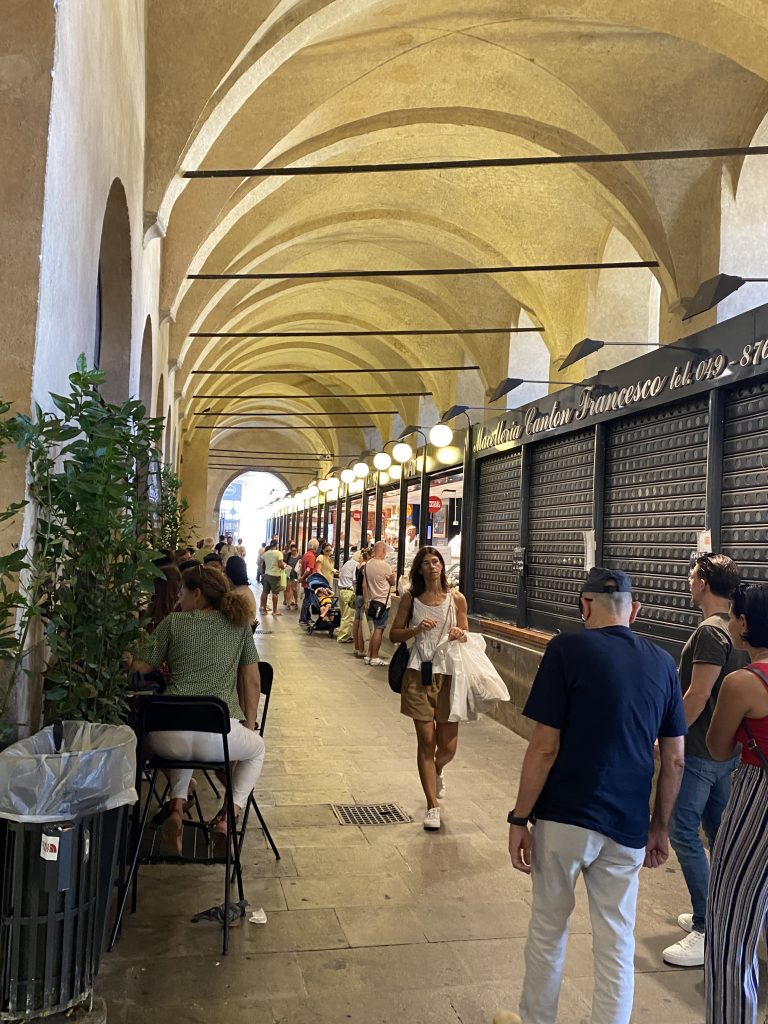
A good time to visit these particular squares is when the street markets are open (i.e. every morning Monday to Saturday inclusive). All three squares are packed with temporary stalls selling just about everything known to man. Even the ground floor of the old town hall is divided into two rows of more permanent stalls selling local foods (predominantly meat, cheeses and fish but, as I arrived, there was also a wonderfully fragrant spice stall).
First photo: Piazza dei Fruiti with the morning market underway. In the background, you can see part of the astronomical clock on the Piazza dei Signori. Second photo: Triumphal Arch is obscured by a market stall but the astronomical clock is obvious. Third photo: Part of the ground floor of the Palazzo della Regioni
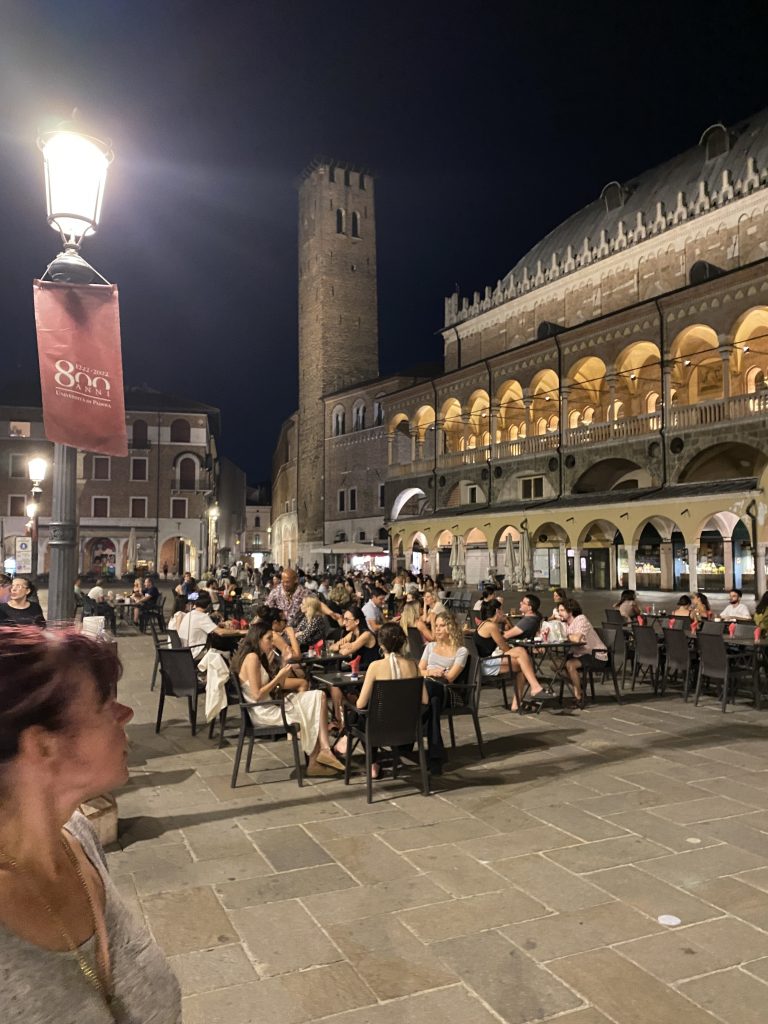
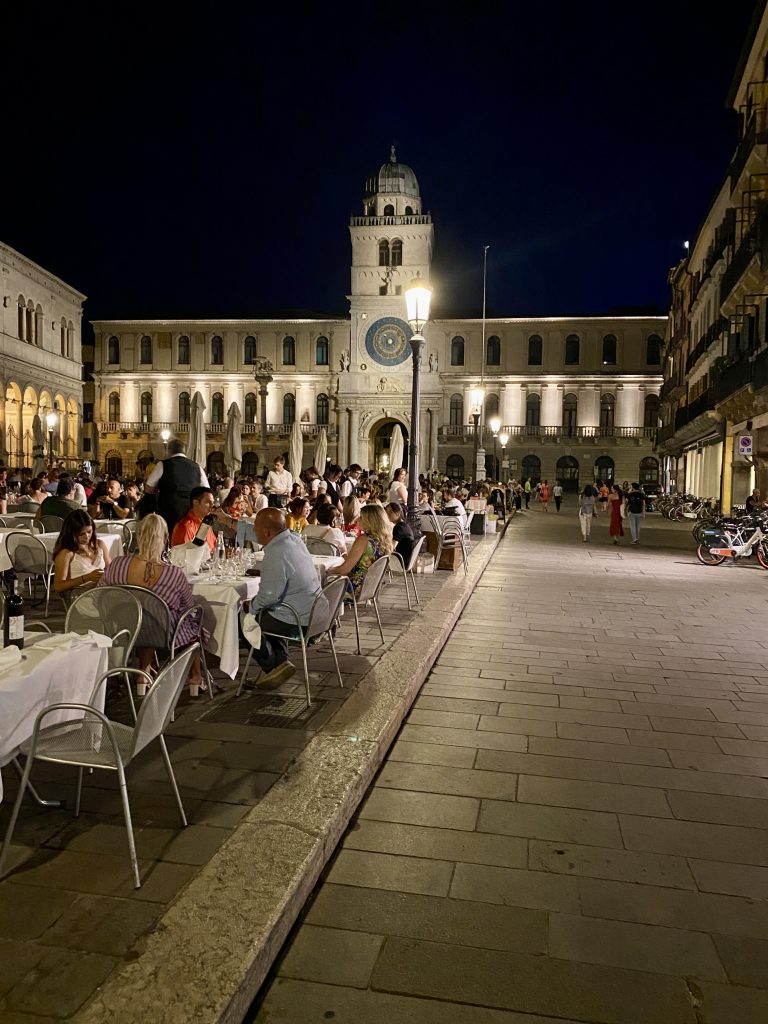
Don’t just visit these three squares in the morning. The stalls disappear during the afternoon and in the evening the squares are filled with tables and chairs as the surrounding restaurants and cafes prepare for their evening trade. The squares are once again packed, this time with diners, and the place buzzes. Our first meal in the city was on the Piazza dei Frutti.
Piazza dei Frutti and Piazza dei Signori at night. The place comes alive with diners
Talking of eating, on our second night in the city we ate at the famous Cafe Pedrocchi. It is famous as a meeting place for academics, artists, writers and revolutionaries (indeed, it was a scene of some anti-Austrian sentiment in 1848 which resulted in shots being fired) but also because it never once closed it’s doors (for much of the time it never had doors) between 1831, when it was built, and 1916. It was open 24/7. We enjoyed our food there but the service was wanting.
A surprisingly high proportion of Padova’s population of 214,000 people are students – there are 60,000 at the University of Paova alone! No surprise then that Padova has a lively night life. We stumbled across some of it while on the way back to our hotel that first night in the city. We saw lights and heard music coming from inside a small park (the Giardini dell’Arena) not far from our hotel. It transpired that the park holds a pop up bar complex and it was packed. We managed to find a spare table for two and sat soaking the atmosphere up over a couple of drinks each into the early hours. It was a great ending to our first evening in the city.
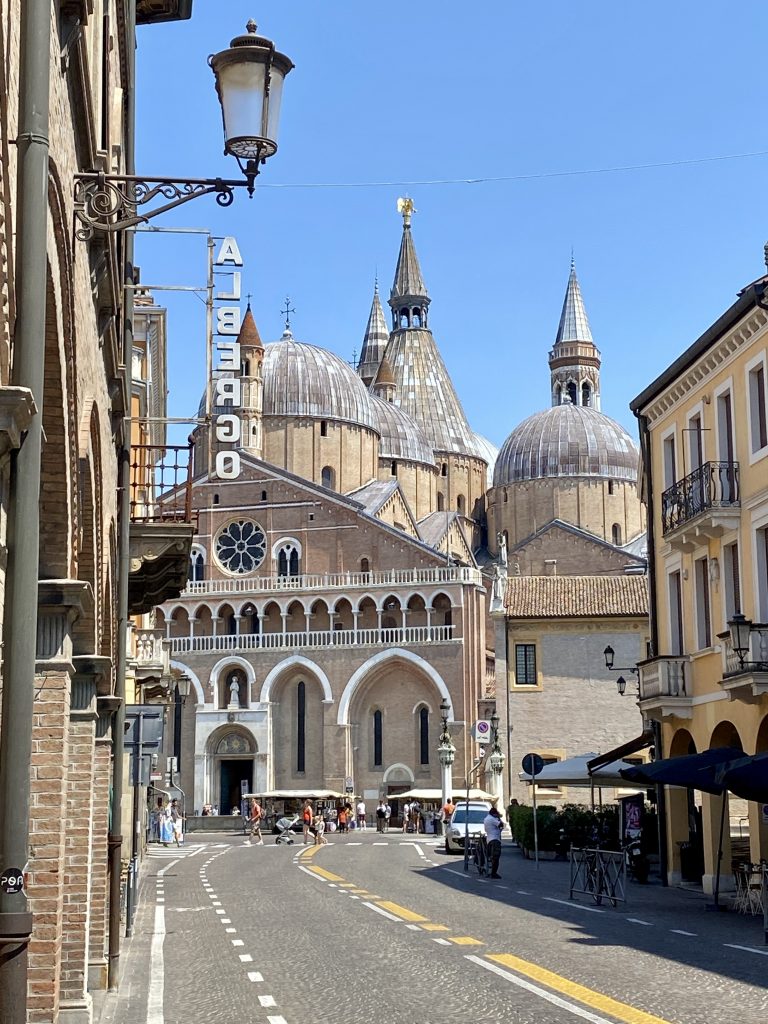
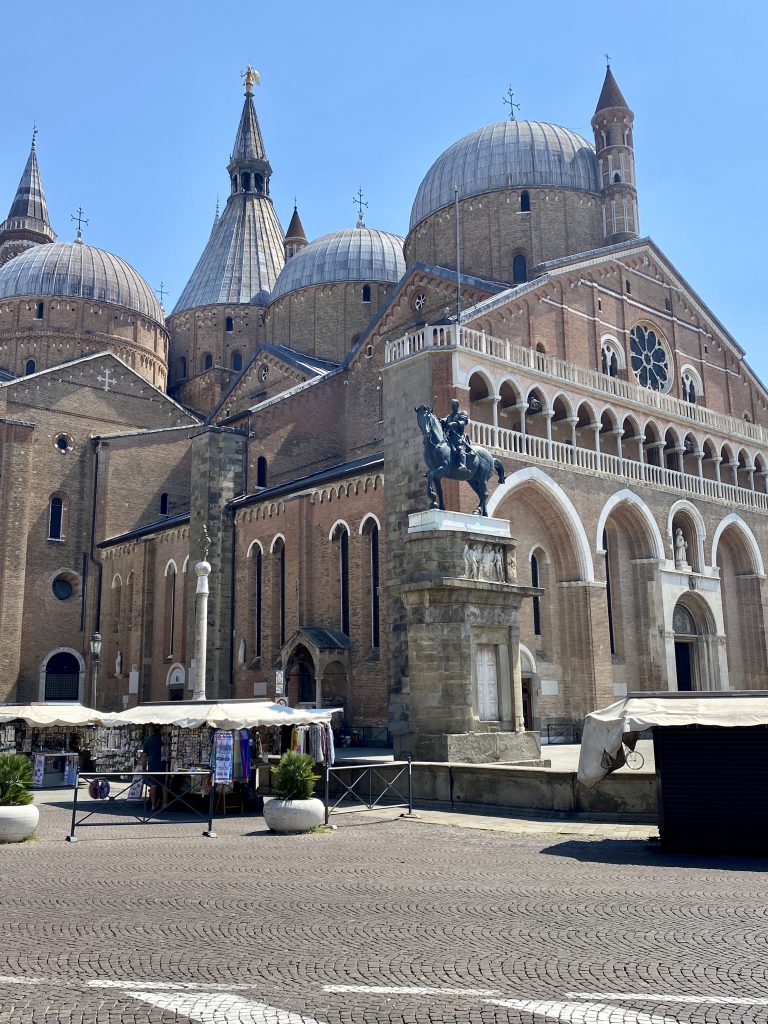
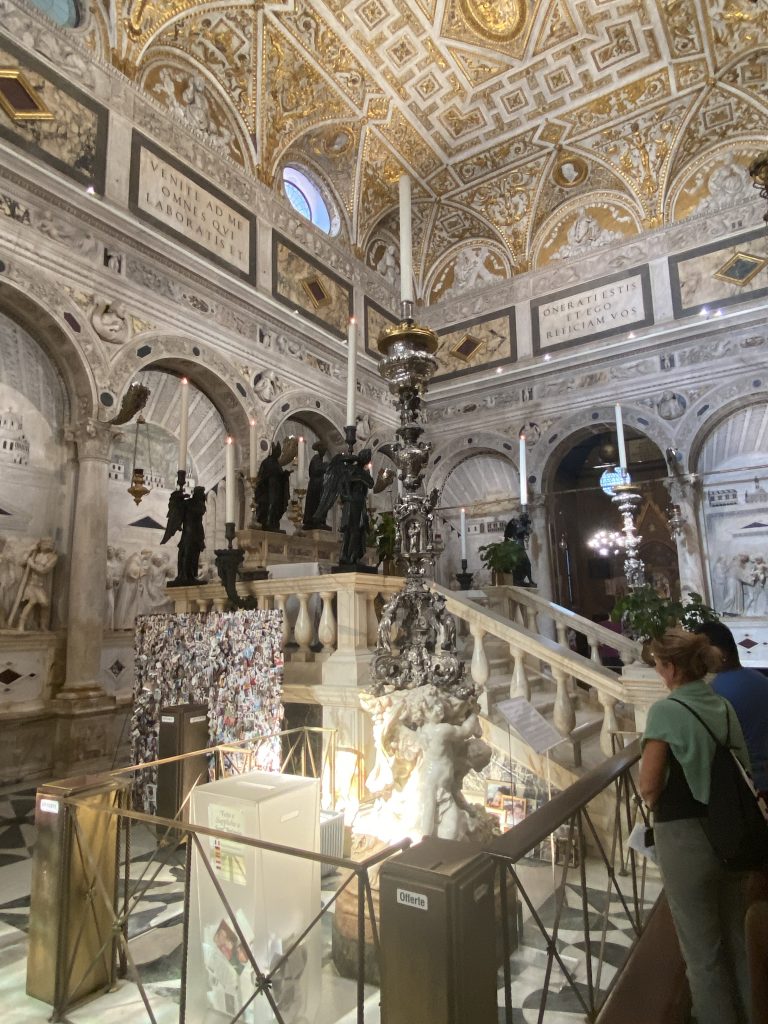
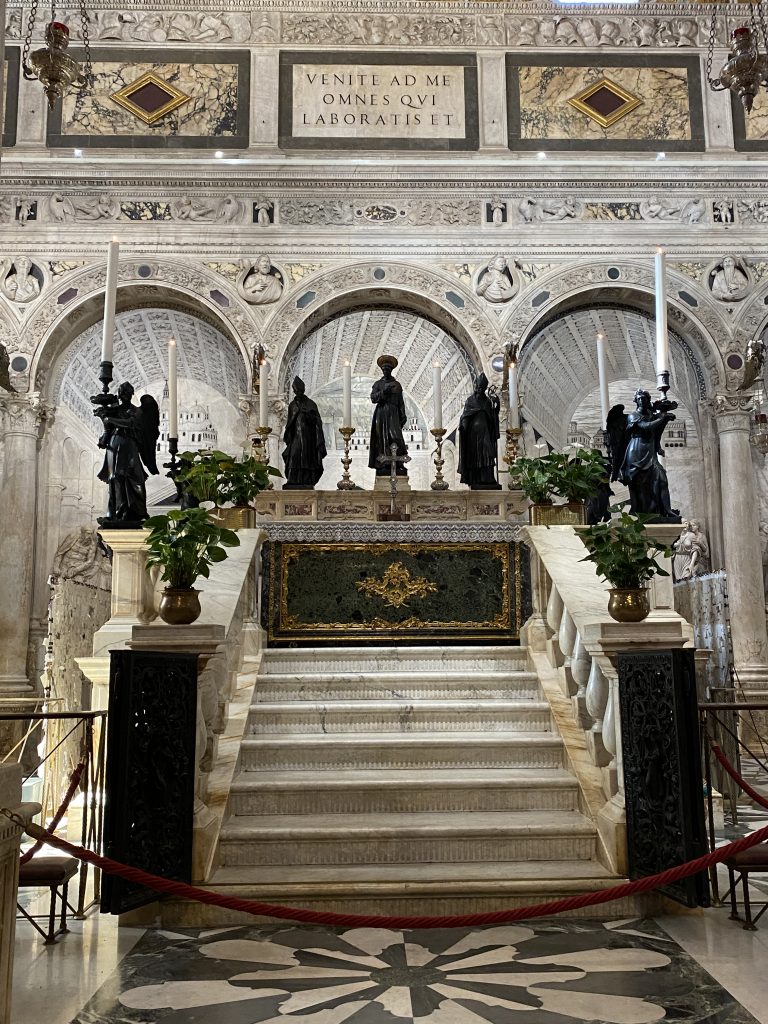
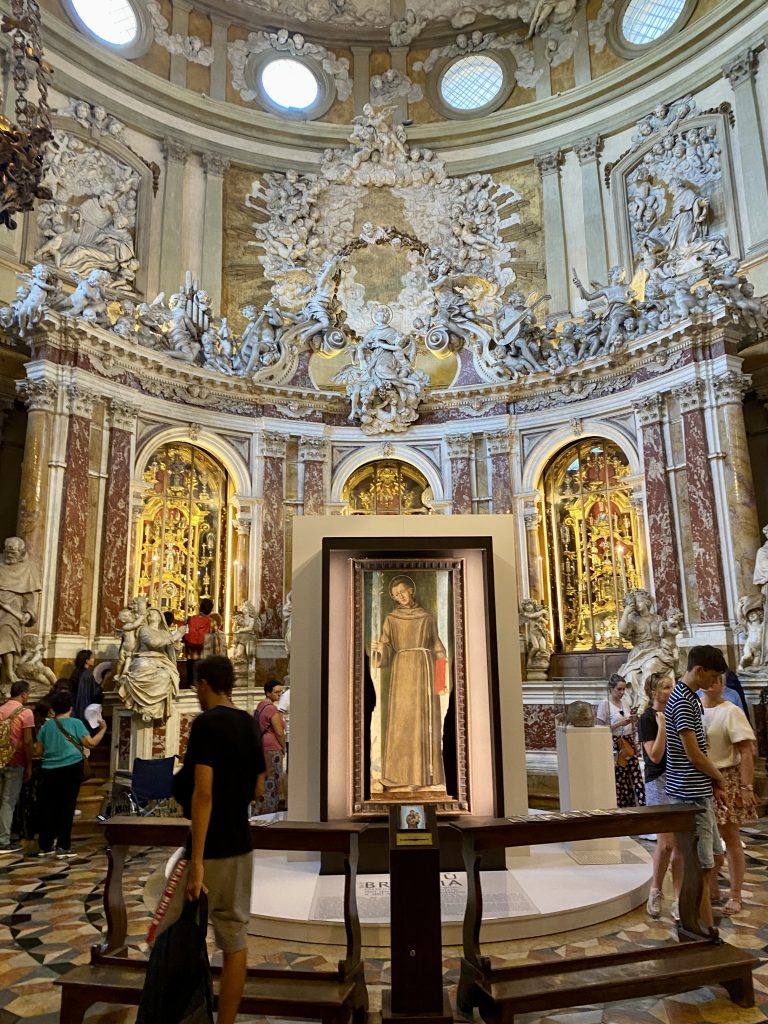
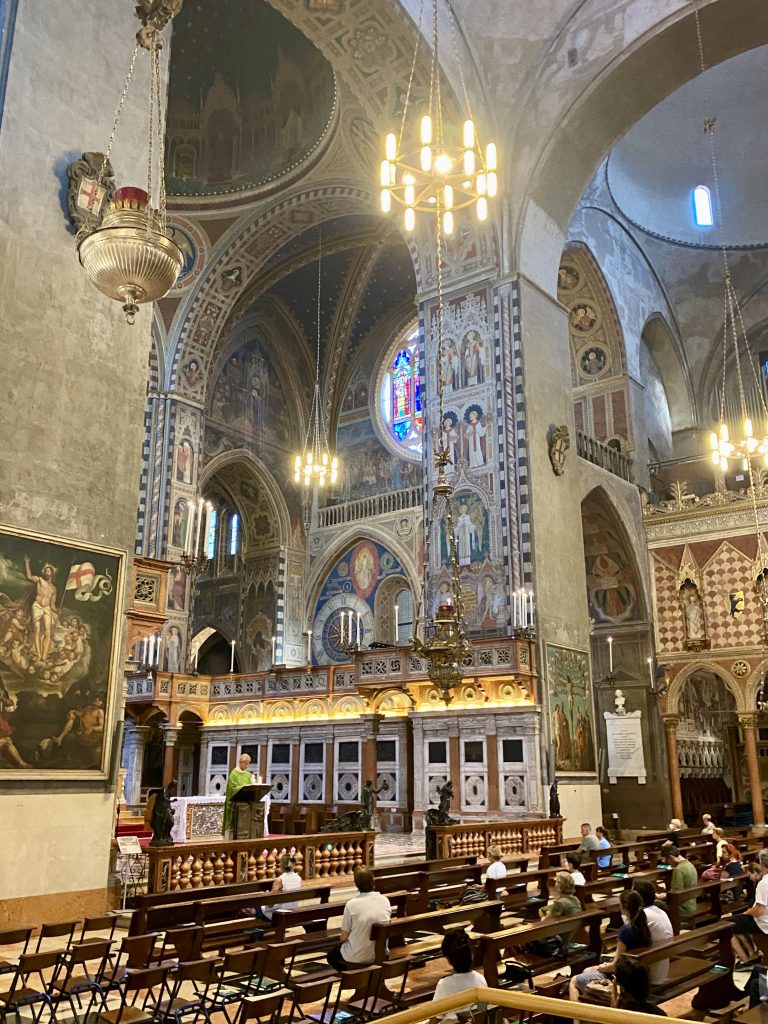
I cannot end a blog on Padova without reference to some of the great churches that fill the city. Without a doubt, the most impressive is the Basilica di Sant’Antonio di Padova or, as it is called locally, ‘Il Santo’. The construction of this huge church began immediately after the death of the saint in 1231 and his body is enshrined there. Everything about this church is extraordinary, inside and out. It is built in a Romanesque and Gothic style and has 8 huge Byzantine domes. Inside, there are numerous chapels and gold and marble is everywhere but the key features are Donatello’s Madonna and Child on the high altar (he was in Padua 10 years working on both the Madonna and Child and on the large equestrian statue of Gattamelata which is on the square outside the church) and some artwork by Titian.
Basilica di Sant’Antonio di Padova (Il Santo) with Donatello’s statue of Gattamelata in the foreground of the second photo. Gattemelate translates as ‘honeyed cat’ and was the nickname of Erasmo de Narni, a mercenary who fought for VeniceThe queue is formed of pilgrims who have come to pay respects to the relics of St Anthony. A Mass was underway and I was therefore unable to see all that I would have liked.
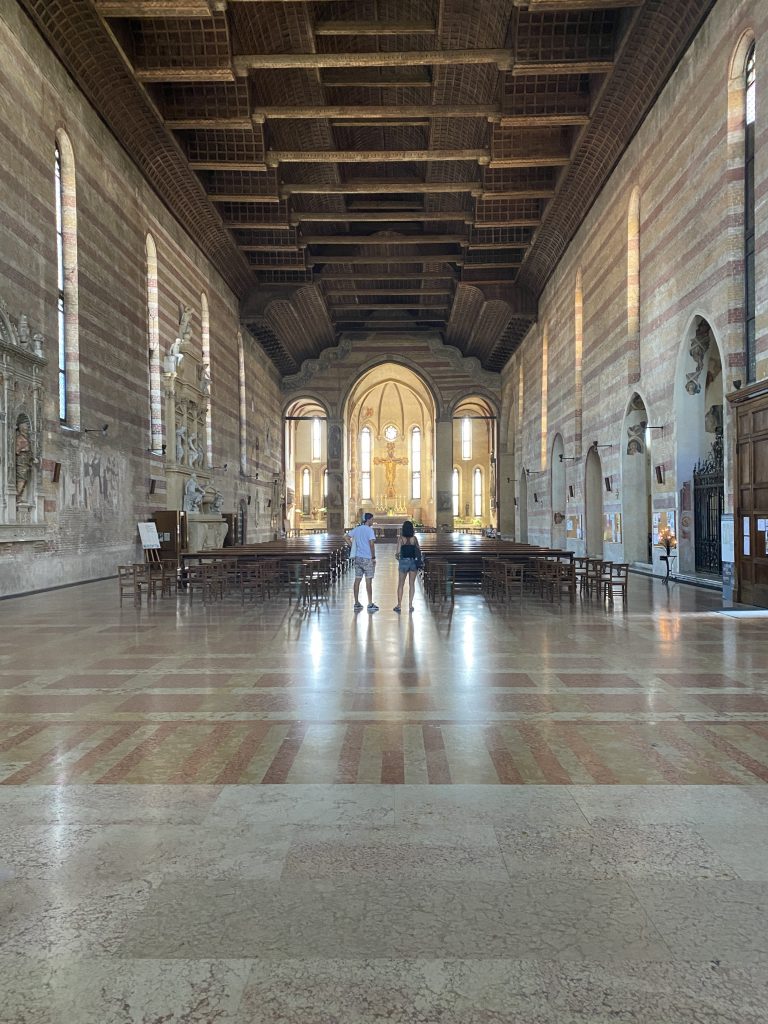
Other churches worth seeing in Padova include the Capella degli Scrovegni (or Scrovegni Chapel) which holds a Giotto Masterpiece (being his series of frescos depicting stories from the bible) but, you need to pre-book to access this church and numbers are very much restricted) and; the nearby 13th/14th century Eremitani Church with it’s wonderful wooden ceiling and; a very small church I stumbled upon and really liked, the Sant Tomas Becket.
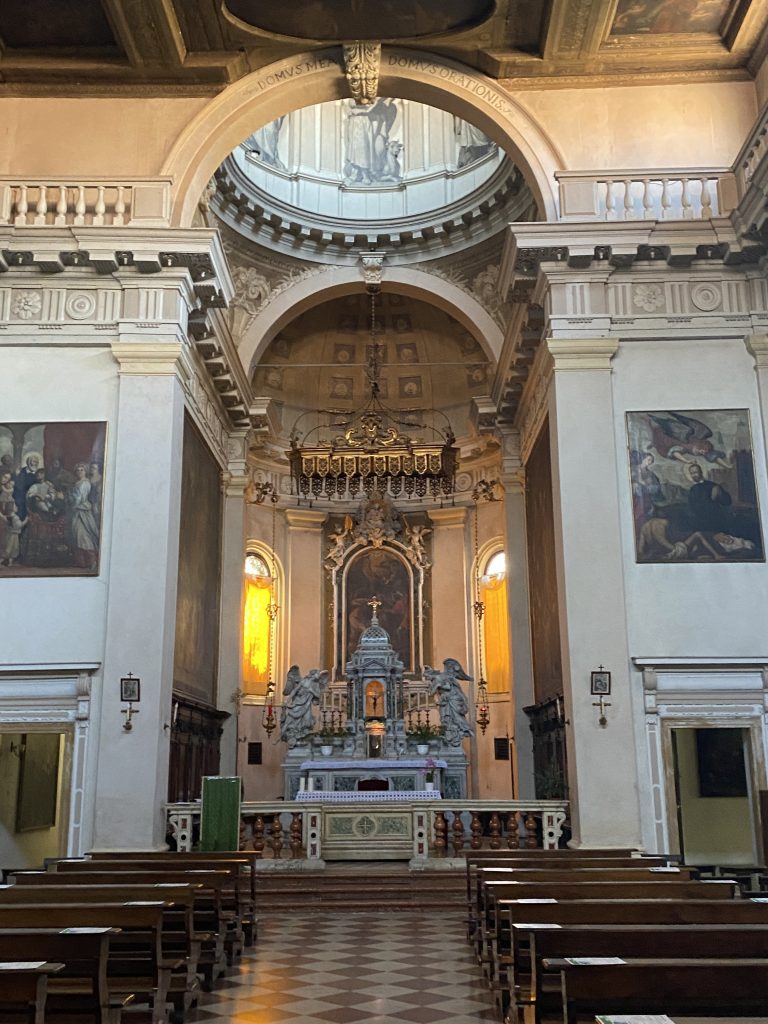
The inside of the very impressive Eremitani and the not so impressive but still adorable Sant Tomas Becket (he of Canterbury Cathedral fame)
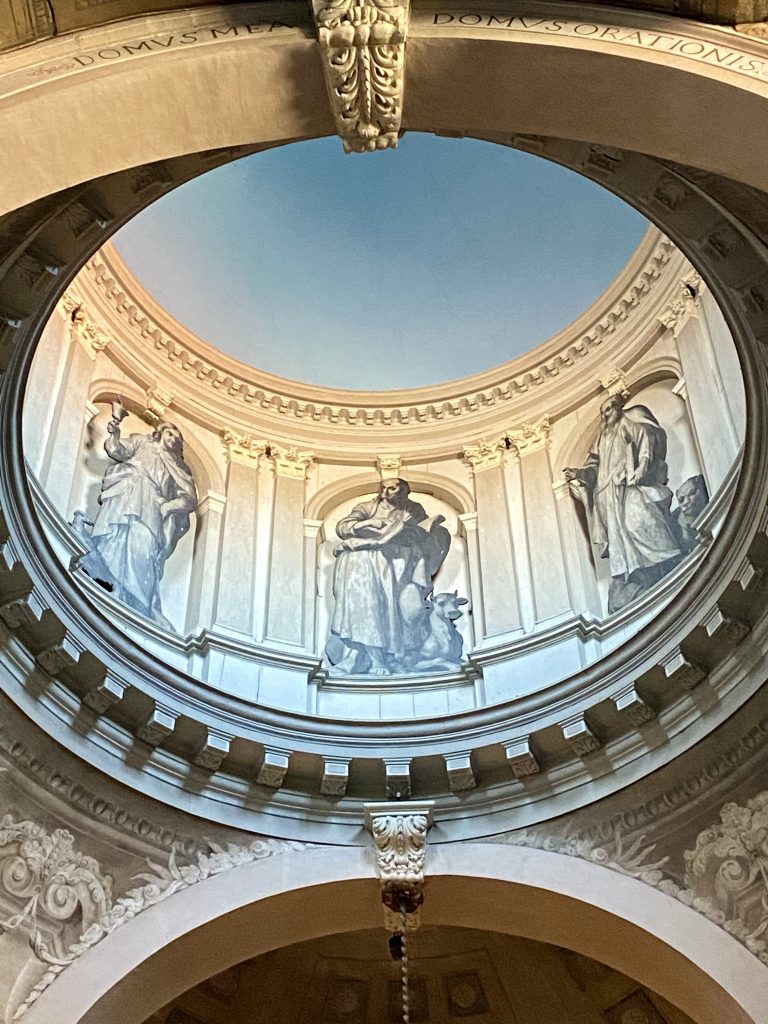
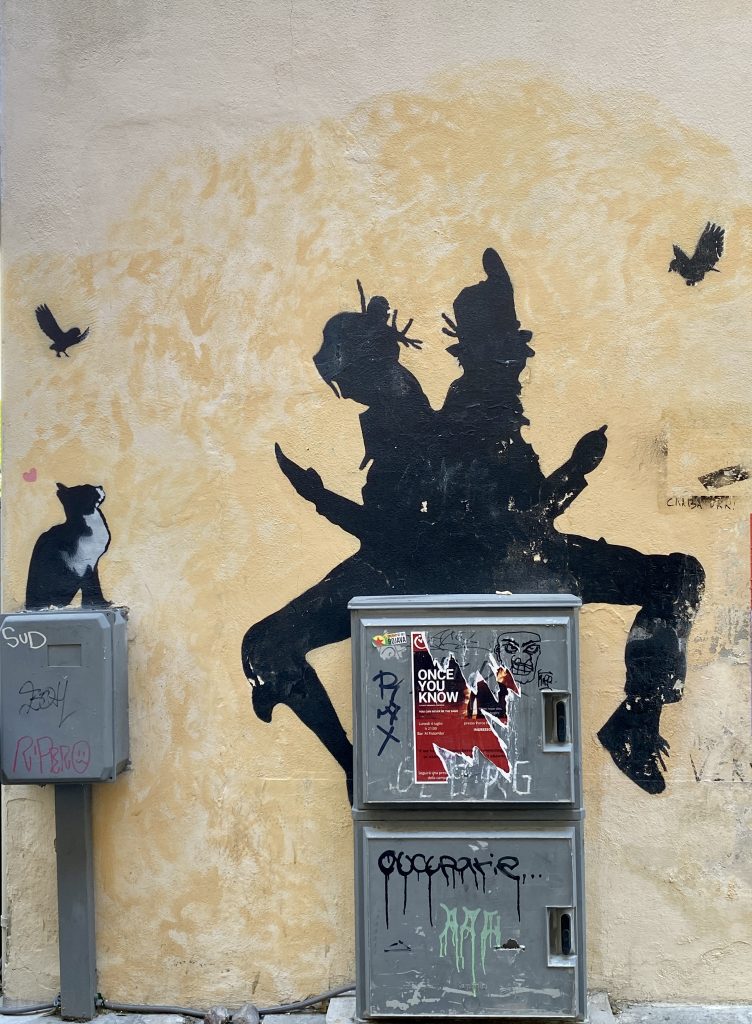
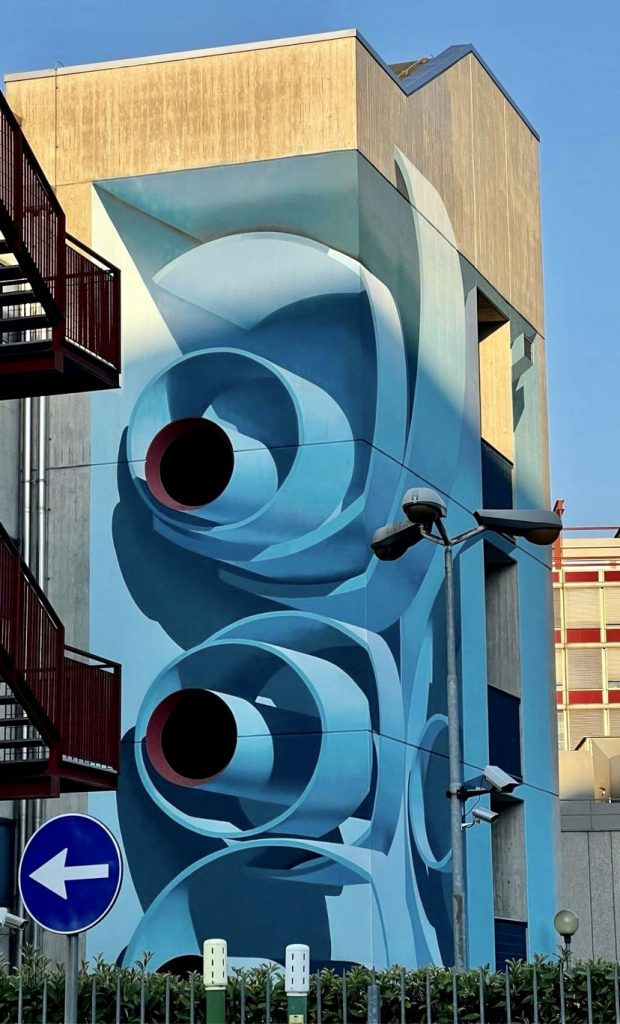
All great cities will have equally great street art and Padova is no exception to that rule. Theirs matches anything I have seen elsewhere although it is perhaps not so abundant. There is a fair amount of ‘Banksie’ style street art but my two favourites are those reproduced below (although I’m not sure if the excellent 3D painting qualifies as street art?)
One place I missed during our brief stay in Padova and that I really wished I had visited is the Botanical Garden. On our last day, I stopped for a glass of barbera wine in a small family run cafe bar near the Porta o Portello. The place was closing for the weekend but I was joined by the whole family and invited to take a second (very large) glass of wine by the grandfather. With the eldest grandson translating the family then took turns asking me what I liked about Padova and what I had seen. They were impressed by the amount of ground I had covered and the grandmother was particularly pleased that I had visited all the principal churches (and she loved my photos of the Tomas Becket) but they were all aghast that I had not seen the Botanical Garden. Next time.
Oh, one other faily worthless piece of information. Did you know that Padova (or Padua) is the setting for William Shakespeare’s comedy ‘The Taming of the Shrew’?
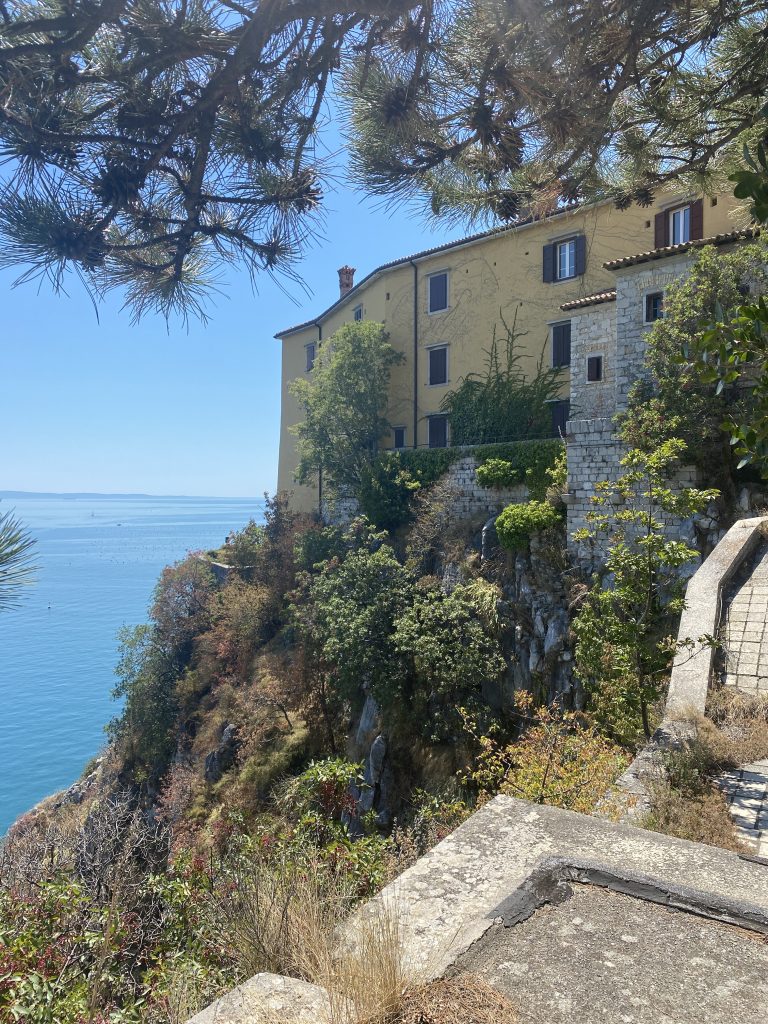
Duino was recommended to us as a nice place to visit by our friend Clare and it is. It is a tiny Italian fishing village on the Adriatic Coast with a focus towards cozze (mussels) but it’s two castles which sit on the cliffs overlooking the Gulf of Trieste have long been the star attractions of the area. For a while, during the time of the Austro-Hungarian Empire, Duino became a fashionable seaside resort of the Austrian Riviera with the then owners of the newer of the two castles hosting Austrian Royalty (Franz Joseph I and Archduke Maximilian I) and such notable guests as Johann Strauss, Franz Liszt, Mark Twain and Victor Hugo. Those days ended at the conclusion of WW1 with the dissolution of the Austro-Hungarian Empire and Duino being ceded to the Kingdom of Italy.
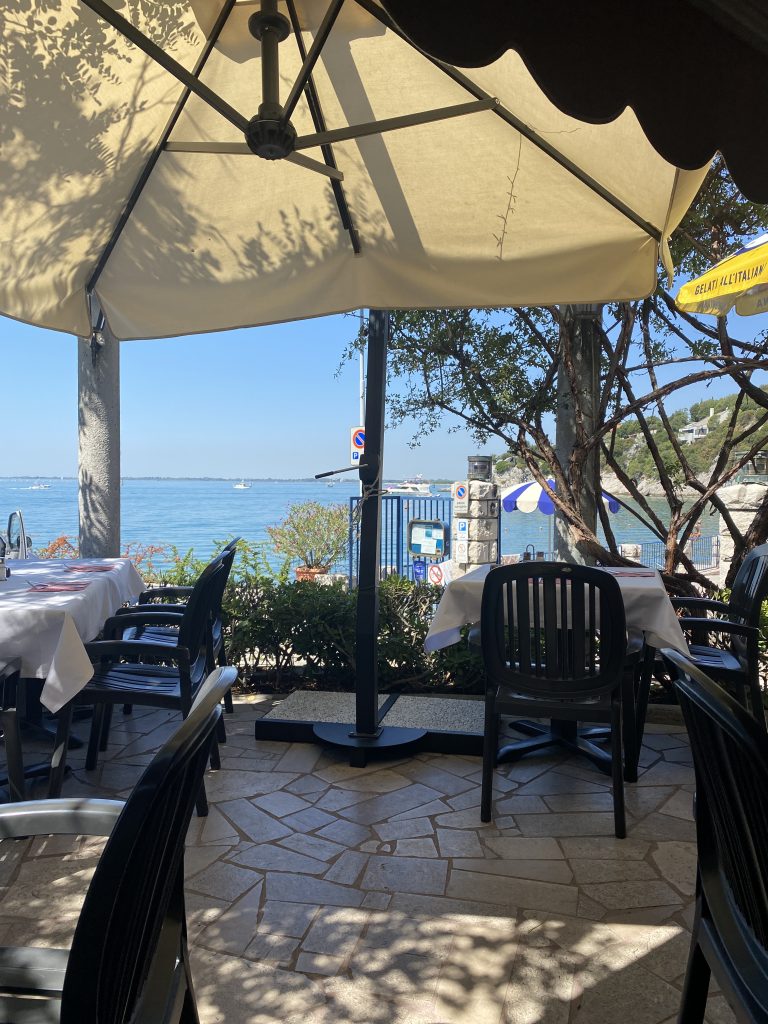
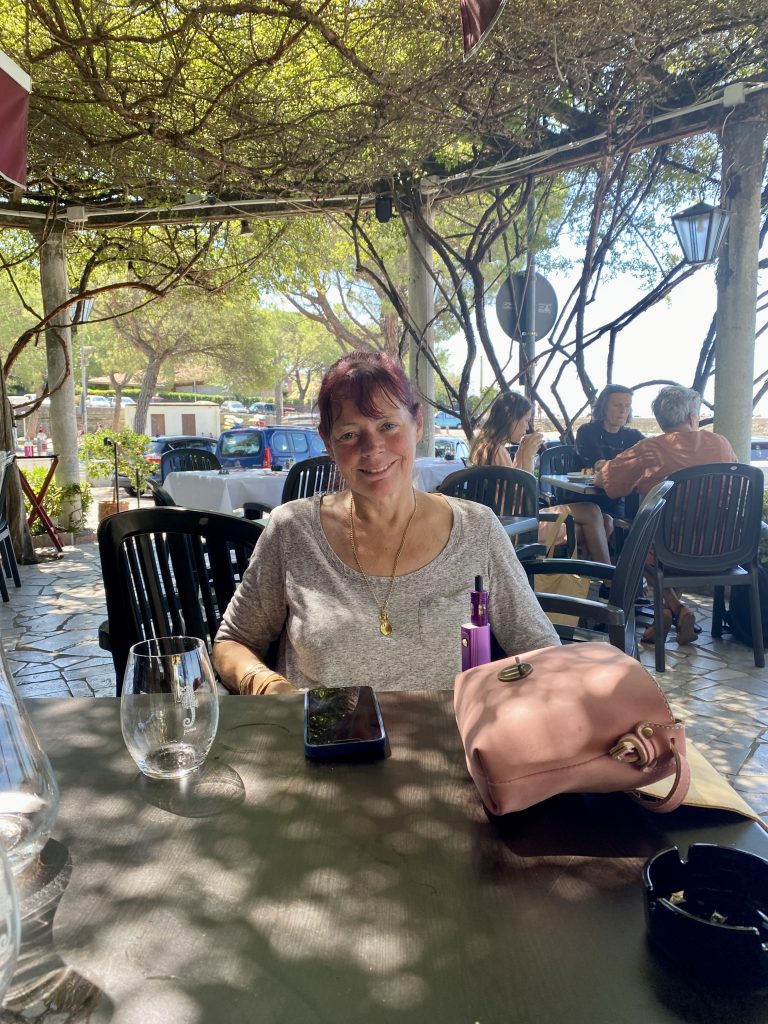
The hamlet has a small fishing harbour which on hot sunny days doubles as a sunbathing and swimming area. It was 34 degrees centigrade and getting hotter as we arrived and there were plenty of locals stretched out on the harbour walls or swimming in the water. It was almost noon and so we decided to stop for lunch at the prettiest of the two restaurants by the water. We had the best prawn salad.
You’ll not believe how long it took me to take the above photos without people in them. The harbour was full of locals swimming or sunbathingI love these moments… sitting in the shade with a drink, waiting for your food and watching the world go by
As the afternoon went by it became increasingly hot; too much so for the dogs and Vanya took them back to the Van for some respite from the heat while I continued on to view the towns two castles.
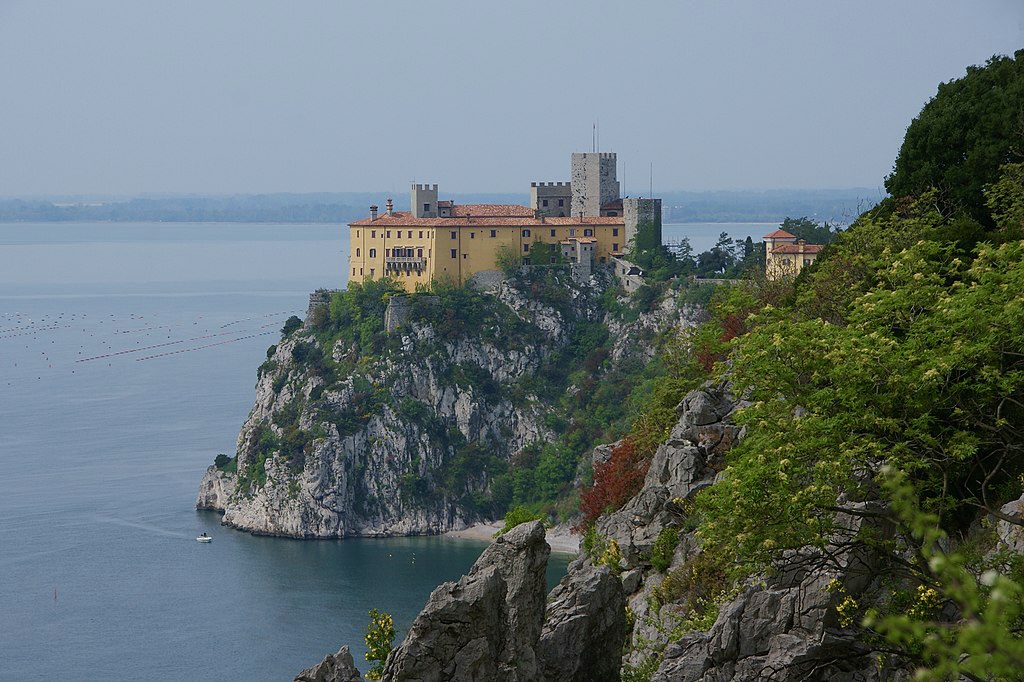
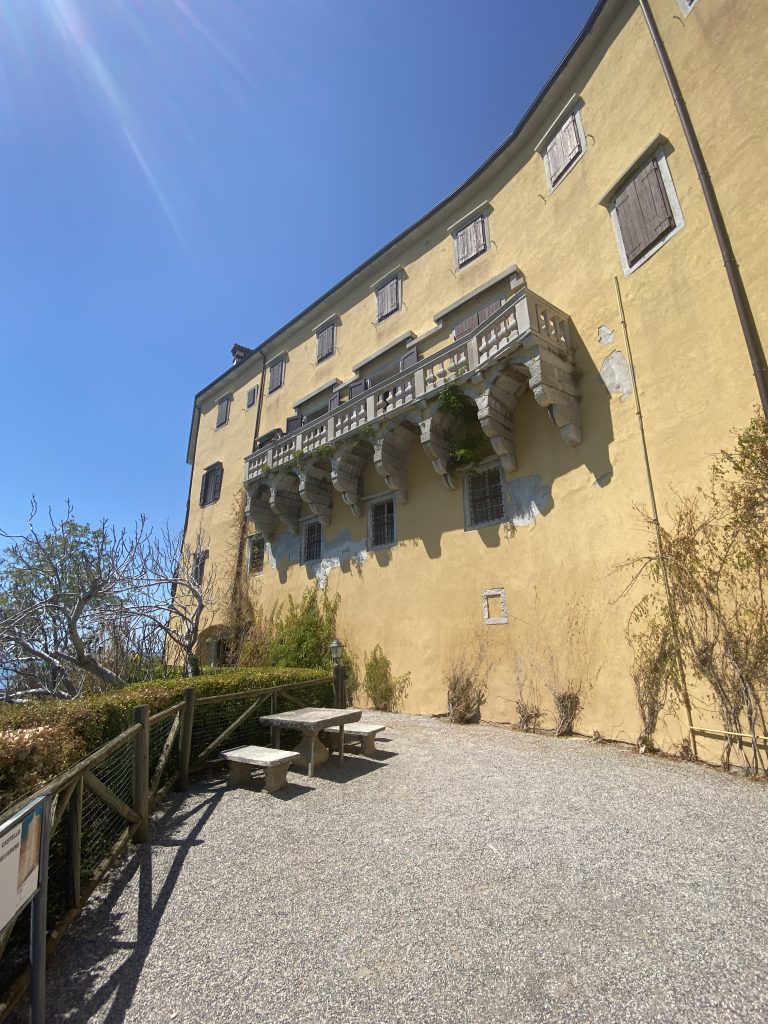
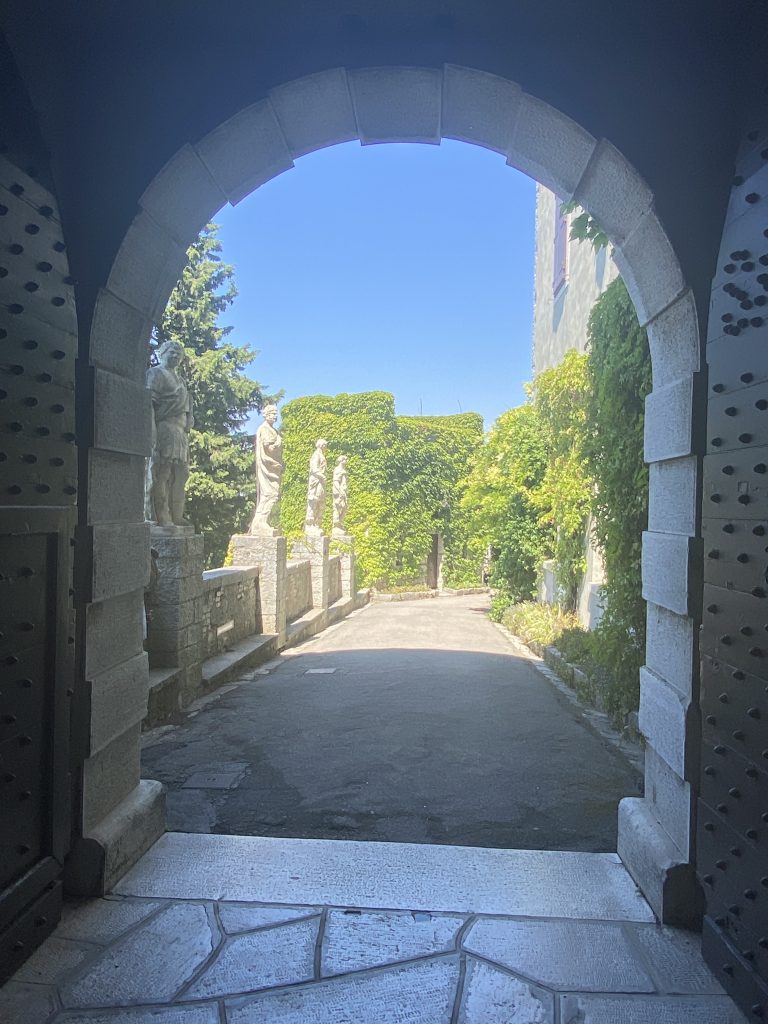
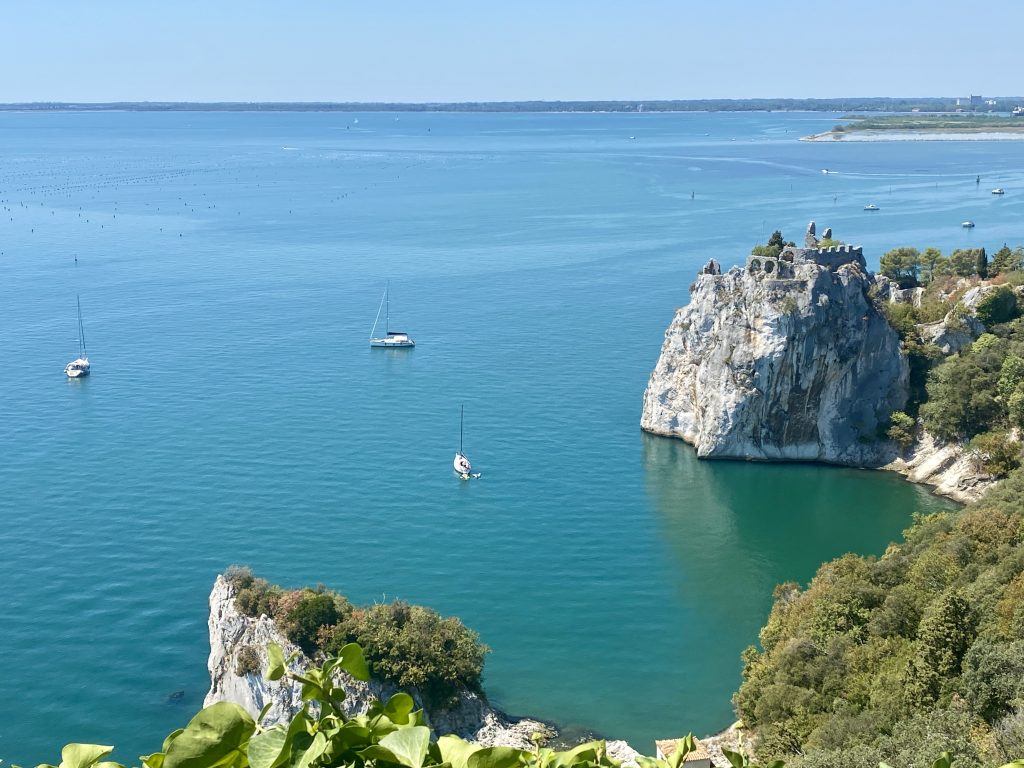
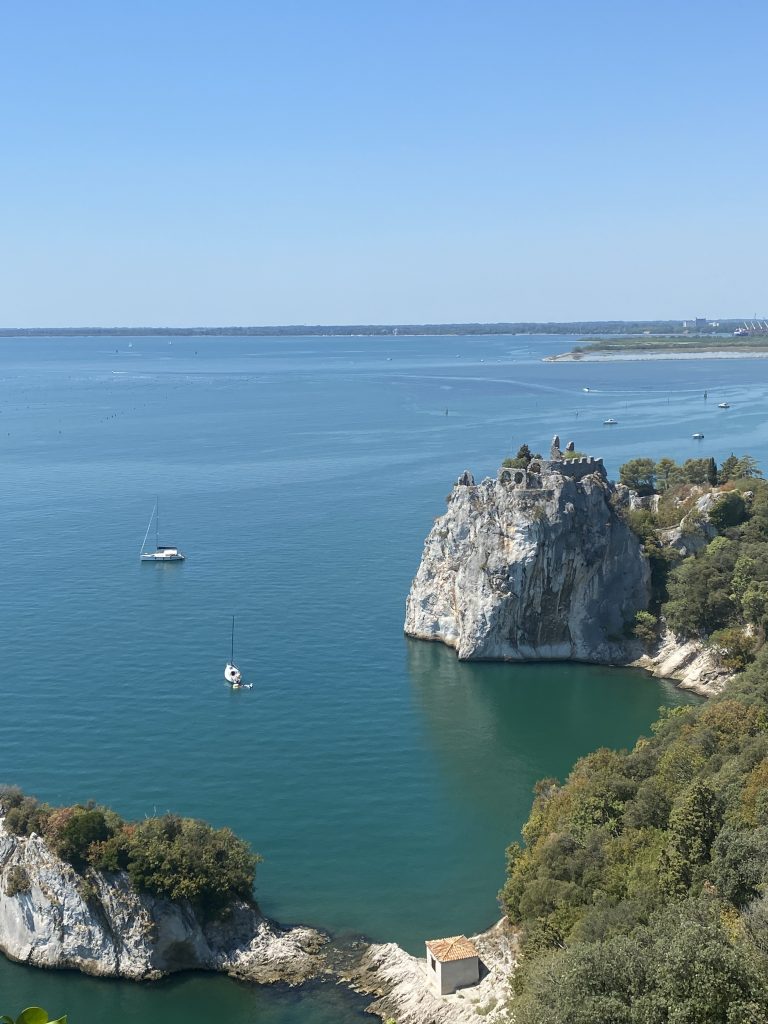
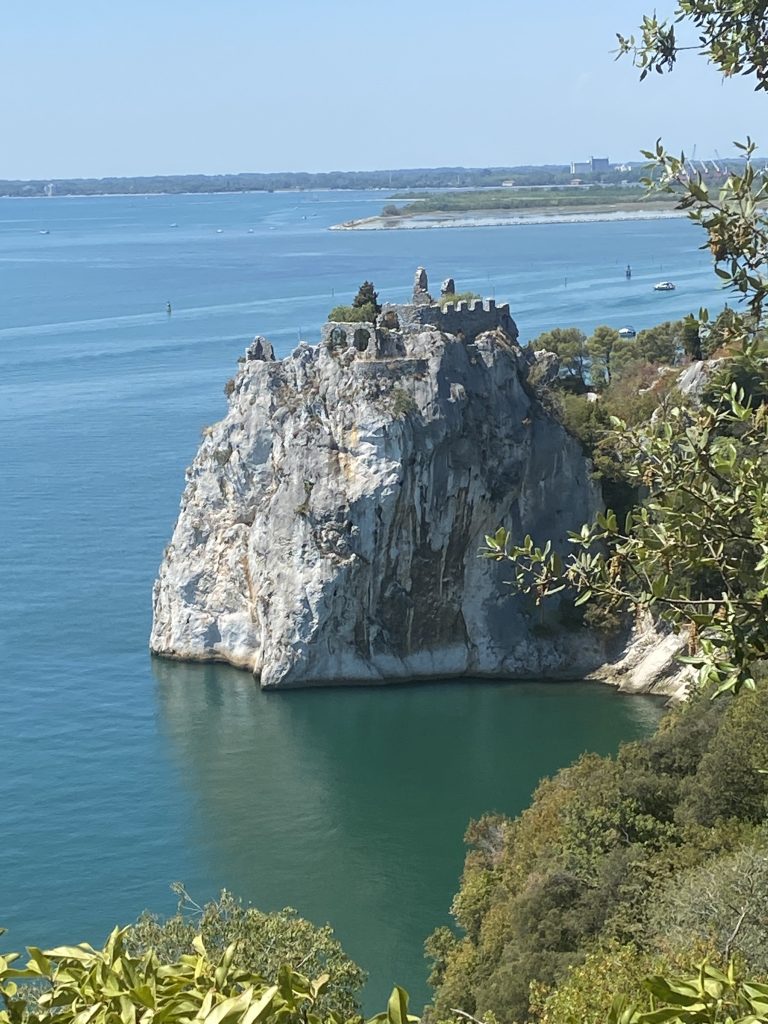
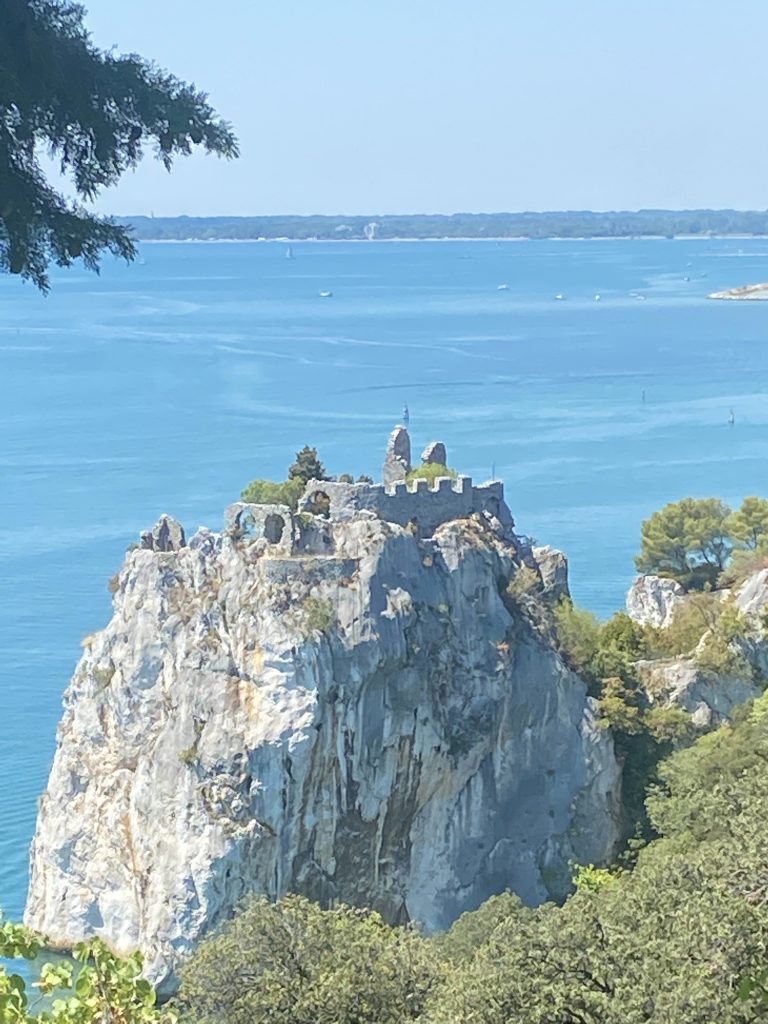
Of the two castles, the older 11th century castle (the Rocca di Duino) was left deserted in the 15th century and is now little more than a spectacular ruin on a large rock beneath the newer 14th century castle. The new castle is still inhabited and was opened as a museum in 2003. It’s exterior and it’s gardens do not match Miramar Castle further down the coast towards Trieste but it’s inside and it’s views are every bit as majestic.
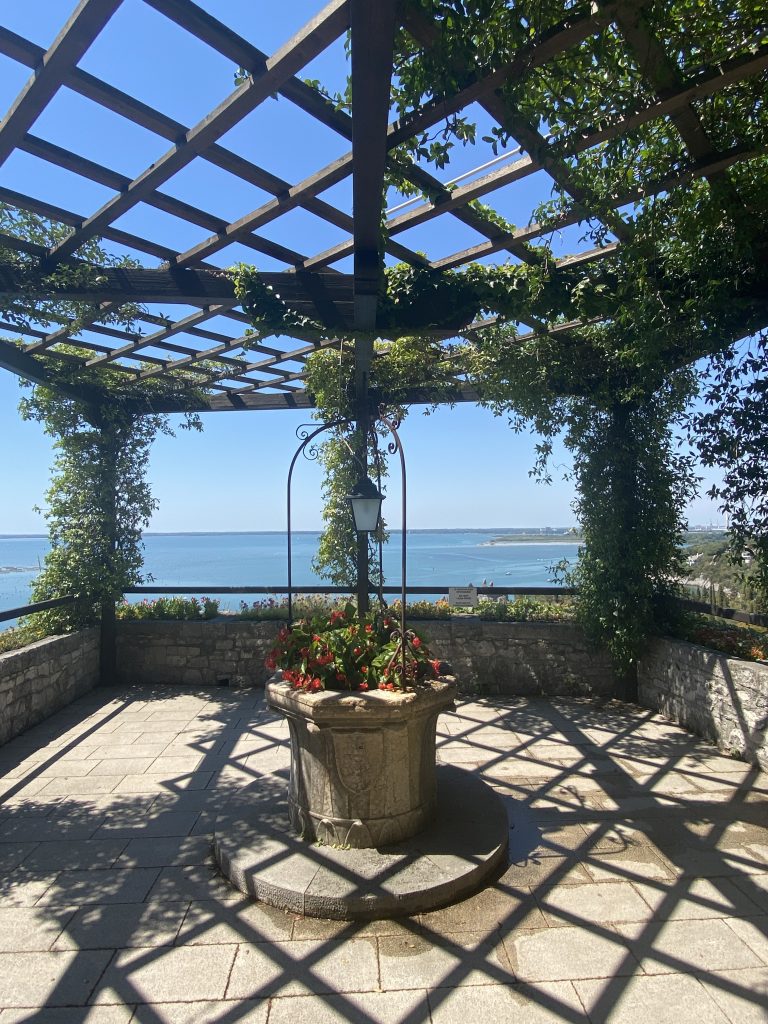
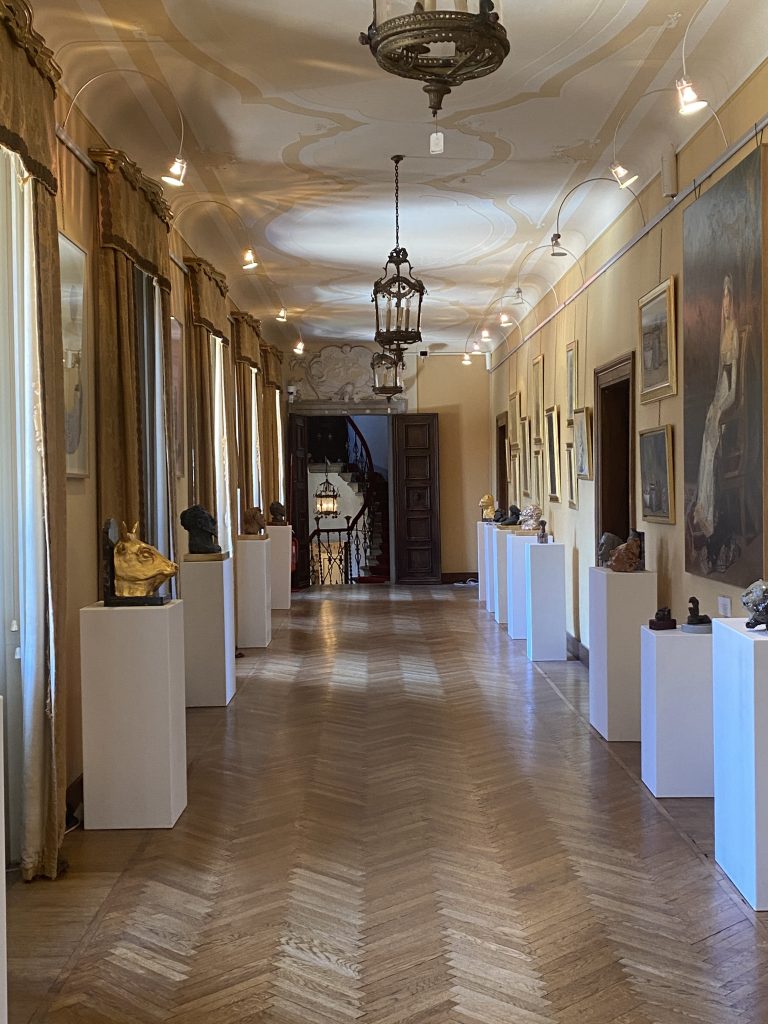
The New CastleThe same side of the new castle; the first photo taken from one of the castle’s viewpoints in the gardens and the second from a gun emplacement or bunker built by the Germans occupiers of the castle during World War IIThe inside of the castle is beautiful and surprisingly homelyThe views from the new castle down towards the old castle
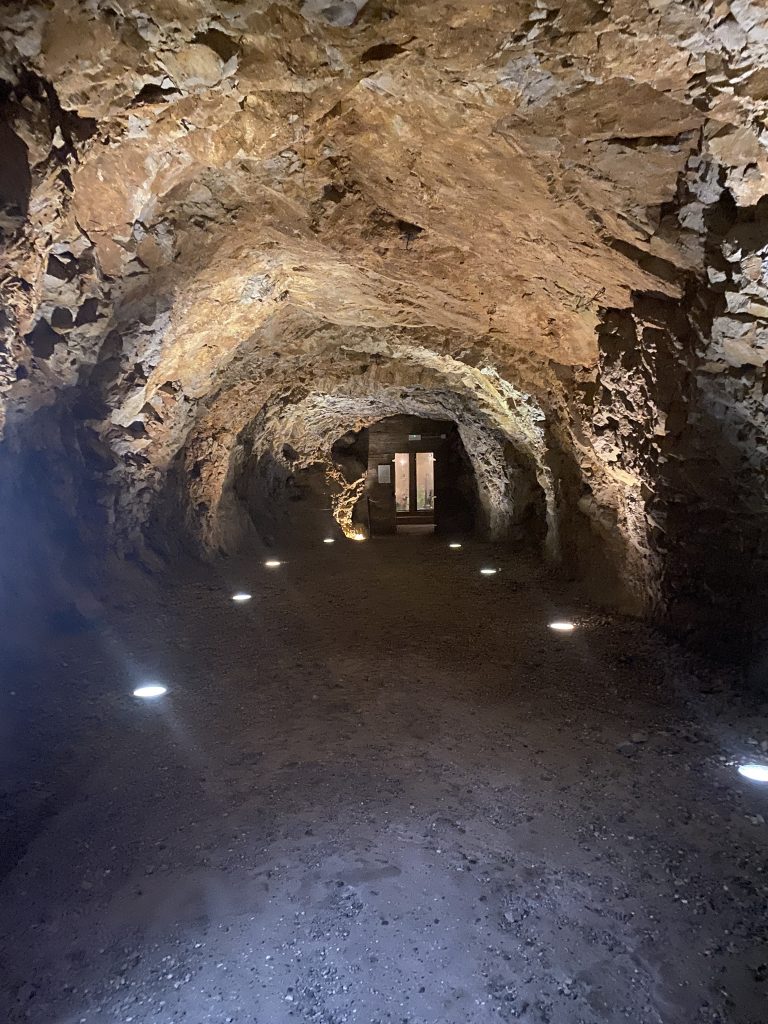
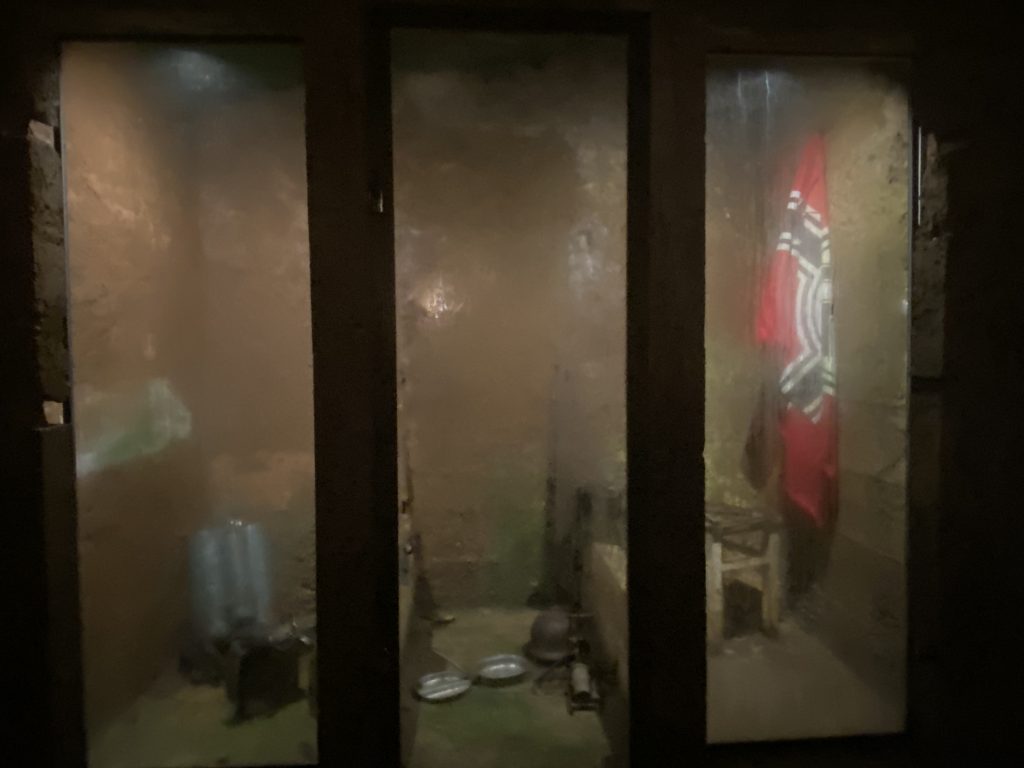
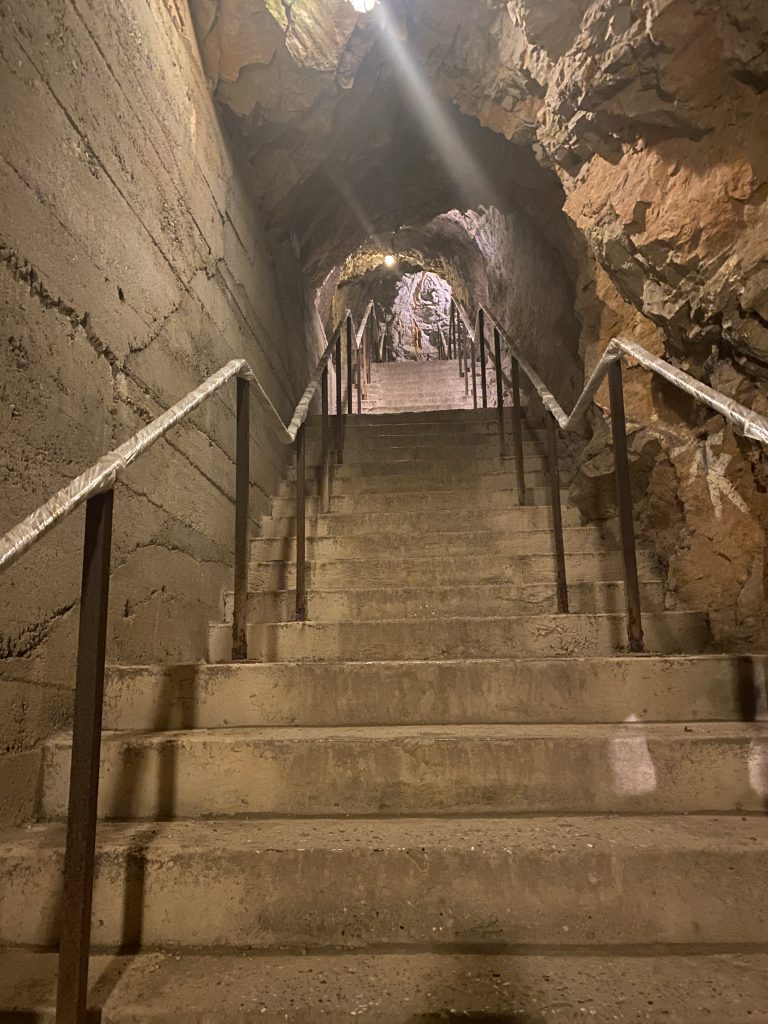
One unusual feature of the new castle is it’s bunker, added by the German occupiers during WWII. The entrance to the bunker is in the garden at the rear of the castle. The cool air in the bunker was well worth the hike up and down the stairs. However, I can’t help but think they could do more with the bunker. There was one glassed off room containing a few pieces of old WWII military equipment but the glass was covered in too much condensation to properly make all the items out.
Gosh, it was so cool down in the bunker.
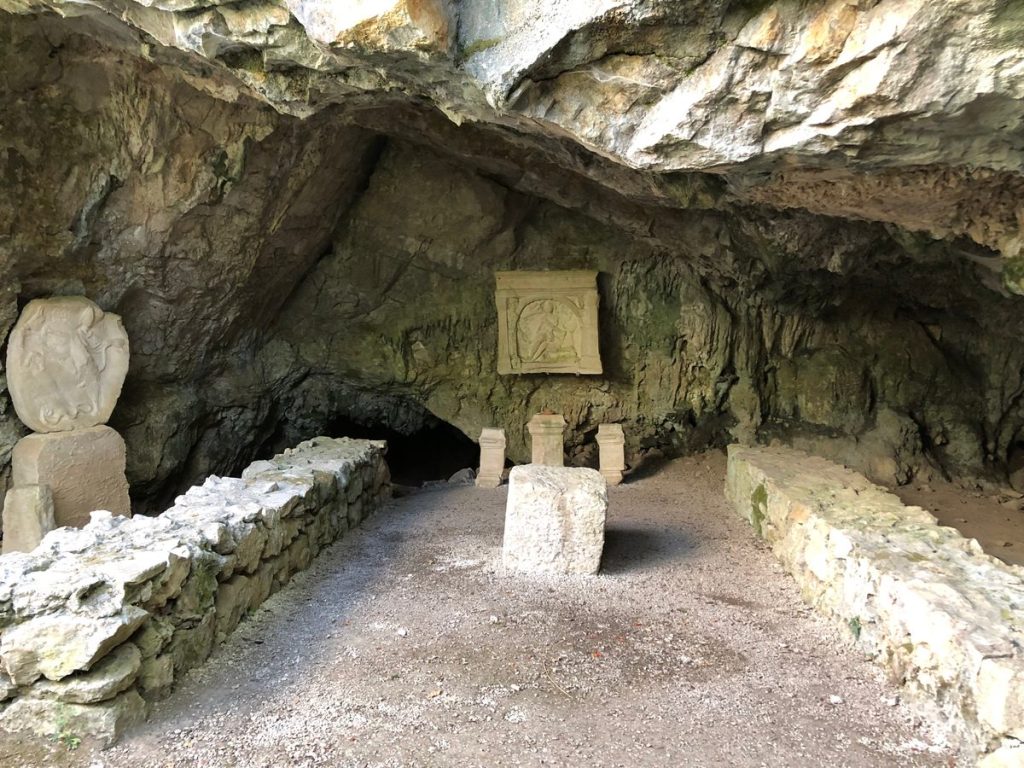
I didn’t get to it but cut into the rocks just above Duino is a small 1st century BC temple to Mithras. This religion was a Persian religion championed by Roman soldiers.
Temple to Mithras
That’s a rather abrupt ending to this post but I’m running behind time. Vanya is ready for wine….
The drive to Crnice took us no time and we passed two favourite places of mine on the way – Lake Bled and Postojna.
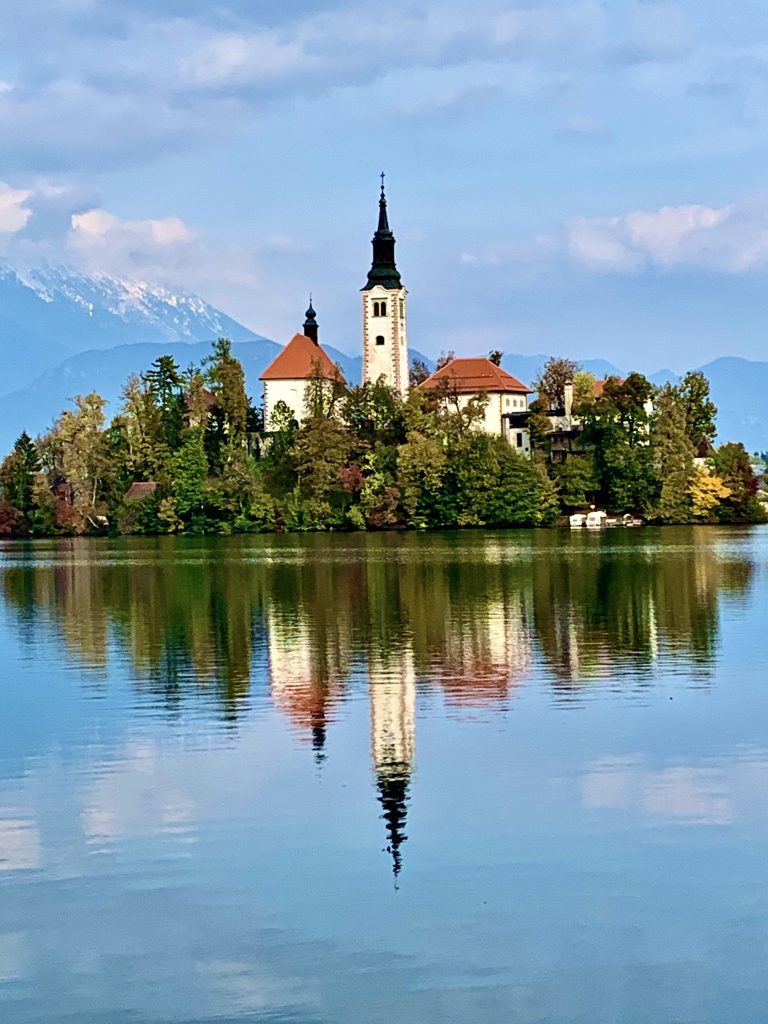
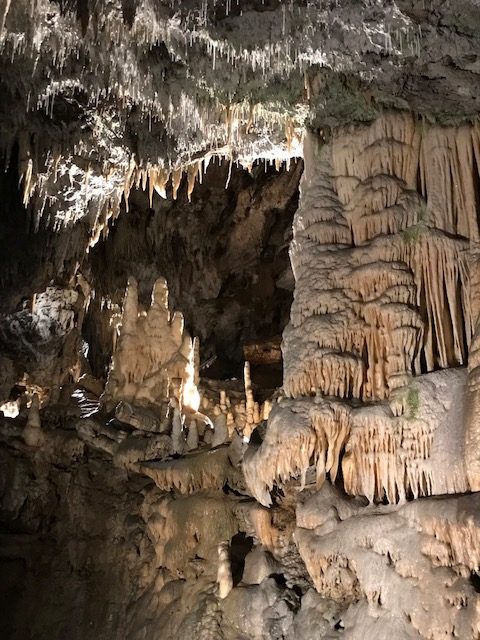
Lake Bled (with its Pilgrimage Church of the Assumption of Mary) and the Postojna Caves
We had booked into the Camp David site in Crnice for two nights because in July and August it is very difficult to find accommodation almost anywhere in Slovenia (or Croatia or Italy for that matter – it is the holiday season) and the prices are ludicrously high. This inland site was to serve as a base until the weekend when we would move into a hotel in Padua in Italy for a couple of days.
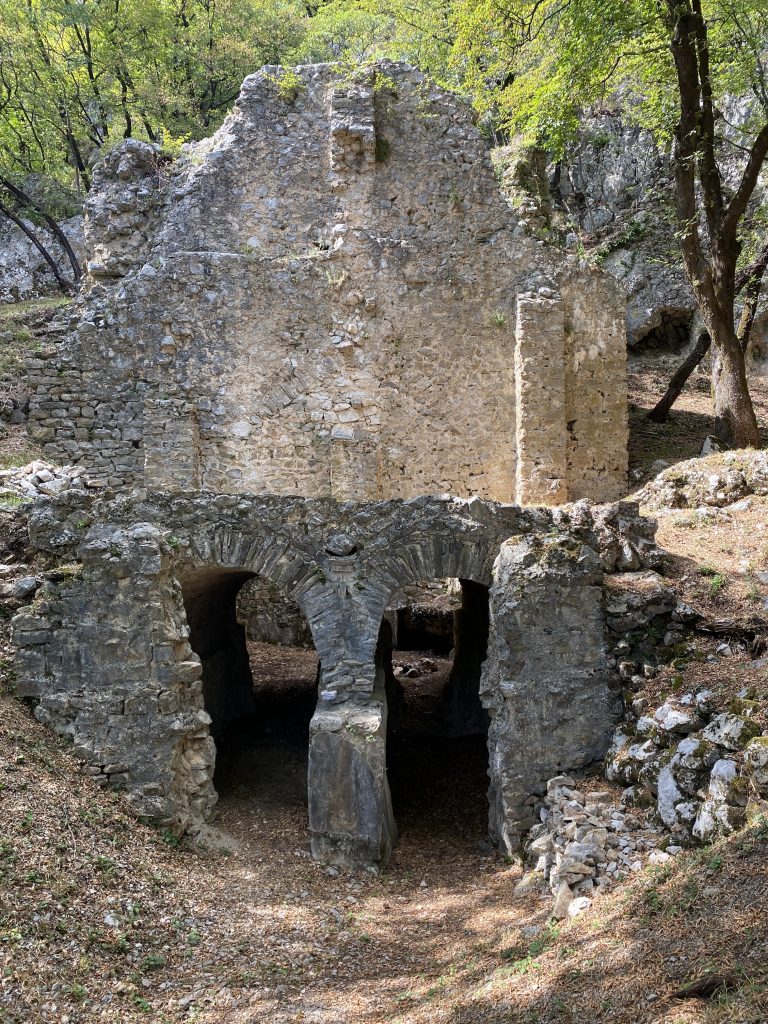
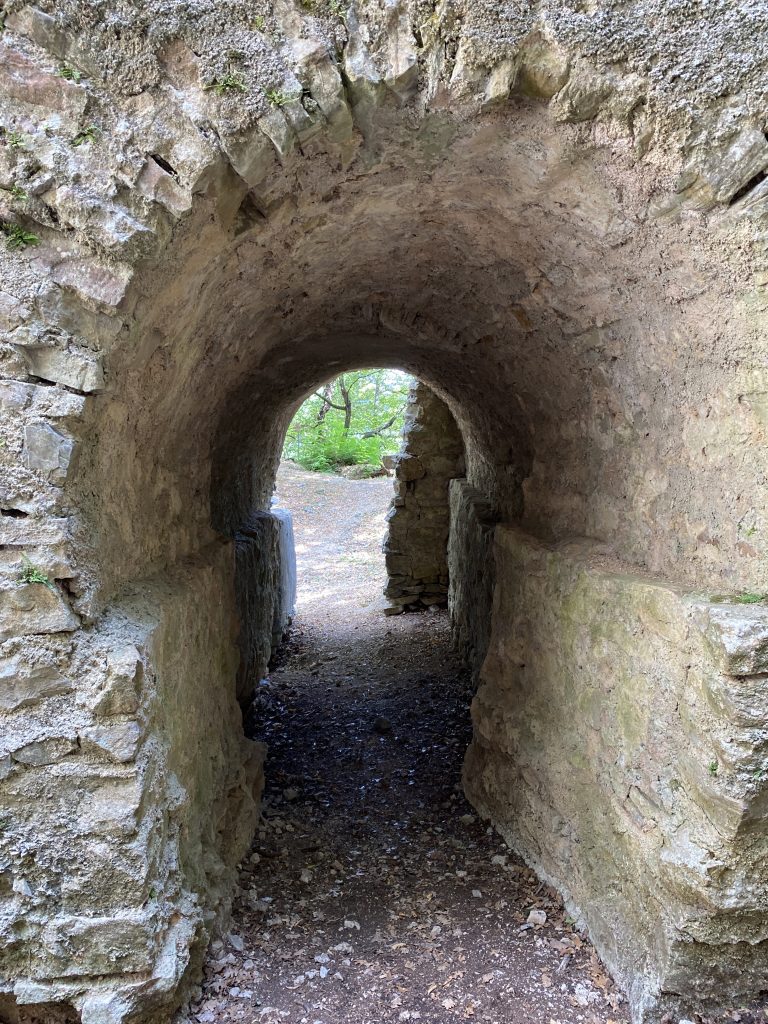
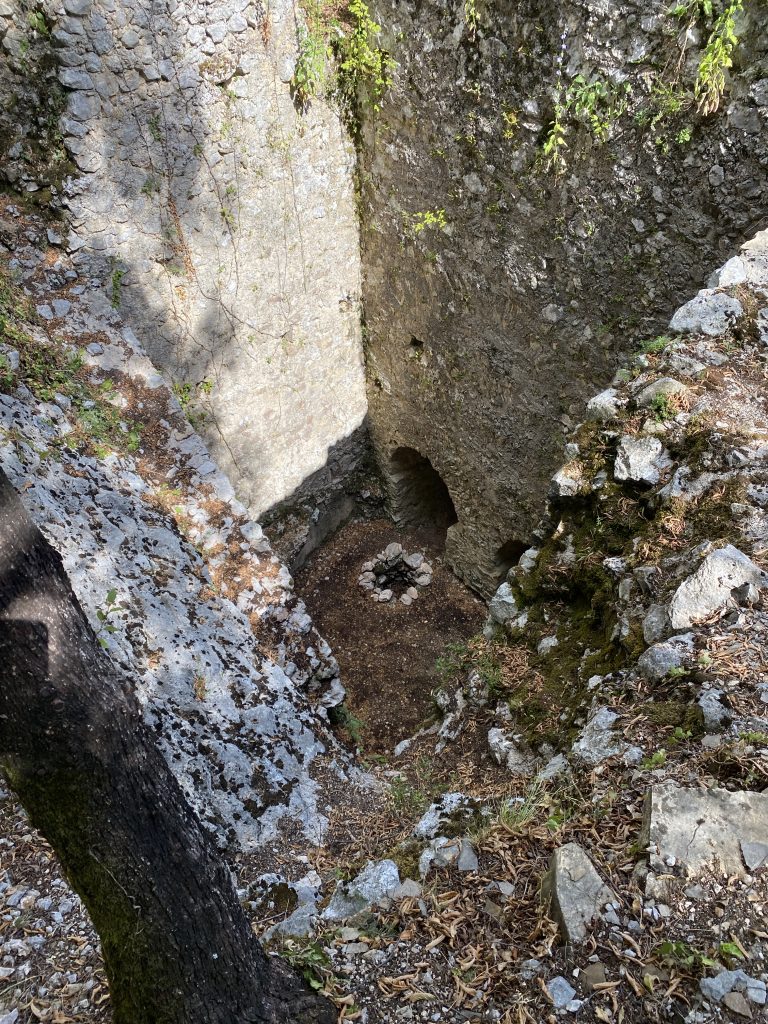
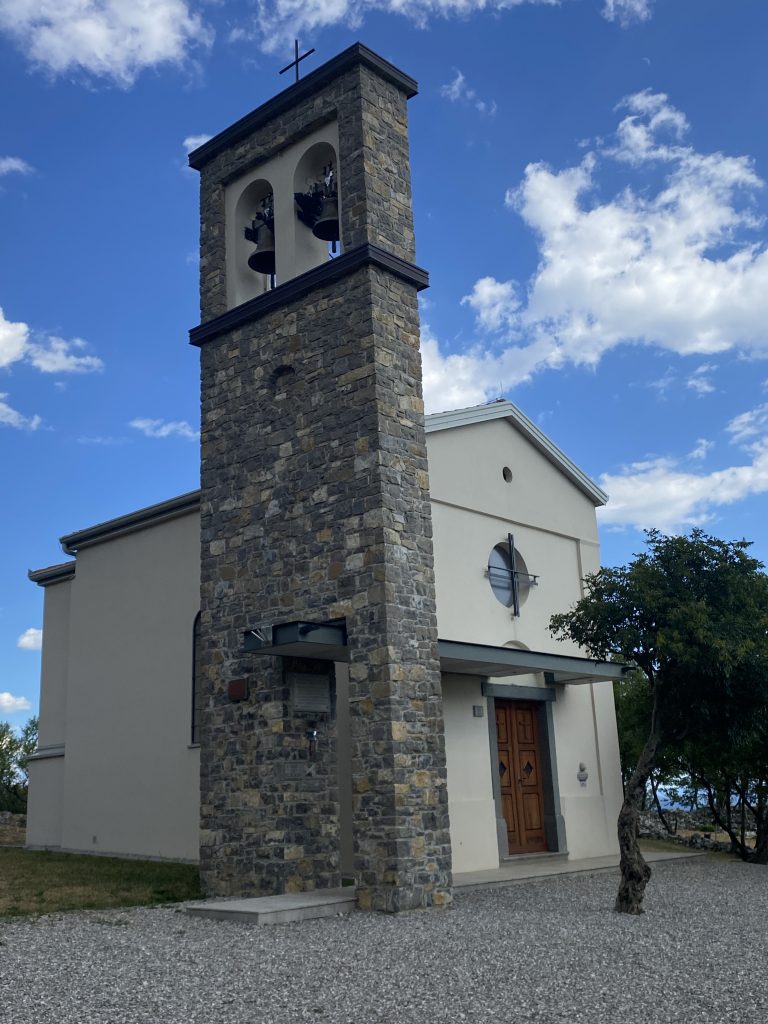
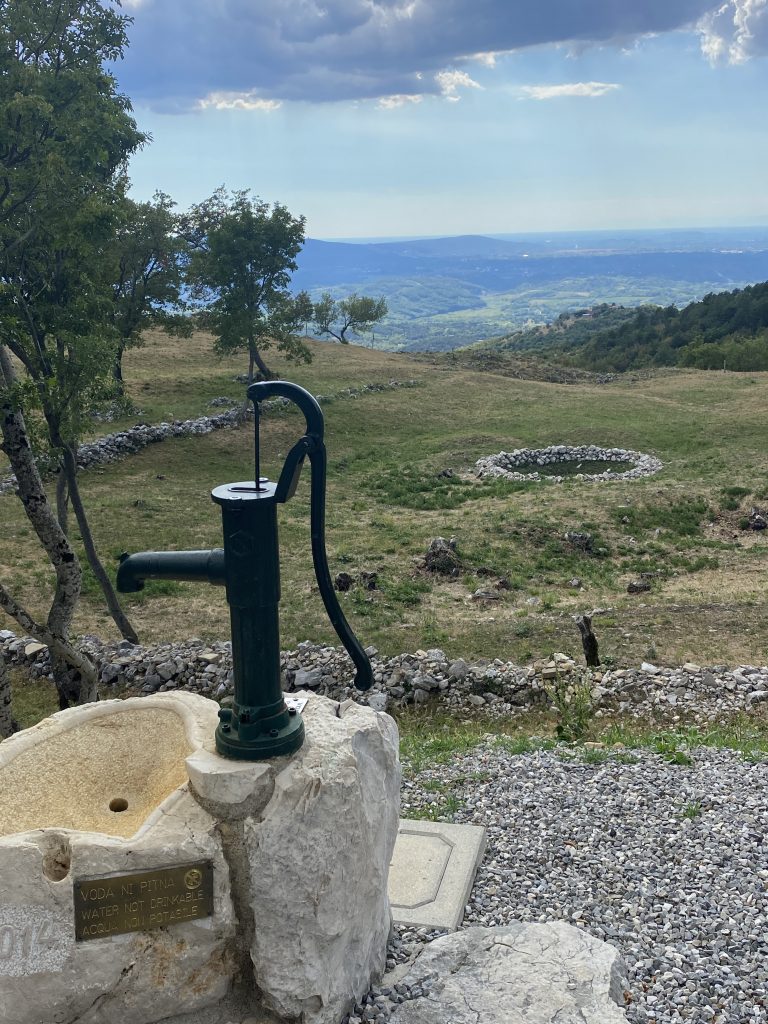
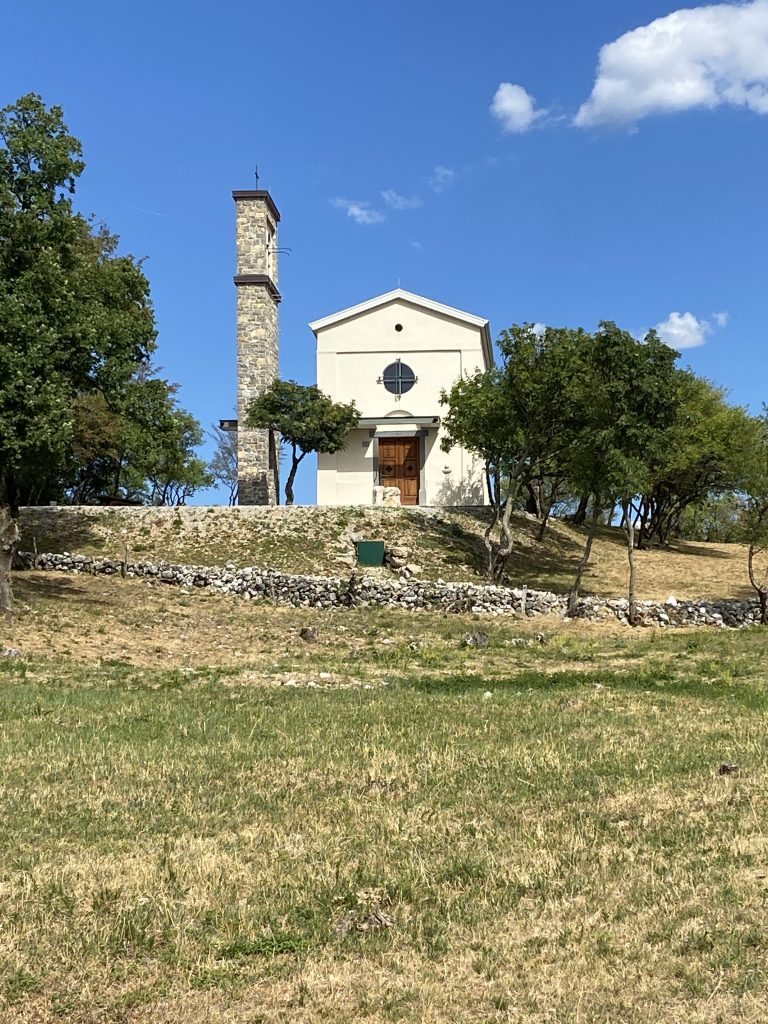
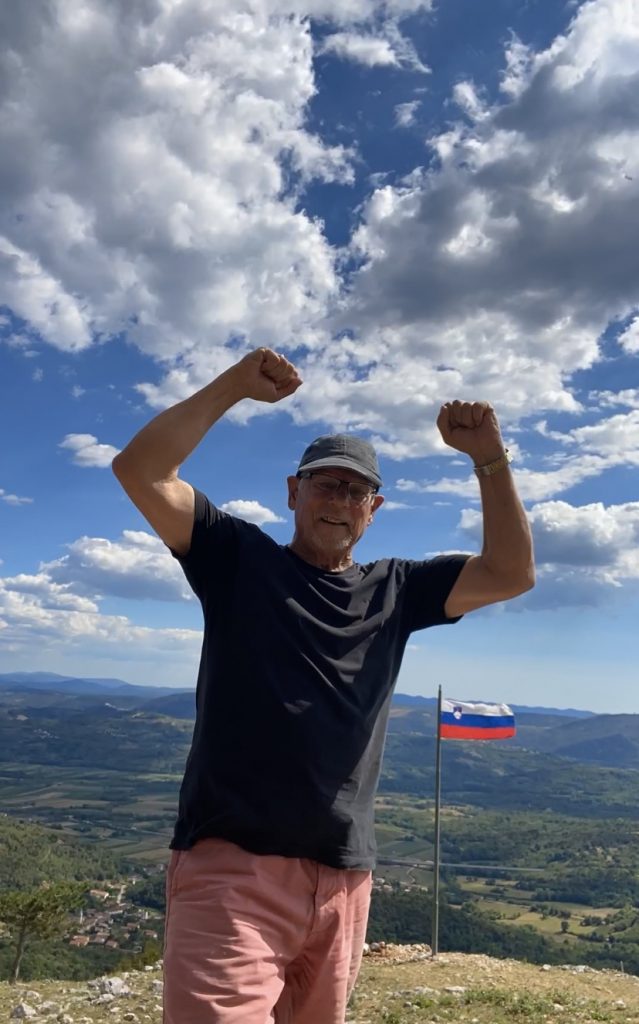
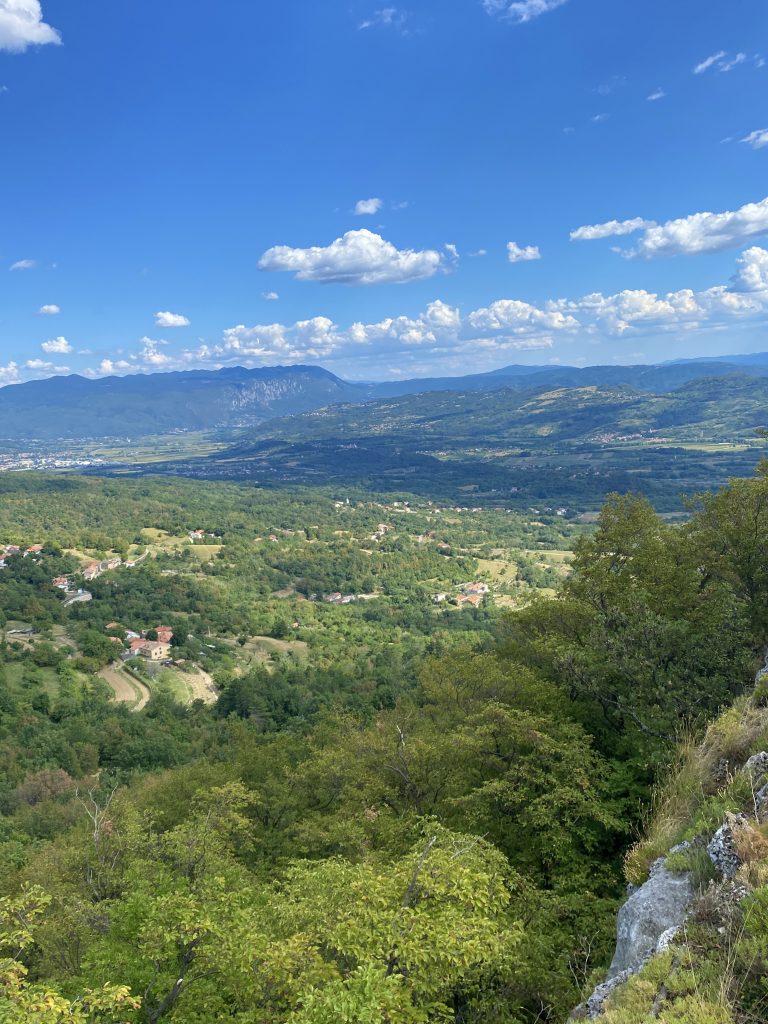
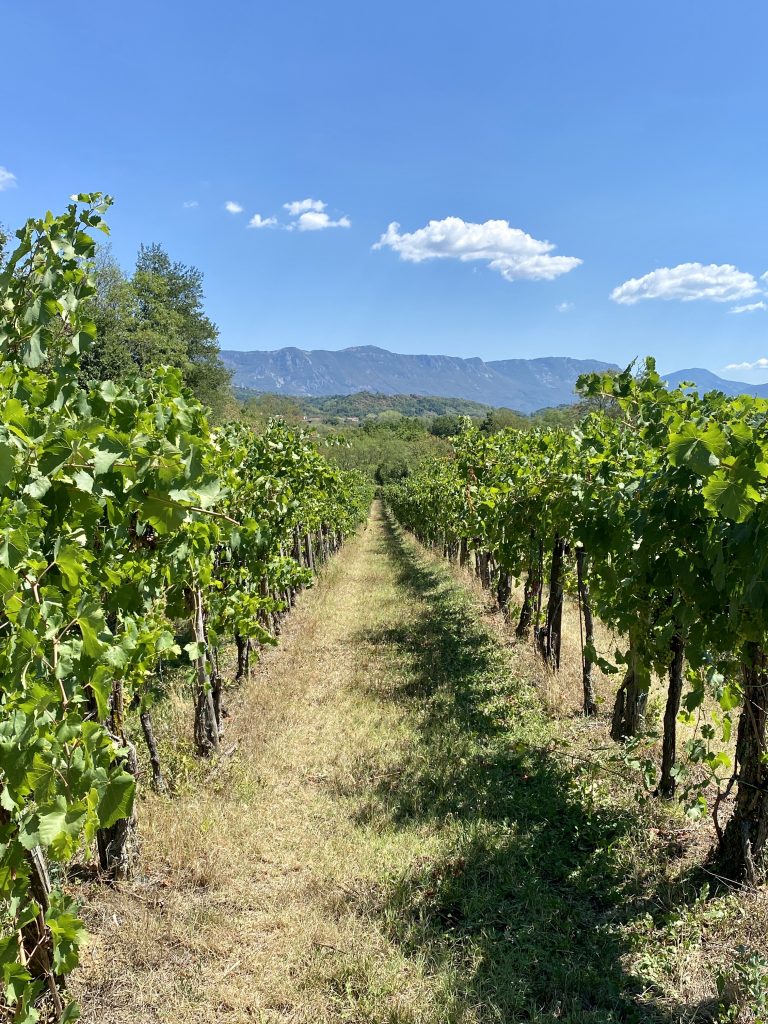
A local I met at Camp David told me about an old iron age fort up on the hills behind Crnice and I thought to take a look. It took about 40 minutes for me to find the place. There is nothing left of the fort which used to stand on this hill, now known as St Paul’s Hill after the small chapel which was erected there in 1946, but it is a pretty spot with some fine views down into the Vipava Valley. Also, on the way up to the old settlement there are the remains of an old Roman (5th century) water tower. I carried on from St Paul’s Hill up to the top of Zasod Hill but it really wasn’t worth the extra effort. I’ve not been able to discover much about the old settlement although it seems that people were living here 2,000 years ago and in the 5th century the population of Ajdovscina (then the second largest town in the valley) withdrew to the hill for safety after the Huns attacked their town.
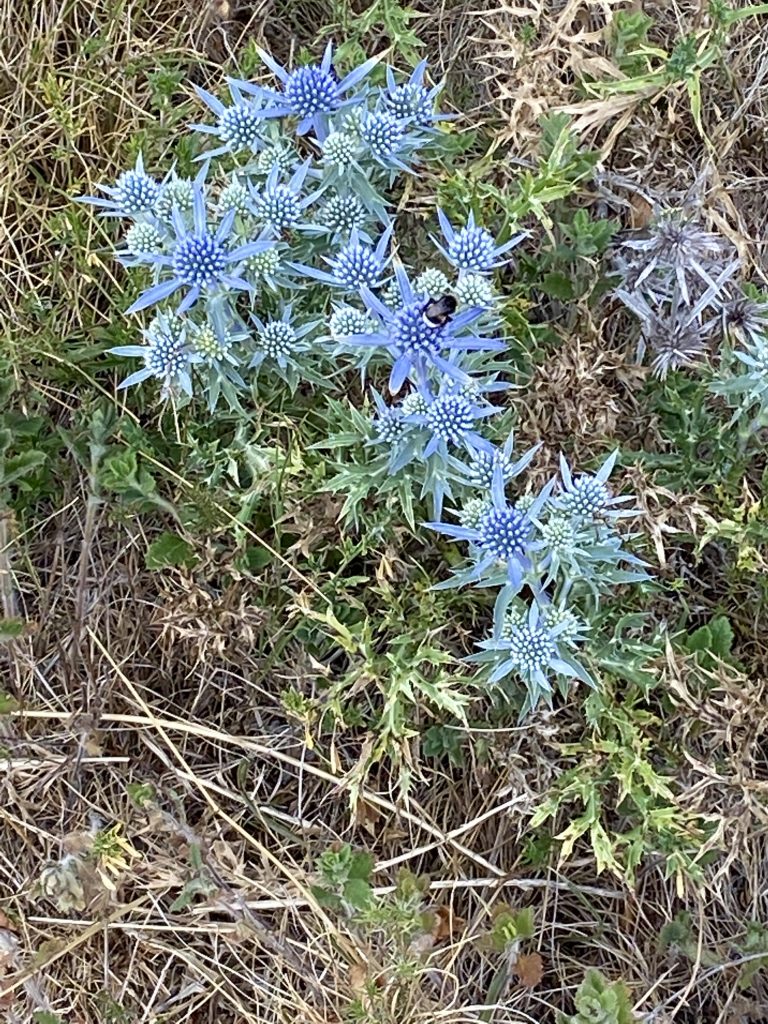
The water tower. You can see the small well in the last photo taken from up on highThe St Paul’s Chapel.Up top. The blue thistles are Eryngium or Sea Holly
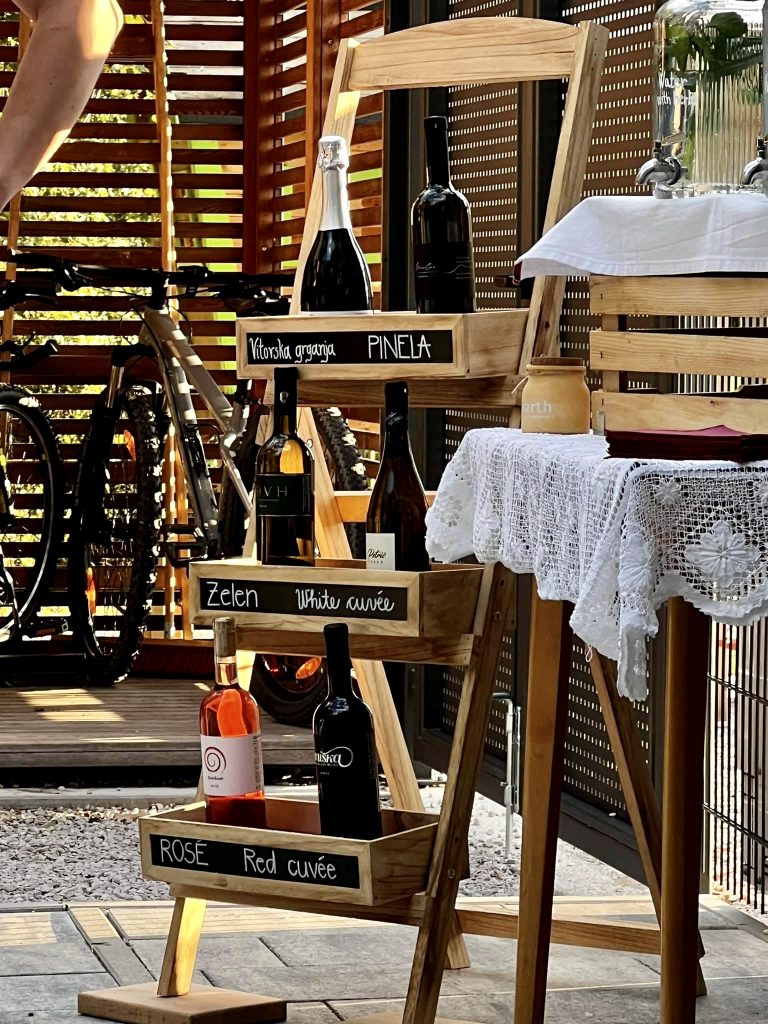
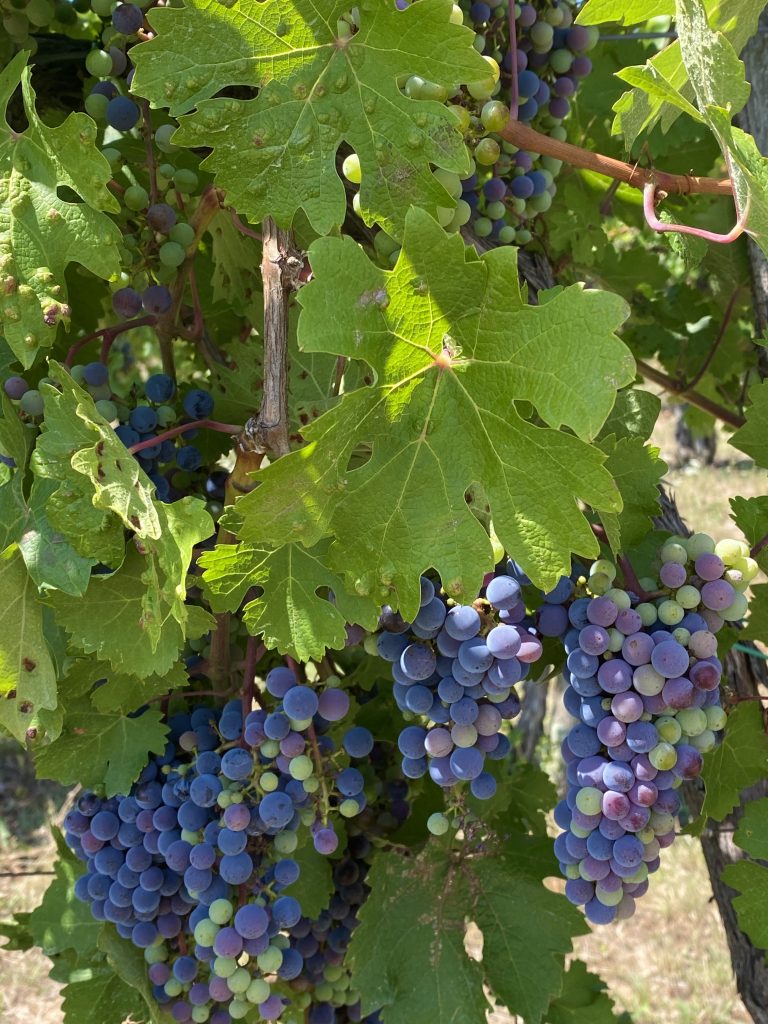
It was a day “of some small energy expenditure” and I was ready for the wine tasting we had committed to at Camp David that evening. Over a period of 1.5 hours we sampled and reviewed 6 local wines, including two which are peculiar to the Vipava Valley (the Zelen and the Pinela) but, while all were surprisingly good, the best of the day for me was a Barbera Merlot cuvee which was outstanding. It seems the Vipava Valley has a number of unique premium wines but, with the vineyards all being so small they can produce only a limited yield and so are relatively expensive.
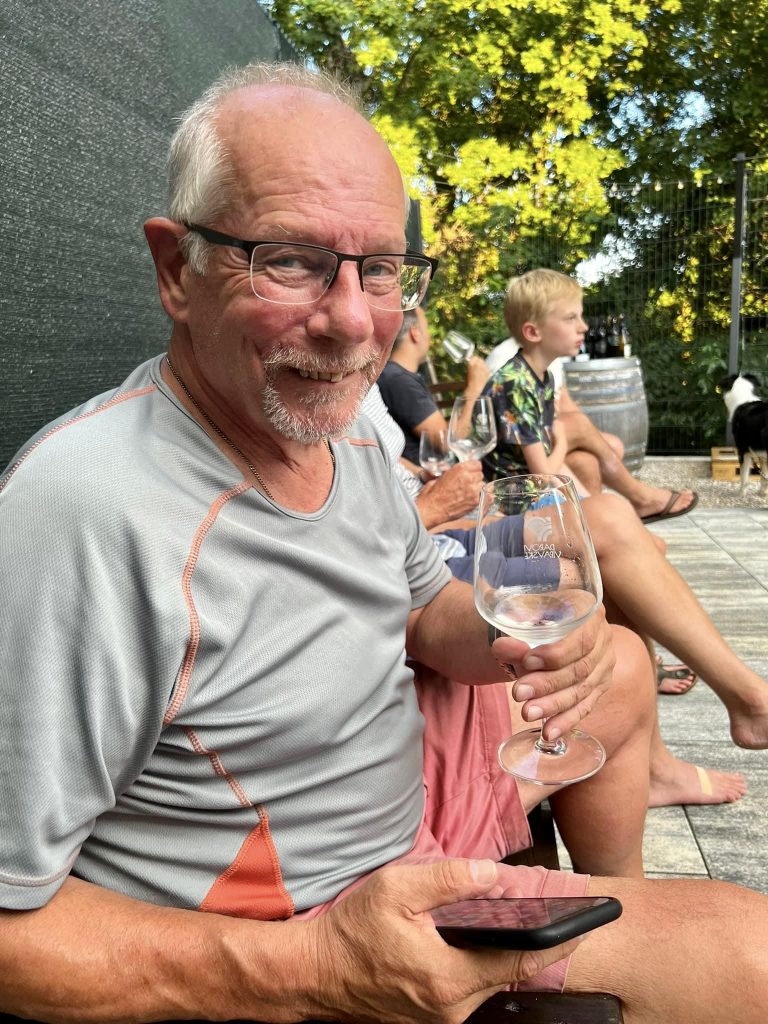
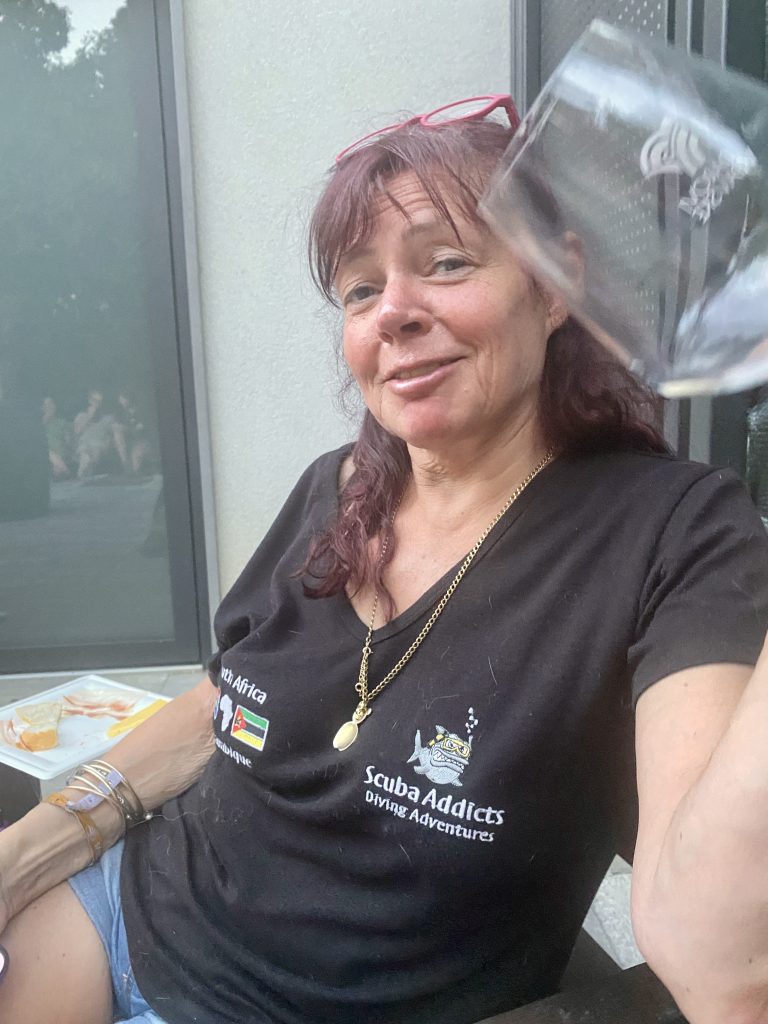
Wine tasting. It looks as if I’ve had too much and Vanya is ready for more lol.
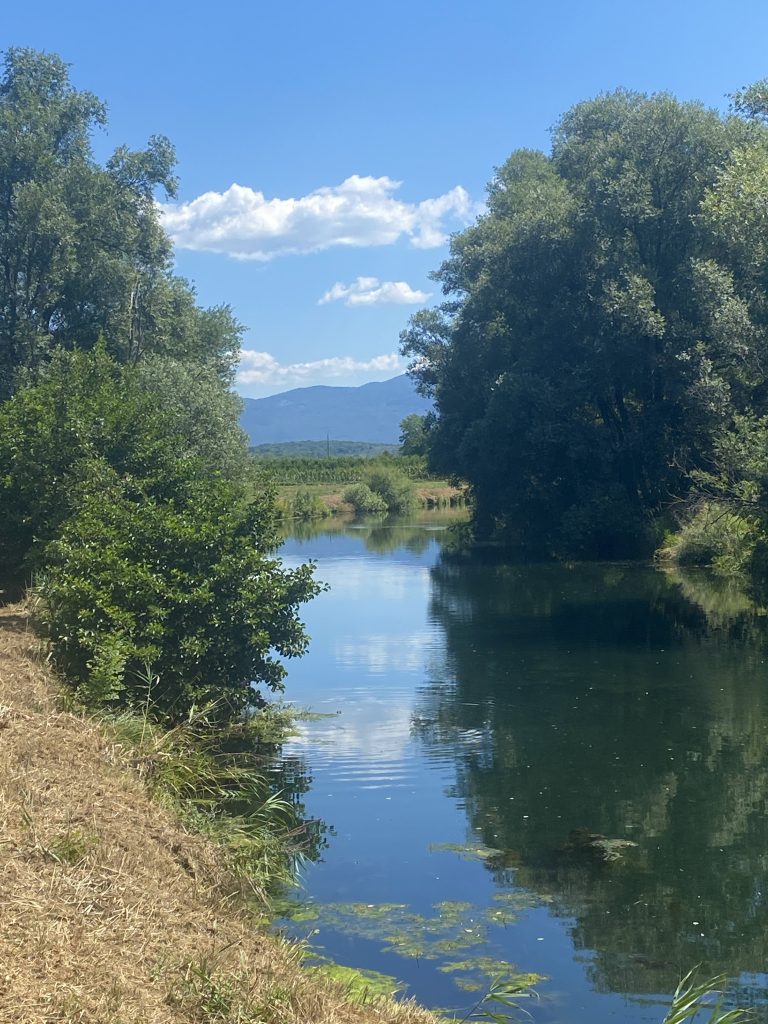
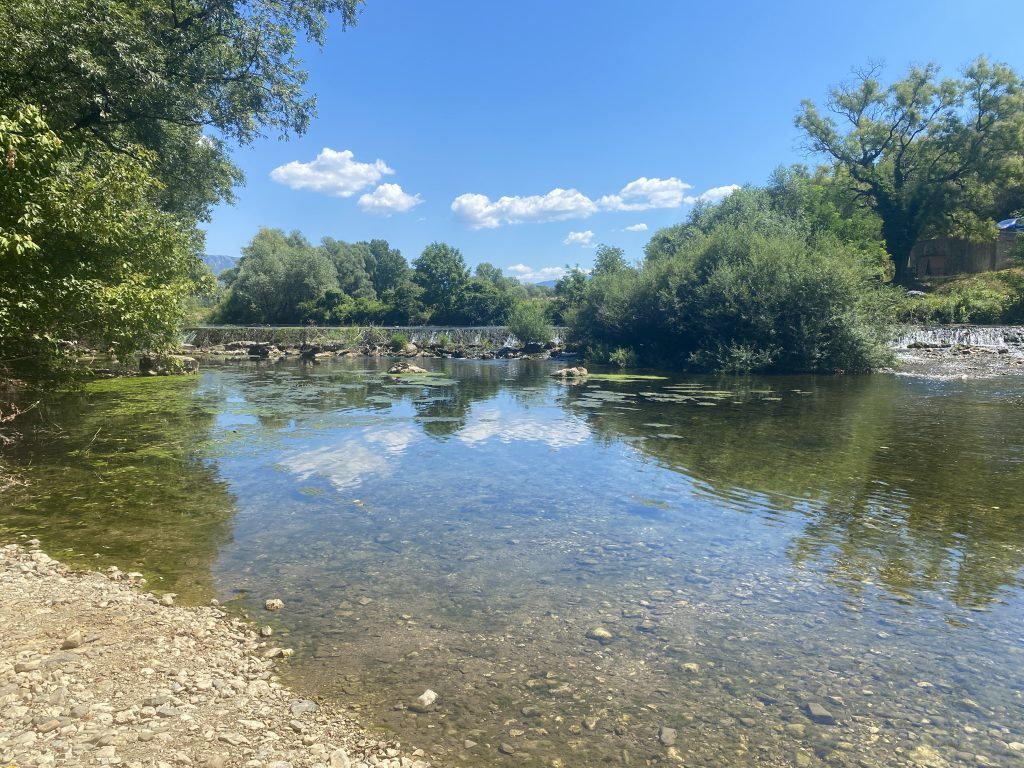
The weather during our second day in Crnice was even hotter than the first, getting as high as 37 degrees centigrade. It would have been cruel to take the dogs out in that sun. Leaving Vanya with the dogs in the Van with the air conditioning on (so pleased we bought that before leaving the UK) I went off in the direction of the Vipava River to see if I could find a swimming spot for the dogs later in the day. I found a good spot on the river but it was simply too far away for the dogs to walk even late at night. At nine o’clock in the evening it is still up in the high twenties.
Memories of last night’s wine tasting everywhereThere’s the River Vipava but, ever had that feeling you are being watched?A perfect spot for the dogs
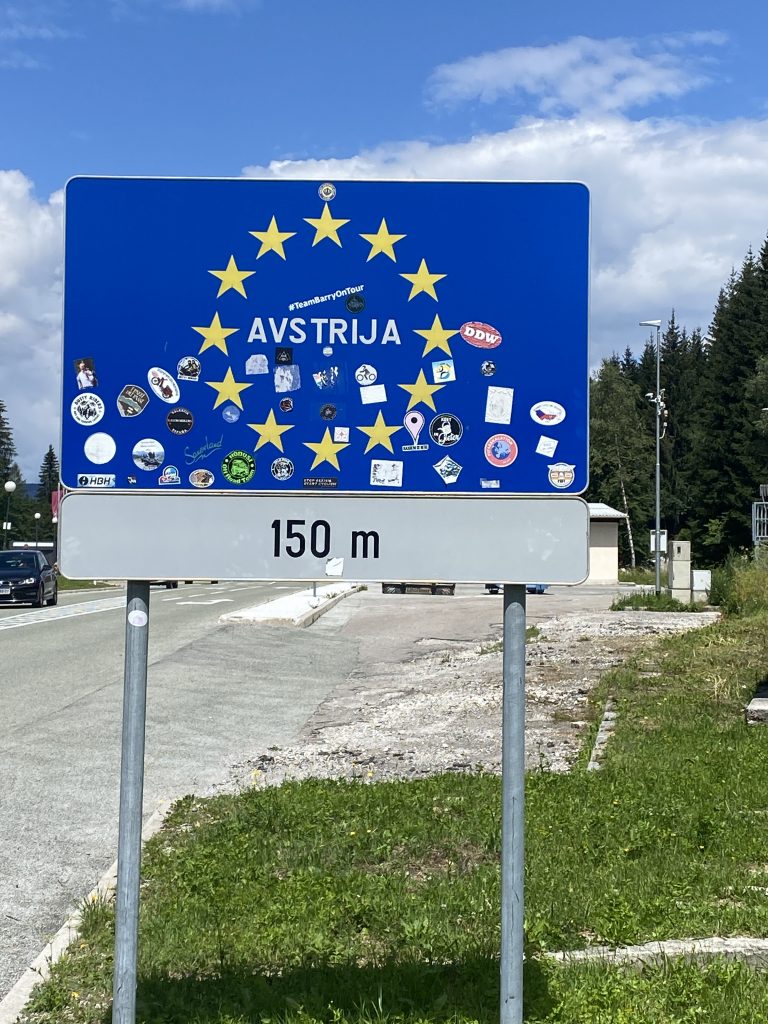
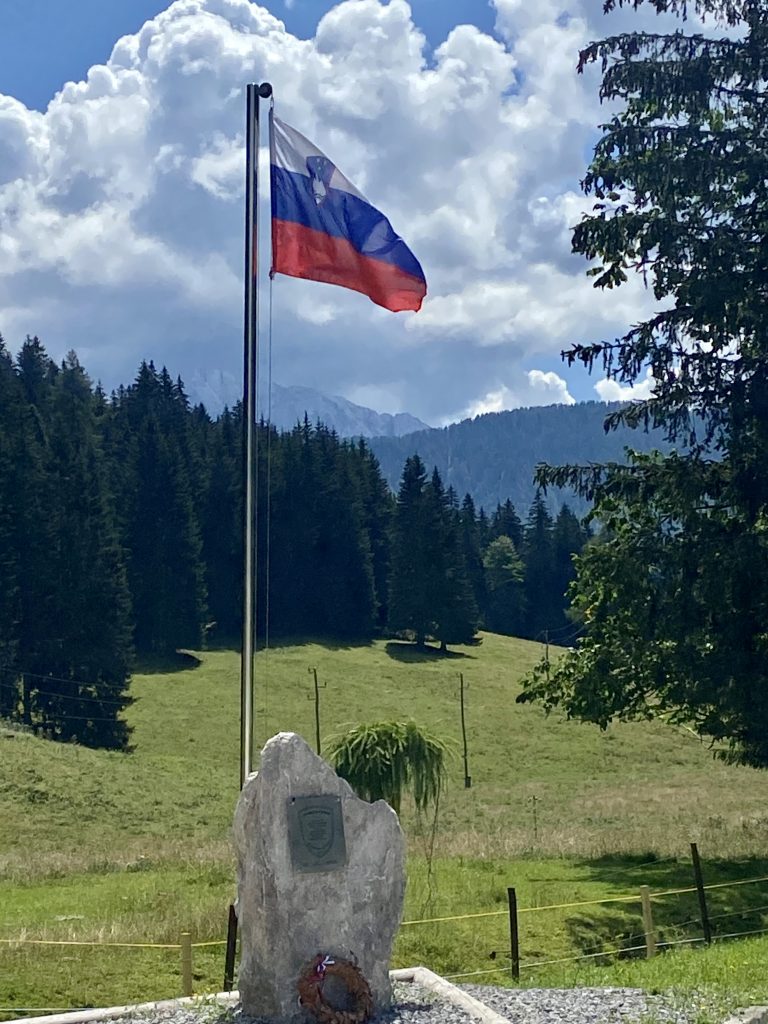
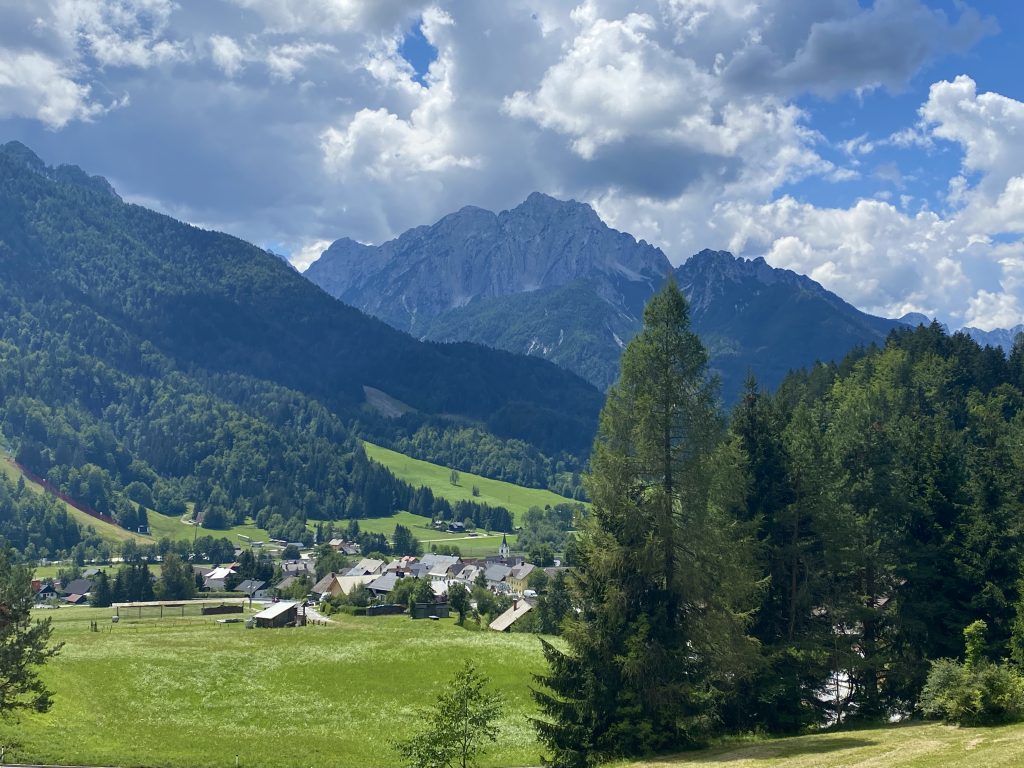
Crossed into Slovenia via the Wurzenpass (1,073 metres) which links Austria’s Radendorf (near Villach) with Slovenia’s Kranjska Gora. This route is quite steep (18%) with plenty of bends but it rarely presented us with any exposure (no matter what Vanya says). It certainly beats the Karawanks Motorway Tunnel and there’s no toll. There is a reasonable viewing point just after the summit which provides great views into Slovenia.
A last look back towards Austria and then it is onwards into SloveniaThat’s a photo of Slovenia from the first layby after we crossed the Wurzenpass
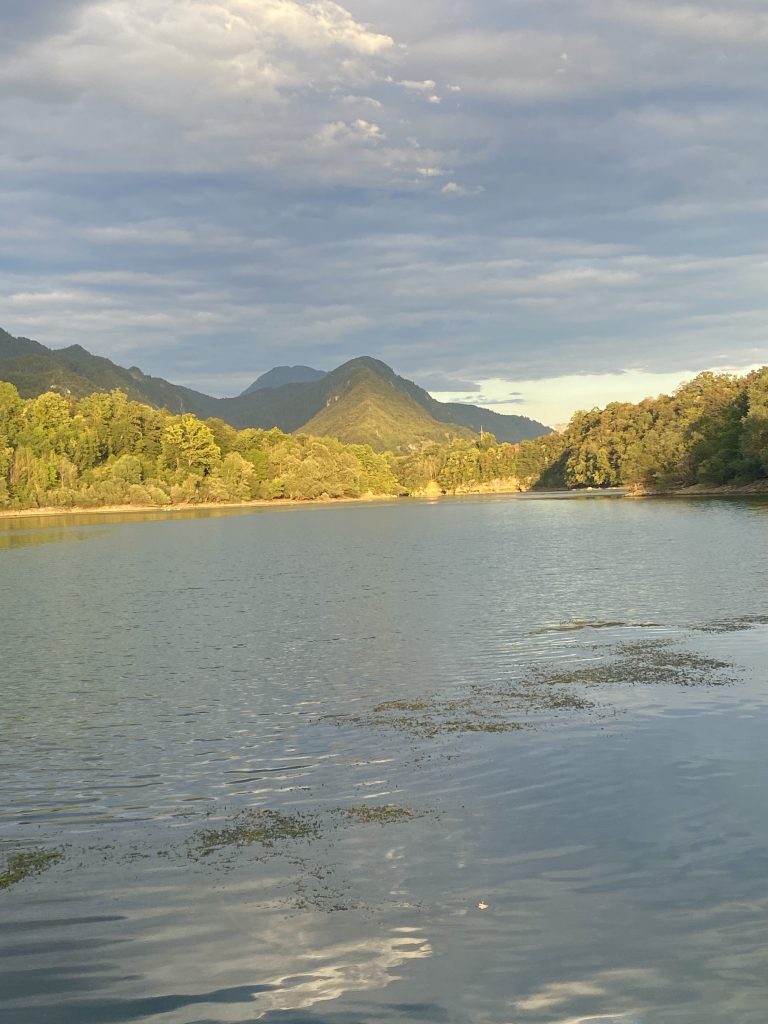
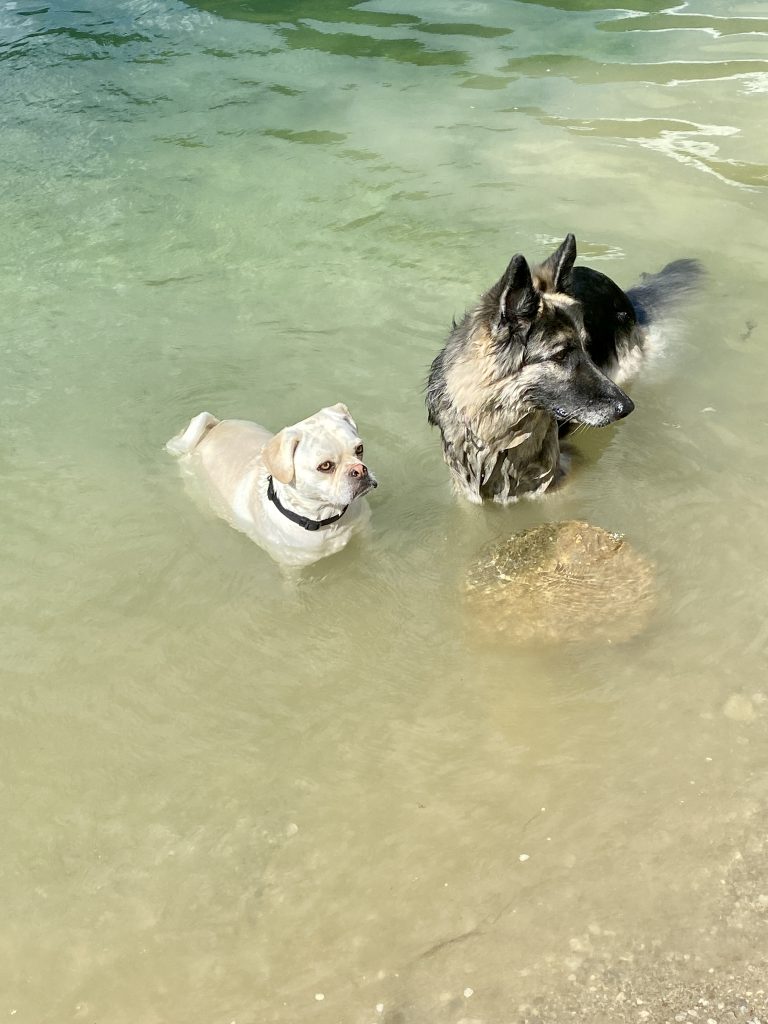
We changed our mind about going into Croatia. It’s packed with tourists during July and August and campsite and hotel prices have already quadrupled. We’ll leave Croatia until next Spring when prices return to something approaching normal. Italy was our fall back position but on a whim we decided to stay in Slovenia for a few days and checked into a campsite on the Sava Dolinka Lake near Lipce. This particular site (Campsite Perun Lipce) has it’s own beach on the lake and professes to be dog friendly. We’ll see…
Yes. That campsite works for us! The dogs, Beanie especially, were delighted to get into the water.
We were never going to stay long at Lipce because, there’s not a lot going on in the area unless you are into outdoor activities such as hiking, cycling or water sports (and Vanya has absolutely no interest in any of those) and; we’d already booked accommodation on another site over in the Vipava Valley, which valley is becoming very well known for it’s wines (and as everyone knows both Vanya and I are into wine).
And so to Crnice (near Ajdovscina) in the Vipava Valley. Time for some wine tasting…
We were late getting away from Enzesfeld (we had to tear ourselves away) and we hadn’t really settled on our next destination. Zadar in Croatia appealed but at this time of the year (July and August), prices in Croatia are trebled and that kind of extortion never appeals.
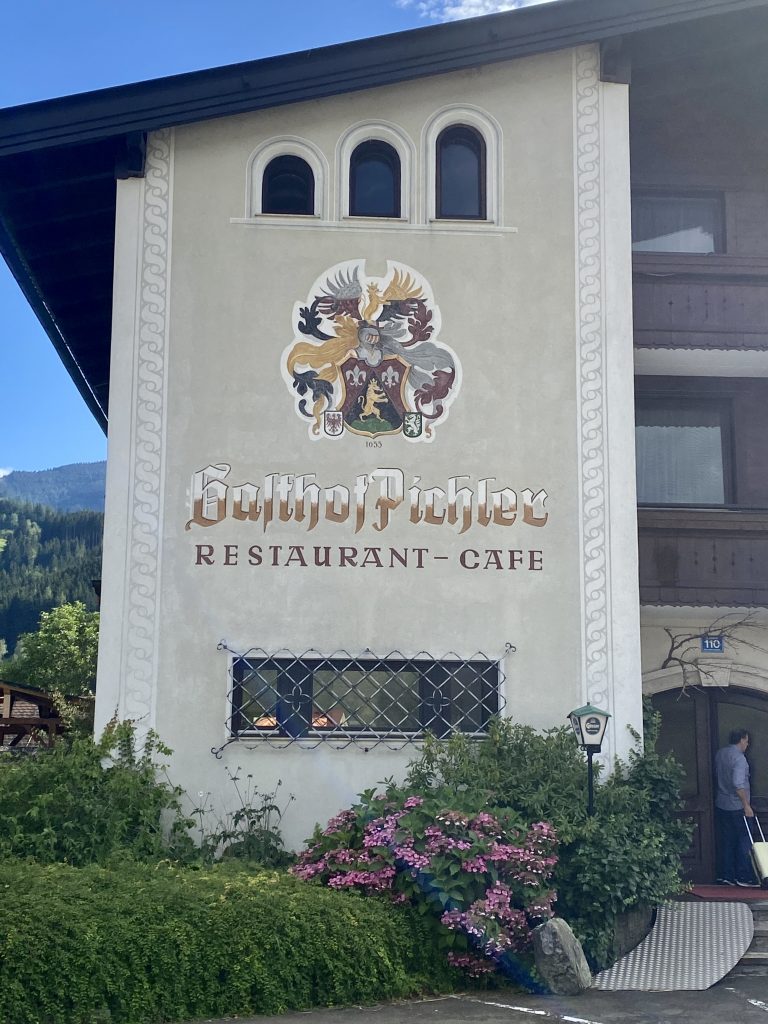
We headed south and made it as far as Oberaich in Styria. We had found a small campsite in the back garden of a Gasthof – Gasthof Pickler – and decided to stay the one night. They were charging a reasonable price for the local beer and a very good Gruner Veltliner and the menu looked good.
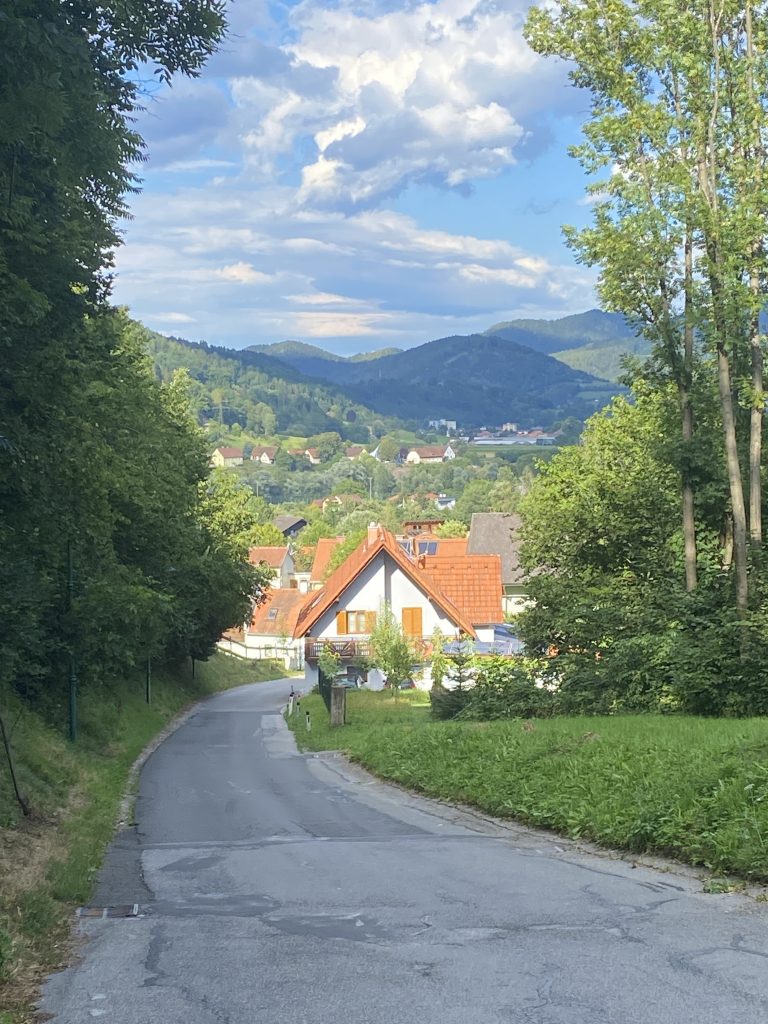
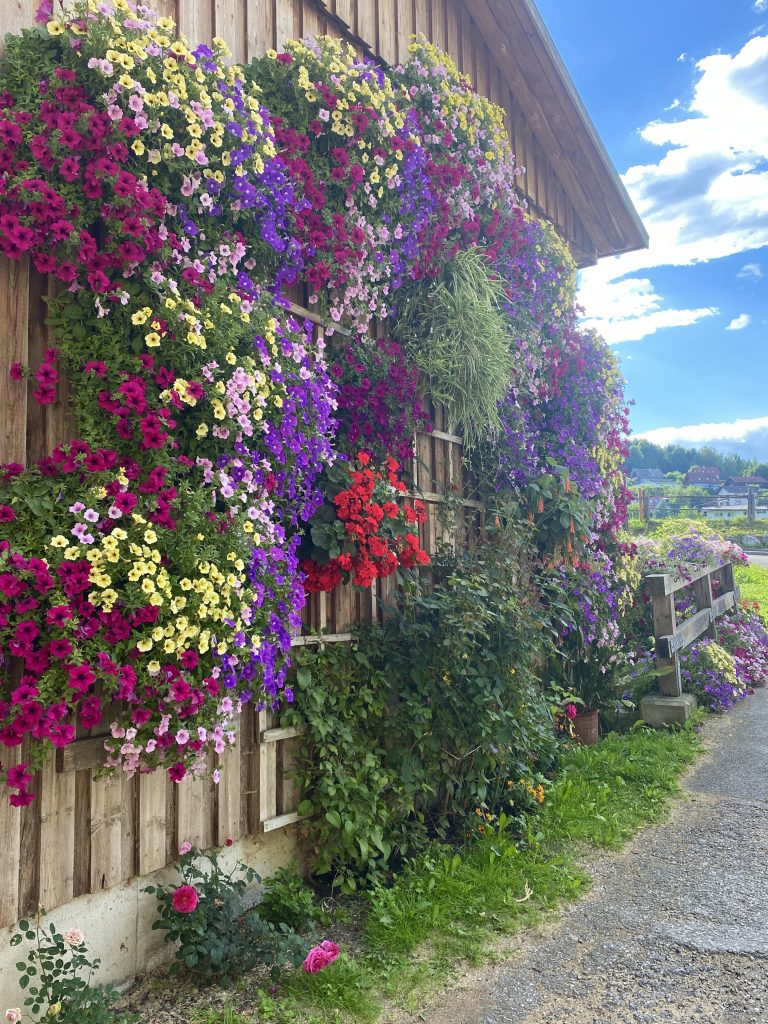
It was late afternoon. That gave me time for a brief walk and a couple of beers before dinner. There is very little to Oberaich (other than a furniture store and a rather dilapidated Roman bridge) but, further along the road, up in the hills is another slightly larger hamlet known as Utschtal which provided nice views into the valley and, better still, has to be a serious contender for the village with the best kept gardens in Austria. Some of the gardens are stunning.
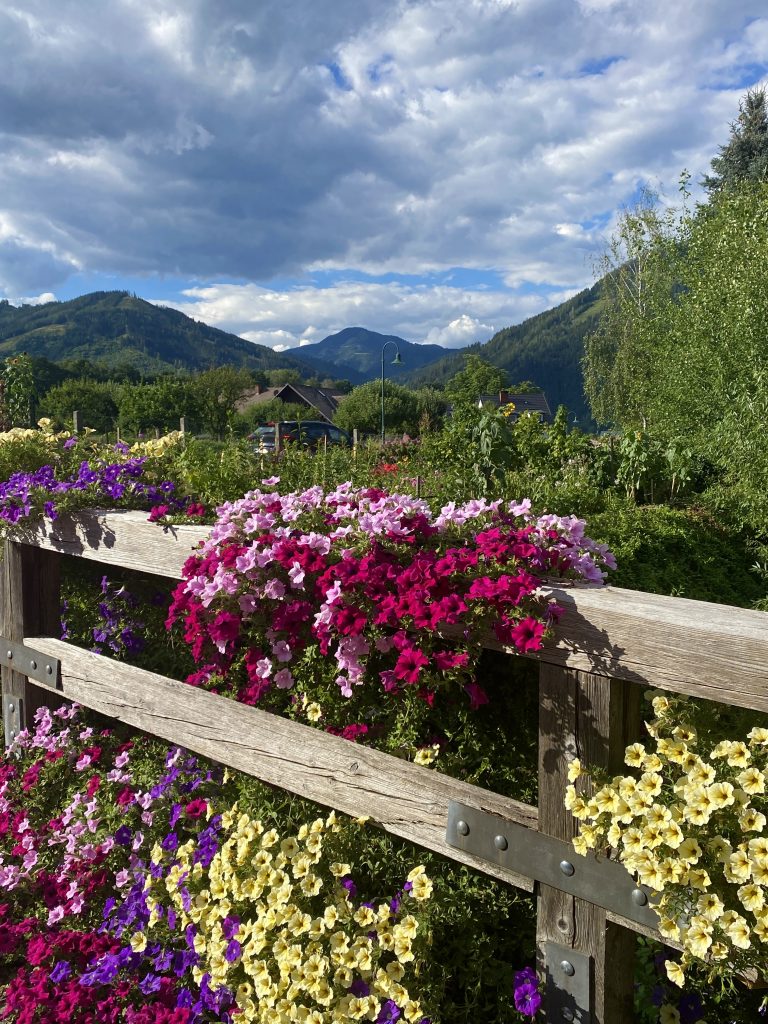
Views from UtschtalSome of the gardens were a riot of colour
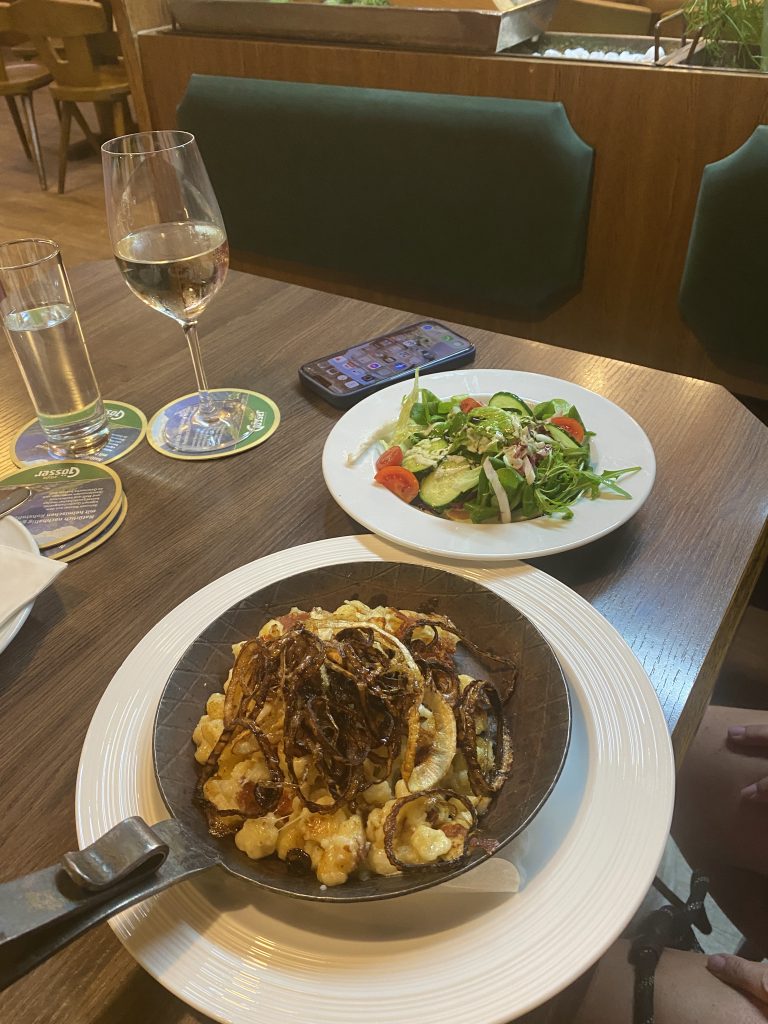
And then it was back to Oberaich and the Gasthof Pickler for some beer and food. What a great find the GP was!
Our last visit to Enzesfeld, just a week ago, saw us catch up with our good friends, the Dedics, and take in trips to Eisenstadt, Rust and Baden bei Wien. This next visit was no less interesting with the added attraction that our daughter had arrived from the UK for the weekend.
A number of wine heuriges were now open and we took full advantage of that during this second 3 day visit. We also visited Hinterbruhl and the pretty little town of Gumpoldskirchen and the small village of Holles (all conveniently located in Lower Austria).
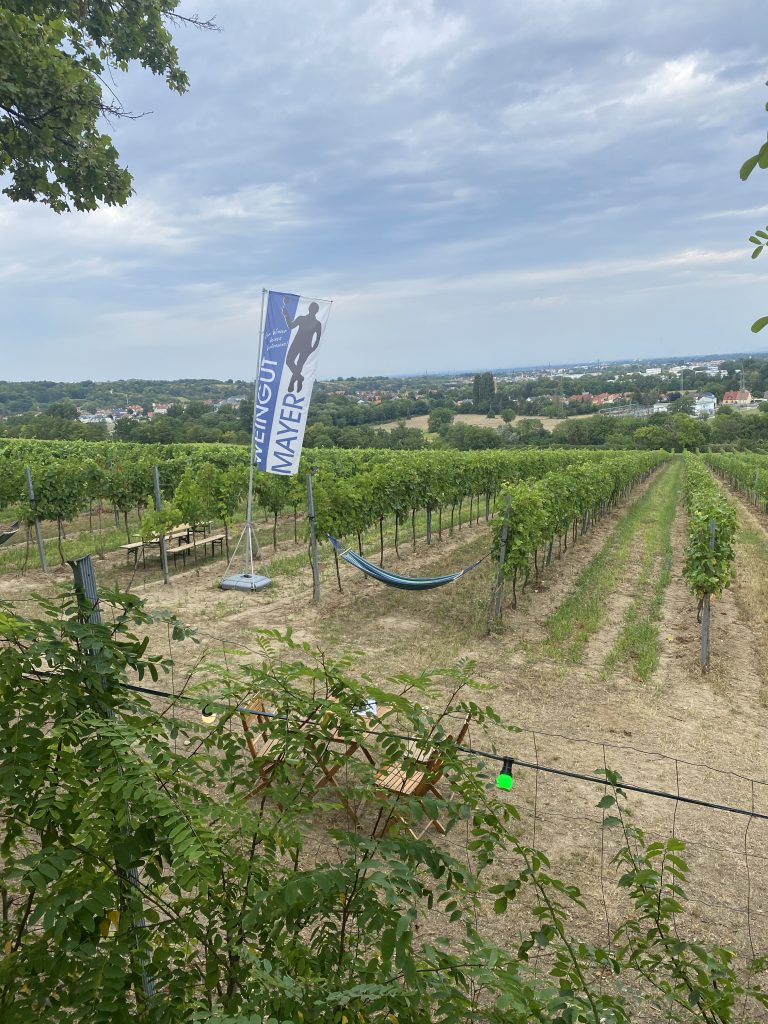
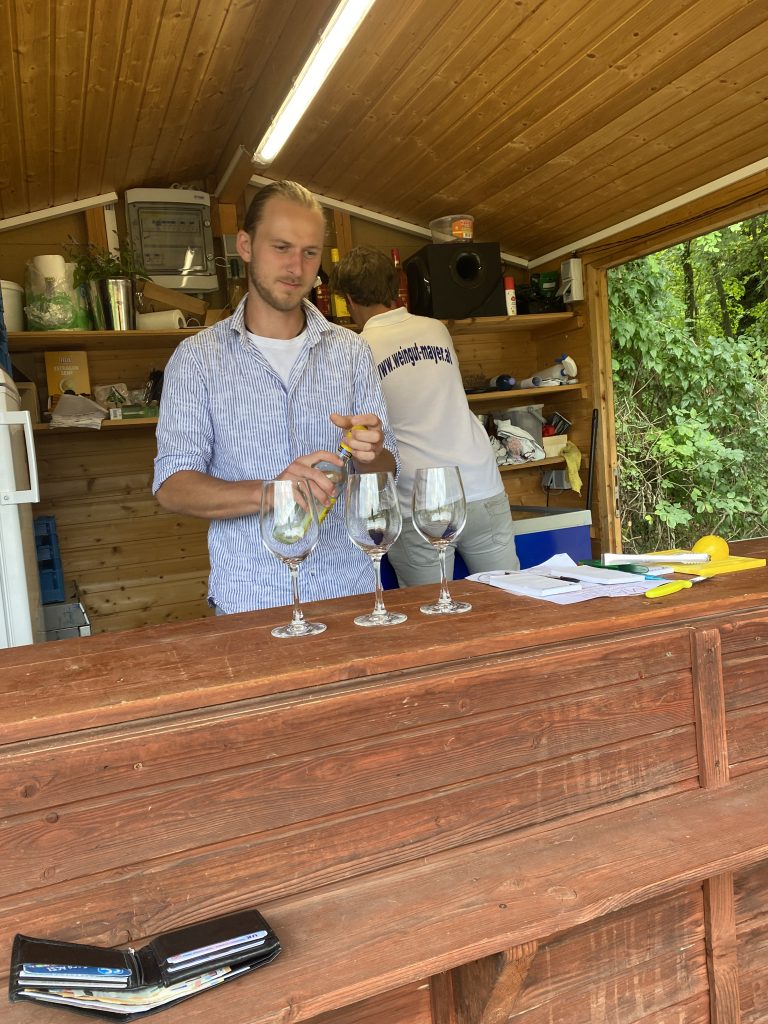
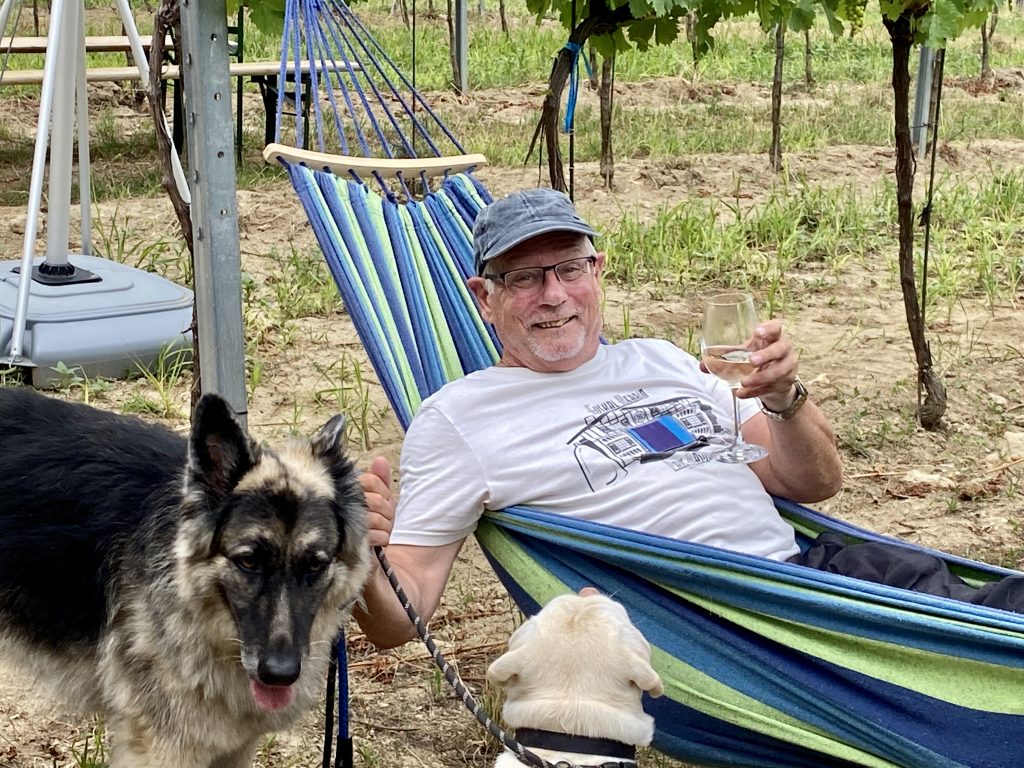
Starting with Enzesfeld itself; while Vanya disappeared into Vienna to meet up with Rohan, the rest of us (Clare, Alex and Niki – Gerhard was still in Abu Dhabi on business) took the dogs for a walk and then, joy of joys, we stumbled on a pick-nick (that’s German for a picnic, as if you couldn’t work that out) but this was subtly different. The Weingut Mayer in Enzesfeld had opened for business in their vineyards (as opposed to back in the town heurige) with a wine tasting picnic.
Vanya met Rohan in Vienna while we all enjoyed Meyer’s pick-nick…… but it wasn’t all easy, I had to dog-sit.
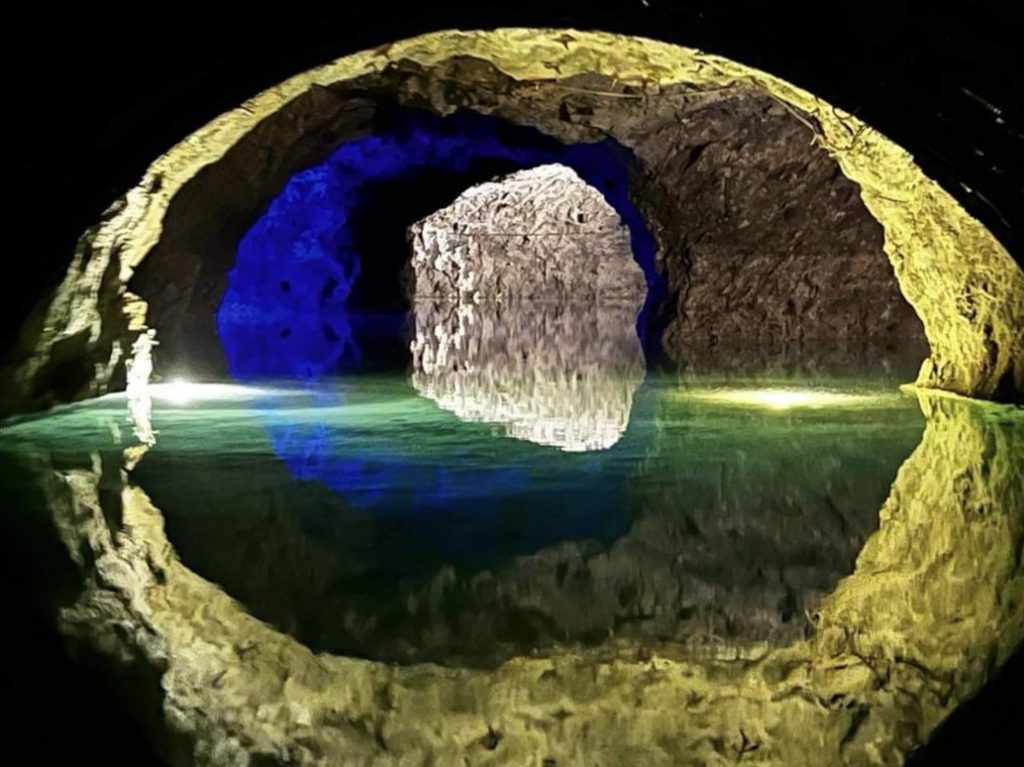
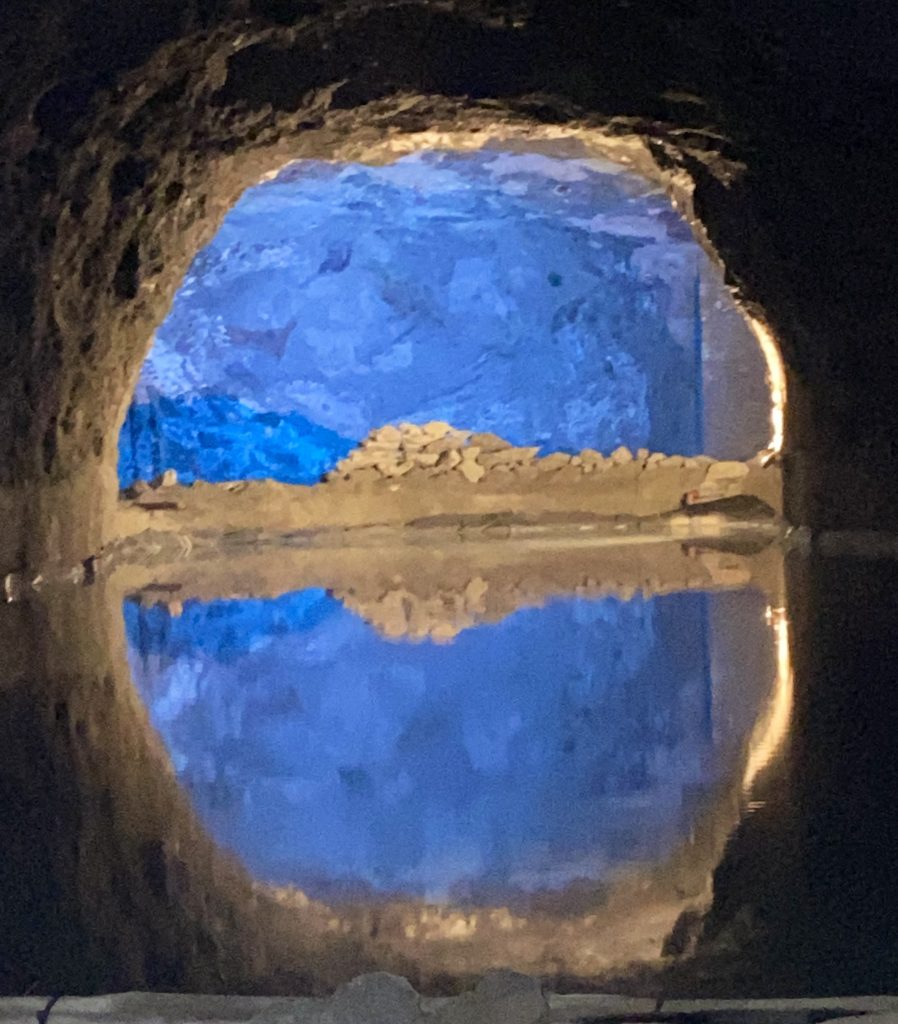
Hinterbruhl is a small village 12 miles south west of Vienna. Now, it is almost a part of Vienna. It is said that Franz Schubert wrote Lindenbaum in Hinterbruhl but there is no documentary evidence of that. More certain is that it is home to Europe’s largest known underground lake, the Seegrotte. The lake was formed in 1912 when a huge explosion rocked numerous caves which had been dug under the village in the mining of gypsum. The explosion released millions of gallons of water which flooded the lower caves and formed the lake.
Mining was immediately discontinued following the explosion but some of the upper tunnels and caves were reopened during WWII as a satellite camp for Mauthausen Concentration Camp. Engine parts were produced here for the fledgling lightweight (almost disposable) jet fighter know as the Spatz or, in English, the Sparrow (the Heinkel 162). There’s a memorial above ground for the concentration camp inmates here who were all murdered.
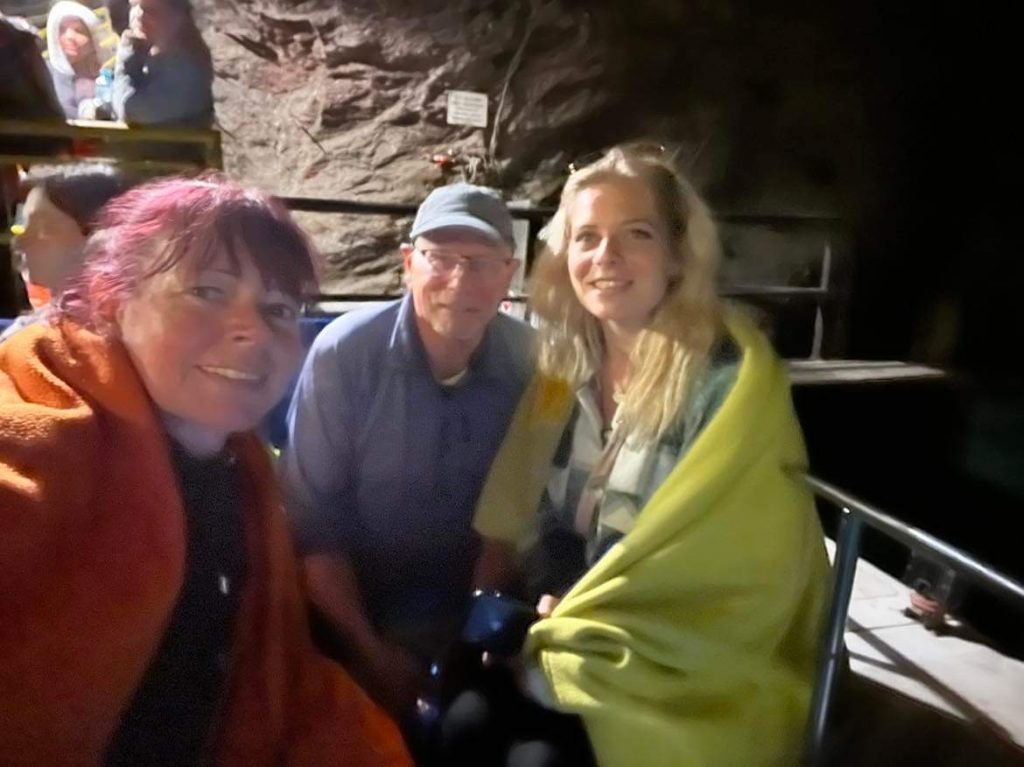
We took an informative guided tour through the cave system during our visit; walking the upper levels and being ferried around on a boat in the lower levels. At 15 euro per person it was quite pricy but I’m pleased we did it. Effective lighting throughout the lower levels of the caves made for some very pretty photos.
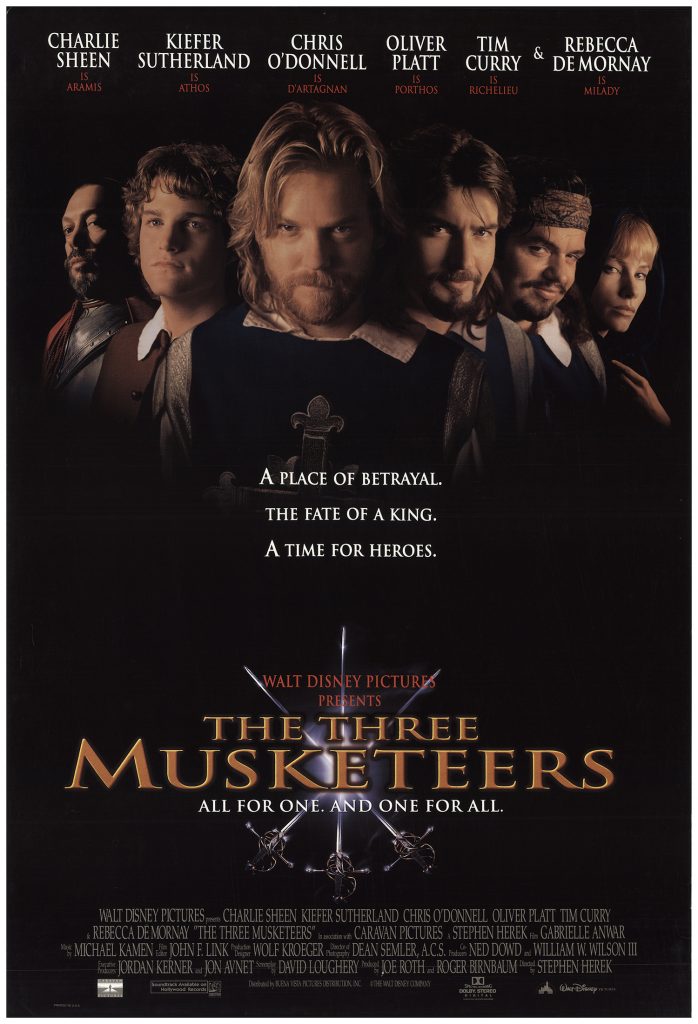
That’s Vanya, Rohan and I being ferried around the Seegrotte. We also learned on the guided tour that some scenes from The Three Musketeers were filmed in the Seegrotte
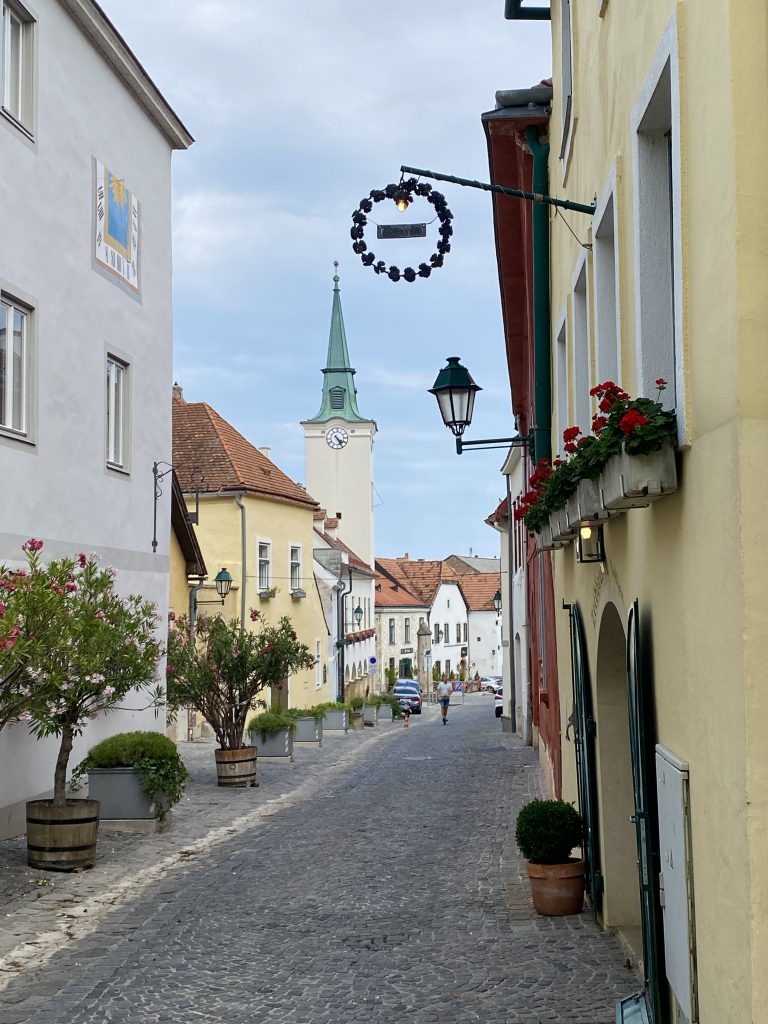
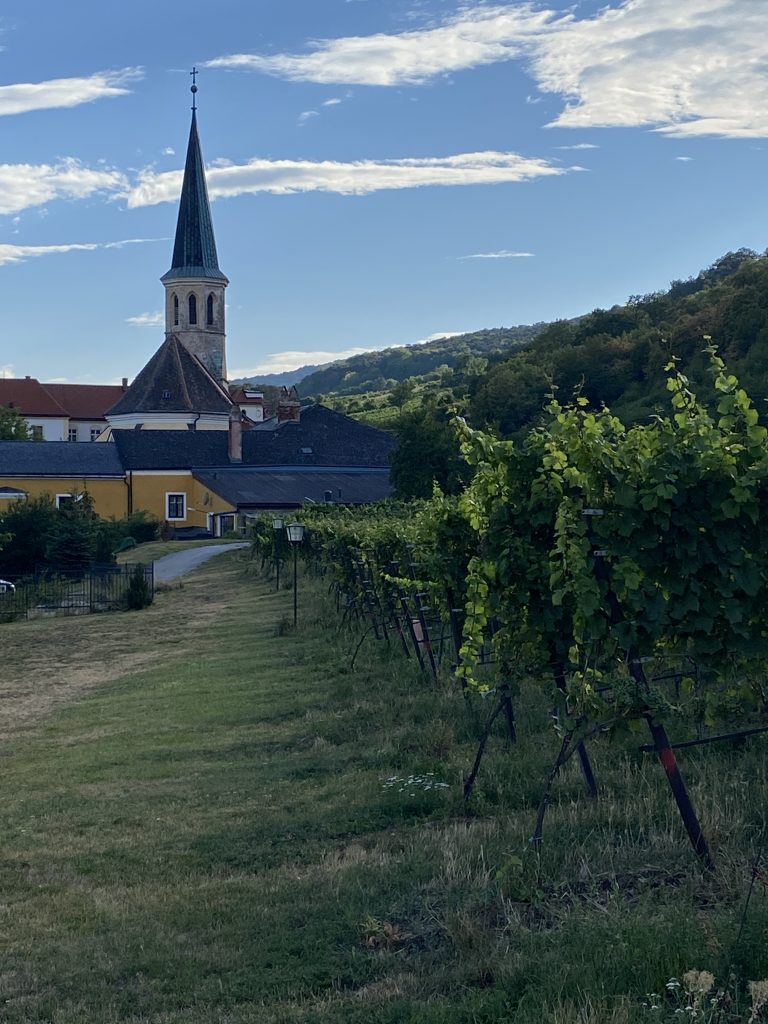
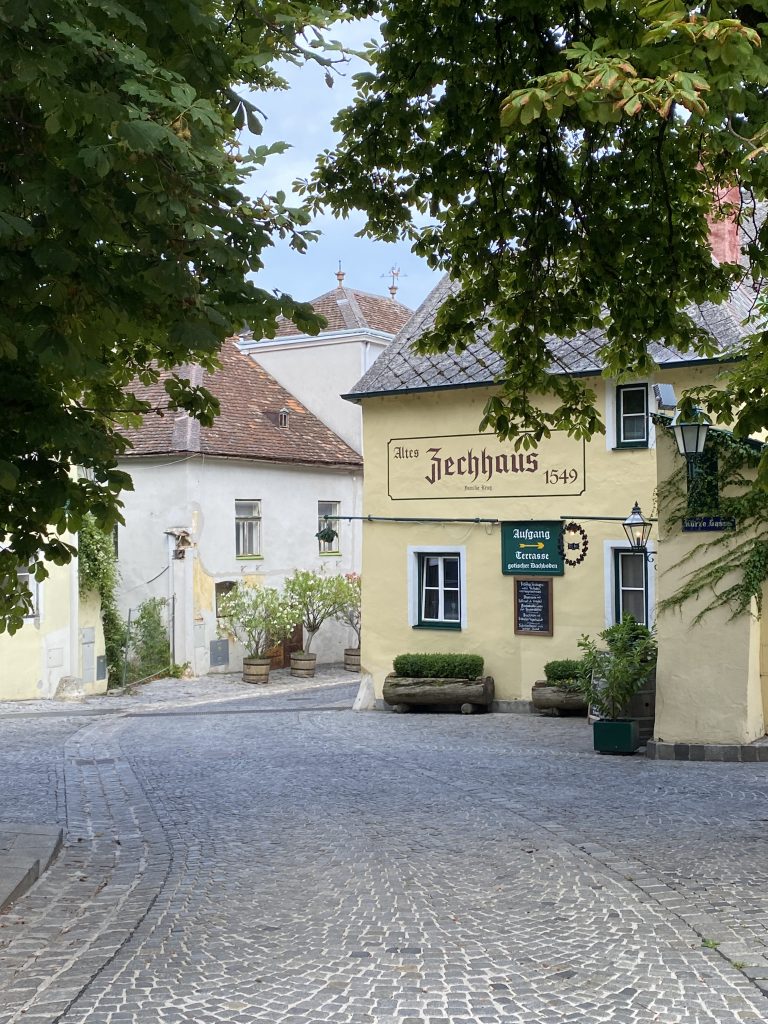
From Hinterbruhl we made the short journey to the delightful village of Gumpoldskirchen. This is for me the prettiest of the villages in the area surrounding Enzesfeld. Of course this view may have been influenced by the excellent wines we enjoyed in a local heurige during our visit but, even so, Gumpoldskirchen is very pretty.
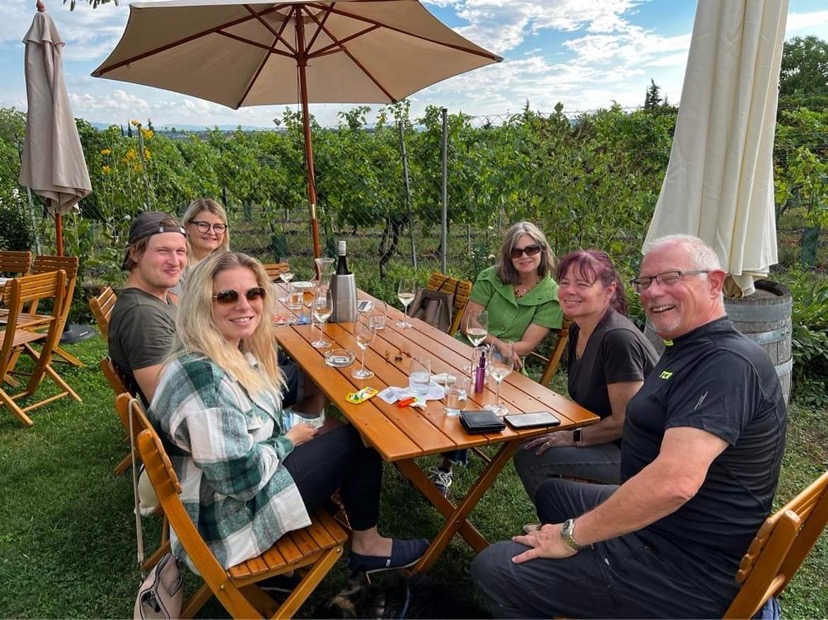
Scenes from GumpoldskirchenThere’s always something special about wine tasting in a vineyard
The last place we visited during this stop in Enzesfeld was Holles. Holles was about the pleasant walk to and from the village from Enzesfeld and our stop in yet another heurige where we sampled Gruner Veltliner, Rivaner (a speciality of this particular heurige) and a Gelber Muskateller and; not forgetting the food, various local cheeses, smoked ham and Salzstangels (salted bread sticks).
And then it was back to Enzesfeld. Thanks so much, Clare; both for introducing us to these wonderful places and for being… Clare. See you soon, we hope!
We used the campsite at Markt St Martin purely as a stop over on our way back to Enzesfeld. The campsite was a total disappointment , especially at 44 Euro per night. Austria at peak season.
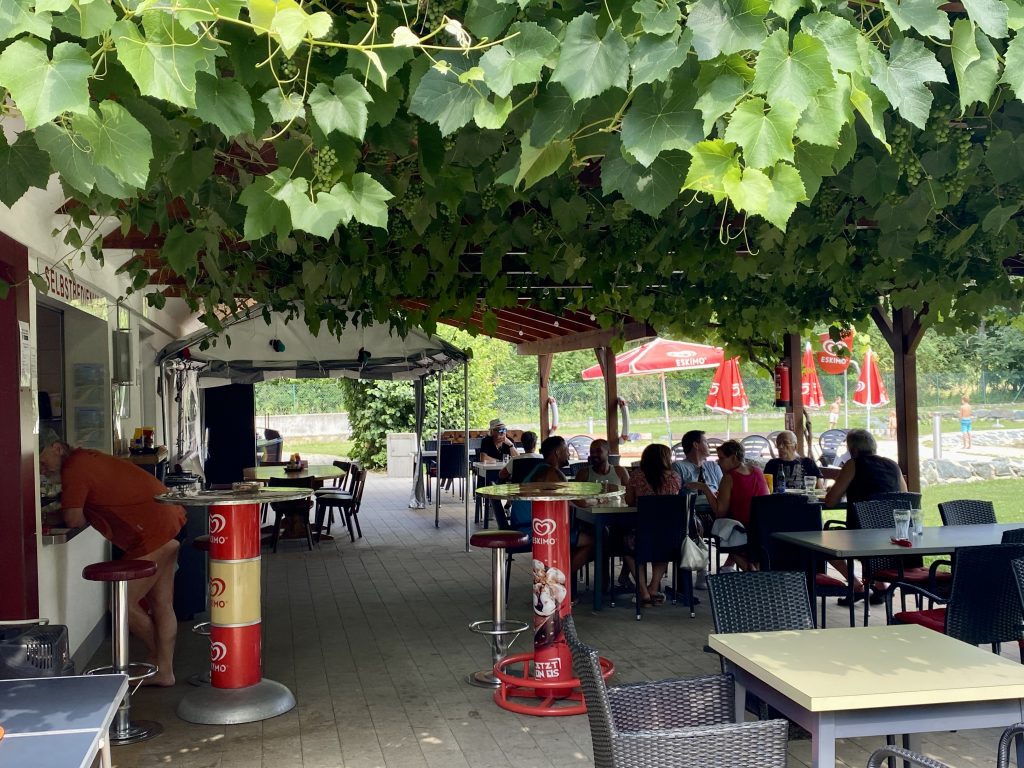
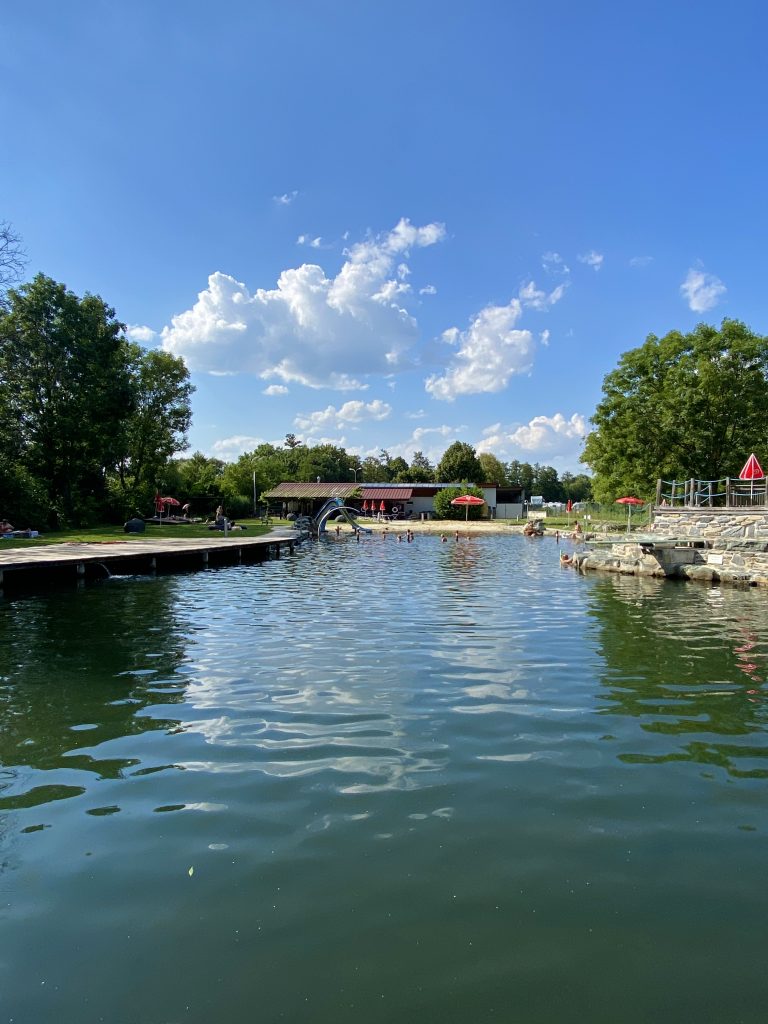
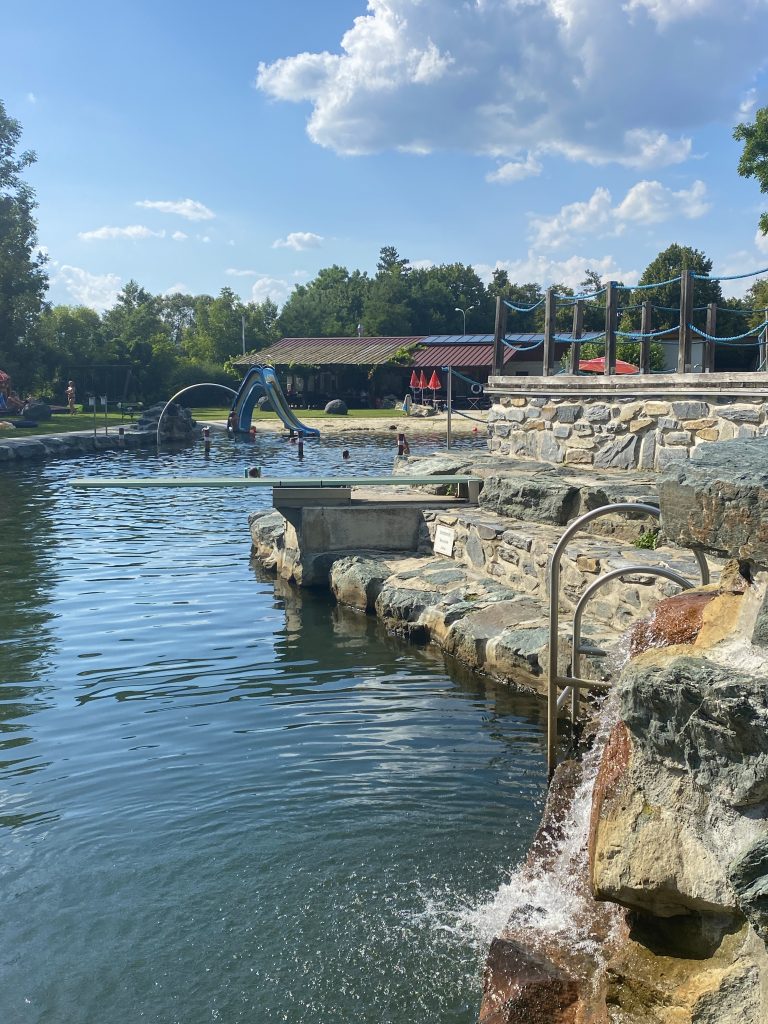
The only half decent aspect to the place was the small bar alongside the camp site. It has a swimming pond.
The food in the bar was poor but the setting was fine
An unusual and very clean natural pond converted into a beach and pool
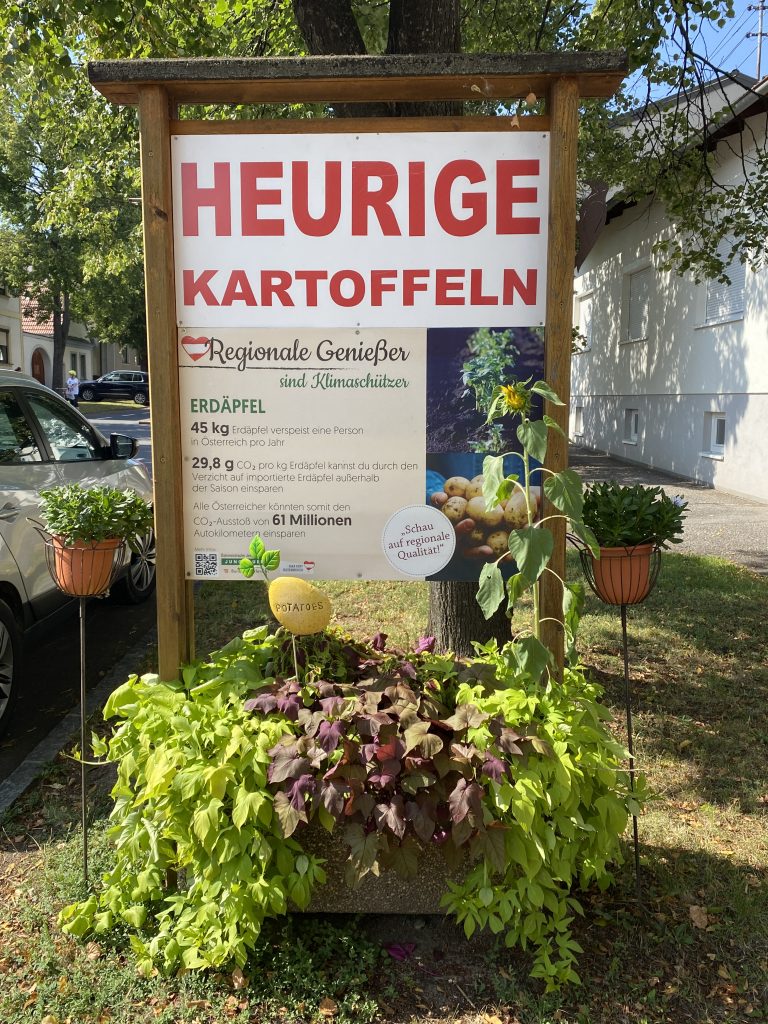
There was little to see in the town (or is it a village) but, it being a Thursday afternoon, everything was closed anyway except for a kartoffeln heurige. Wine heuriges I have heard of; a potato heurige is new to me.
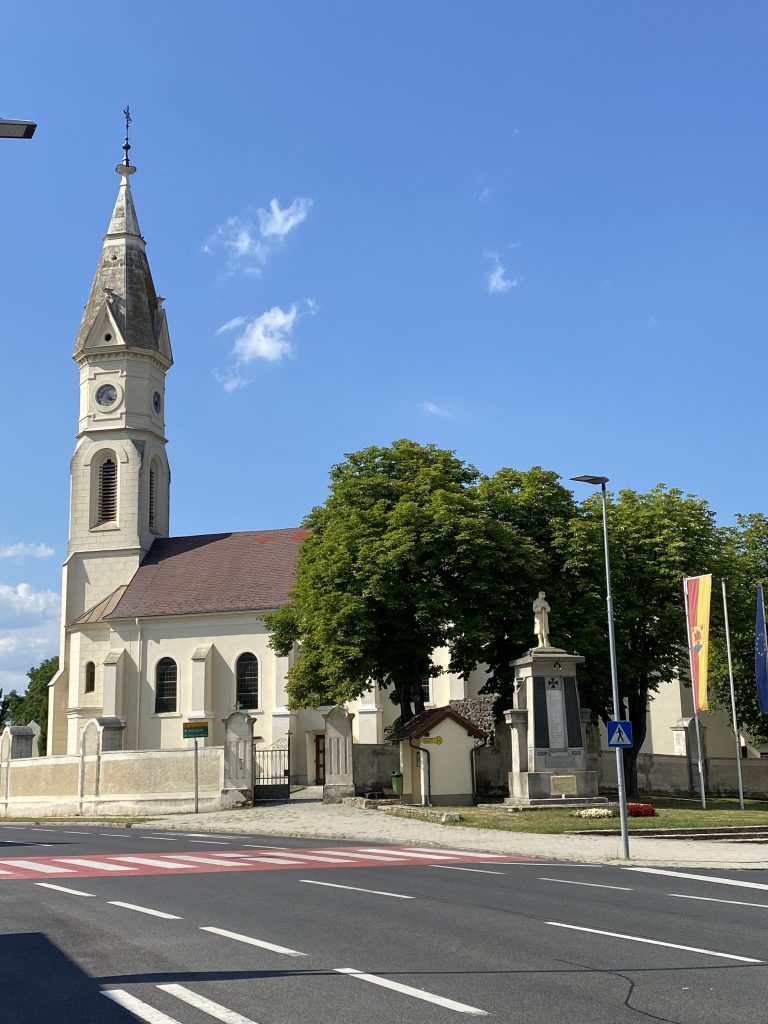
Even the local church was locked up. The only place open was the potato heurige.
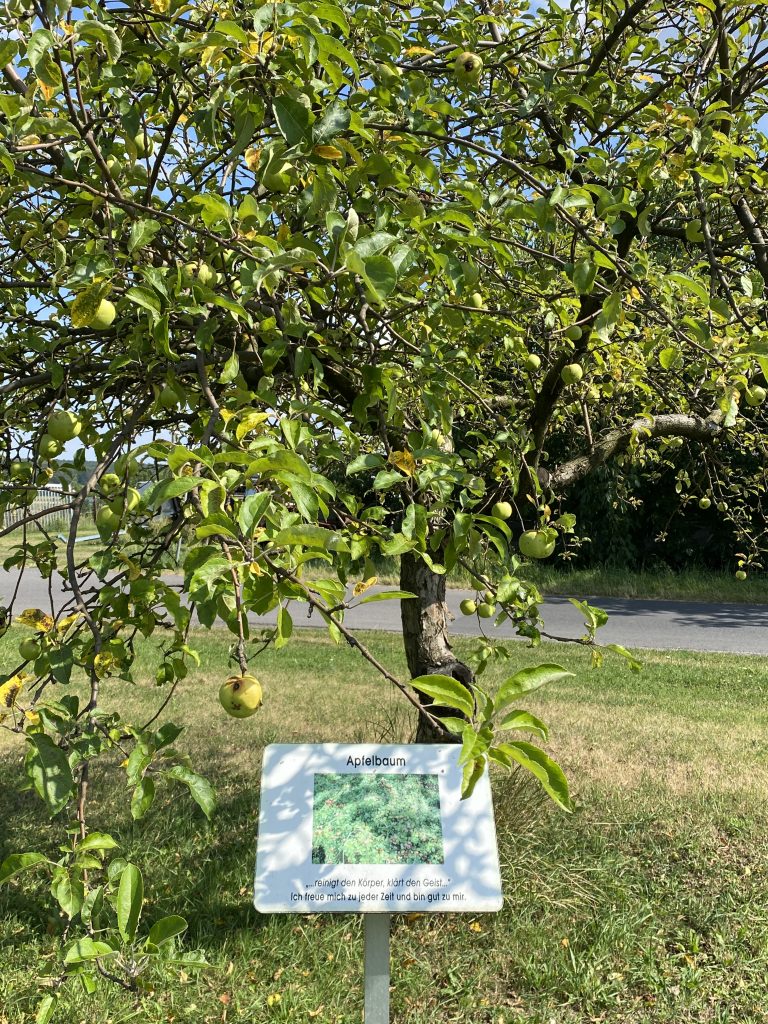
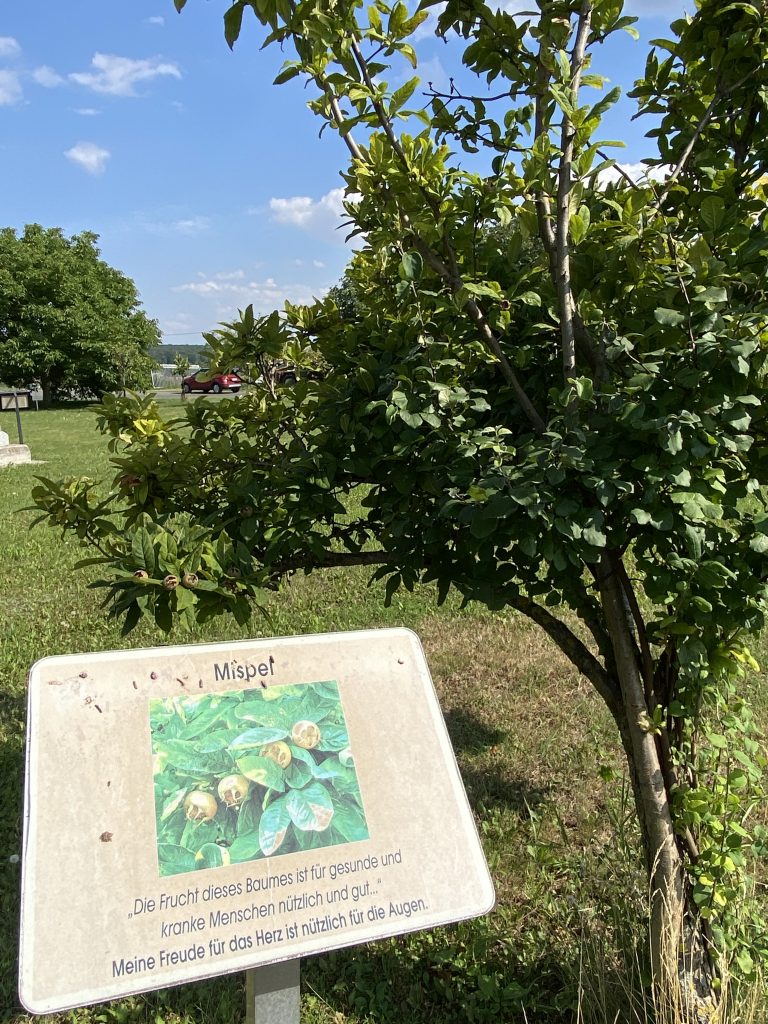
On the way in to the village I came across another relatively intriguing feature namely, a fruit (and nut) tree circle. If you’ve lived in Scotland (or any other country where the Celts once settled) you will probably have seen a stone circle or two. Markt St Martin has substituted a stone circle with a much more practical fruit tree circle. Well, I think that is what is was.
Part of the fruit circle. The centre piece and a couple of trees.
You know something? I don’t think I have ever produced such a pointless (and boring) blog before. Back to Enzesfeld.
Pausing only briefly in Heviz, we headed for Lenti, still in Zala County (named after the River Zala) but further west near the borders with Austria, Slovenia and Croatia. We were committed to going back to Austria at the weekend because our daughter Rohan would be travelling to Enzesfeld (and we were keen to both see her and pick up on where we left off with the Dedic family) but we had to keep our options open. Keszthely didn’t make the same positive impression on Vanya as it did on me and she remained unsure about this part of Hungary. As it happened, we needn’t have worried. Lenti proved a great place to visit and Vanya enjoyed it so much that our planned one night stopover was extended to three nights.
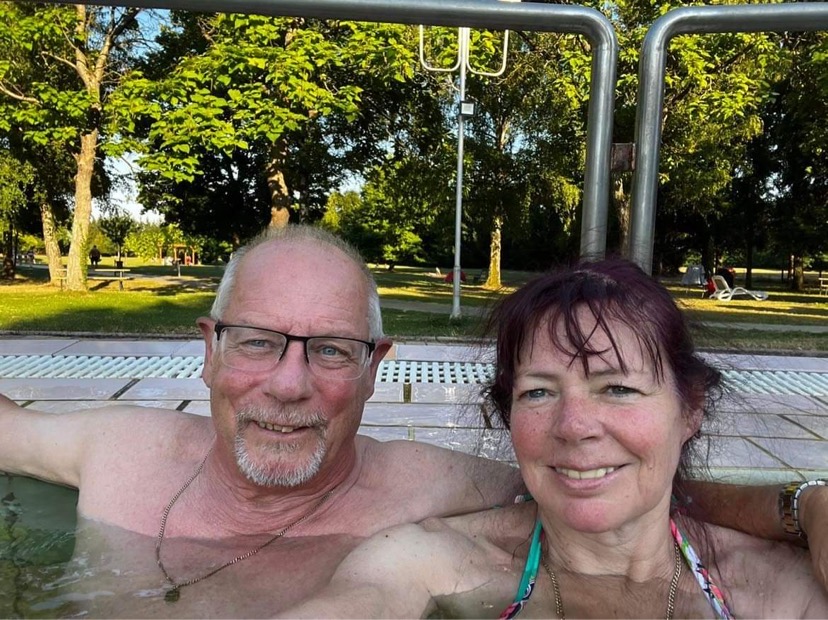
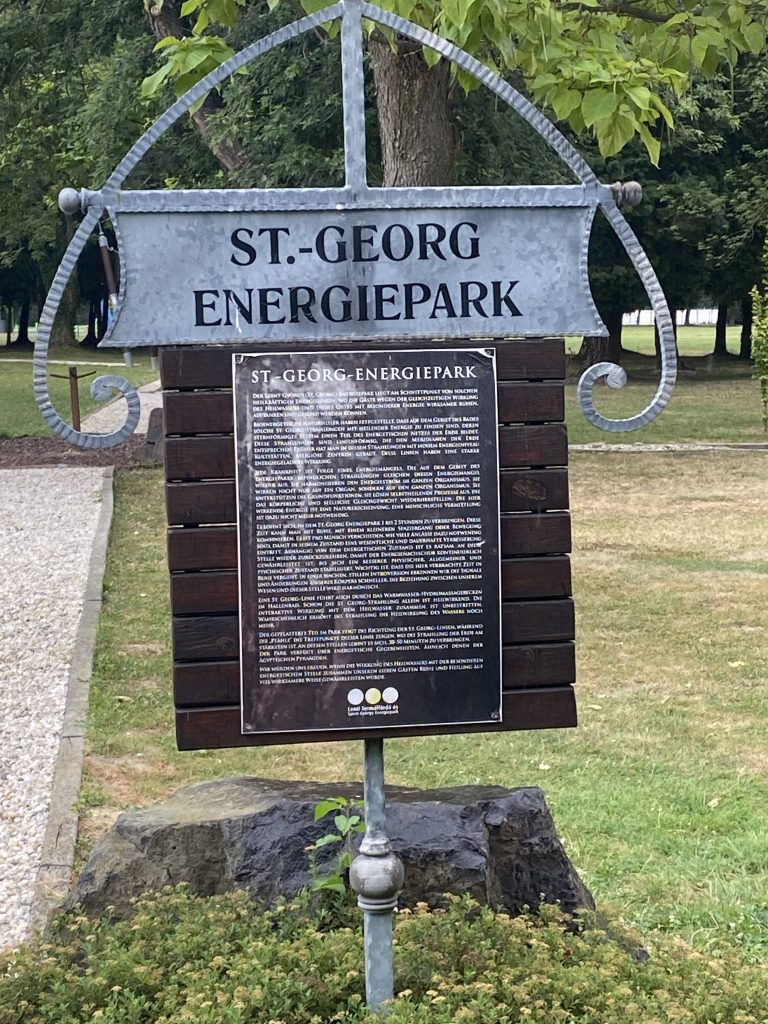
We were going to Lenti for a specific purpose. The campsite Vanya chose sits alongside a spa complex known as the Lenti Thermal Spa & St George Energy Park and guests of the campsite are given free access to the spa for the duration of their stay.
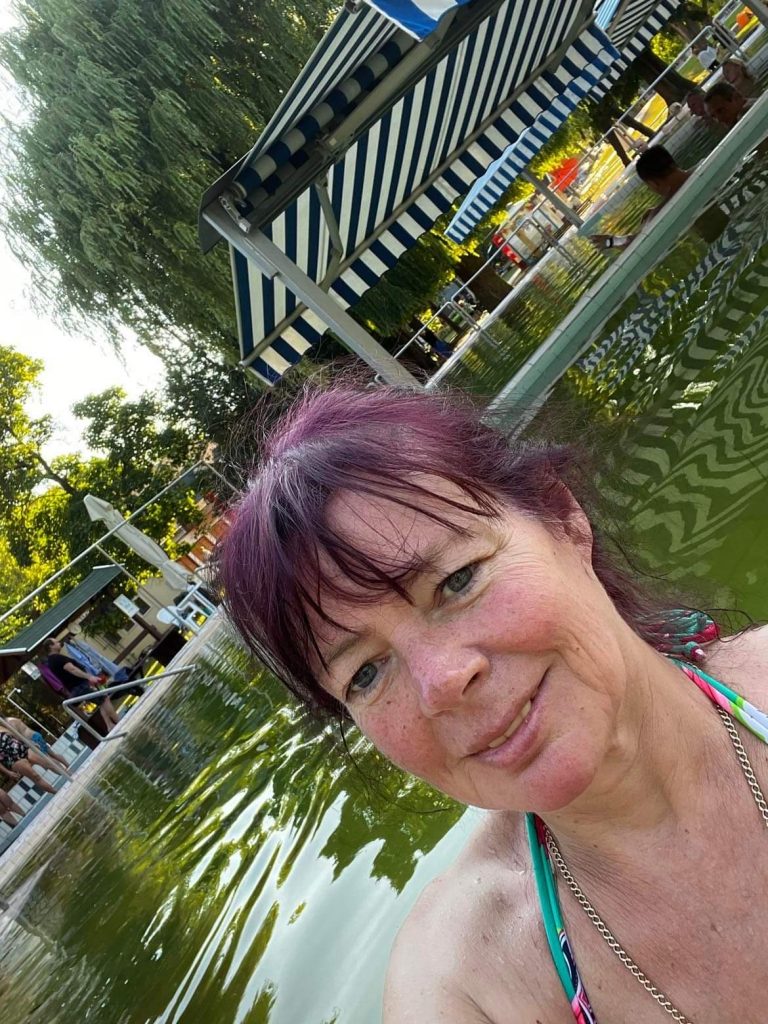
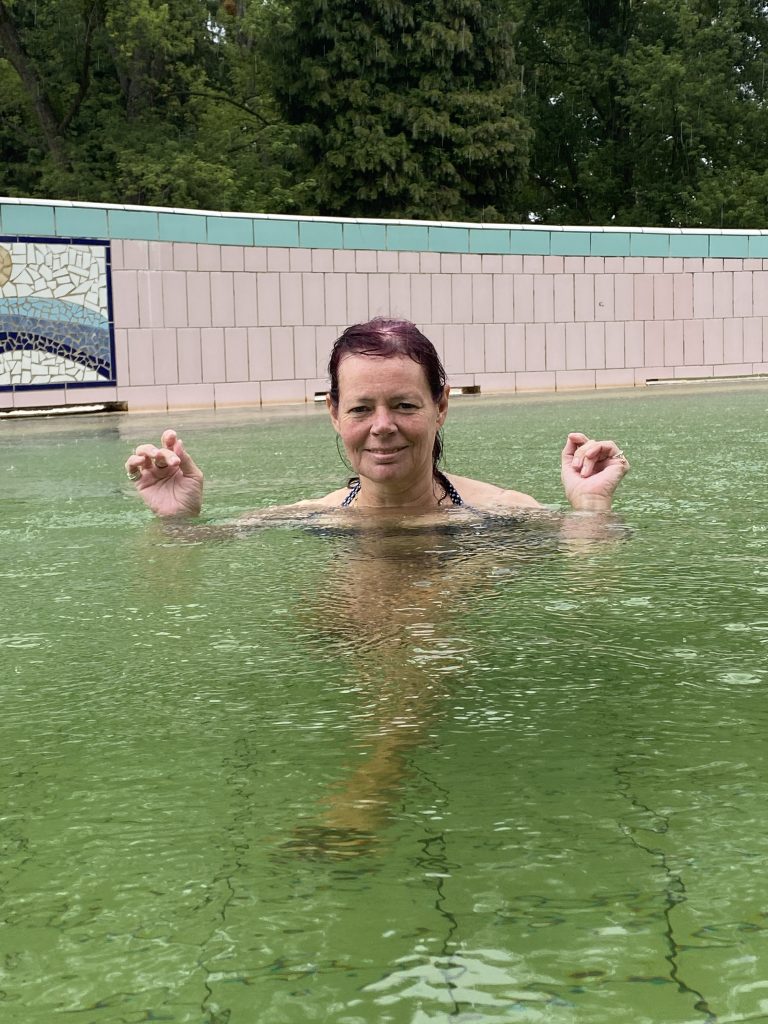
It proved to be a really good spa complex. Vanya rates it better than any of those she used in Budapest. According to the blurb the water is a 40,000 year old sodium-hydrogen-carbonated water. Okay, fine. The spa comprises 5 outdoor pools, 7 indoor pools and 1 pool which is half inside and half outside. We favoured two of the outdoor pools being, the medicinal pool at 36-38 degrees centigrade and the adventure pool (with the lazy river, water jets, bubbles and big slide, etc) at 26-28 degrees centigrade (but which was closer to 30+ degrees because of the hot weather).
What we particularly liked about this complex is that the spa pools are spread across 8 hectares of lawn around which are bars, restaurants, food kiosks, etc and we didn’t once feel crowded despite the place being busy.
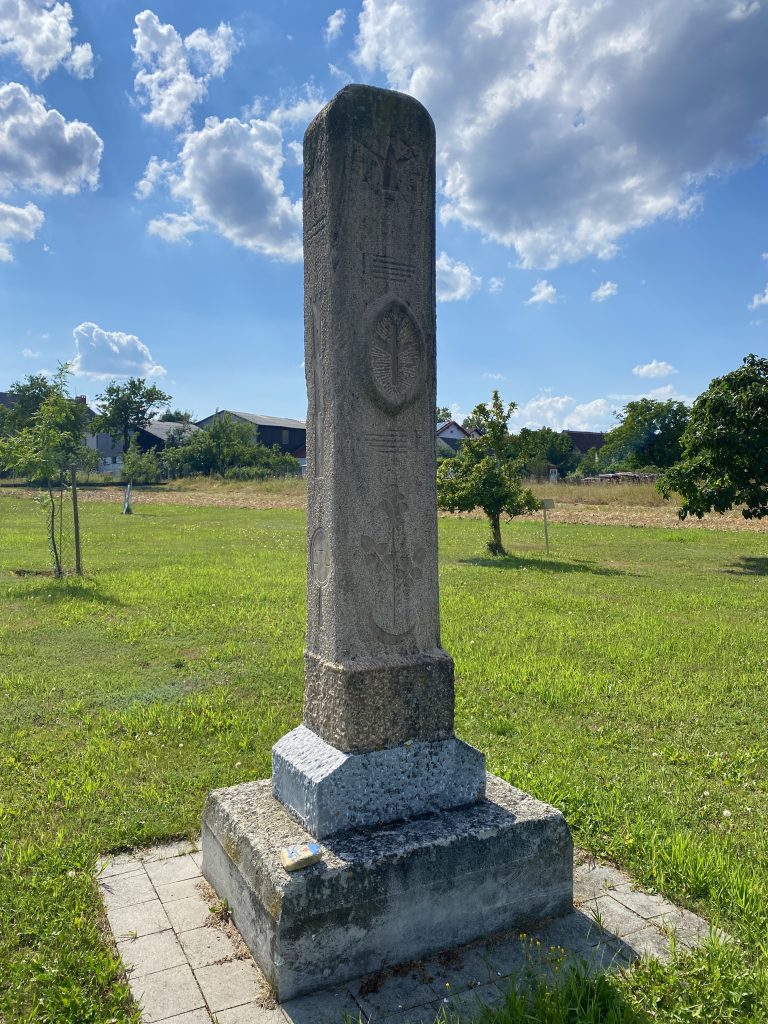
Another unusual feature of the complex is the Energy Network or Earth Radiations, more often referred to as Saint George Lines or Dragon Streams. It seems that sometime in 2002, ‘Earth Radiations’ and ‘Crossing Points’ were discovered in the area of the Lenti Thermal Spa and, according to certain authorities, “the energy radiation here harmonizes the flow of energy throughout our bodies and triggers positive processes that can restore our physical and mental balance”. The Spa has marked the Crossing Points of the Lines with columns or posts and guests are invited to spend between 20 and 30 minutes at these posts to maximise the beneficial effects of the spa.
I know very little about Saint George Lines and Crossing Points but I do know that time spent in the spa complex was time very well spent. We used it every day and found the whole process very relaxing. Sated would be a more accurate feeling. I think if I were to visit the place again I would stay in the 4 star Balance Hotel next door to the Spa Complex. This comment does not reflect badly on where we stayed but the Balance Hotel also provide sauna rooms and massages. That would have been cream on the cake.
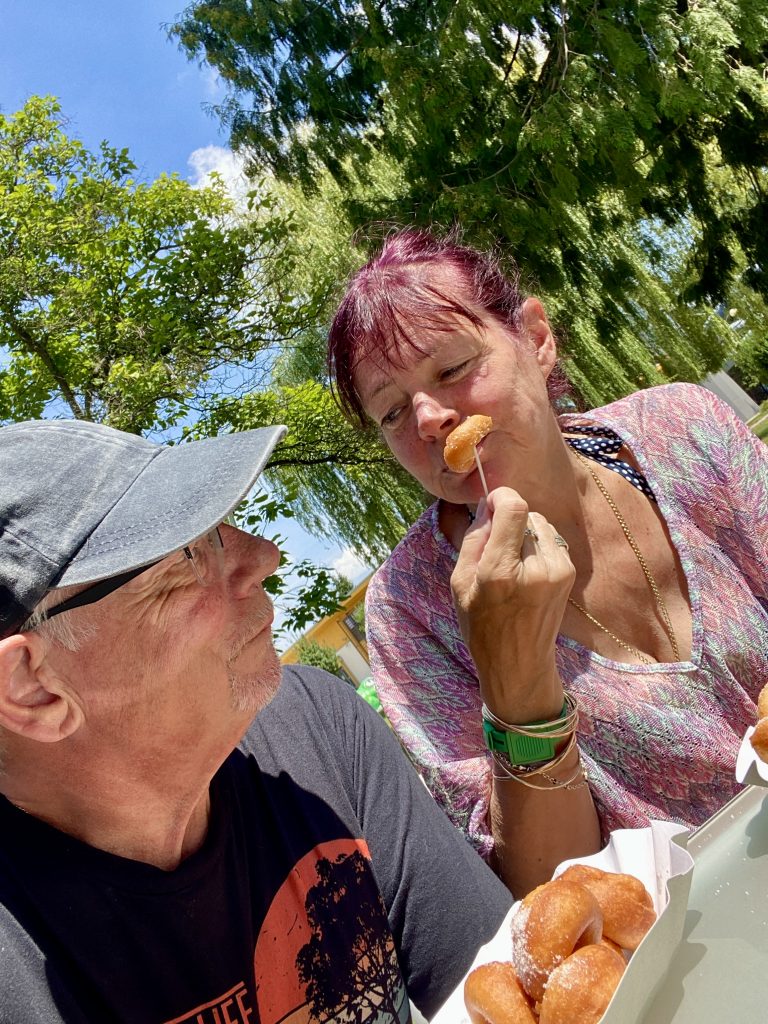
Doughnuts also make me feel sated and there was a kiosk selling warm doughnuts on the complex
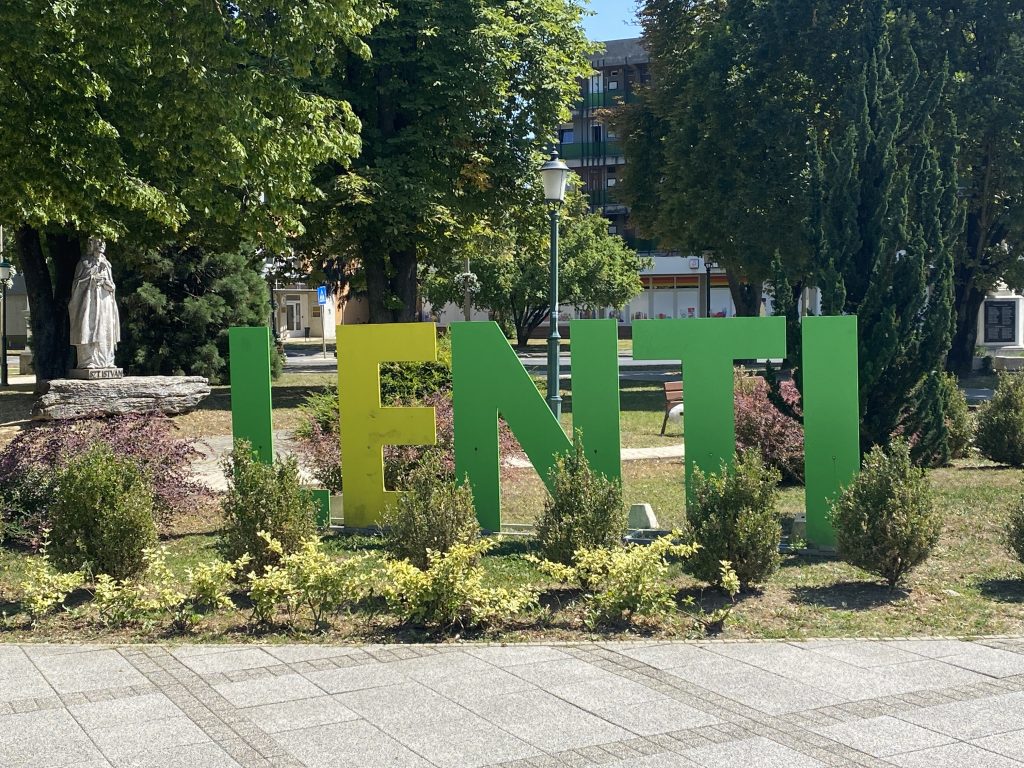
But I haven’t talked about Lenti itself. It’s a small quiet town of just over 7,000 inhabitants. We didn’t see much of the place during our stay (preoccupied with the thermal baths, I suppose) but, I walked into the town centre a few times for a ‘look see’ and to replenish our supplies from two local mini-markets and we both took the dogs into the town for a meal one evening.
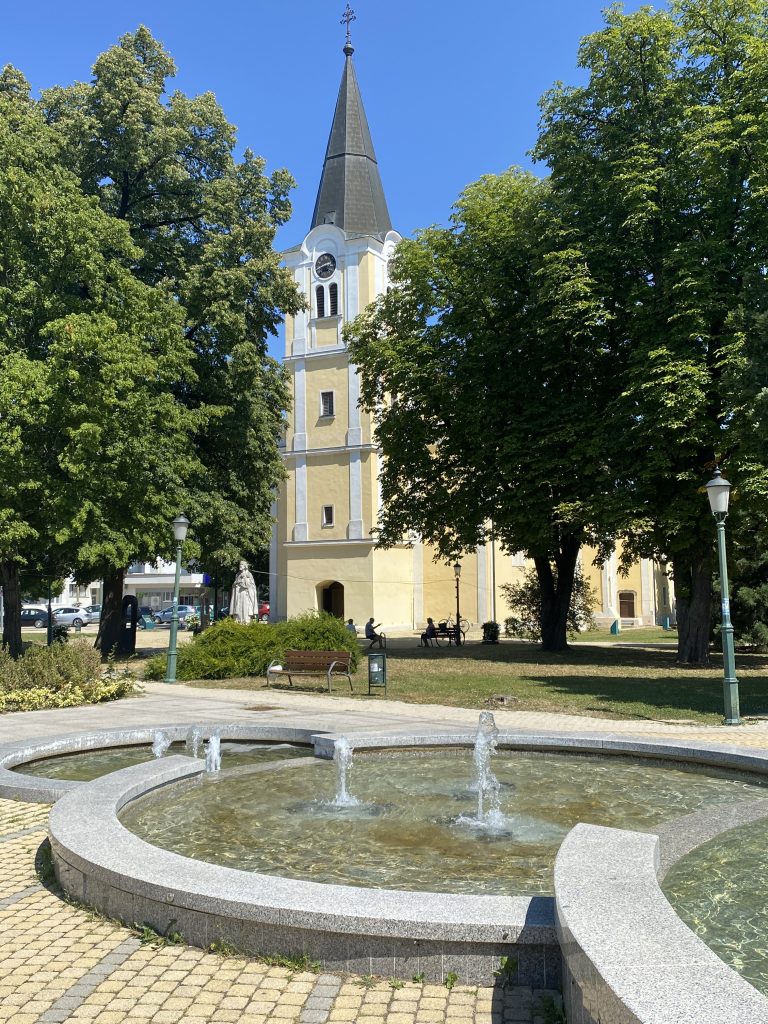
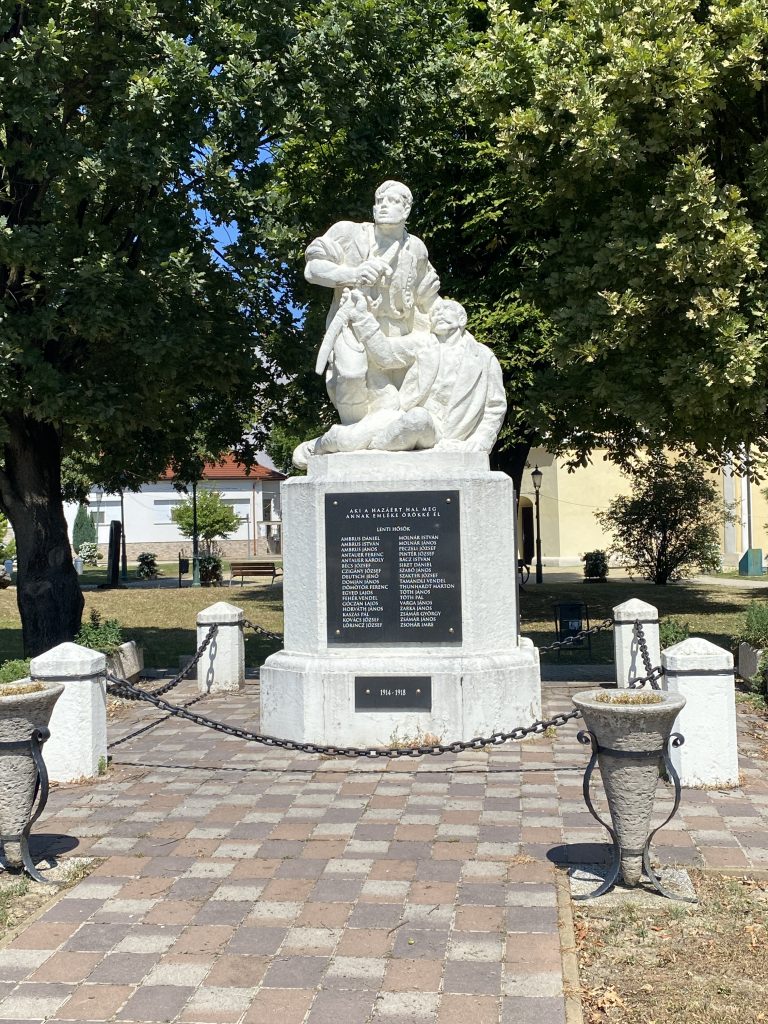
It’s a tidy town, almost Slovenian or Austrian in many respects (although the roads in this area by no means match those in Slovenia or Austria). There are a couple of small but nice squares and small parks (funded by EEC money judging by local signage) where a number of locals seemed to congregate as the day cooled. The largest of the two squares we saw was the one in the town centre where St Michael’s Church and the War Memorials are situated.
St Michael’s Church and the 1914-1918 War Memorial
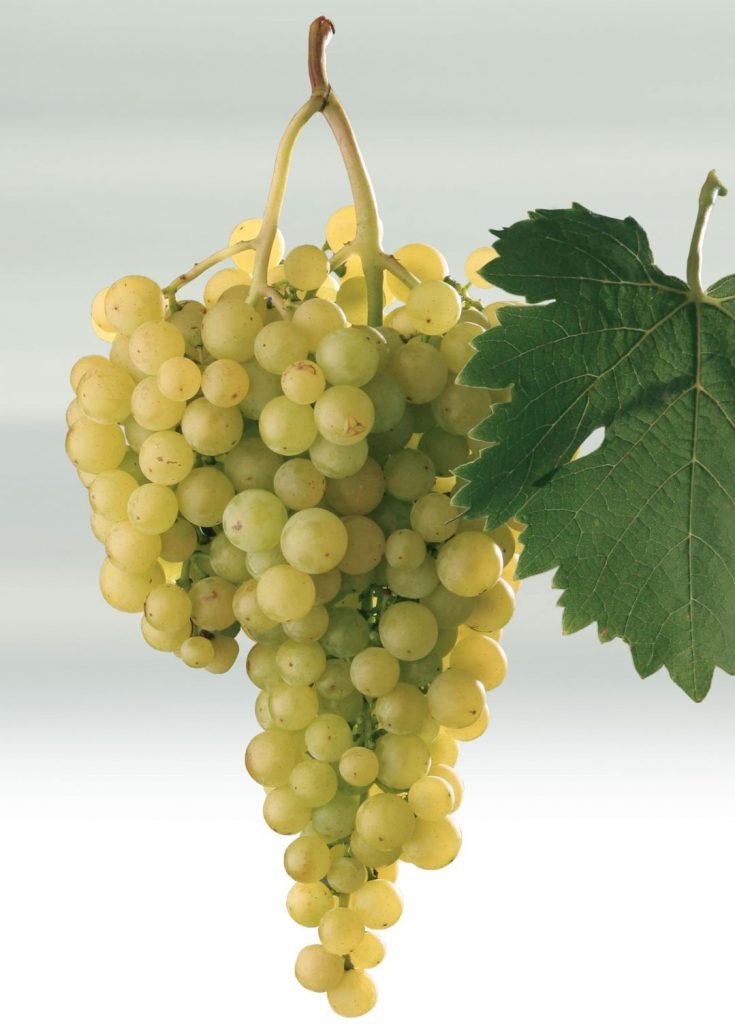
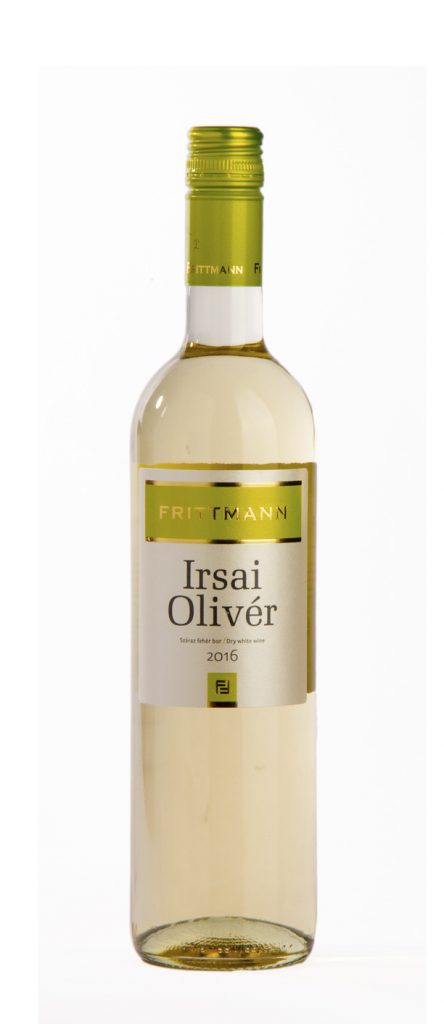
The people we met in Lenti were very welcoming but none spoke English and the fall back language was definitely German. Our Hungarian is non existent. What really impressed us about the place was the low prices. In one bar opposite where we were staying, three pints of lager and five glasses of Irsai Oliver (a very respectable Hungarian wine) cost just 9 Euro. That is £7.56 at today’s exchange rate. We used that bar more than the once and we’ll no doubt be bringing some Irsai Oliver back from Hungary.
* Typically, Irsai Olivér wines from Hungary are dry, medium bodied, with low acidity and a pronounced aromatic fragrance giving it a Muscat-like character.
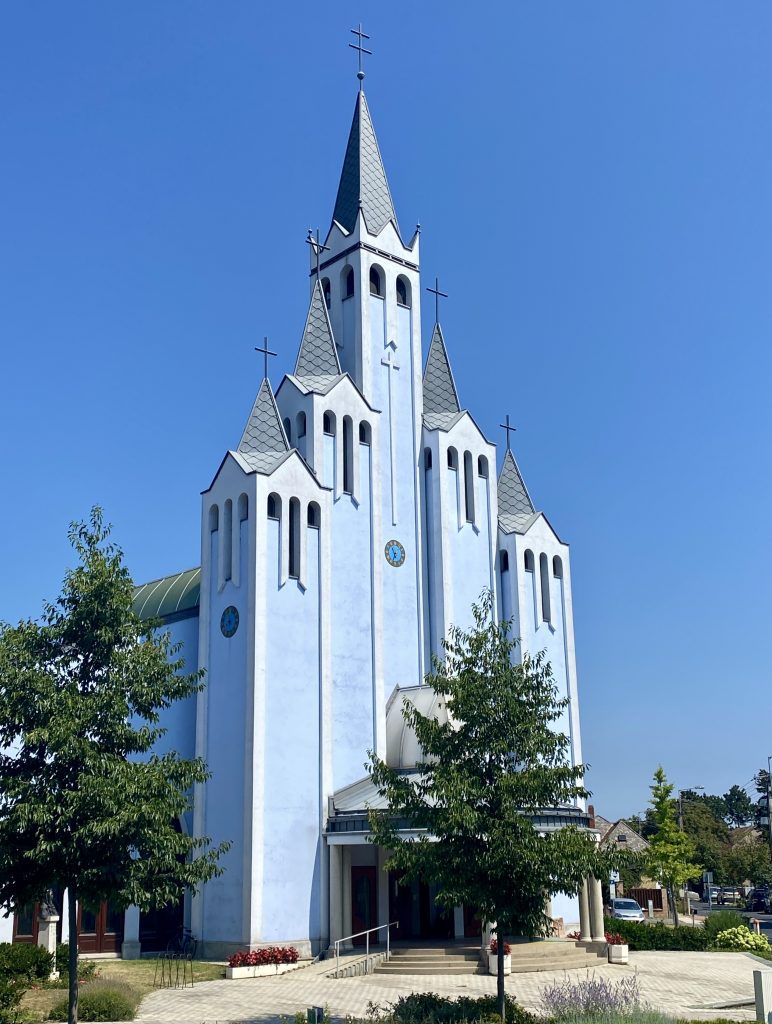
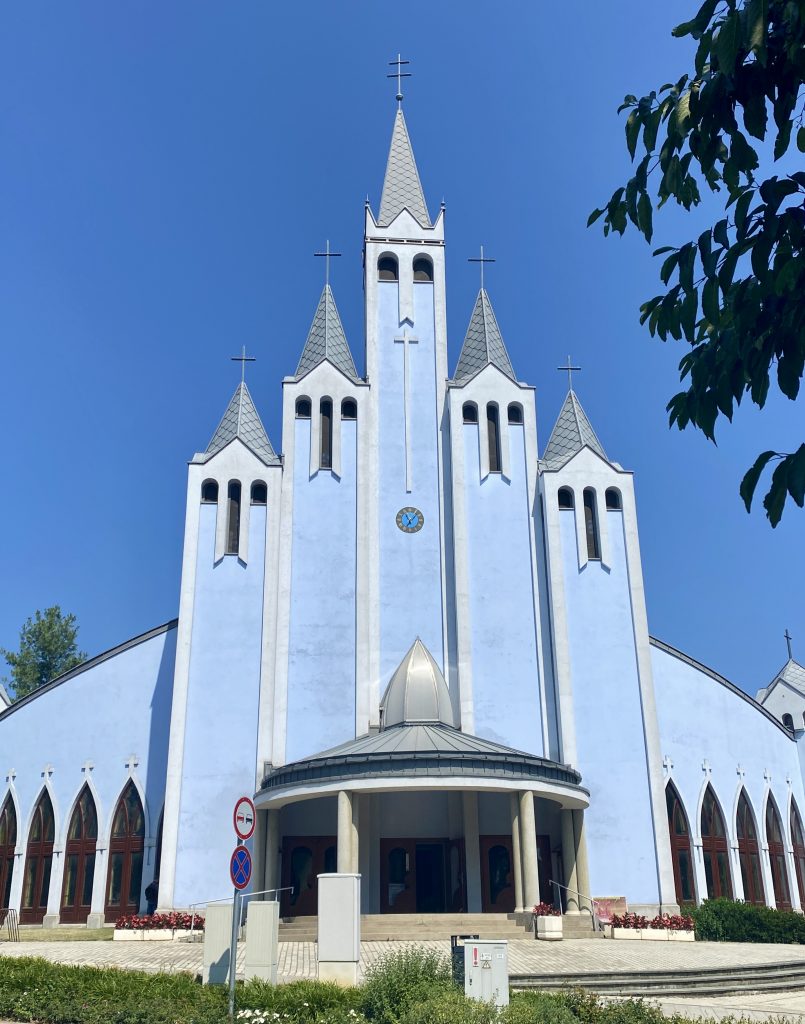
I wasn’t going to write even a short blog on Heviz because it was a place we simply passed through on our way to Lenti. Okay, that’s not altogether true. I made a short detour because I had read about the Roman Catholic Holy Spirit Church (known locally as The Blue Church) and I wanted to see it. I was going to mention the detour and the church in the Lenti blog but then, after researching the church on the internet and coming across some absolute drivel, I changed my mind and decided to write something about Heviz if only to put the record straight about this unusual and quite beautiful church.
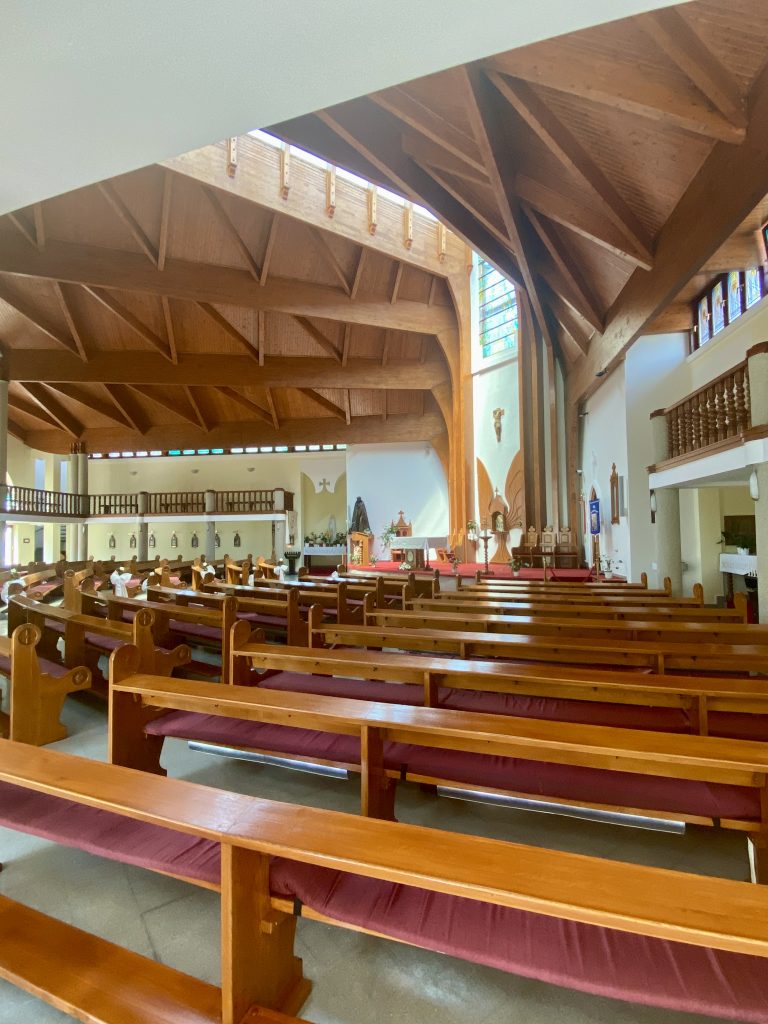
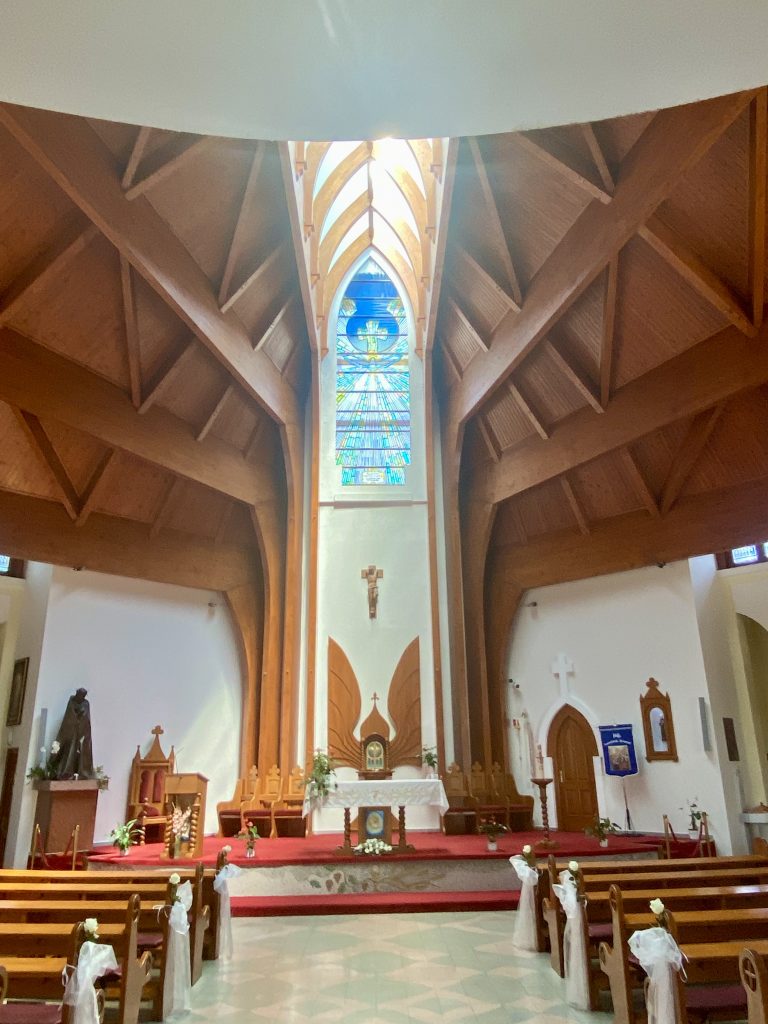
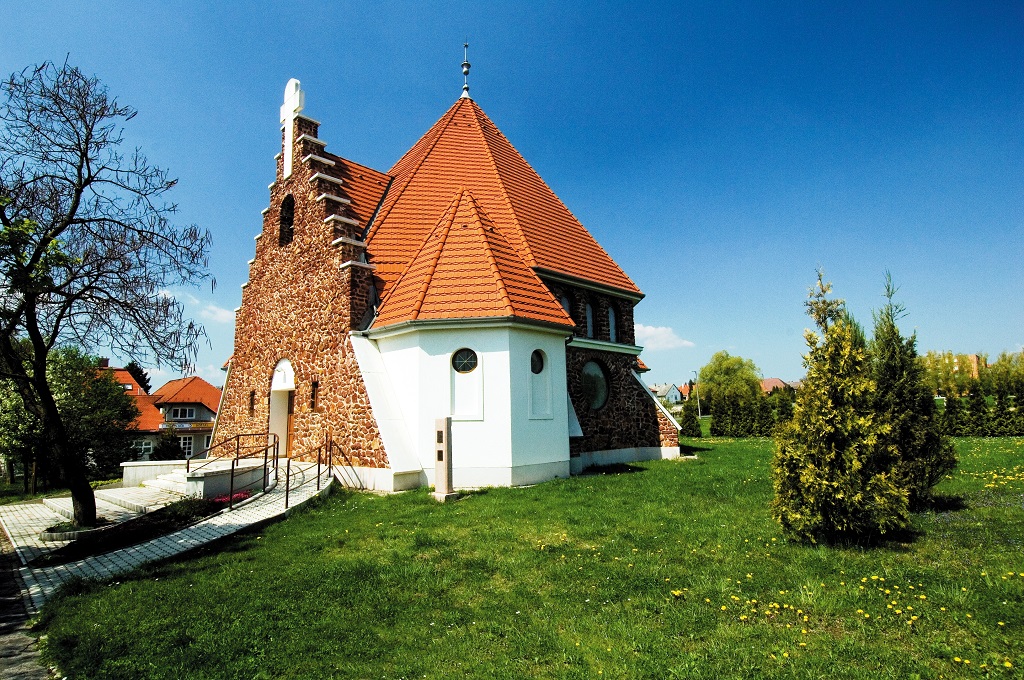
So, it has been written on at least two internet sites that the Holy Spirit Church in Heviz was designed by the renowned Hungarian architect Imre Makovecz and that it was built in 1988. No it wasn’t! There, the record is straight. The church was actually designed by Janos Bocskai. Construction started in 1996 and was completed three years later. It is the largest church in Heviz. It can accommodate 1,000 people and it is made entirely of wood. The exterior of the church is a beautiful sky blue colour and it’s seven towers represent the seven pious gifts of the Holy Ghost. Not being a catholic, I had to look those up but can now confirm that the seven gifts of the Holy Spirit are wisdom, understanding, counsel, fortitude, knowledge, piety, and fear of the Lord. The inside of the church is also beautiful and surprisingly minimalistic by Roman Catholic standards.
No prizes for guessing why it is known locally as the blue churchThe inside is quite austere by Roman Catholic standards and combines modern and traditional architecture
It is a glorious piece of work, inside and out, and I love it.
One other church perhaps worth a visit in Heviz is the Lutheran Reformed Church which was built in 1993. It is the only protestant church in Heviz and it’s small size reflects that of the local protestant population. Again it is a pretty and unusual looking church.
The Lutheran Reformed Church in Heviz
Only other thing I would say about Heviz at this time is that the Holy Spirit Church is close to the Heviz thermal bath which until 1948 was owned by the Festetics (i.e. the same family who own the Festetics Palace in Keszthely). I was going to pop in on the thermal bath (it is only a couple of hundred yards down the road from the Holy Spirit Church) but, with Vanya taking us to Lenti especially to visit the thermal baths there, it seemed a bit excessive. Having said that and in case you are interested, the Heviz thermal bath is purportedly the world’s largest (swimmable) biologically active medicinal lake. More important, the waters of the lake are completely replaced every 72 hours. That makes it clean, notwithstanding the lake’s average summer heat of 34 degrees centigrade.
I am certain that there is considerably more to Heviz but Lenti beckoned.