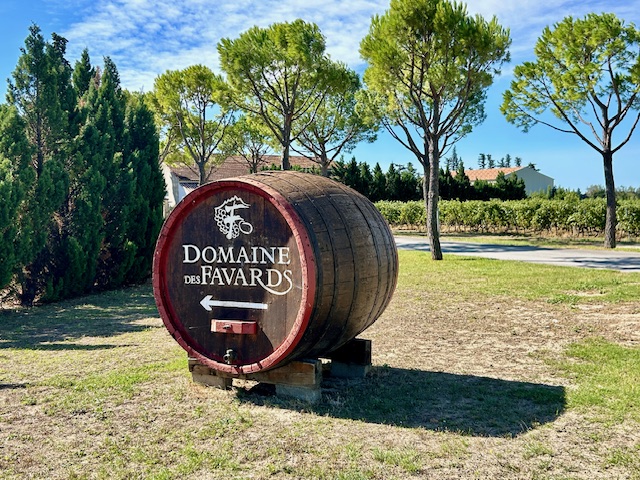
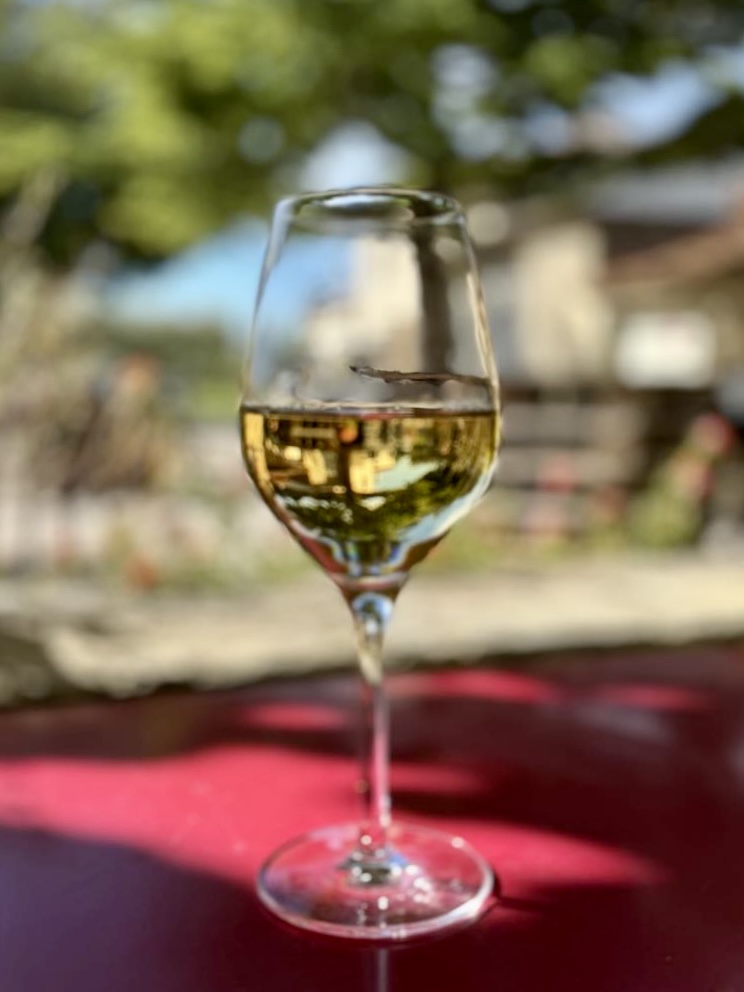
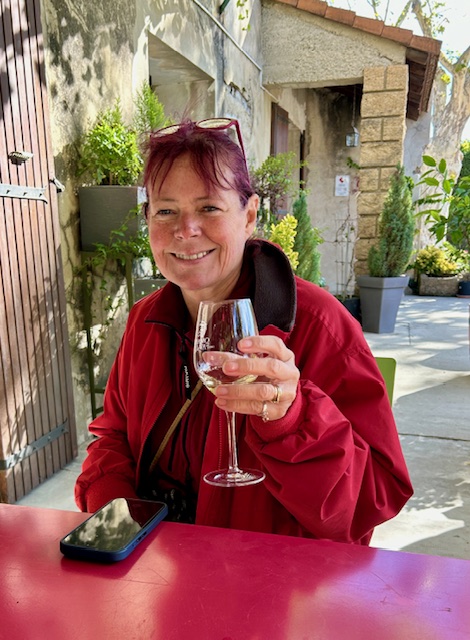
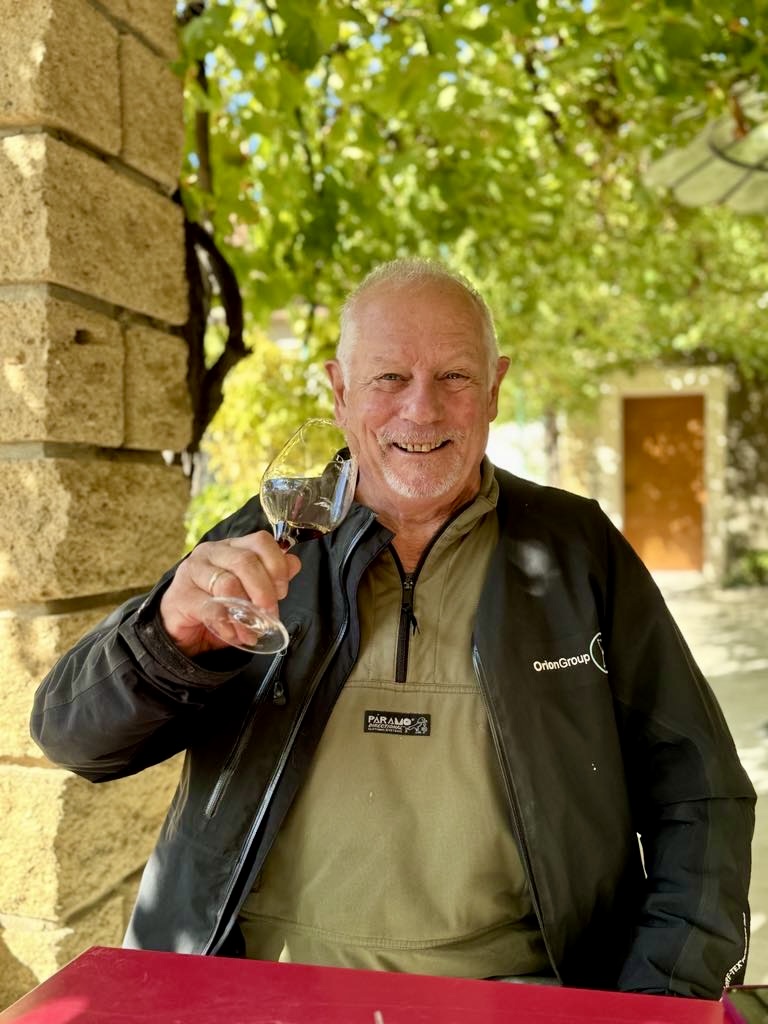
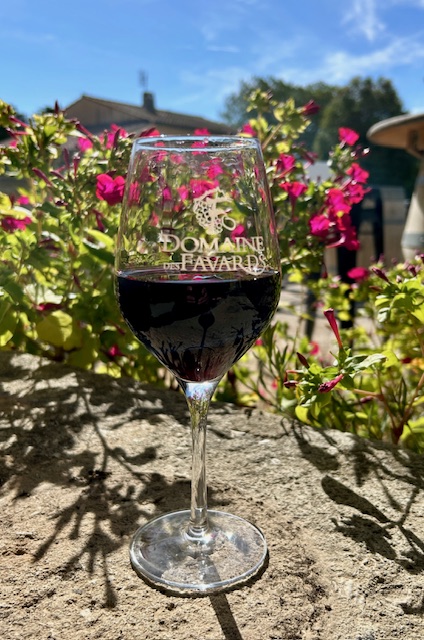
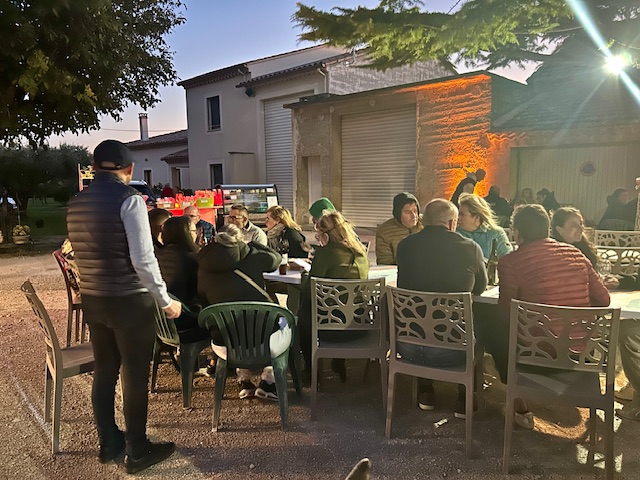
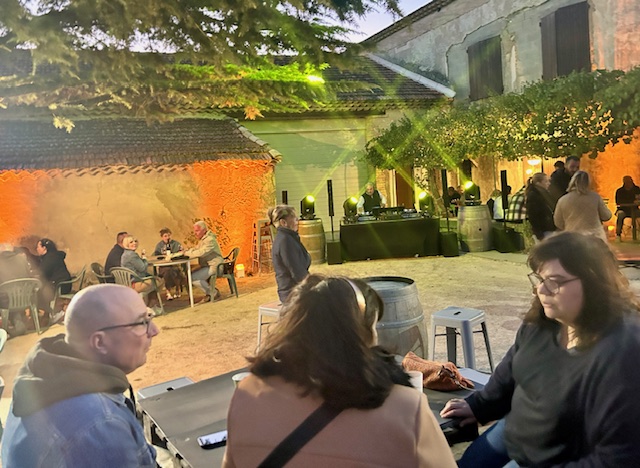
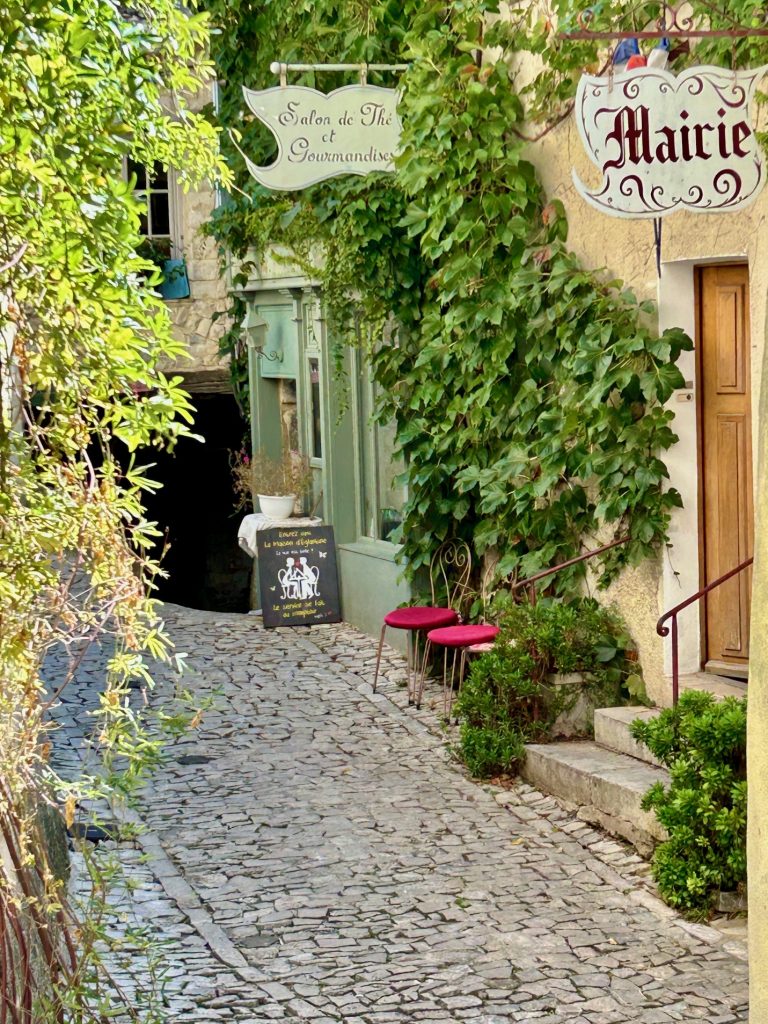
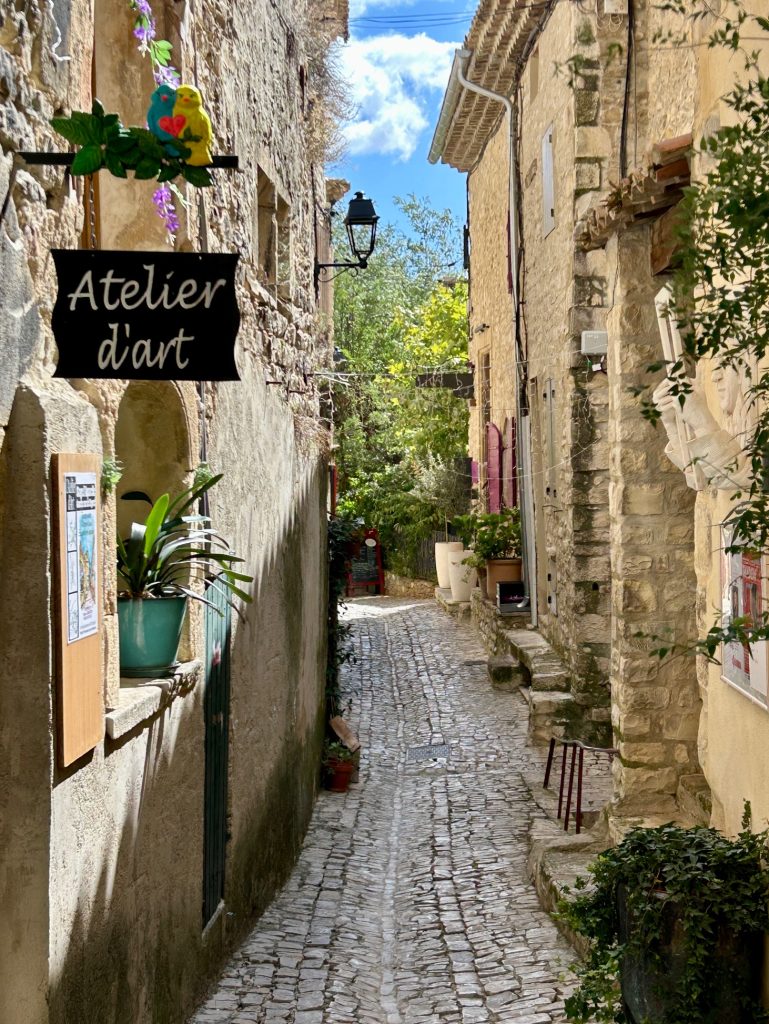
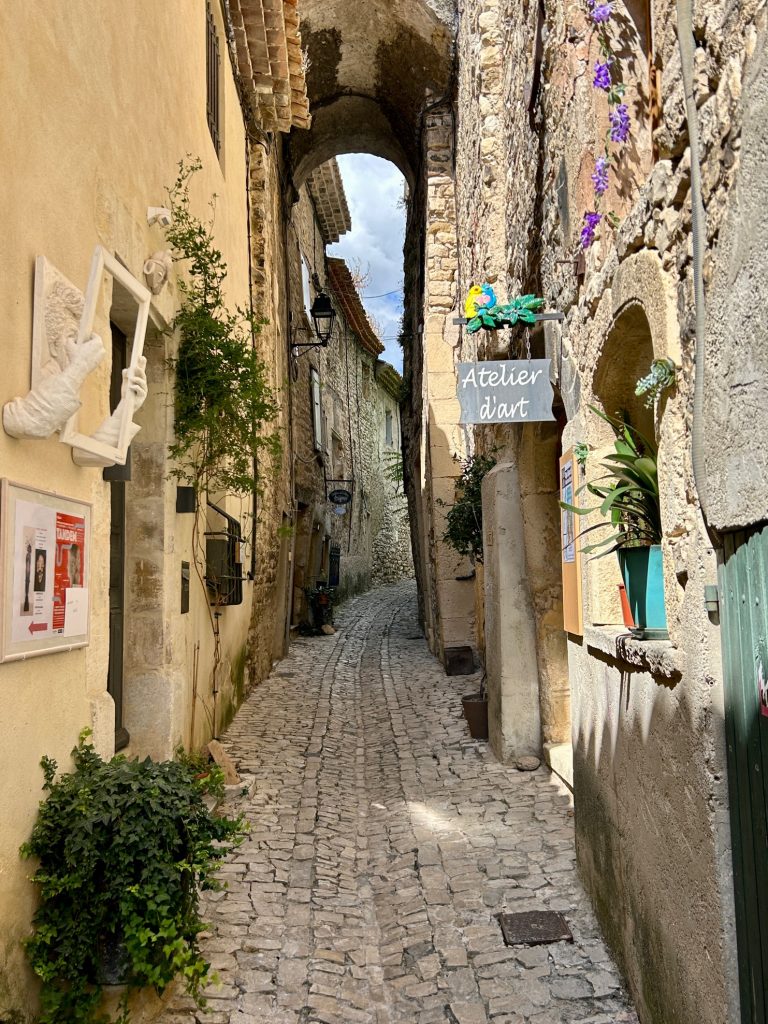
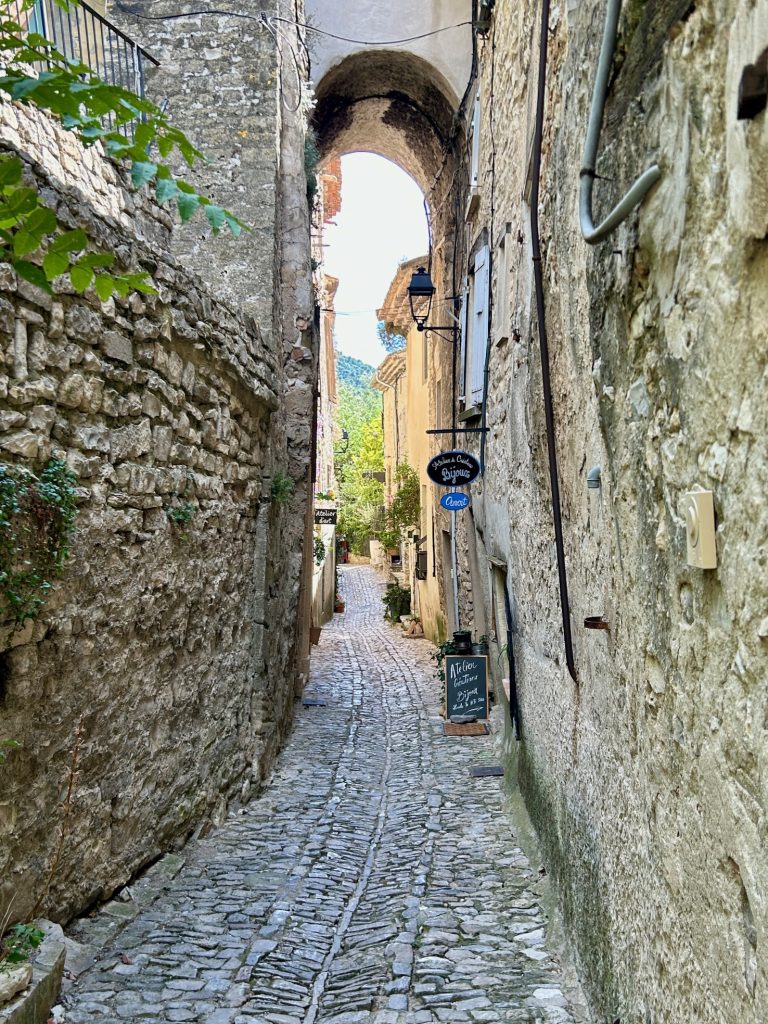
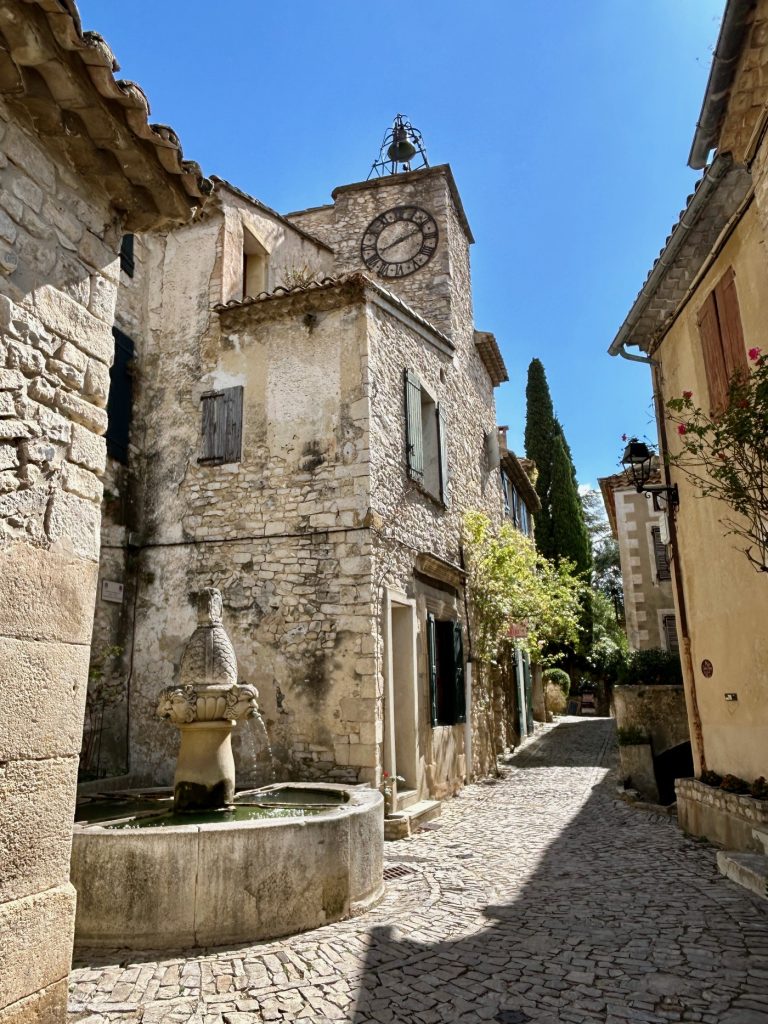
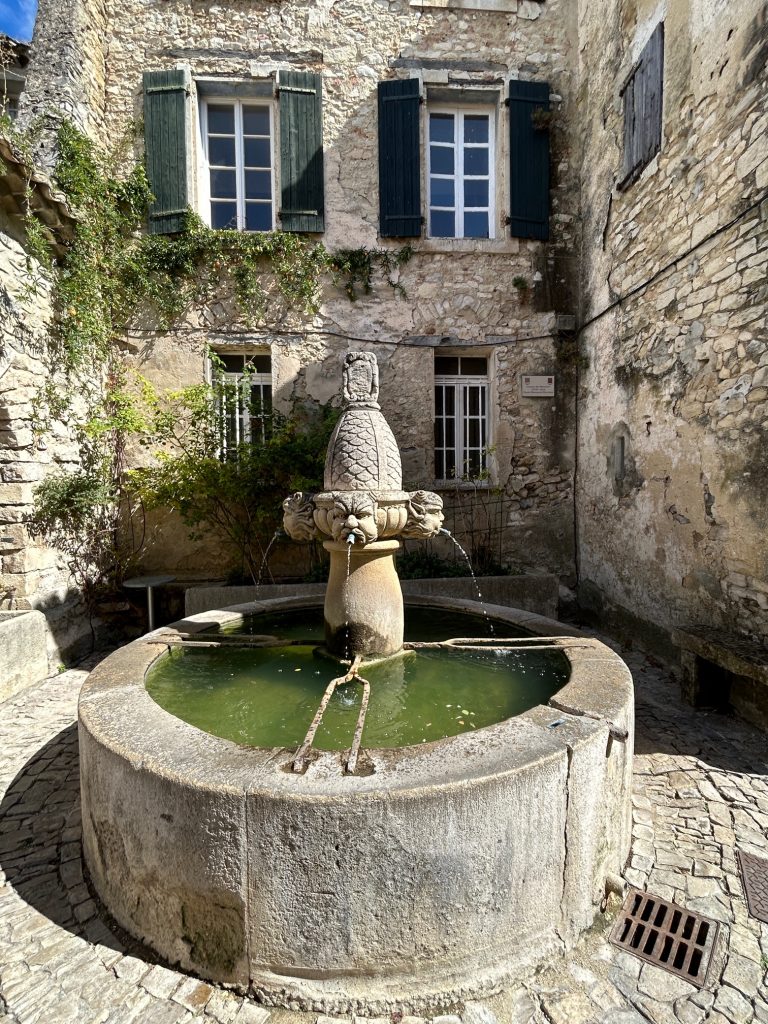
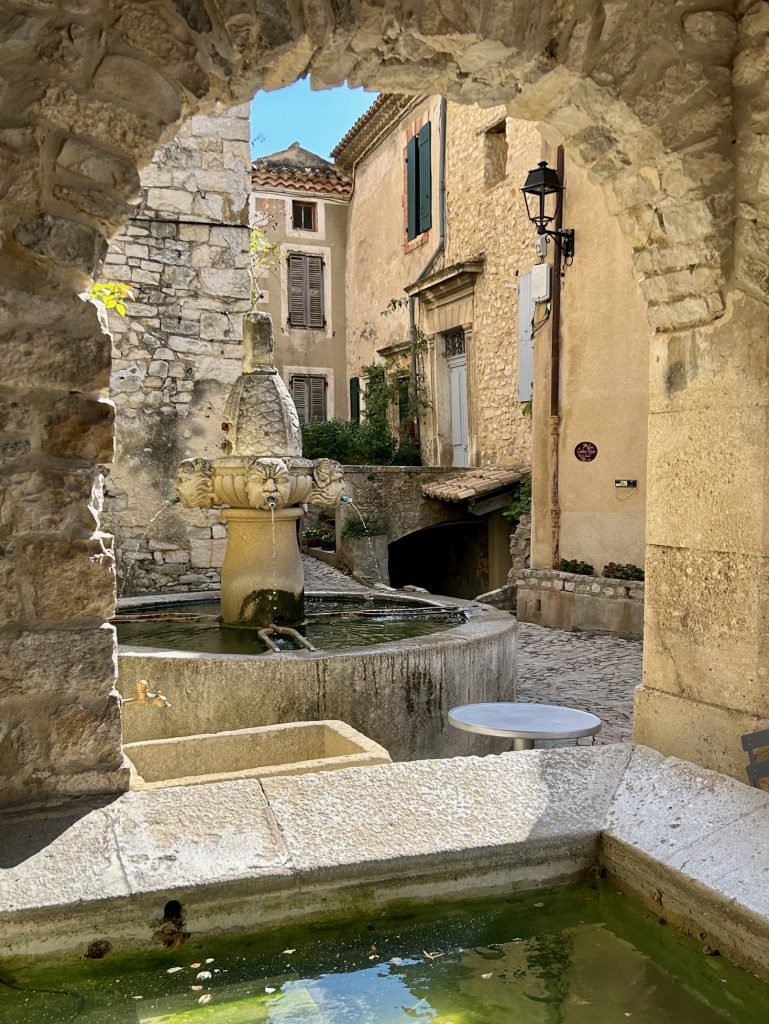
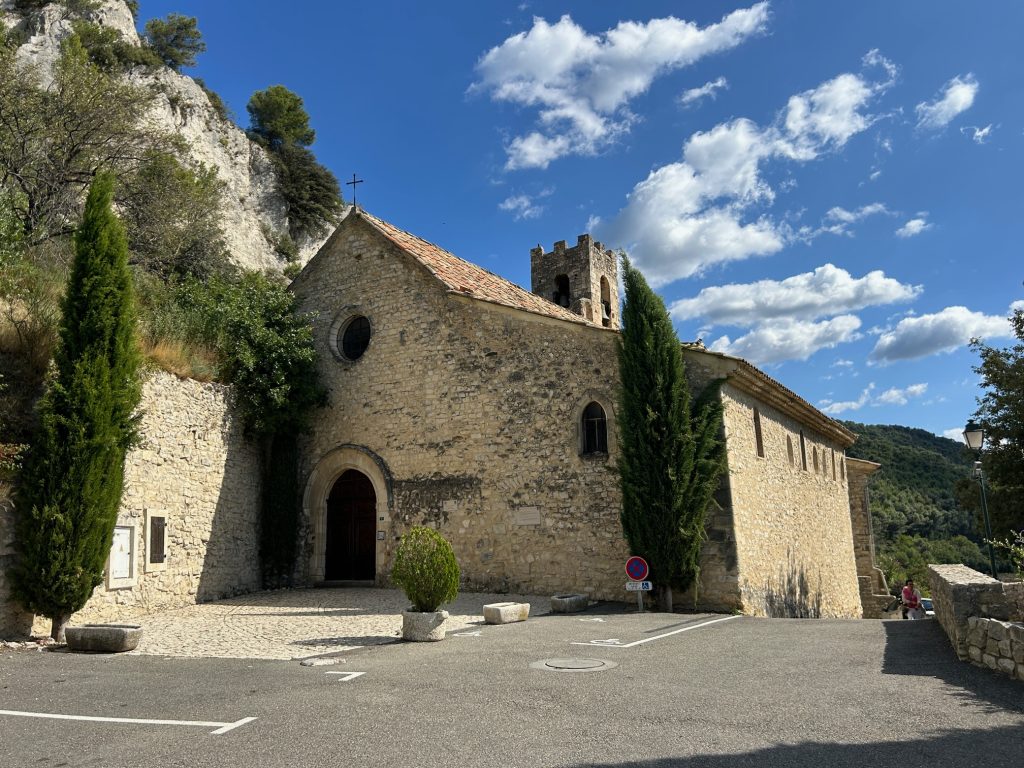
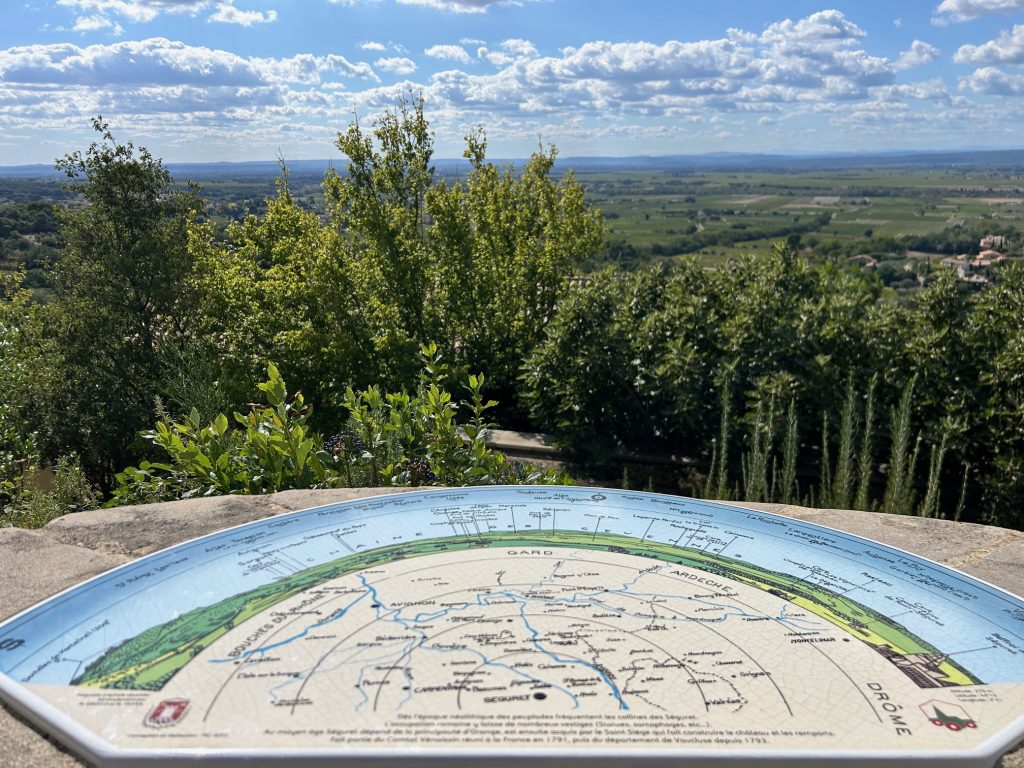
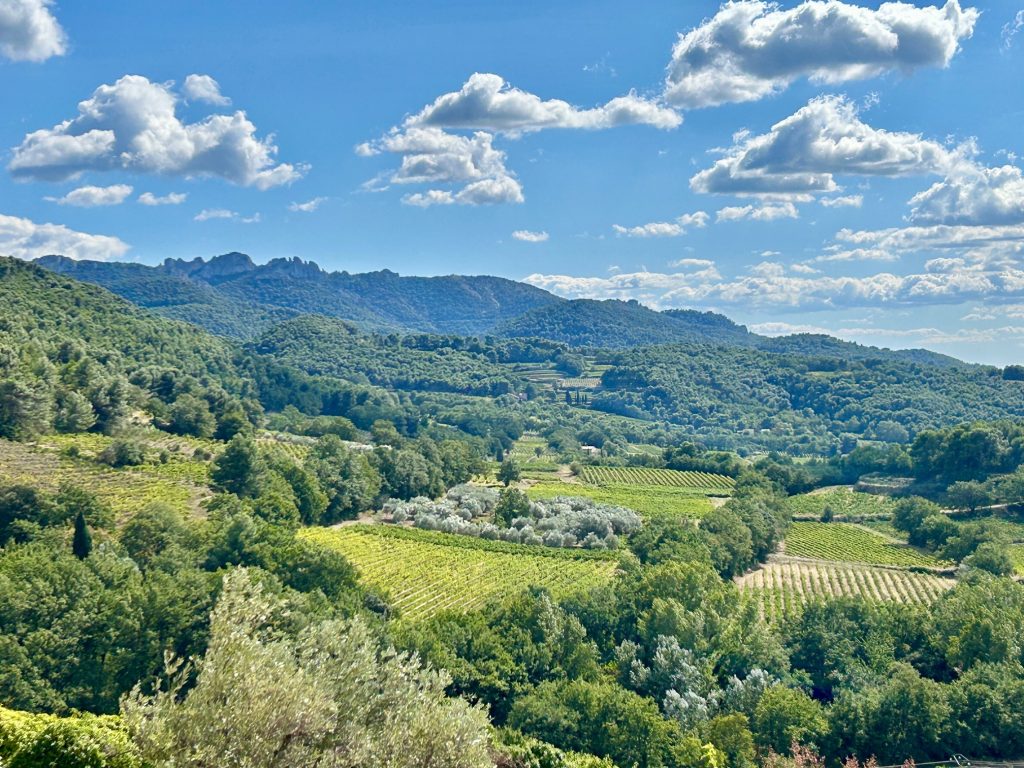
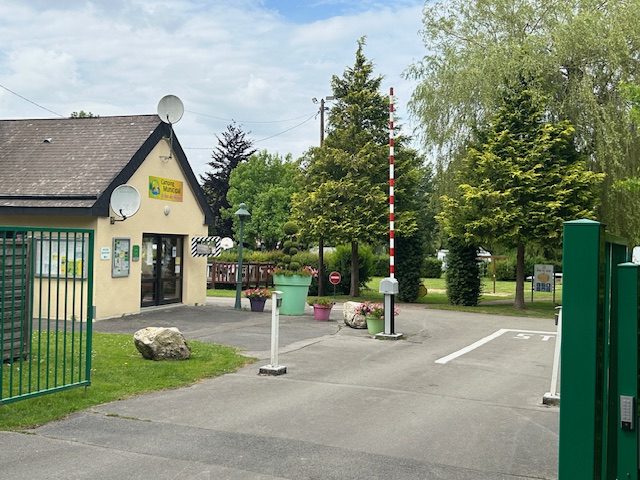
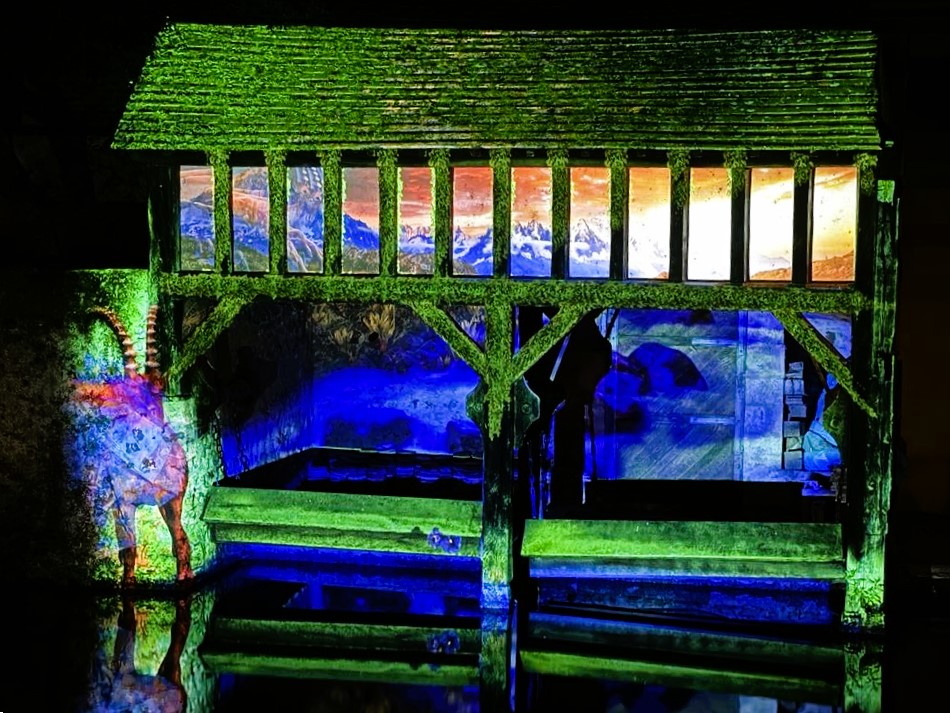
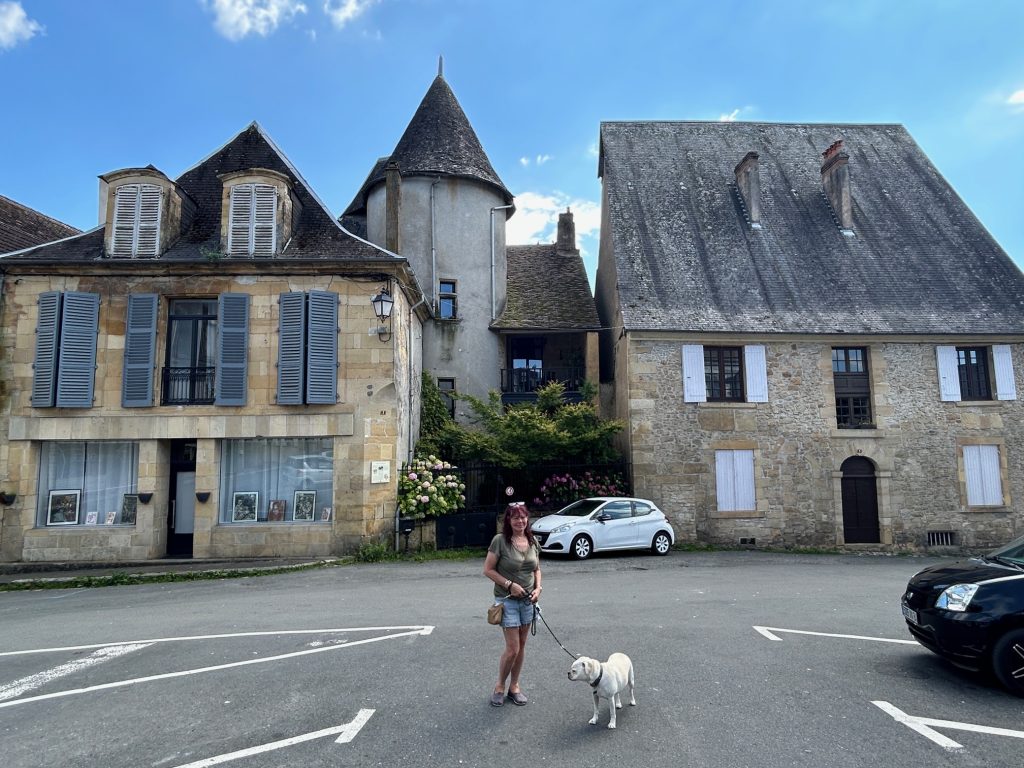
We were in Violes, in the southern Rhone Valley, to sample the wines at the Domaine des Favards and thereafter enjoy their annual celebration ‘Bodega La Nuit Favardaise’ (although, in truth, we didn’t know about the winery’s annual celebration until after we arrived). The Domaine des Favardes is first and foremost a very successful working winery of 25 hectares owned by the Famille Barbaud but they have converted a large stretch of land next to their bodega into a first class campsite. How Vanya finds these places I don’t know but we booked in for two nights.
There was nothing open in the village of Violes that first night. In fact, there is very little in the village to open. Google ‘Francethisway’ and check out Violes and everything they write about is at least 5 miles away – witness Seguret and the Dentelles de Montmirail.
Please don’t misunderstand; I’m not complaining about Violes. We know from our earlier travels in this Region that there’s plenty to see and do in the area, if not Violes itself. We were there to relax and enjoy the local wine and we weren’t going to venture out while the Mistral was blowing a hoolie. Our first evening was therefore spent in the campsite’s restaurant enjoying some good French cooking and getting a sneak preview of a couple of the local wines.
A little about the Mistral before I continue. It’s a wind and it had been blowing for a few days before we arrived and showed no sign of abating. It can blow any time of the year but is more common in the autumn and winter. It occurs when warm air coming in from the Mediterranean meets the cold air from Central France and the Alps. The warm air rises leaving a space for the cold air from the mountains to fill and this cold air then sweeps down through south east France to the Mediterranean. It makes for very strong cold winds which get even stronger as they are funneled through the narrow Rhone Valley. I heard a local man describe the Mistral as ‘exhausting’. He could not have described the phenomenen better but, it wasn’t going to spoil our wine tasting the next morning and, anyway, on the plus side this strong wind clears away pollution and makes for very blue skies.
Unfortunately for Vanya, the Domaine des Favardes produce just two white wines; a Cotes du Rhone ‘Les bons moments’ and a CDR ‘L’affute’ and as a result her wine tasting session the next morning was soon concluded. We shouldn’t have been surprised because only 6% of wines across the Rhone Valley are white, 13% are rose and a whopping 81% are red. There was no doubt which of the wines would win the white category either because the L’affute is stored in oak casks and Vanya hates oaked whites. So sorry for laughing Vanya.
I didn’t mind either of the white wines but it was the reds I was looking forward to tasting and when our host started on them, they just kept coming. I was a very happy chap.
Before this session, I knew very little about Cotes du Rhone wines other than that there are 4 grades which are produced across both the Northern Rhone and the Southern Rhone (where the terroir is somewhat different). The best wines are the ‘Crus’ AC; the next best are the ‘Villages’ AC from a named village (e.g. CDR Villages Plan de Dieu and CDR Villages Chusclan) – not just any old village but one of 20 specified villages. The third level are ‘Villages’ AOC which are not produced by one of the 20 specified villages but by a CDR accredited commune. The fourth and final level, which amount to some 50% of the area’s controlled wine production, is the CDR AOC. Anything else just isn’t Cotes du Rhone (officially).
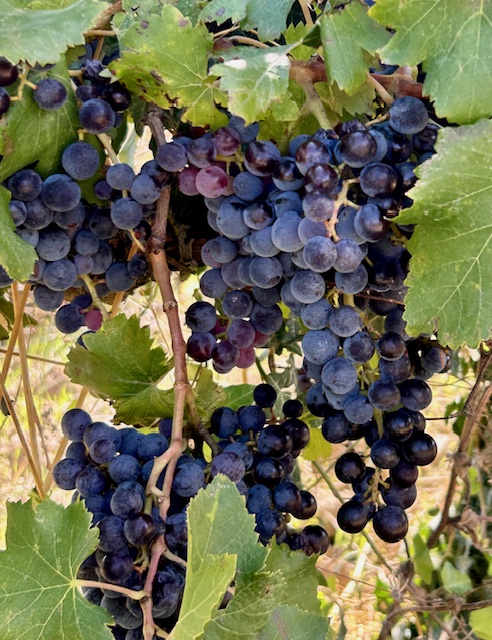
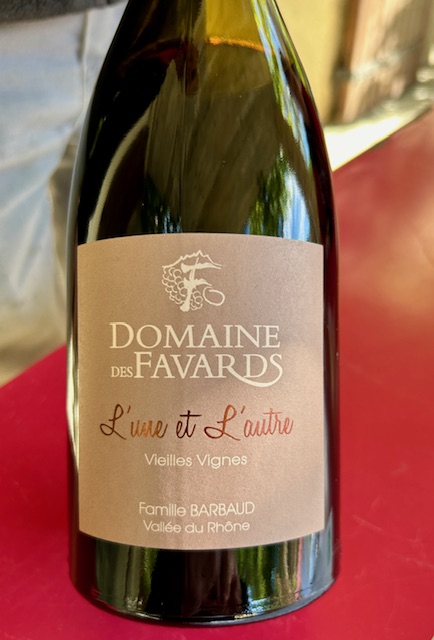
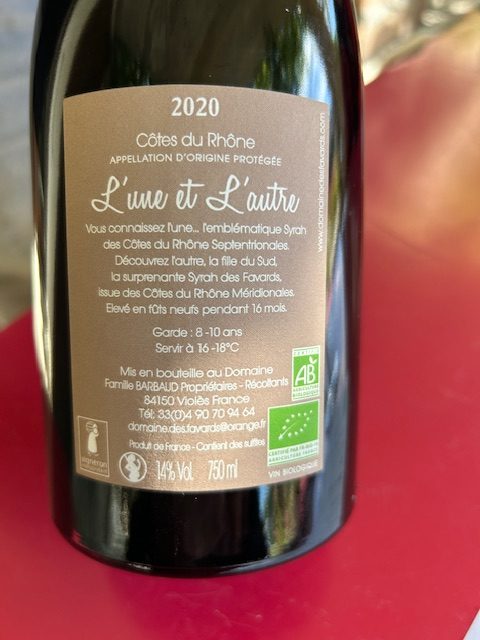
I’m not sure I learned a great deal more about Cotes du Rhone wine at the Domaine des Favards but I certainly got to taste a few. These included (a) Les bons moments rouge 2023 13.5%; (b) CDR Les Grandes Terres 2022 (Grenache, Mourvedre & Syrah grapes) 14.5%; (c) CDR Villages 2020 (Grenache & Syrah) 14.5%; (d) CDR Villages Plan de Dieu 2022 (Grenache & Syrah grapes matured in oak barrels for 12 months and at their best after 6-8 years) 14.5%; (e) CDR Villages Plan de Dieu les Givres 2021 (Grenache, Syrah, Carignan & Cinsault) 14.5%; (f) CDR Villages Plan de Dieu les Brigands 2022 (Cepages, Grenache, Cinsault & Syrah and at their best after 8-10 years) 14.5%; (g) CDR L’une et L’autre 2020 (matured in oak barrels for 16 months and also at their best after 8-10 years) 14%.
There was only the one wine I was unsure about, the Les Givres. The rest were fine but the winner for me was the L’une et L’autre with the ‘Plan de Dieu’ (a named village) coming a very close second. Needless to say, we purchased a mixed case of our favourites.
We were sufficiently rested when, that same evening, we made our way back to the winery to join La Nuit Favardaise. It was well attended by residents of not just Violes but various other villages in the area and all had dressed having regard to the continuing strong winds (in what the Geordies would call ‘their big coats’). The Mistral was still in full flow.
I tried a couple more glasses of the Les Givres during the course of the evening and, I am pleased to report, I warmed to it.
The locals are clearly made of hardier stuff than us because within an hour, Vanya and I decided to retire to the Van. We can attest to the fact, however, that the party continued to precisely 0H30 as advertised on the admission ticket. The music played by the DJ Mister Flo was good and loud.
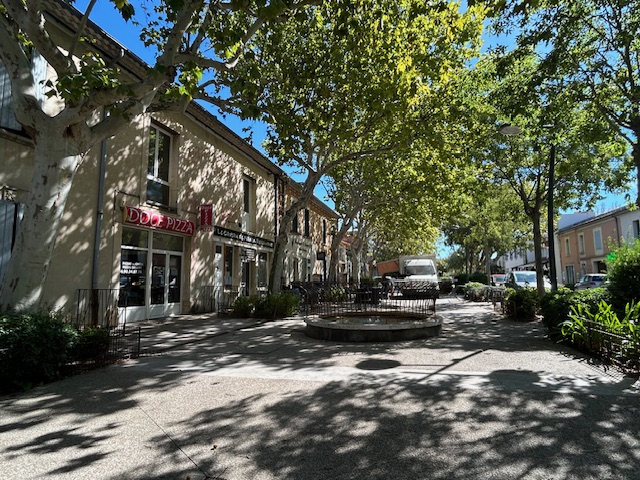
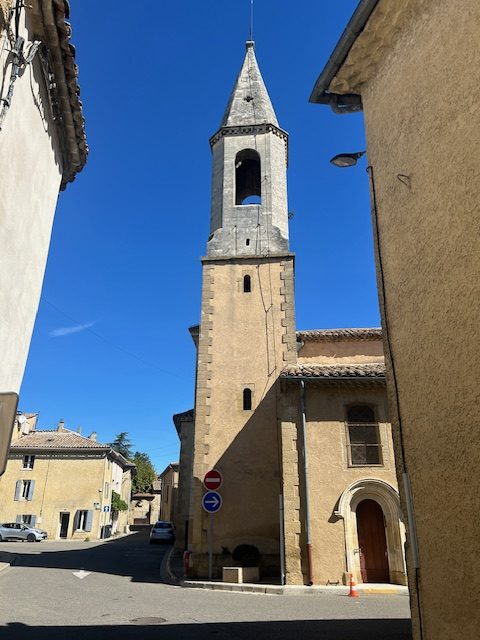
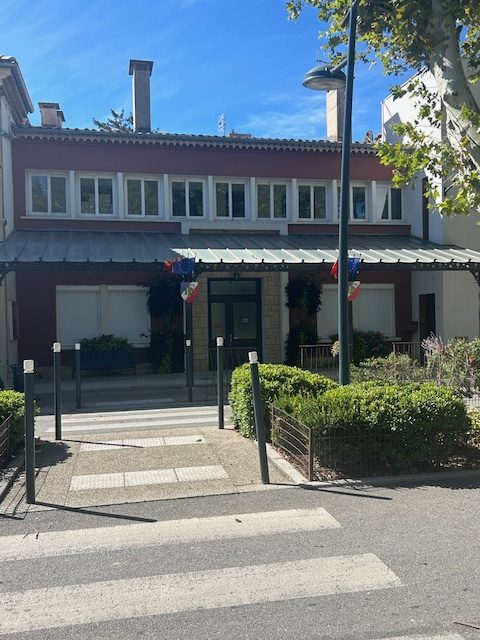
The next day we left Violes to drive further south and west to Les Argeles sur Mer, near France’s border with Spain. Before leaving I, once again, battled my way into the village for a final look and to buy some fresh bread. My first thoughts apropos the village were correct. It really doesn’t have much about it but, the bakery at the main cross-roads produce first class bread and the nearby cafe-bar does a good coffee.
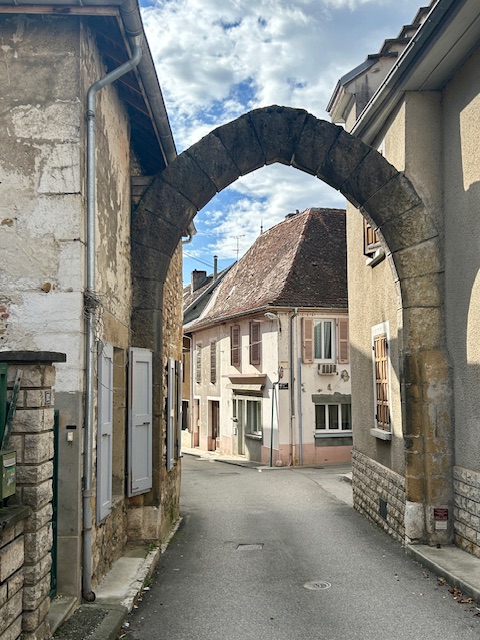
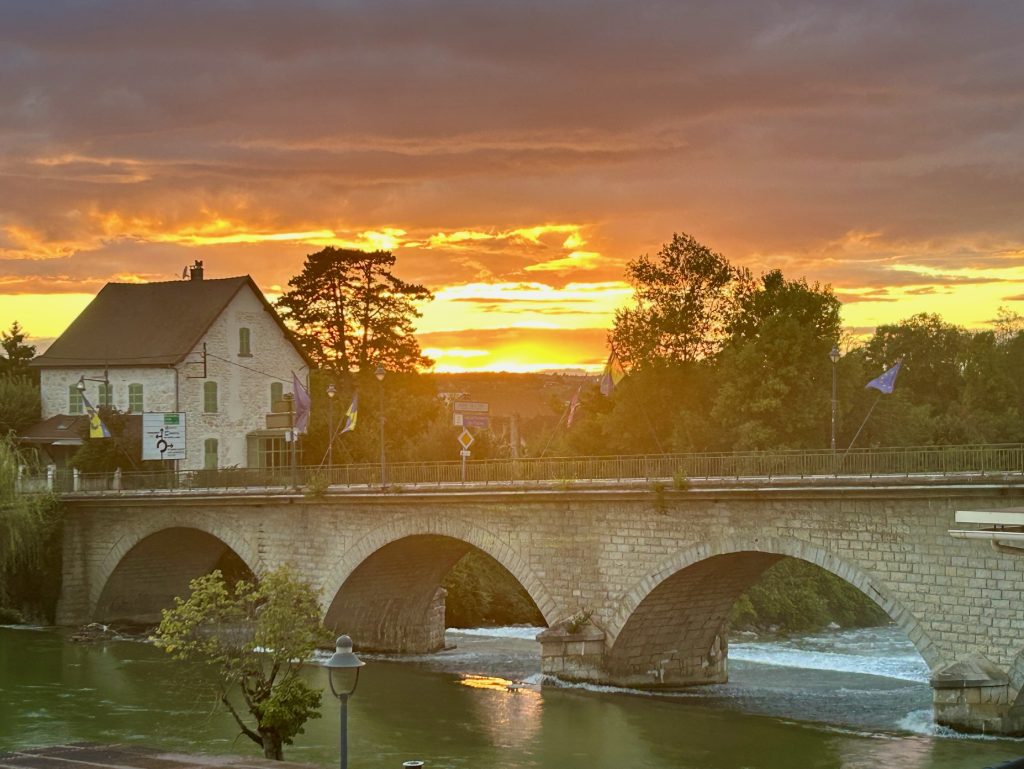
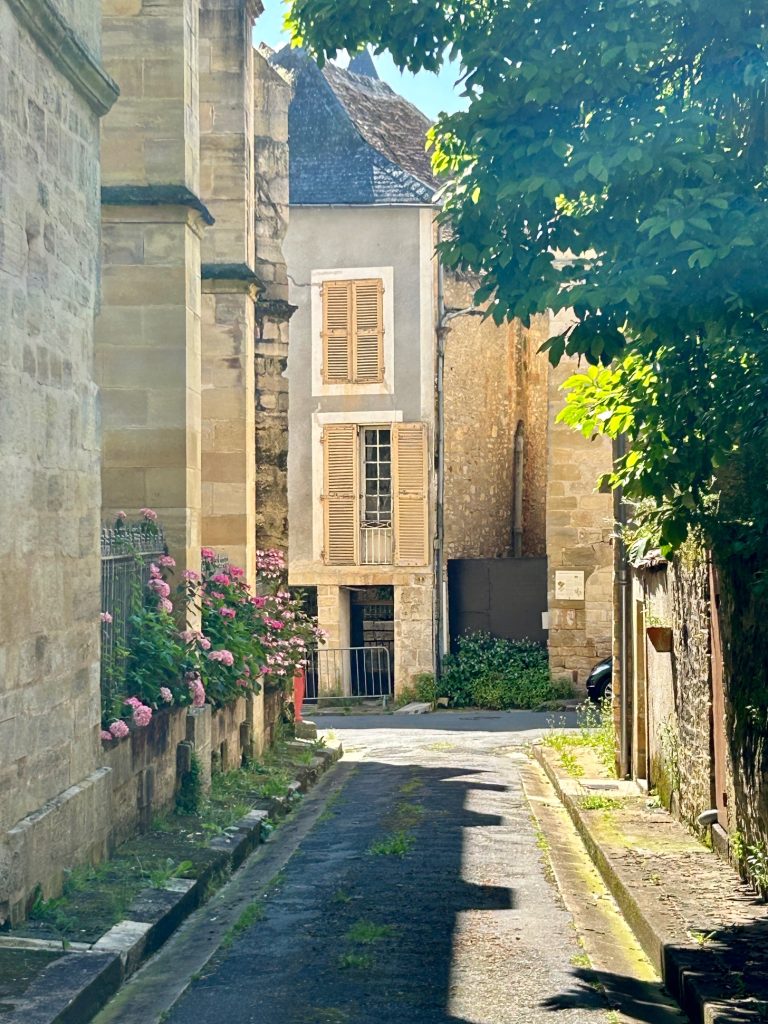
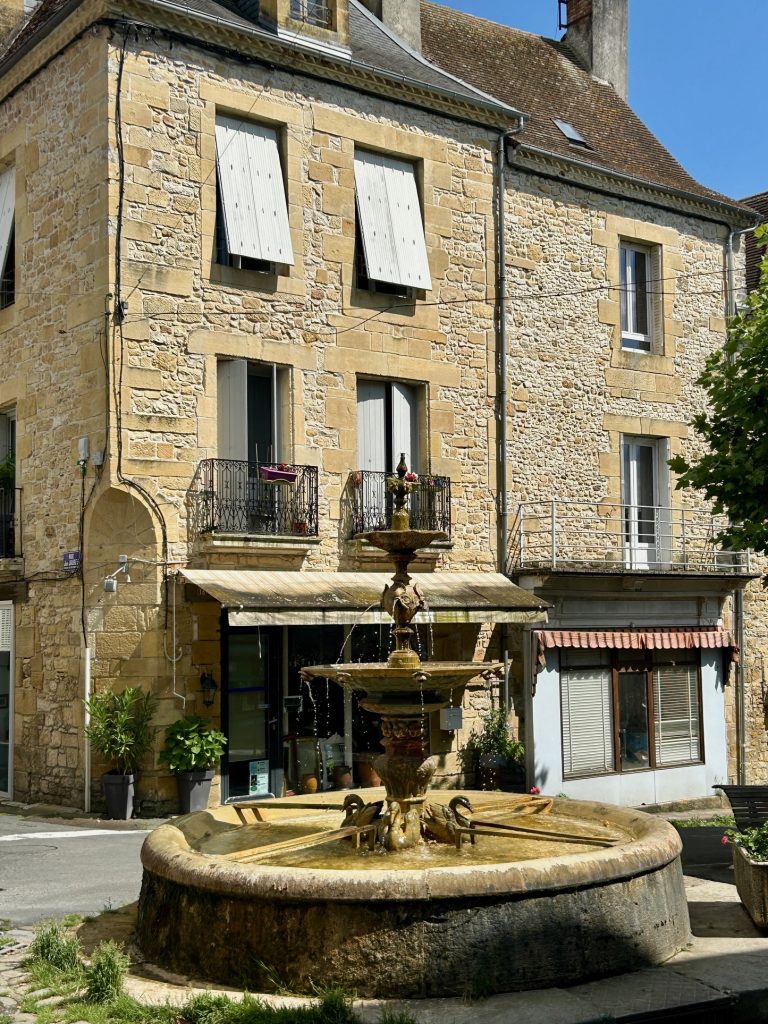
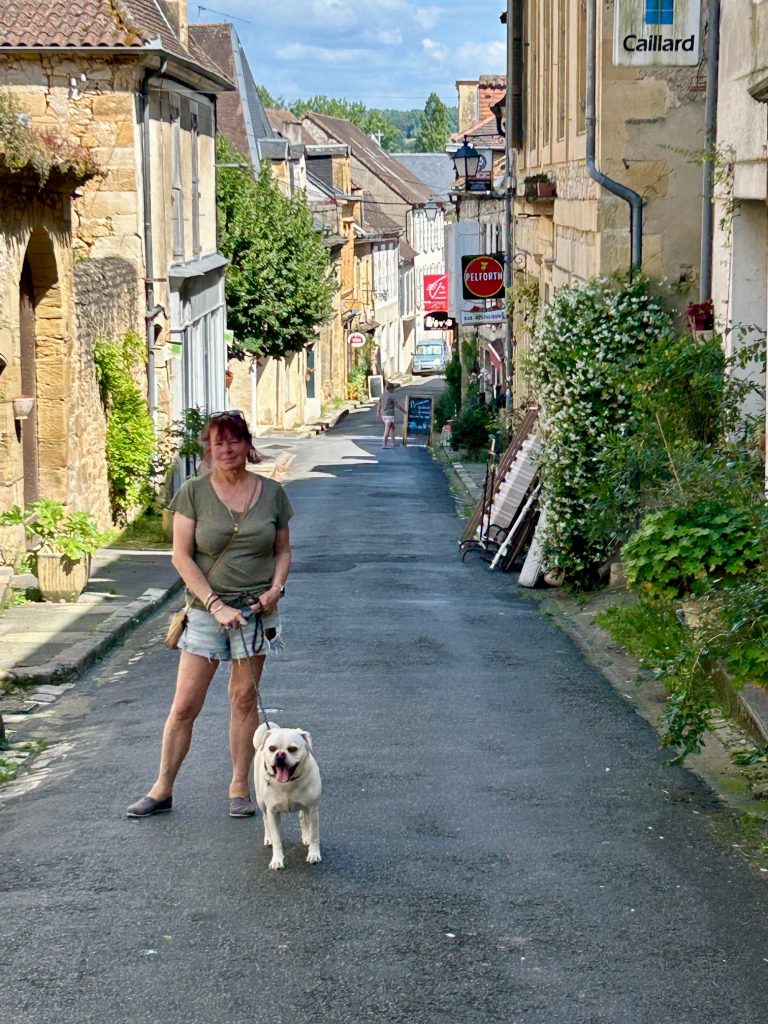
There follows a couple of photos of the village…
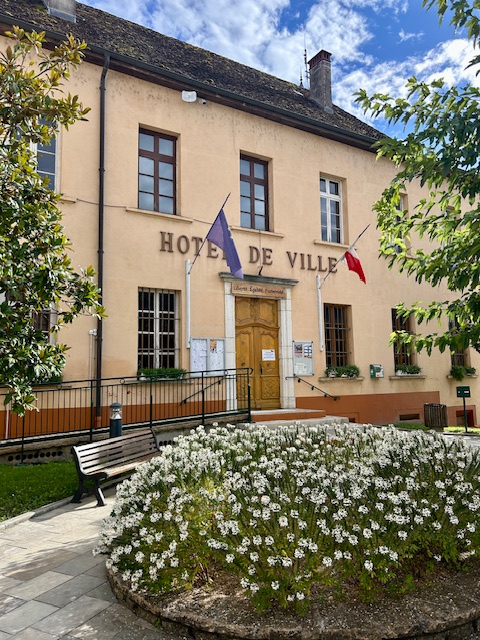
The village centre; the bakery is next to the pizza barL’Eglise (closed of course)The most unassuming Hotel de Ville
Les Argeles sur Mer next… and of course, one of my favourite wineries (Les Vignerones des Alberes) is very close by at Saint Genis des Fontaines.
We were heading to Violes but, on the way, stopped off at the tiny hilltop village of Seguret.
The ‘old town’ part of Seguret clings to the western side of a small hill in the Northern Vaucluse area and is as deserving a member of the ‘plus beau village de France’ community as any. It is almost completely encircled by two roads; the Rue du Barry which stretches along the lower part of the town and is little more than an access road and; the Chemin de L’Auteret which stretches along the upper part of the town and leads to the village church, L’Eglise Saint Denis. The area in between these two roads is entirely pedestrianised and comprises two narrow winding cobbled streets being, the Rue des Poternes and the Rue de Four. The main street is the Rue des Poternes which stretches the entire length of the village. The other, the Rue de Four, is a spur which leads off the Rue des Poternes and up to the church. Both are beautiful.
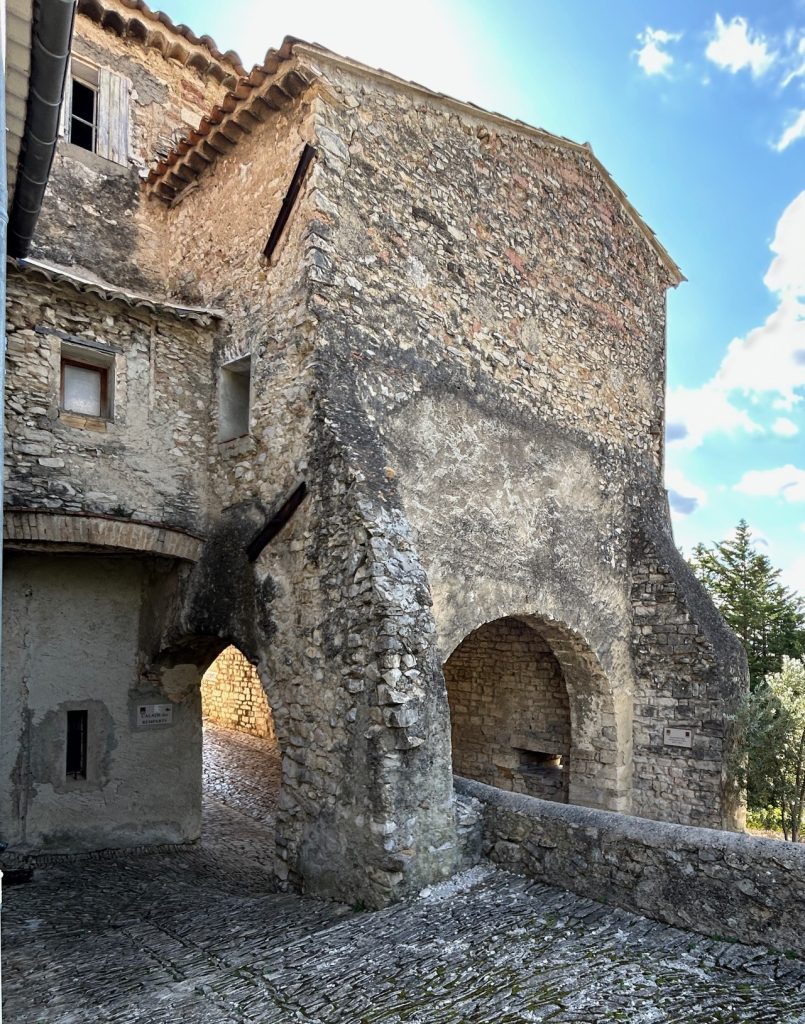
We approached the village from the north, entering via the 12th century Porte Reynier (also known as the Portail de la Bise), and then walked the length of Rue des Poternes. Narrow and winding is an understatement but it is full of interest and a photographers dream.
The Rue des Poternes is largely residential but there are a handful of craft shops and/or galleries and three cafe-restaurants, one of which was shut. Le Mesclun, further down towards the southern entrance to the village is reputed to be the best for food but it too was closing as we arrived and we therefore made do with Le Cote Terrasse; friendly and welcoming but not good value.
Porte ReynierRue des PoternesRue des PoternesRue des Poternes
There’s no market square in old town Seguret; the village is simply too narrow. Instead there is the Fontaine des Mascarons; the ‘fountain of masks’ on account of the four sculpted heads with spouts through which potable water flows. At one time, this was the only source of drinking water in the village. Close to the fountain is the old lavoir (communal washtub for want of a better description) and a drinking trough for the village’s animals. This would have been the village’s principal meeting place; as is evidenced by the adjacent village clock and belfry.
There’s a second larger lavoir at the southern end of the village just outside the Huguenot Gate on the Place des Arceaux.
Rue des PoternesLa Fontaine des MascaronsMy favourite photo of the day.
Having walked the length of the Rue des Poternes, Vanya was content to wait in the Van while I walked the remainder of the village. I escorted her back to the Van by way of the Rue du Barry and then took off, firstly, up the Rue de Four to the church and then up the Chemin d’L’Auteret to the castle ruins. That way, I would be able to cover the whole village.
Saint Denis was closed but the panoramas from a viewing platform outside the church more than compensated; especially those across the Rhone Valley.
L’Eglise Saint DenisView west from the churchView south east from the church
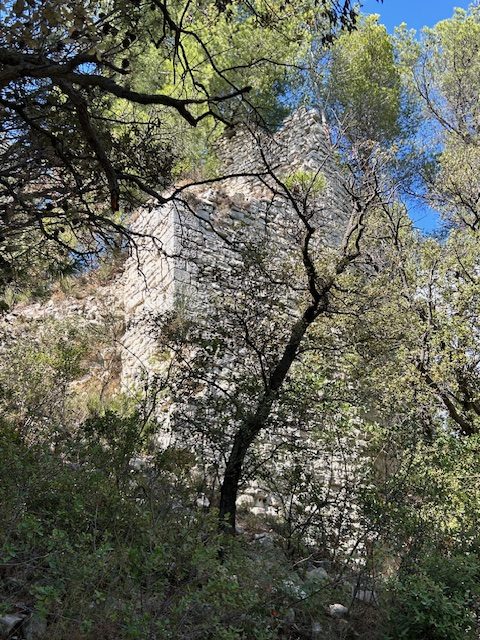
Indeed, the views from the church are better than from the castle ruins higher up the hill (and don’t let anyone tell you different); particularly those to the south east (which could be the jagged teeth of the ‘Dentelles de Montmirail’). Actually, I thought the walk up to the castle ruins a complete waste of time. The views are obscured by trees and there’s nothing left of the castle that is worth seeing.
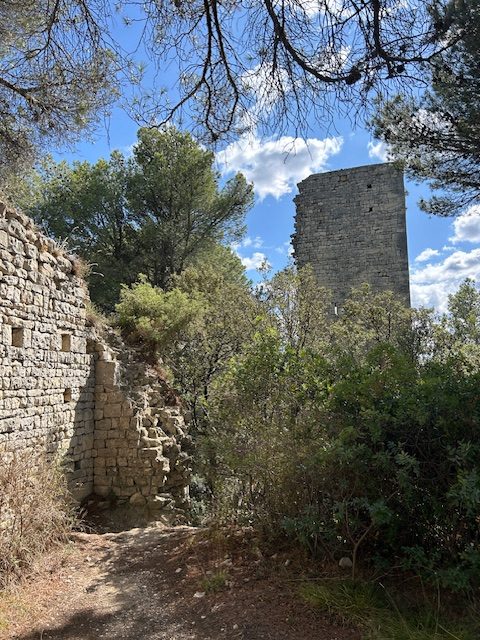
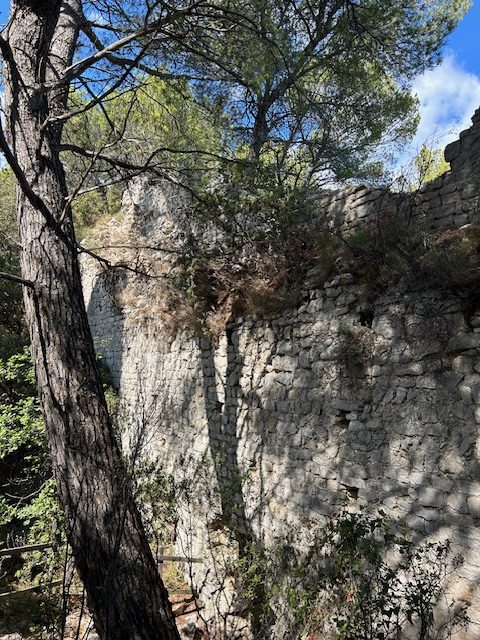
Castle ruins…
That’s all I’m inclined to say for now about Seguret except that during our short stay the wind started blowing a real hoolie! I thought at the time that such a strong wind had to be the Mistral. If so, we would be in for a rough ride at our next stop, Violes.
We were on our way into France to escape Switzerland’s rain and Vanya picked out a camp site in the Savoyard at a place called Saint Genix sur Guiers. Neither of us had heard of the place before. Imagine our surprise when, later that day after we had checked into a campsite in the town, I read a post on facebook by friends of hours who had overnighted in Saint Genix just 24 hours earlier! These friends were walking a Camino from Geneva to Le Puy en Velay and this route took them along the GR65 which passes, amongst other places, through Saint Genix (and ultimately on to Santiago de Compostela in Galicia, Spain). Small world or what?!?
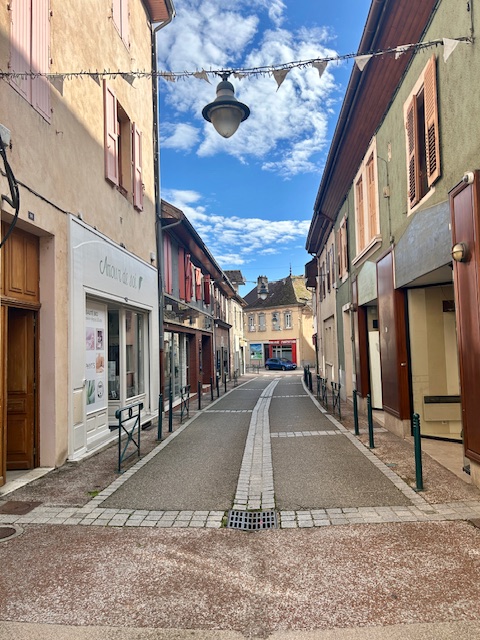
Okay, so a little about Saint Genix. The town is located at the confluence of the Rivers Rhone and Guiers and it’s proper name is Saint Genix les Villages. The town was known as Saint Genix sur Guiers until, in 2019, some civil restructuring saw it merged with the two villages of Gresin and Saint Maurice de Rotherens and formed into the new commune of Saint Genix les Villages. Much of the signage in the town still refers to Saint Genix sur Guiers.
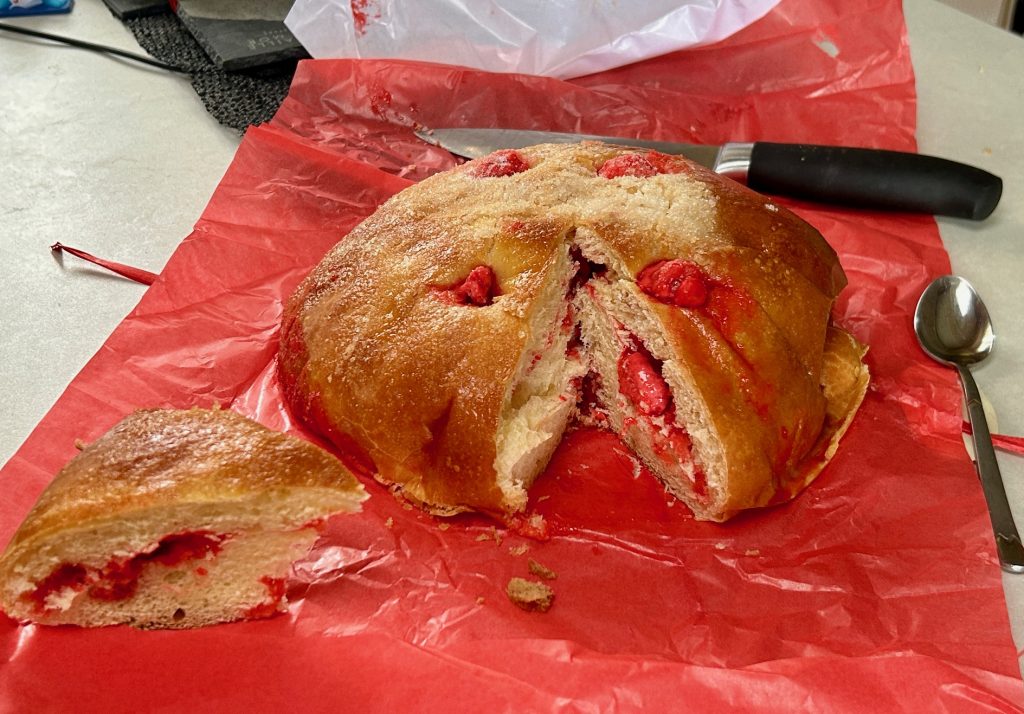
It is a small fairly unassuming town of just over 3,000 people which became famous for it’s Gateaux Saint Genix. This cake was created by a local pastry chef, Pierre Labully in 1880. In truth it is more a Brioche than a cake. It is a bread made with leavened dough to a fairly common recipe but Labully made it his own by adding pink pralines (sugar coated almonds) and topping it with sugar before baking. The resulting product caught on and is now made all over France. The Gateaux Labully bakery where the product was first created was closed for holidays during our visit but I was able to get one from the Gateaux Saint Genie bakery on Rue de Couvent. It is quite tasty but proved a little too dry for me.
Gateau Saint Genix
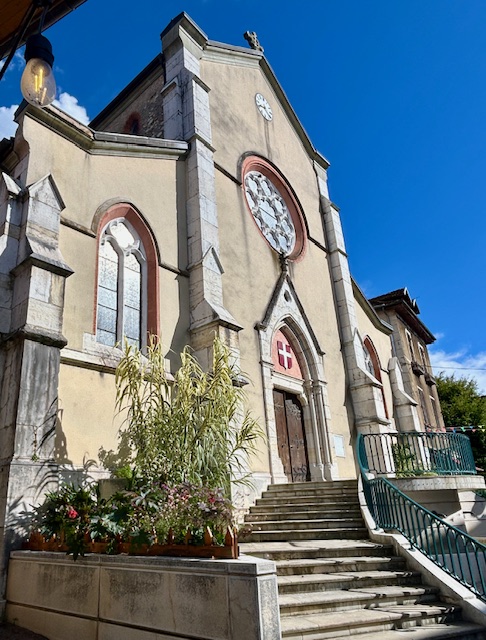
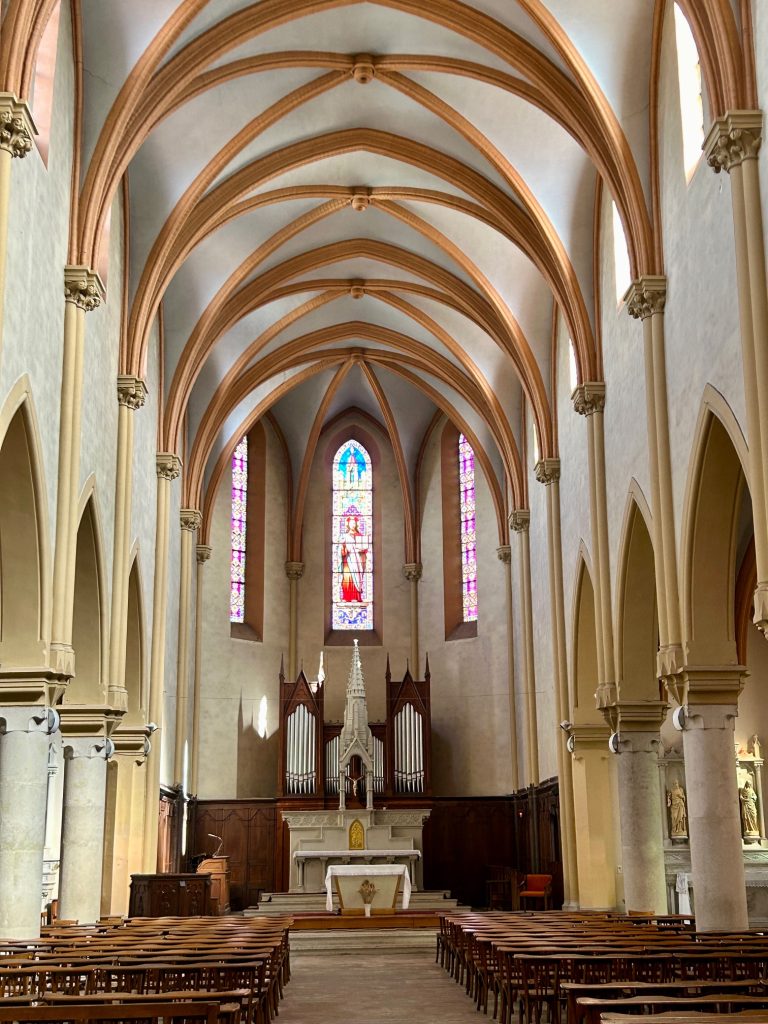
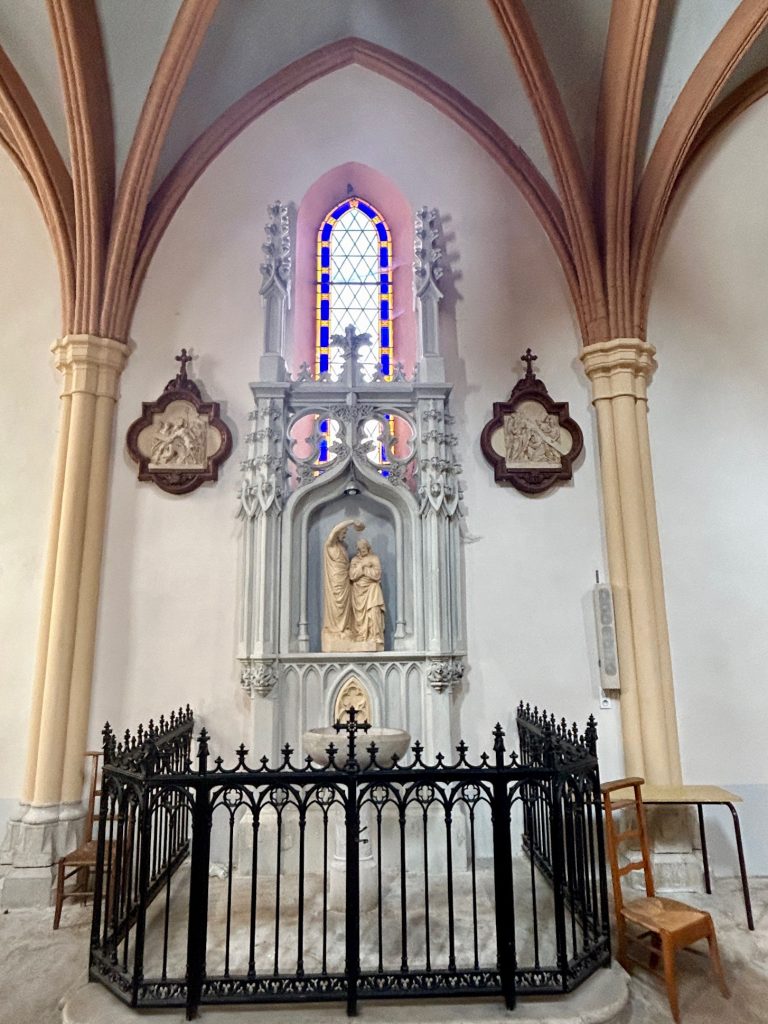
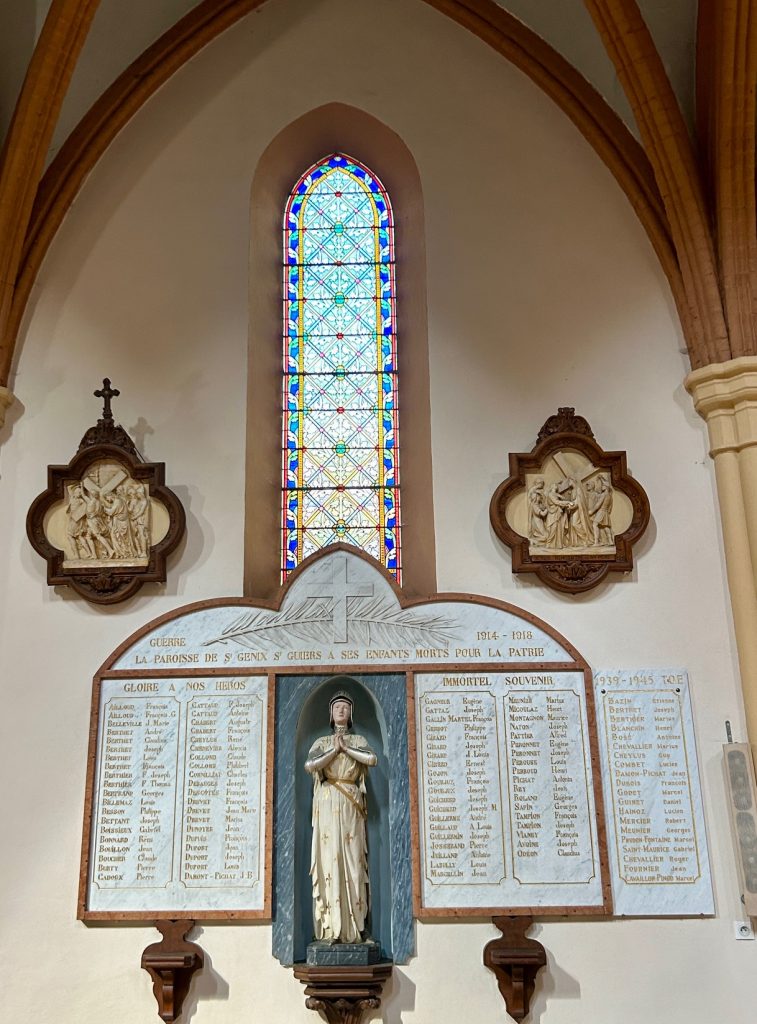
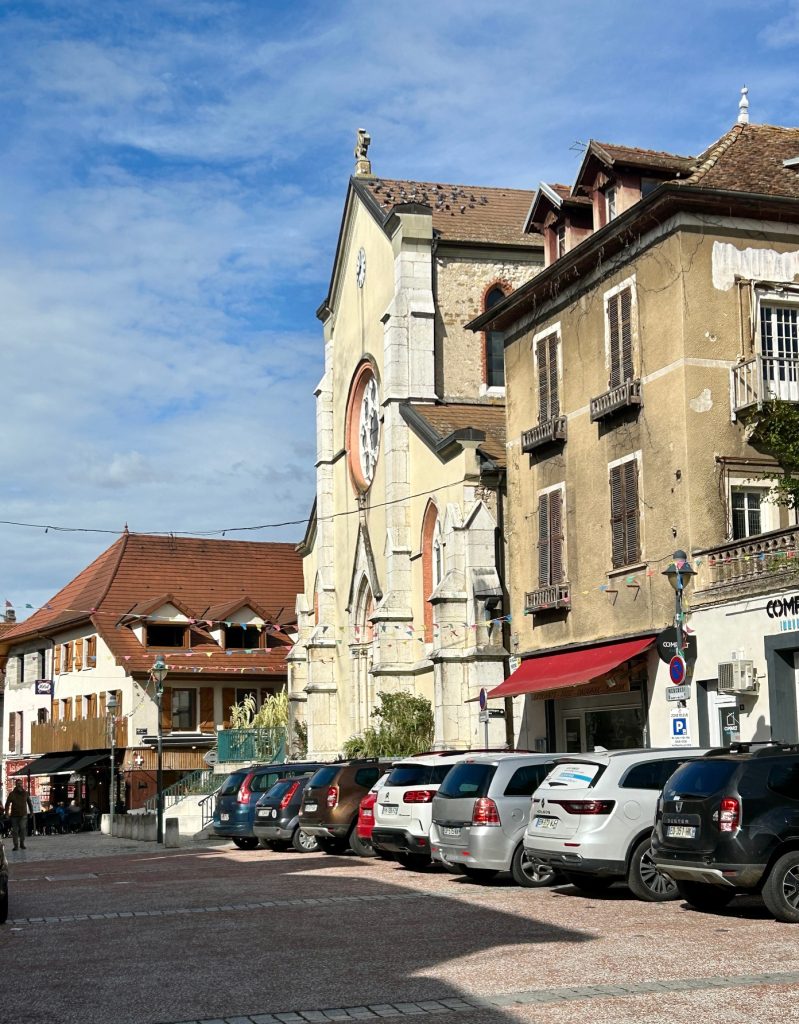
There’s not a great deal to the town in terms of things to see or do. Why else would I go on so much about a cake that I didn’t really enjoy? However, it has a little church, L’Eglise Notre Dame de l’Assomption, which is worth a visit. By Roman Catholic standards it is simply adorned but it is charming. I particularly like the entrance with it’s curved staircase and and the fact that there’s a plaque inside honouring the town’s war dead (1914-1918 and 1939-1945). Such plaques are not that common in French churches, nor English ones for that matter.
L’Eglise Notre Dame……and inside.Baptismal Font Honouring the town’s war dead
Next door to the church on Place de l’Eglise is a bar-restaurant (Cafe des Sports) which appeared during our visit to serve as much a focal point in the town as the church itself. It was full of people on the two occasions I visited it; once during the day to reserve a table for dinner and again that night to enjoy the dinner. The welcome on both occasions was warm and friendly.
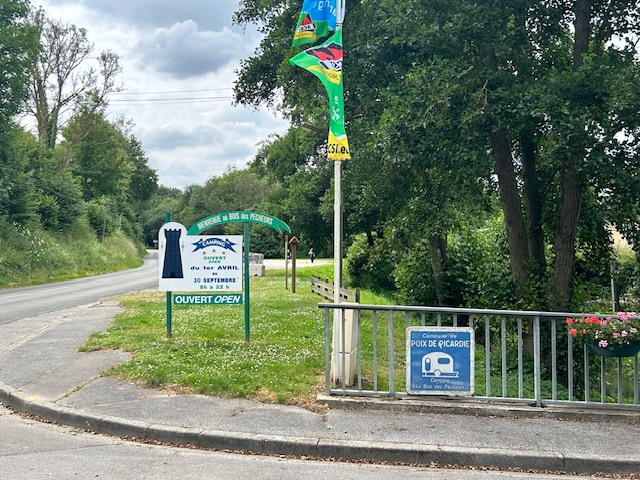
And so to Poix de Picardie in the Somme Department of Hauts de France. We elected to stop in Poix de Picardie (almost half way between Pont-Audemer and Calais) because it has a town centre campsite and we hoped to find a bar in the town where we could watch England’s next game (against Slovakia) in the European Championships. It took us about 1.45 hours to complete the drive to Poix.
I should have known better. I had forgotten it was a Sunday and Poix de Picardie, in common with the rest of France, was closed. I checked all around the town but nothing was open. Indeed, I barely saw anyone out and about. We’d have to watch the football match on Vanya’s Ipad back at the campsite.
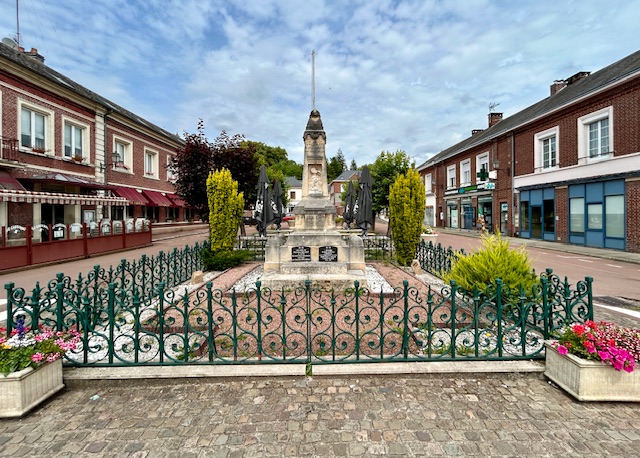
There’s not much to the town. The large town square (Place de la Republique) has a couple of bars and a sizeable hotel-restaurant (Le Cardinal) but, as mentioned before, everything was closed.
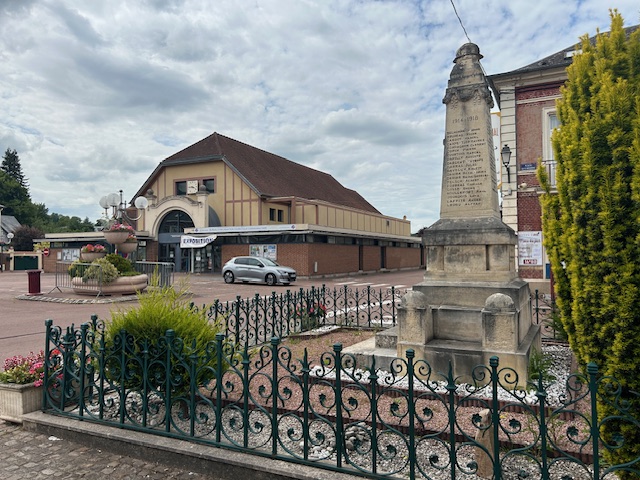
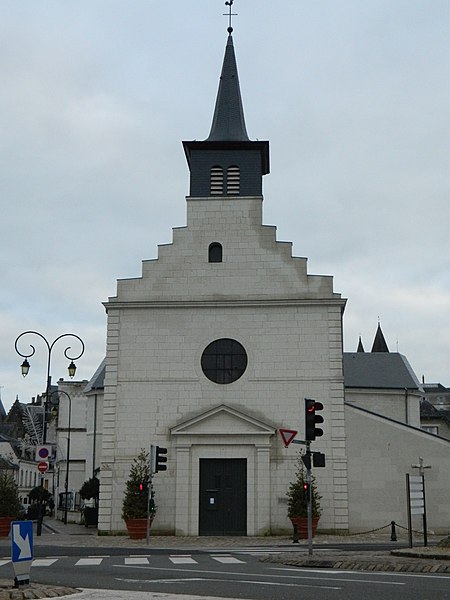
The War Memorial on Place de la Republic…… and again.
The town’s most interesting feature is, without any doubt, it’s 16th century church (L’Eglise Saint Denis). There was an earlier church on the same site but it was burned, along with the rest of the town, by Edward III’s army just days before the Battle of Crecy (1346). The church was subsequently rebuilt but then destroyed again in 1472 by Charles the Bold.
The existing 16th century church suffered damage early in the 18th century from floods and fire and again towards the end of that century (during the French Revolution) when it was turned first into a warehouse and then a stable. Early in World War II it escaped serious damage when much of the town was heavily bombed by the Luftwaffe.
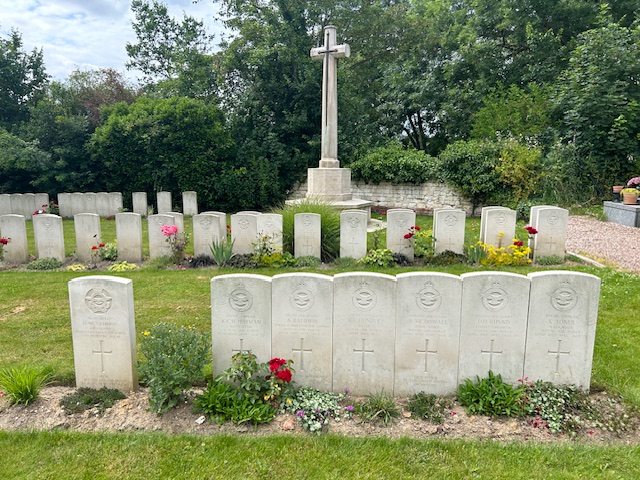
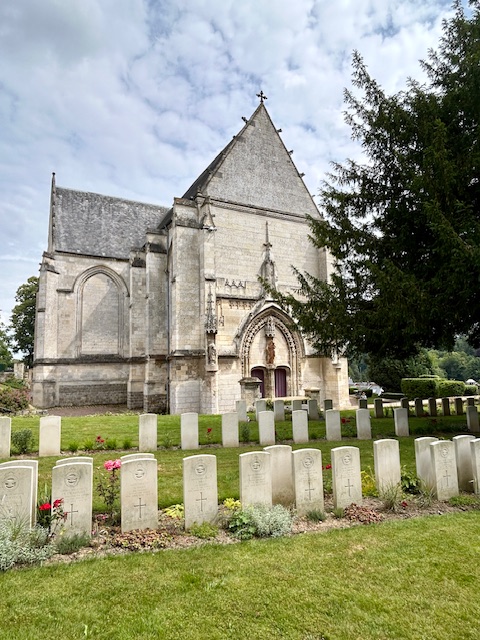
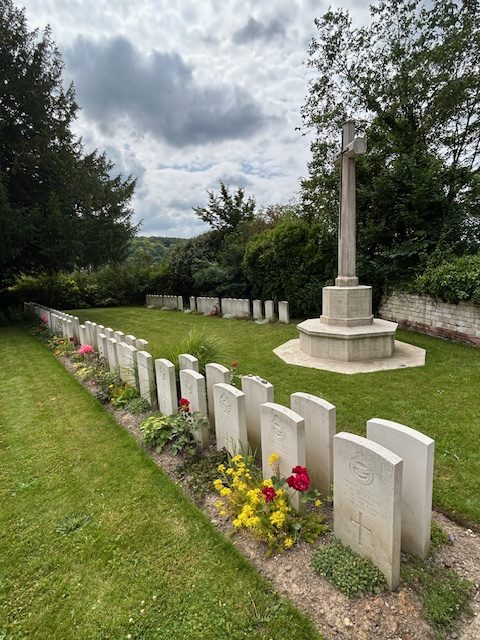
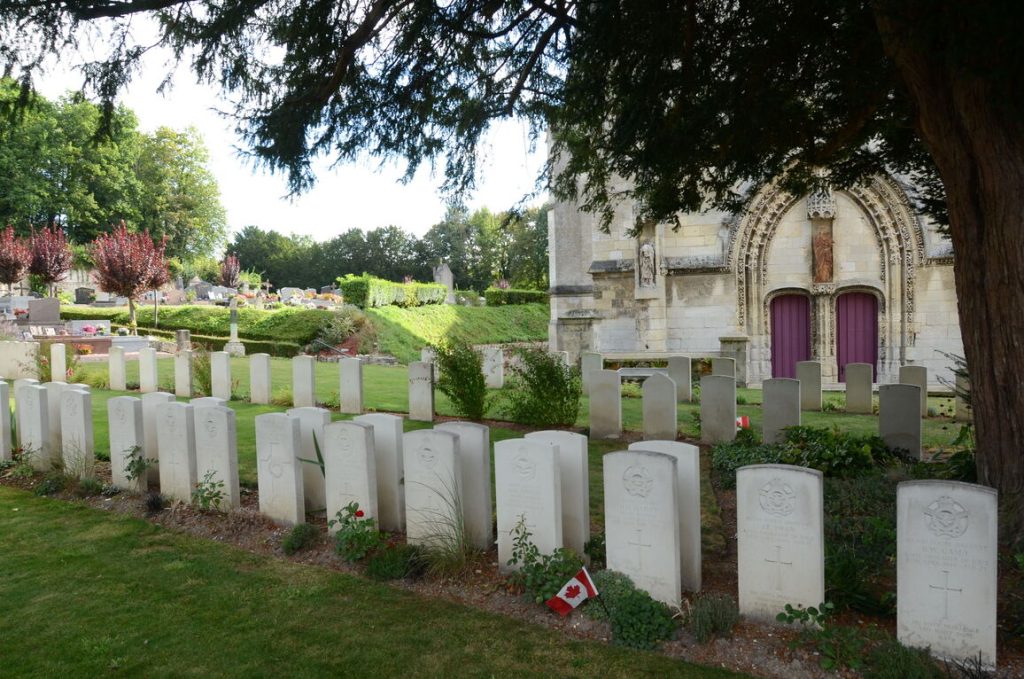
Talking of WWII, there is a Commonwealth War Graves plot outside the west door of the church. It holds the bodies of 149 allied aircrew who crashed or were shot down in the area during the war and there is a memorial commemorating a further 4 pilots whose remains have not been found. It is sobering to see how young so many of the airmen were when they were killed.
Well that’s it. Tour 9 has come to an end. Next stop Calais and the ferry back to England. We hope to be back early in September. Fingers crossed.
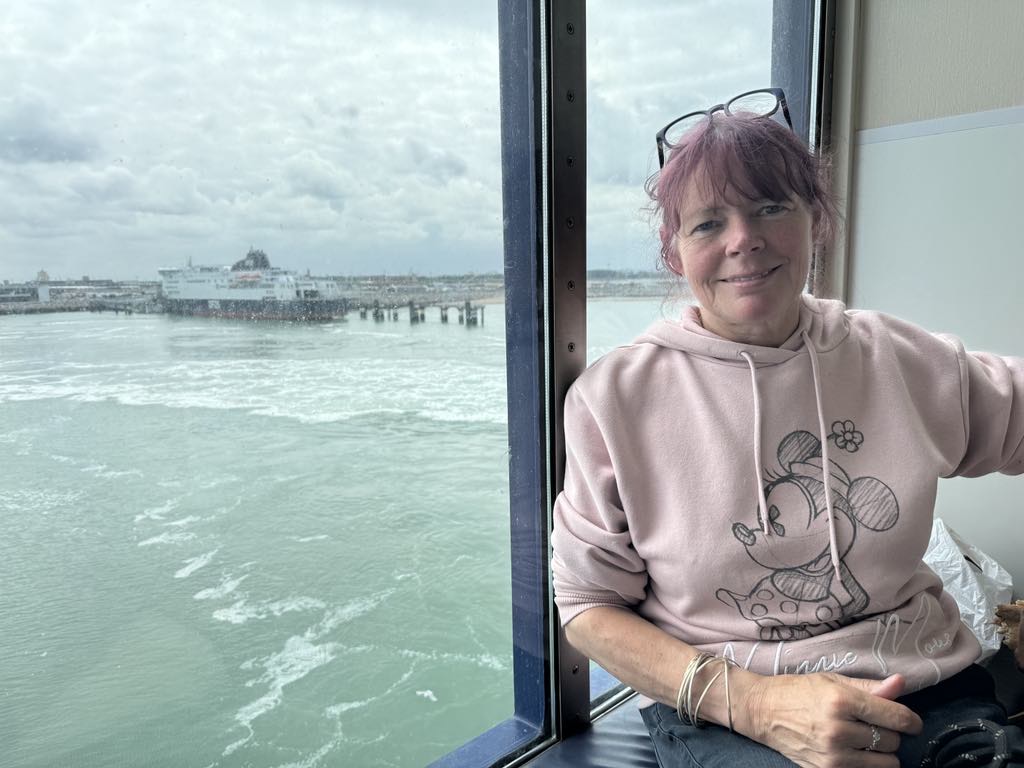
On the ferry and leaving France.
Footnote: In case you are interested, England scored two goals against Slovakia during injury time (after being a goal down for much of the match). They are through to the next round but they will have to play much better to win this competition. Don’t hold your breath.
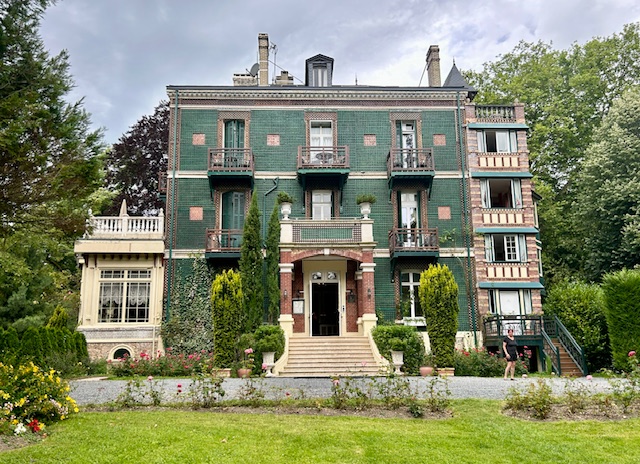
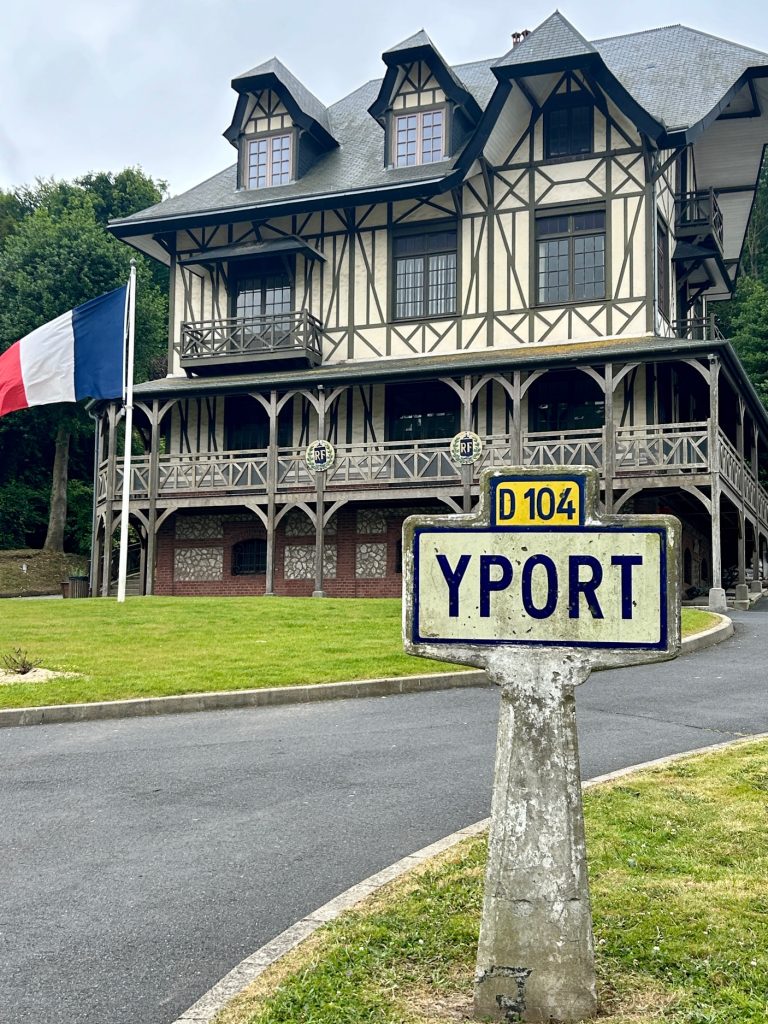
It took no more than an hour or so to drive south from Yport to the small town of Pont-Audemer and the Belle Isle sur Risle Chateau Hotel & Spa.
Vanya had booked us into the hotel for my birthday and, having been told to do nothing other than relax during our stay, I decided against taking anything other than a very short walk around the town. I cannot therefore tell you much about the place. I know it dates back to the 8th century when it was known as Duos Pontes (Two Bridges) and that it suffered horribly during the 100 Years War (but didn’t just about everywhere in the north of France?). I know too that the town reached it’s heydey during the 18th century, after an influx of English artisans helped revolutionise the local tanning and papermaking industries but; both of those industries have long since failed and the town is now trying to reinvent itself on the back of tourism. I learned all that from ‘plusbeauxdetours.com’.
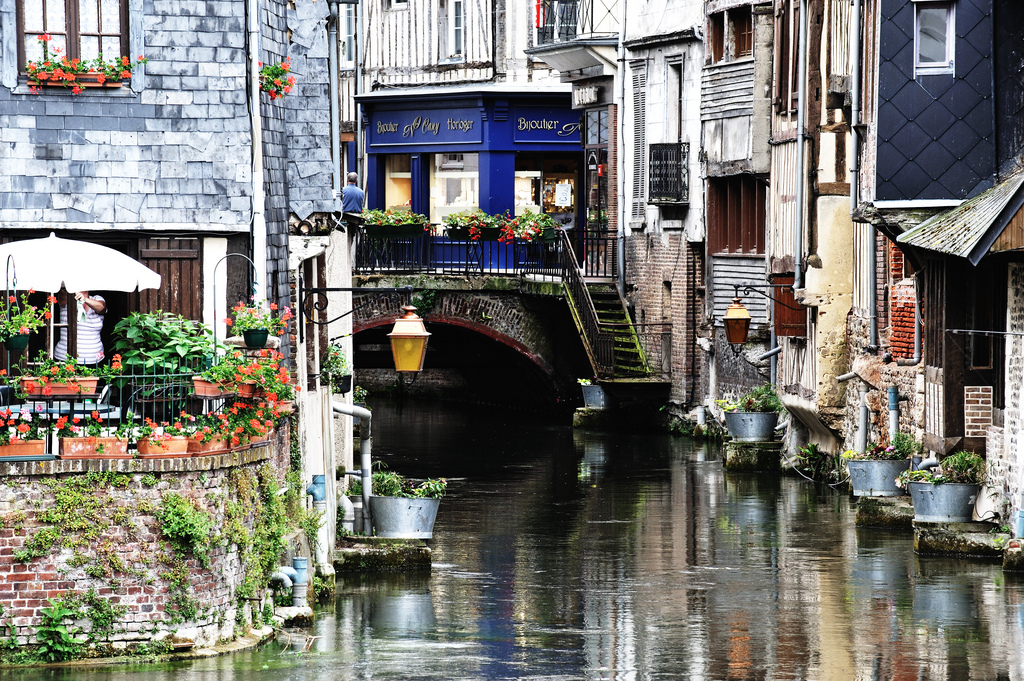
Parts of Pont-Audemer are very picturesque; especially down by the canals where there is a mix of half timbered houses and some elegant town houses but; during my admittedly short walk I saw little else of interest and there is considerable competition in the tourism sector. Pont-Audemer will not find it an easy sector in which to establish itself.
Having said that, the very welcoming Belle Isle sur Risle Chateau Hotel & Spa attracted us to the town and could quite easily do so again. It proved a very relaxing hotel, reasonably well placed for travel around Normandy and it has a first rate restaurant.
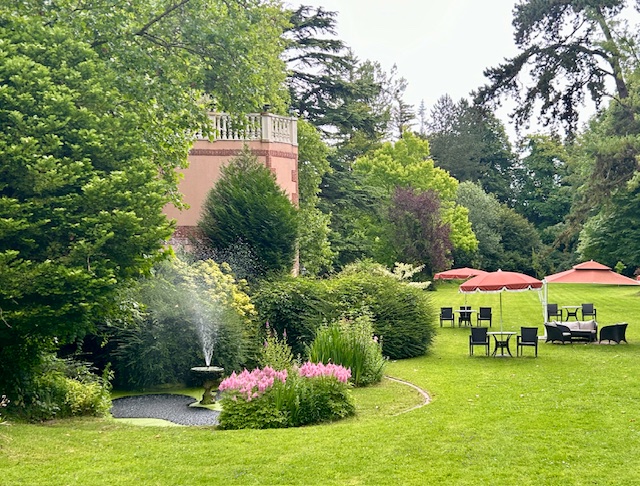
The town rather grandly describes itself as the Venice of Normandy (which really does stretch the imagination) but, in keeping with that portrayal, the hotel is built on an island in the middle of the River Risle. It sits in 5 acres of mature woods and the gardens are quite beautiful. They were planned by the celebrated 19th century horticulteralist, landscape architect and Andean adventurer, Edouard Andre, who designed city parks all around the world, including such places as Monte Carlo, Montevideo, Paris (Les Tuileries) and Liverpool (Sefton Park).
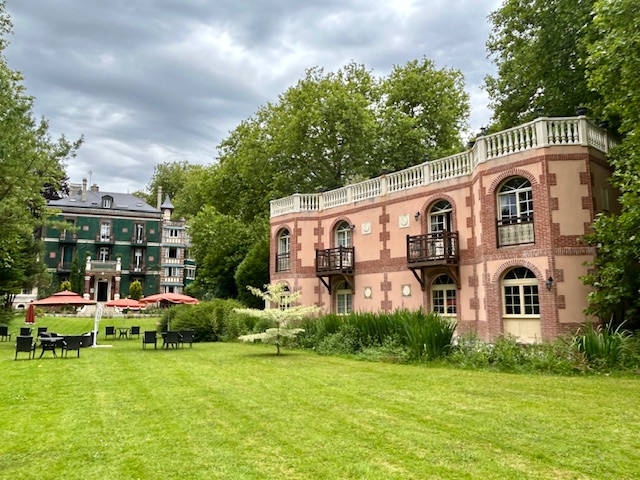
The hotel itself comprises the main building (built in 1856) and a remodelled orangery which together contain 28 rooms and/or suites. We were given a large ensuite room in the former orangery which is described in the hotel brochure as being ‘of hushed elegance’. With it’s art deco furniture, thick carpets, floral curtains and luxury bedding, etc, Vanya and I would describe it as being ‘shabby chic’ but we would mean that in a most complimentary way. The hotel is spotlessly clean, very comfortable and wholly calming.
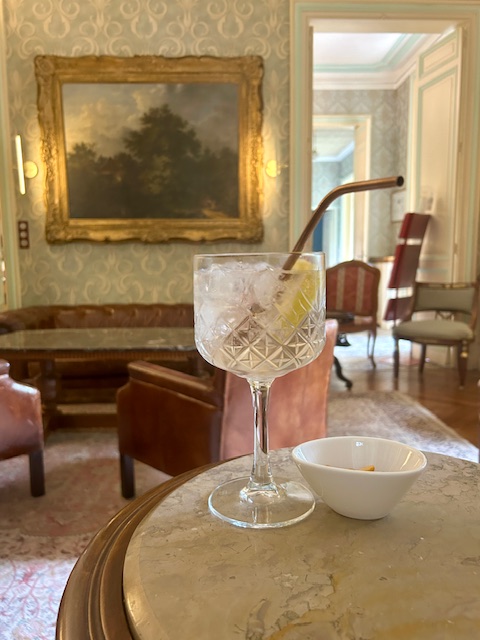
The spa facilities include an outdoor pool, an indoor pleasure pool, two jacuzzis, a hammam (a type of steam bath), a sauna, a massage room and a fitness room. What else do you need? Regrettably, because of my damaged hand (see Yport blog if you have an unhealthy fascination in injury), I was unable to take advantage of any of those particular facilities but Vanya did while I sat and sipped a large gin & tonic and perused the evening’s menu.
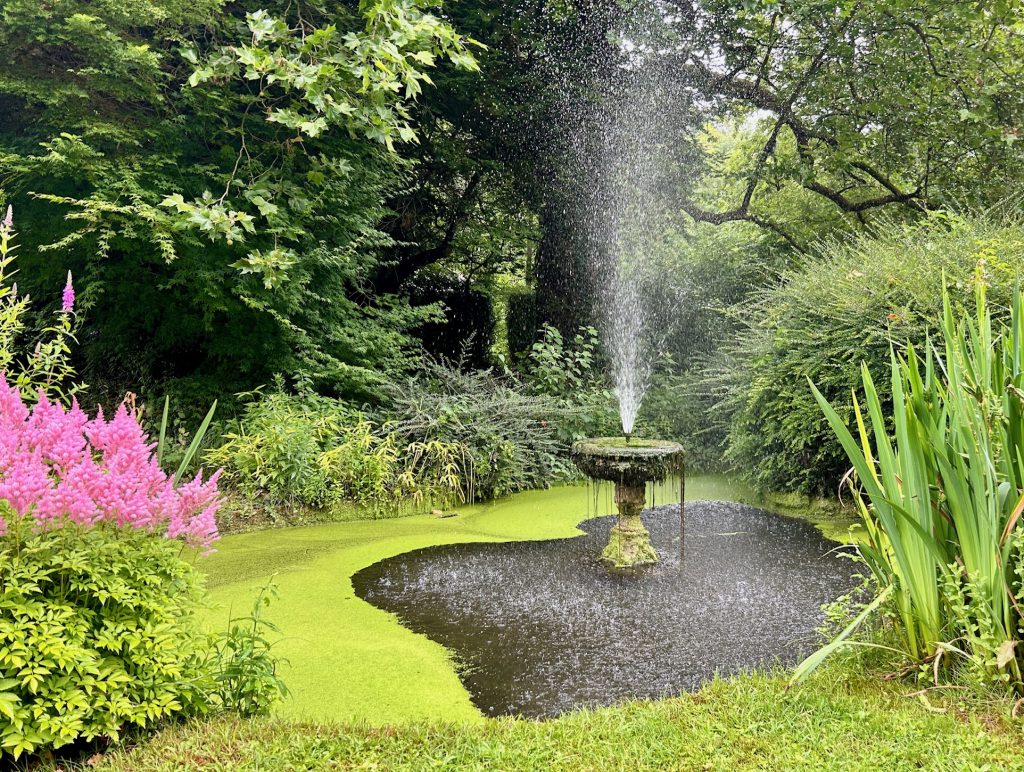
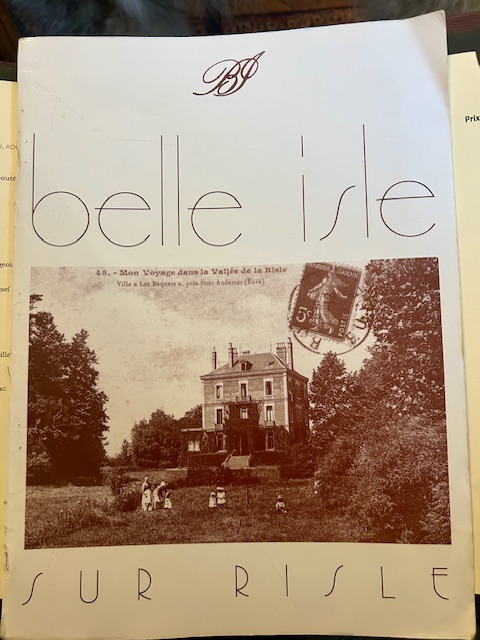
Belle Isle sur Risle Chateau Hotel Part of the gardenThe orangery (with roof terrace)A detail within the beautiful gardensThe gin……and the menu
To my mind, Gault & Millau (with their “Yellow Guide” and “Nouvelle Cuisine 10 Commandments”) are as much a reference for gastronomy and hospitality in France as Michelin are. I was delighted therefore to see read that the hotel, it’s restaurant and it’s chef are recognised by Gault & Millau.
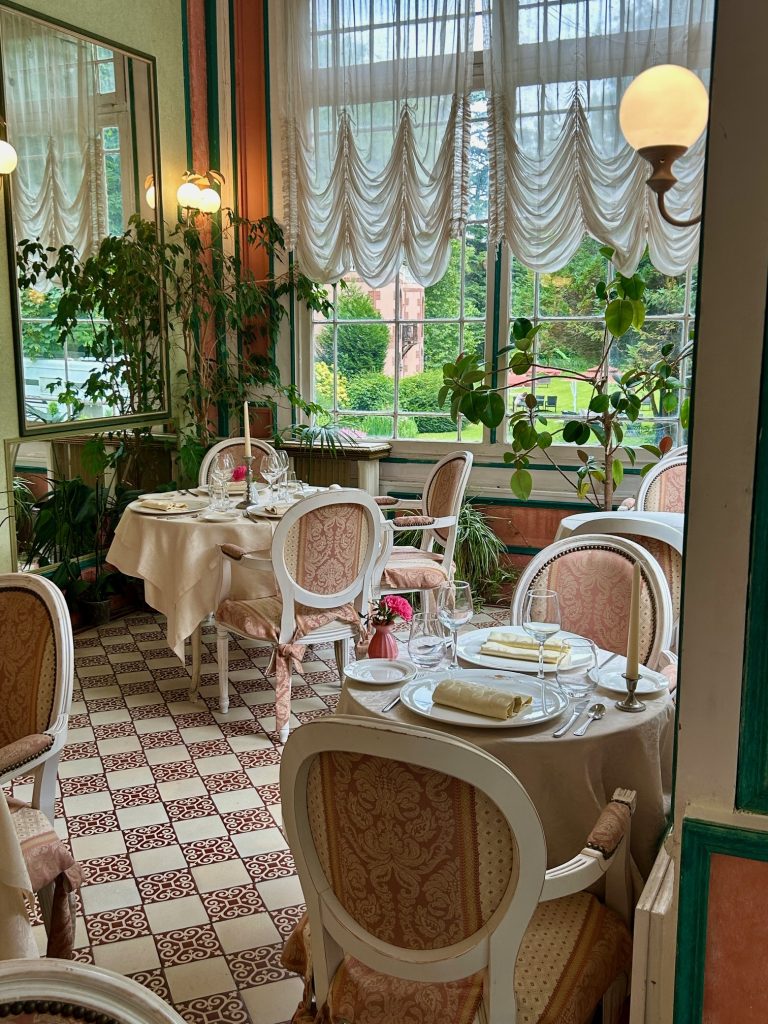
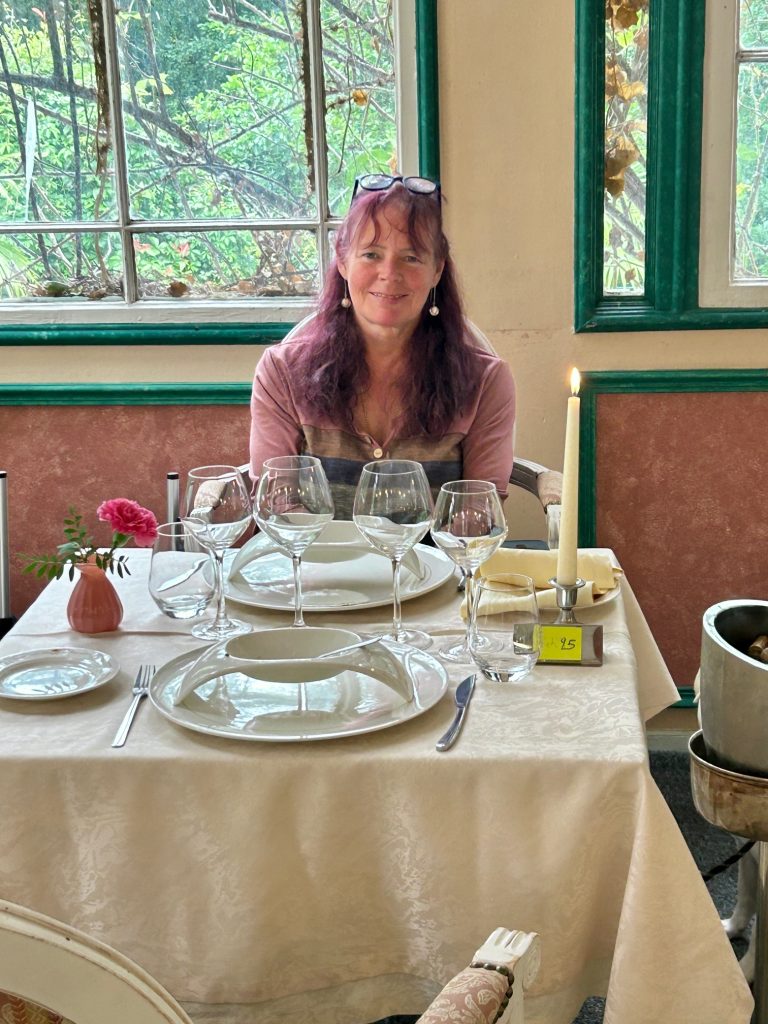
Our dinner that evening is best described as a total experience. Everything about the event was perfect. The superb food took centre stage but all other aspects of the occasion had clearly been given considerable thought; from the elegant restaurant setting through all aspects of the friendly and attentive service, the exquisite food & wine and the luxurious and yet comforting ambiance. We couldn’t see the resident pianist from our table but, my goodness, he played well.
For food we chose from the recommended 6 course gourmet meal, which without wine cost 76 Euros per head. The hotel’s wine selection was extensive. At first glance it was also very expensive (starting at 15 Euros a glass for the house white and rising to 4,750 Euros for a bottle of 1959 Chateau Petrus) but, there’s no denying the quality. We gave the Chateau Petrus a miss but we didn’t stint on the wine.
The food was in keeping with the aforementioned 10 commandments – home made bread (baked fresh in the hotel); home made duck foie gras; fresh stir-fried scallops & chorizo (served with samphire & a rich potato puree); a homemade Granite de Pommeau (that’s peach/honey flavour with champagne); a cotriade de poisons for Vanya and a Filet de Boeuf Francaise for me (and the meat was the best ever); four fromage Normands and; I finished with a Pineapple Charlotte topped with a raspberry & mango sauce while Vanya finished with a black chocolate palet covered in all sorts. The chef, Armand Malandain, did not disappoint. The meal ranks among our most memorable.
We would like to have stayed on at the hotel but our ferry back to the UK was booked for the next day and I wanted to overnight somewhere closer to Calais. We’d spend one more night in France at Poix de Picardie.
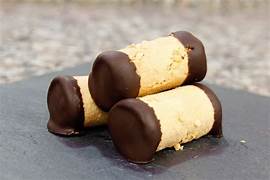
Postscript: Still on the subject of food; you can’t go to Pont-Audemer without tasting the famous Mirliton or Kazoo. It’s a biscuit roll filled with praline cream and closed at both ends with a small chocolate cap. It looks and tastes delightful.
We arrived in Fecamp in order that the vet could do the necessary with Nala and Beanie to facilitate their return to the UK. Within an hour of arriving we had parked up, seen the vet, had coffee and a pastry for breakfast and were en route to Yport, stopping at a supermarket for Vanya on the way (Vanya will always find room in the Van for a few more bottles of Cremant). We like Fecamp but it is fast becoming a bitter sweet place to visit since, more often than not, it heralds the end of a tour.
Better news is that we had pre-booked a place at our usual campsite in Yport and, best of all, had secured a table for dinner at our favourite restaurant in the town and one of our favourites in Normandy – Le Nautique.
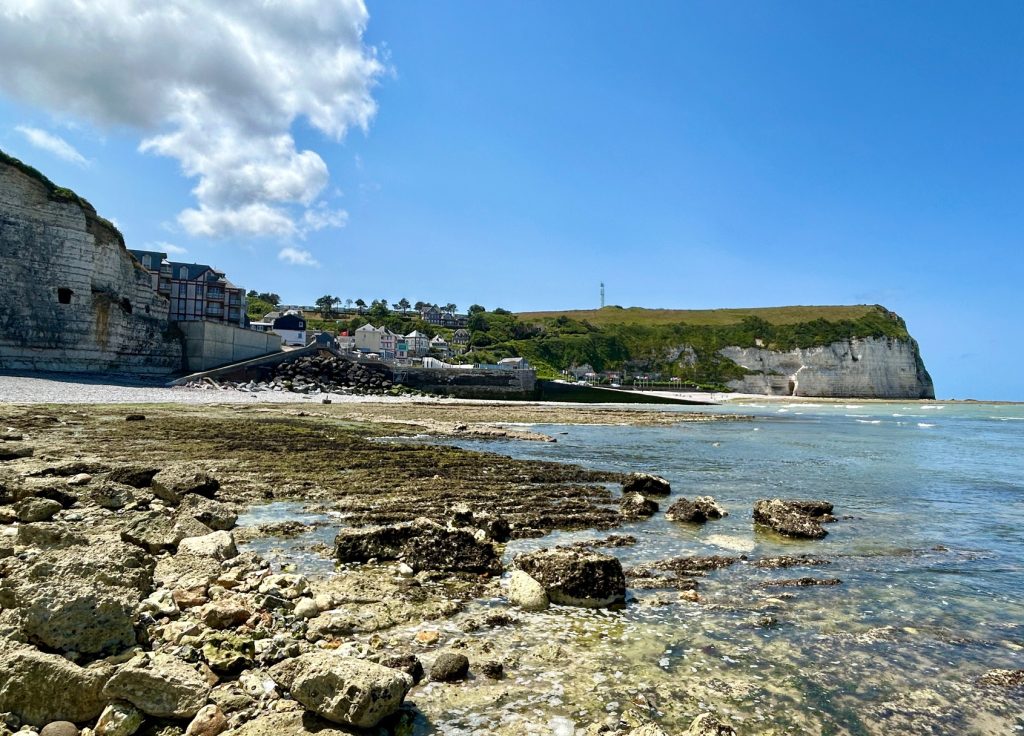
Dinner was a few hours away and so, after parking up at the campsite, I strolled off into Yport, leaving Vanya to sunbathe. She wants a suntan before Iain’s & Orla’s wedding in August and I wanted some sea air.
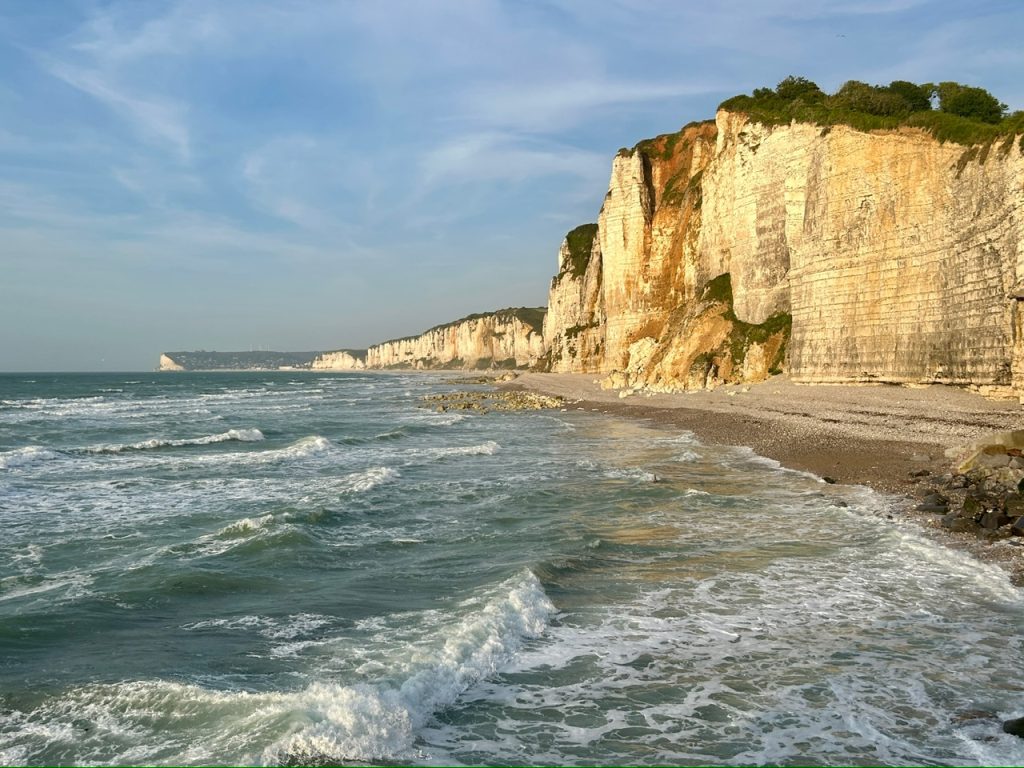
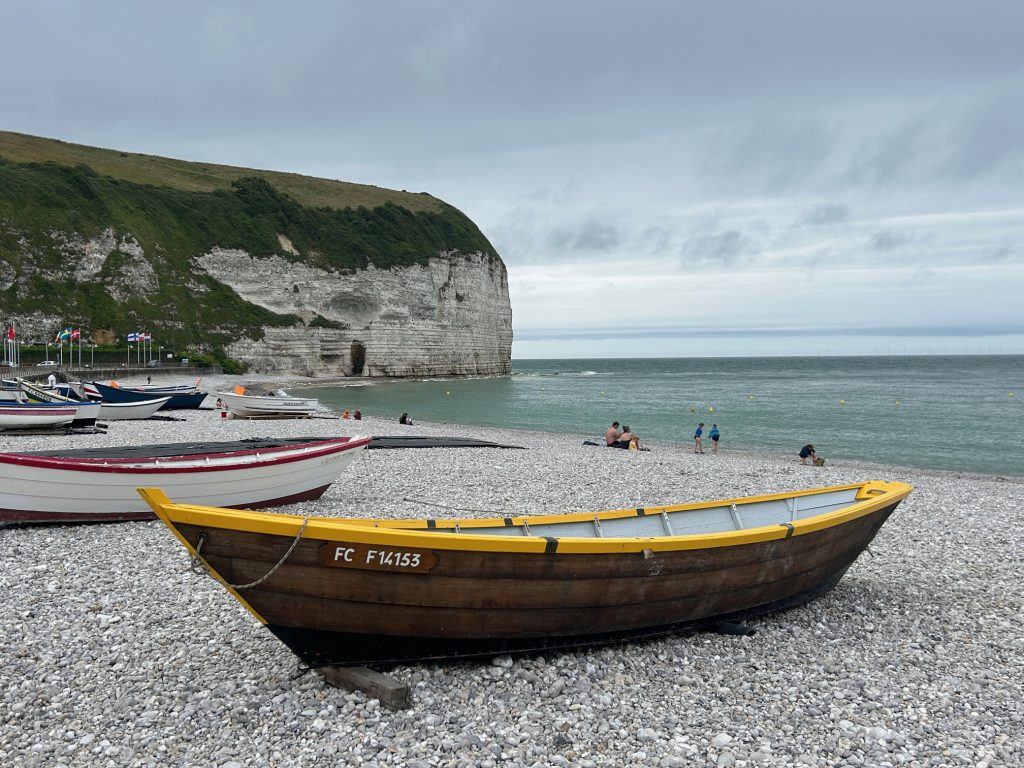
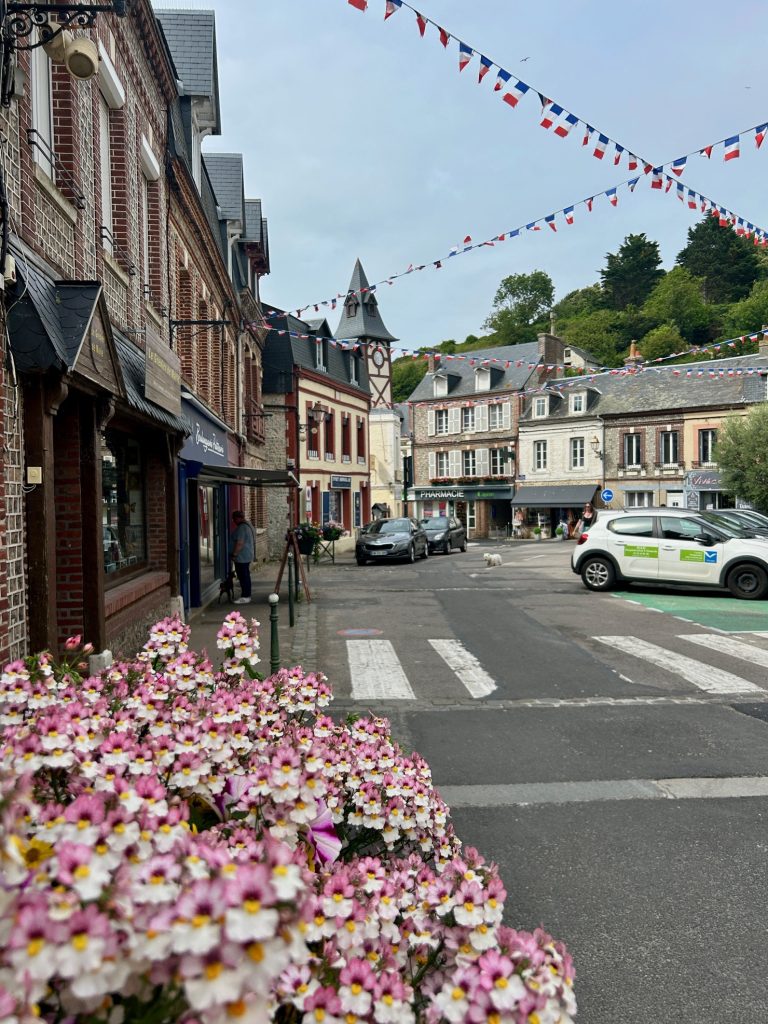
I’ll never tire of that viewPlace Jean Paul LaurensHotel de Ville
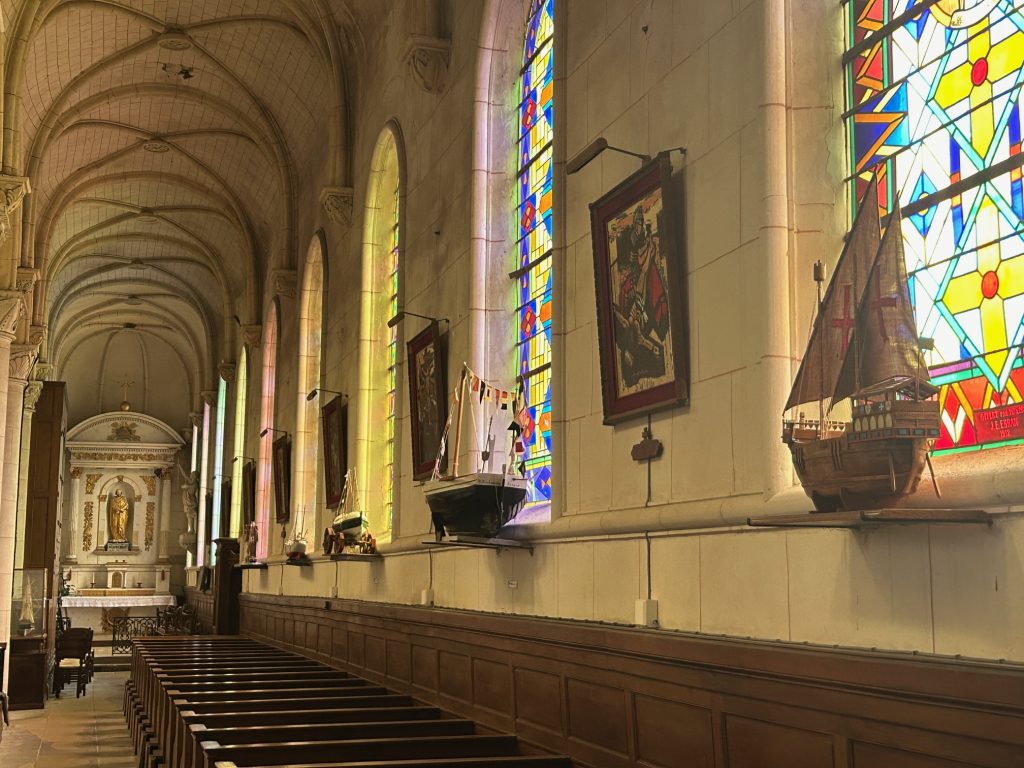
Yport has barely changed since we were last there. I say ‘barely’ because I did notice one difference in the church. The votive (model ship) which used to hang over the altar now sits amongst various others along the far side of the church. Isn’t it sad when you notice that kind of detail? Hey, no matter. Yport is a great place to chill.
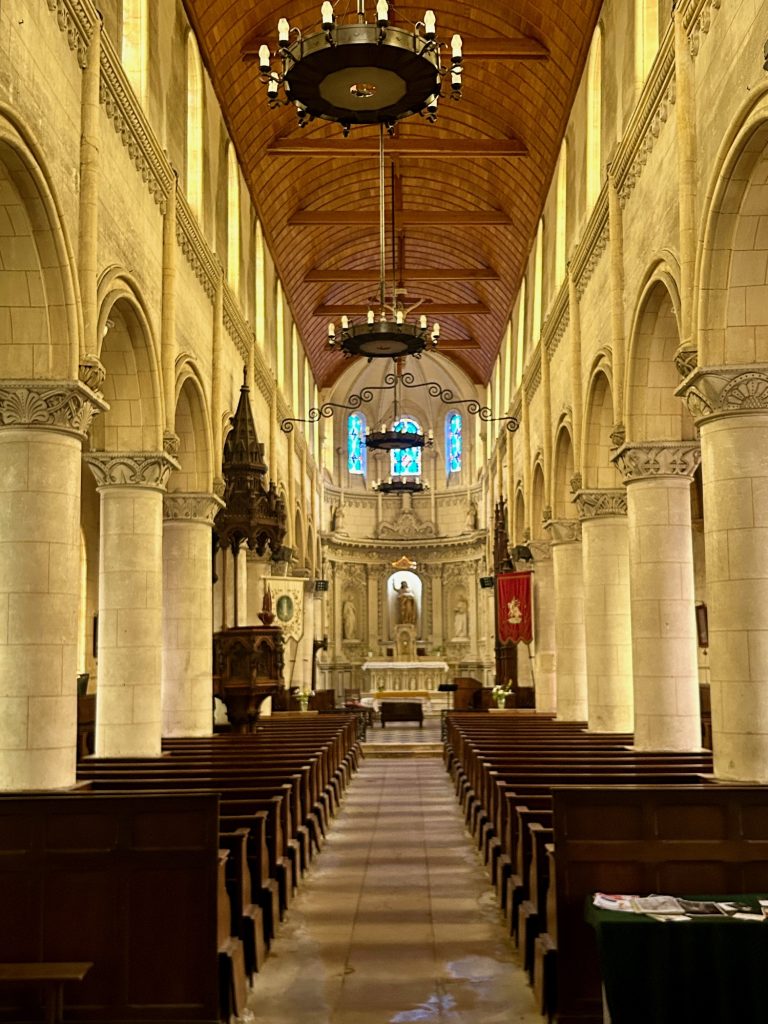
Inside L’Eglise d’YportThe votives
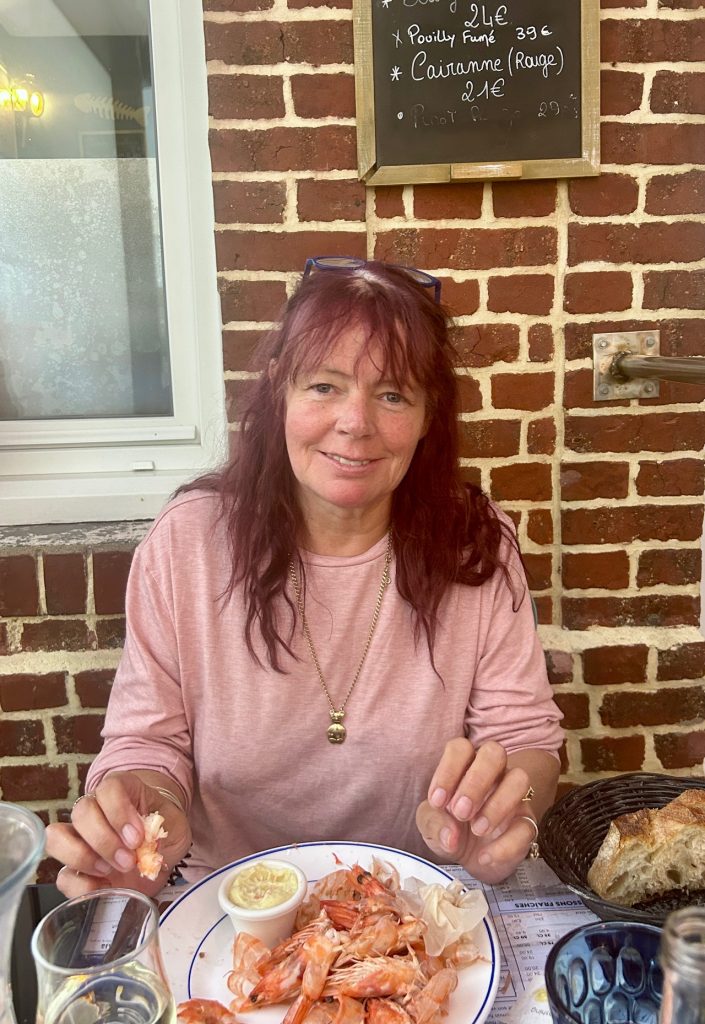
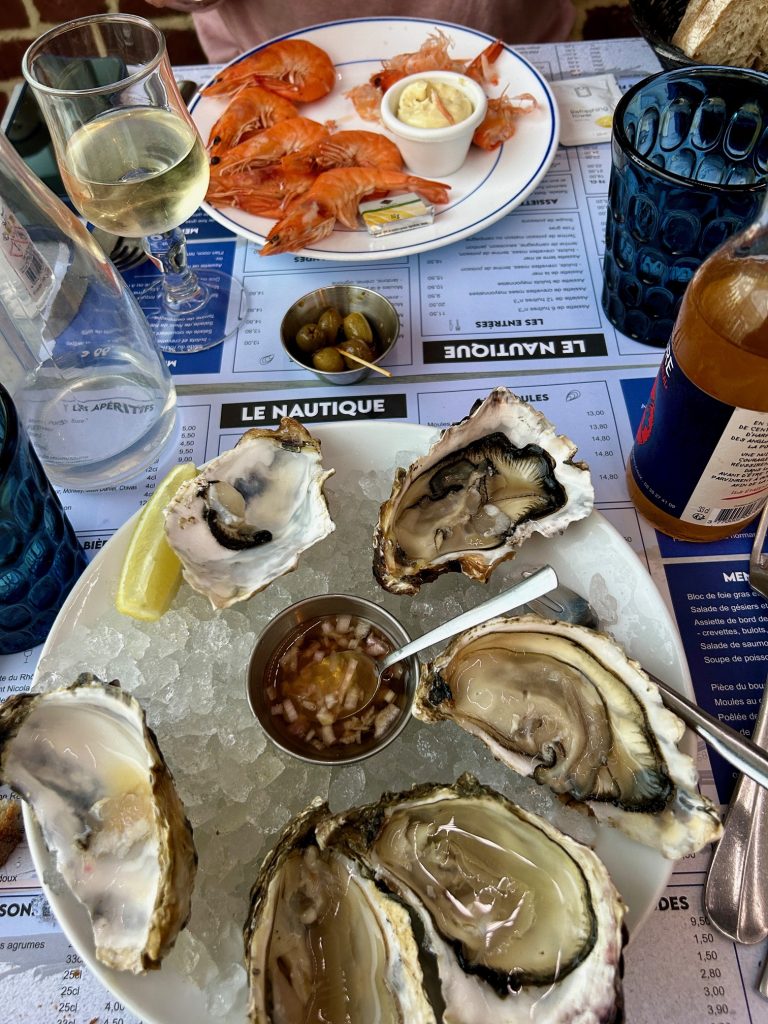
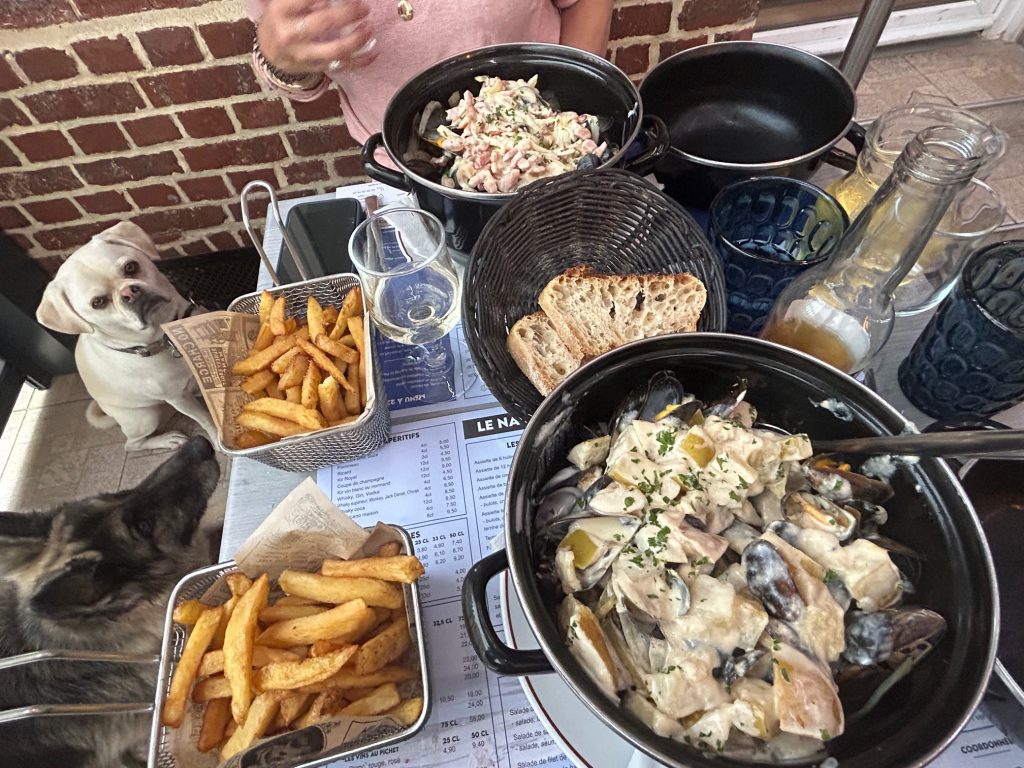
Yport is also a great place to eat. There aren’t many restaurants or cafes in the town but they are all okay and, if you like fish (especially mussels), Le Nautique is outstanding. They love dogs there and the patron chef went out of his way once again to personally find a table for us in our preferred space at the back of the restaurant and cleared a space for Nala and her wheels. He couldn’t have been more accommodating. The welcome, the service, the food & drink and, most important, the concern he showed throughout our repast made for another unforgettable visit.
Vanya loves seafoodThe freshest oysters…
Vanya particularly likes the mussels at Le Nautique but we were a little concerned that it would be too early in the season for them. We needn’t have worried. They wouldn’t serve them if they weren’t first class. We do love the Nautique.
… and the Moules!!!
The next day saw me down at the beach again but this visit didn’t go too well. Would you believe that skimming stones over the waves nearly cost me a finger? I would never have believe that rock could be so sharp. I threw a piece of flint and as it left my hand it literally ripped open the length of my index finger. It was a wide, deep and long cut and boy did it bleed. I’ll not go into any more detail except to say that I couldn’t get any treatment locally. Yport is a very quiet little town. The only place open that particular afternoon was the tourist information office and the lady there couldn’t contact the local doctor, nor the chemist. Moreover she was frightened to death of blood. Fortunately, I keep a fairly comprehensive medical kit in the Van and I was able to sort things myself.
Moments before I damaged my hand
Enough of that. It was my birthday and we were booked into a quite exceptional little hotel a few miles down the road at Pont Odemeyer.
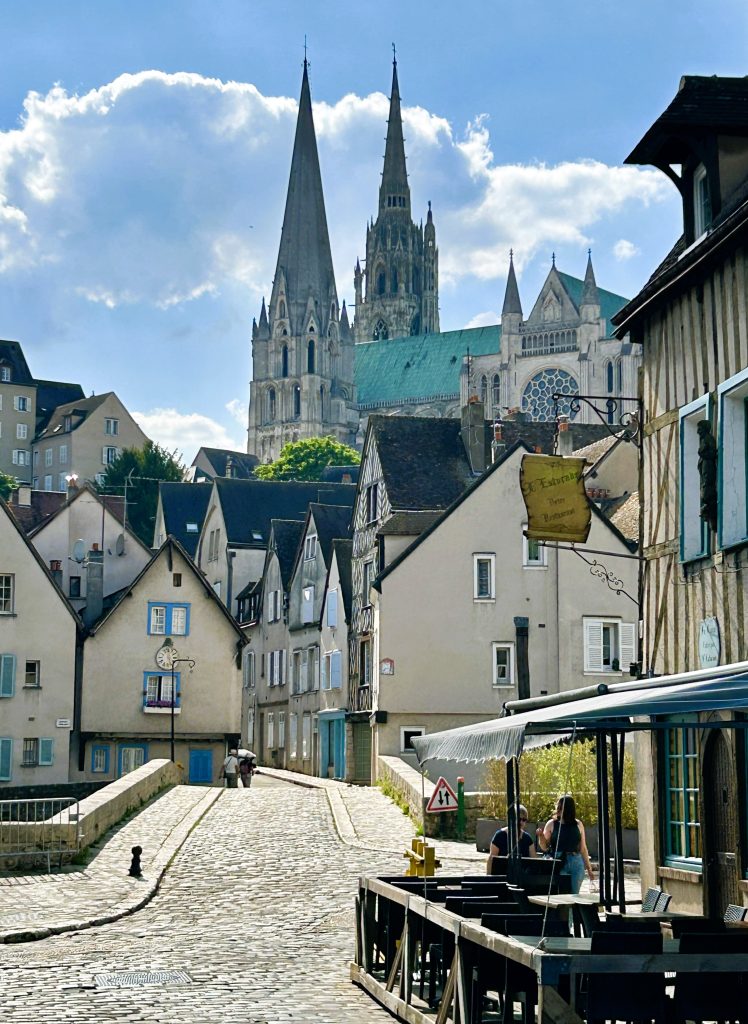
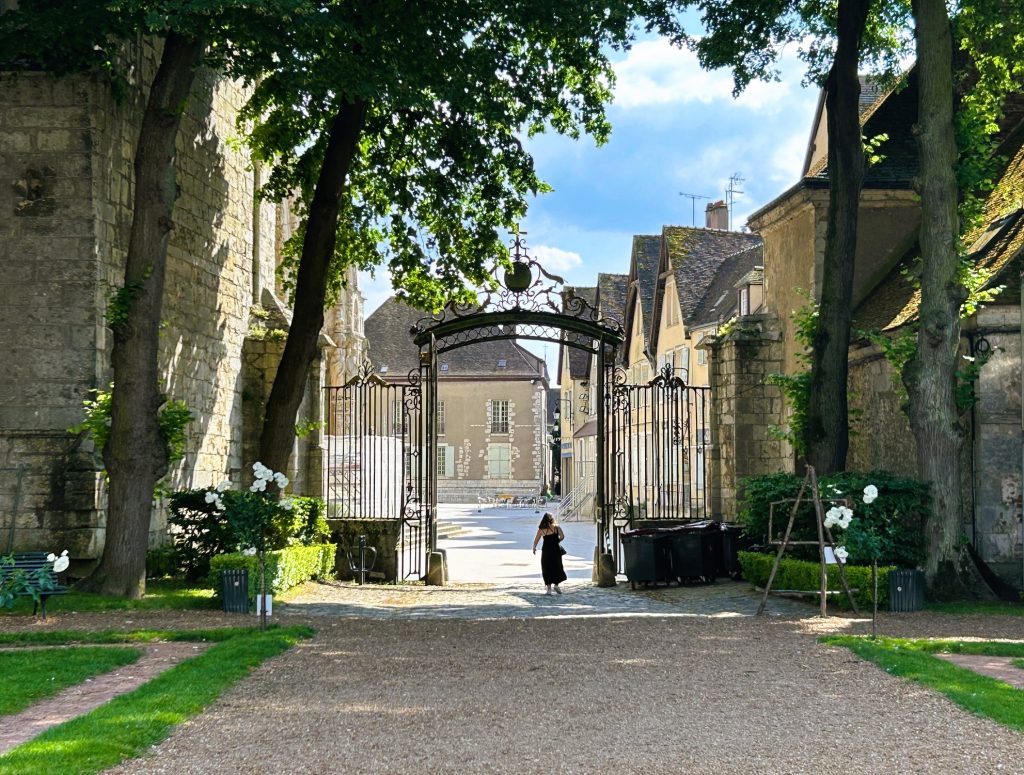
I don’t know why but we have often passed Chartres on our way through France and not once thought to visit the place. We stopped this time only because the municipal campsite is close to the town centre and on a direct line to our next destination on the English Channel. We’re pleased we did. Chartres is a charming historical city with a majestic medieval cathedral and a very pretty old town down by the River Eure. Add to this that the city operates an absolutely stunning light show every evening (Chartres en Lumiere) and you will understand why we’ll be coming back.
Considering the trials and tribulations the city has endured over the years (I’ll talk a little about that), it’s medieval centre and especially it’s cathedral are incredibly well preserved and a joy to wander.
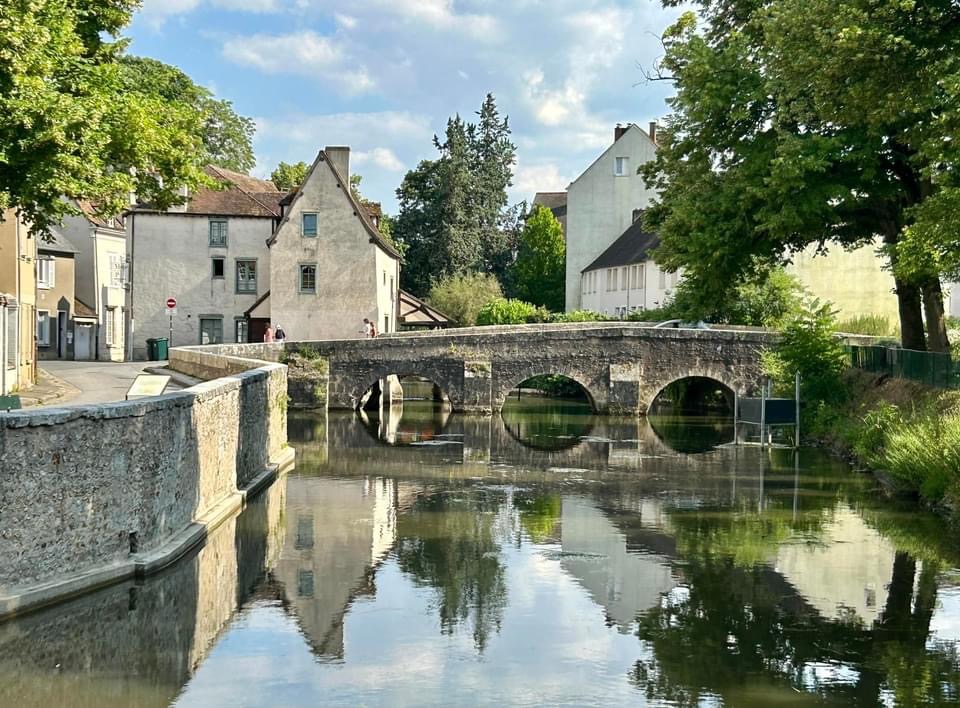
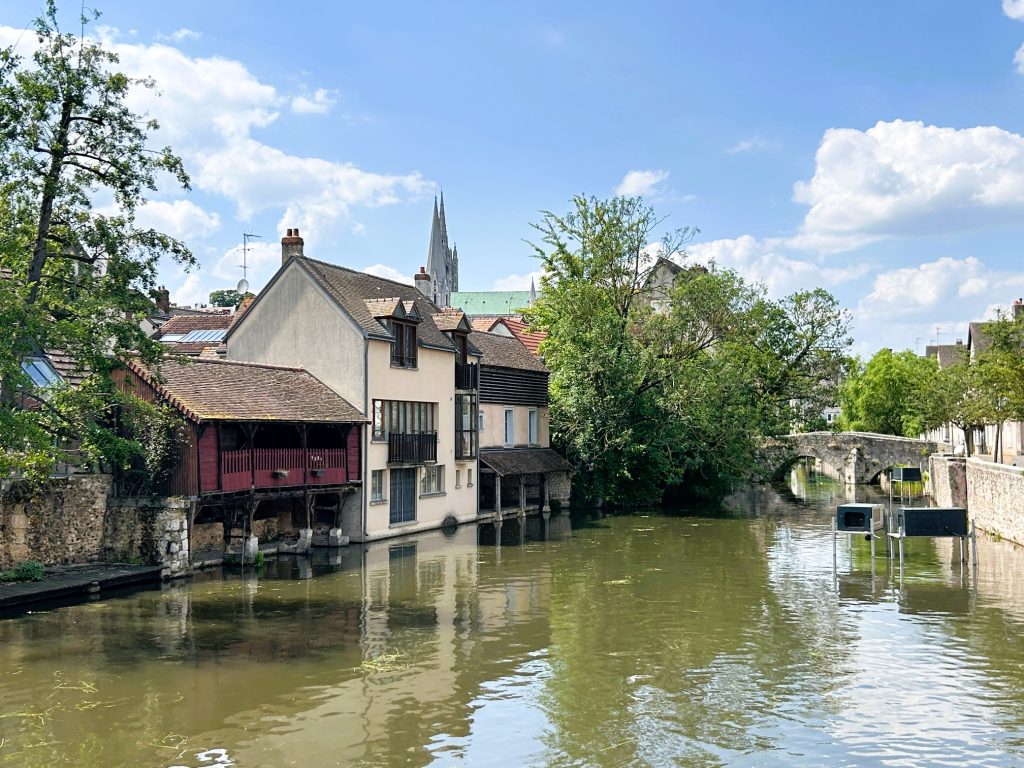
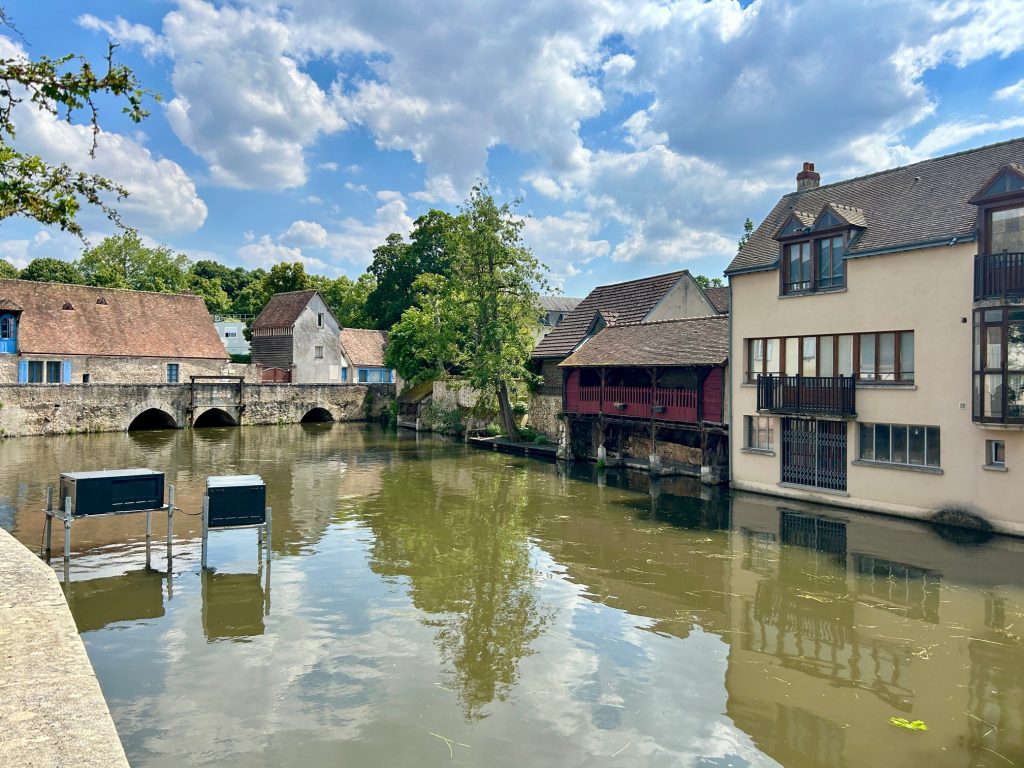
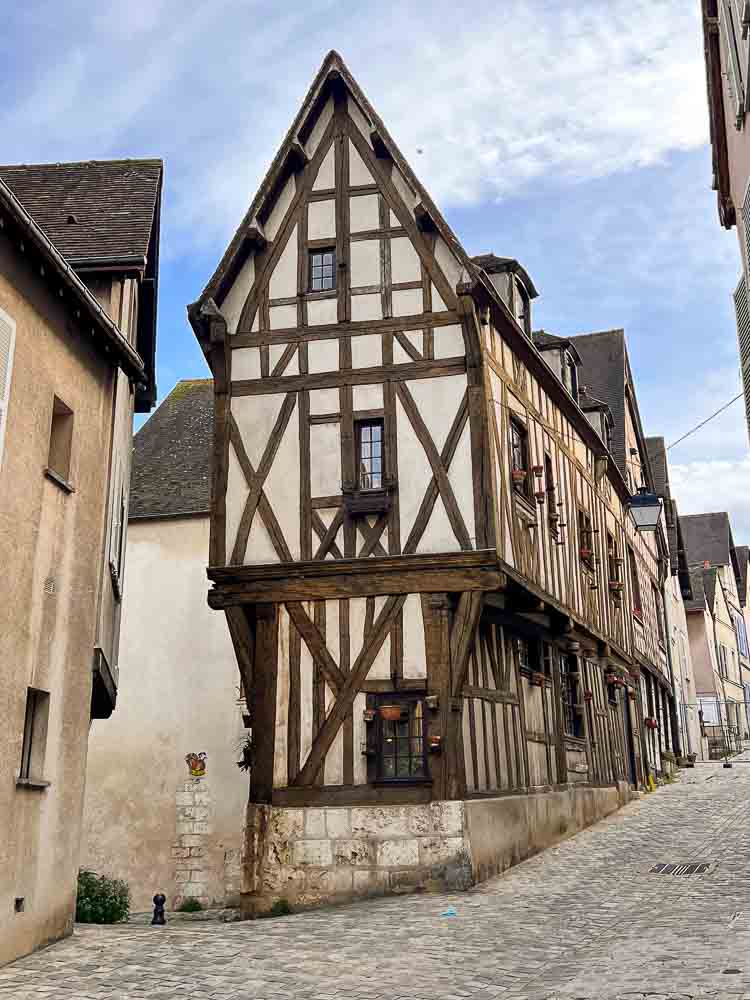
I followed the banks of the River Eure into the city; the route taking me along narrow cobbled streets and past colourful half timbered houses, medieval wash houses, olde worlde water mills and numerous picturesque humpbacked bridges. It was picture postcard views all the way.
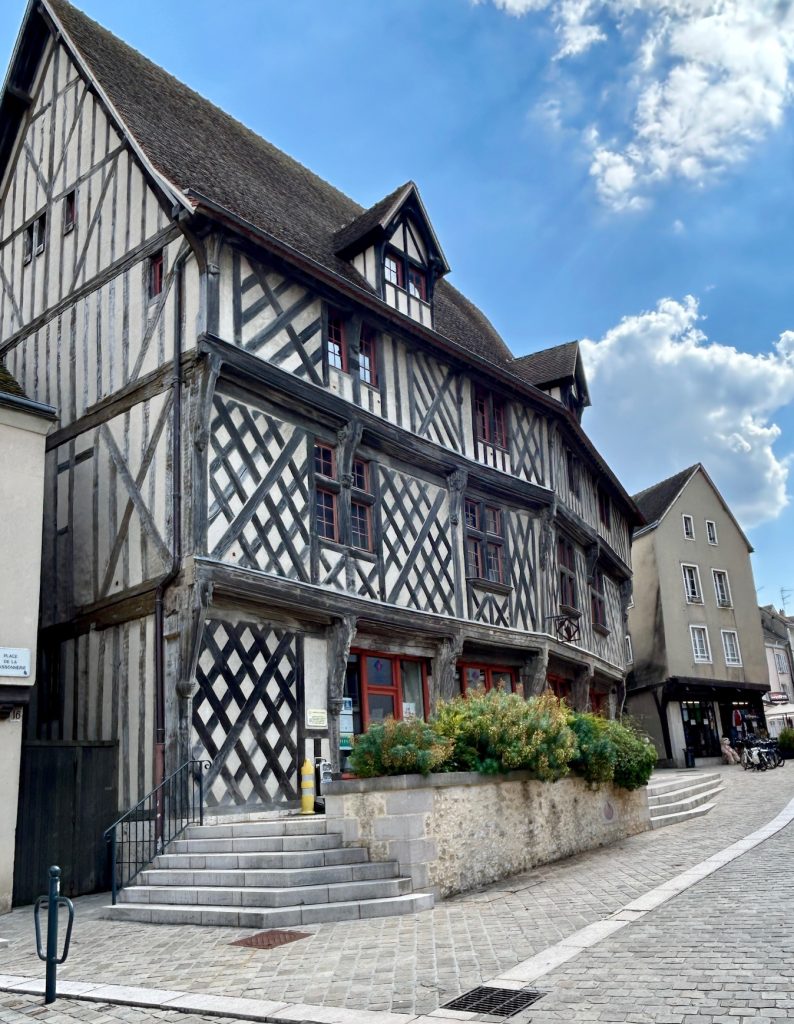
Now that’s a colombage!Love this view
After exploring much of what I shall call ‘downtown’ Chartres, I decided to visit three of the more prominent churches in the city: Eglise Saint Pierre, the Parish Church of Saint Aignan and, of course, the Cathedral Notre Dame de Chartres. It was time to go uptown.
Few if any people would want to follow the route I took to the upper part of the city. Tortuous is an understatement. I couldn’t help it. My excitement with the city was increasing with every step; so much so that I wanted to press on and see more but; every time I glanced back I would see something I had missed and would have to retrace my steps or, all too often, be drawn in yet another direction. It was almost intoxicating.
Maison du Saumon
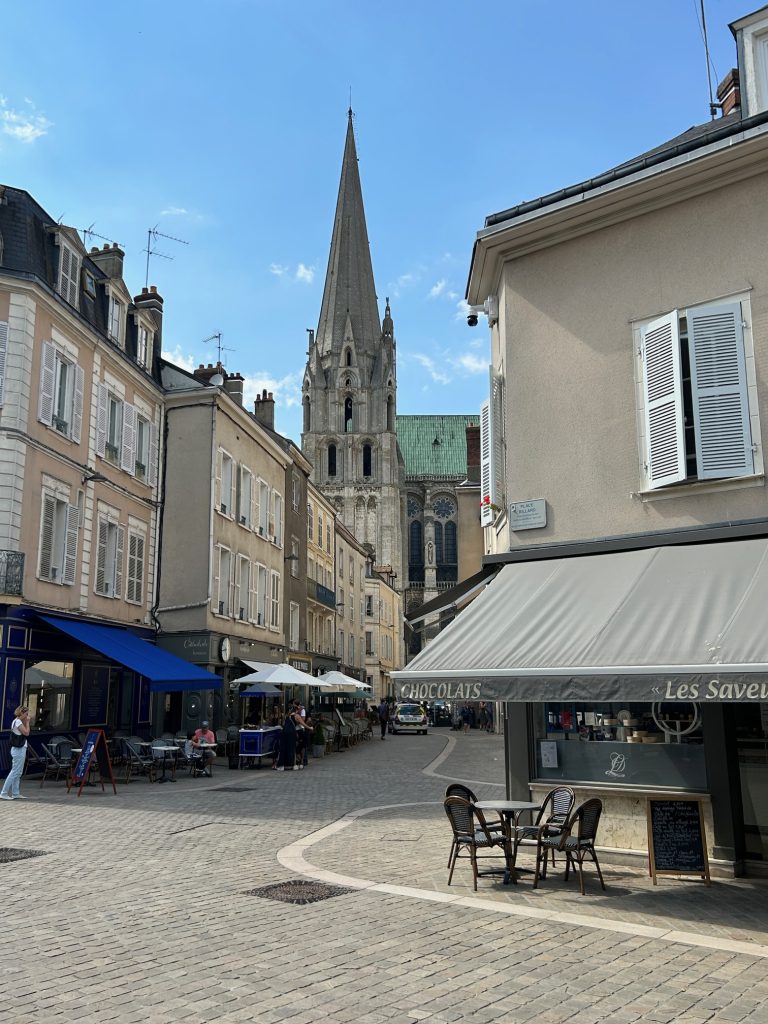
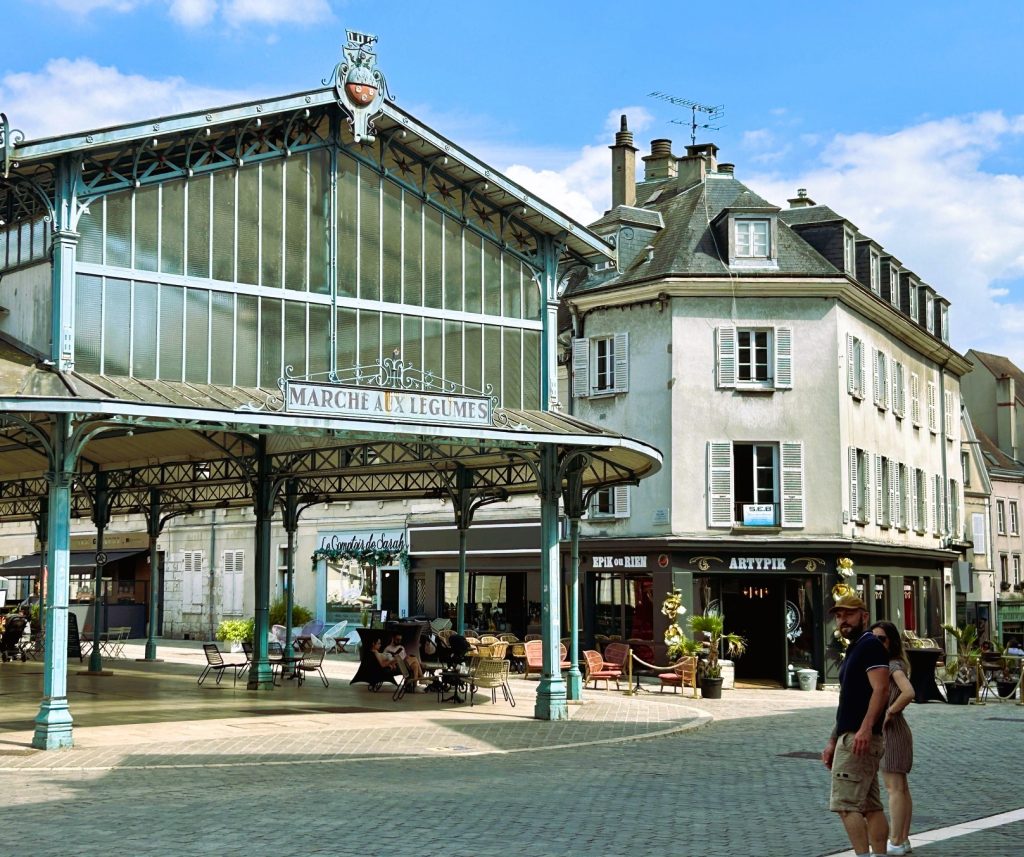
It took a while but, eventually I managed to collect myself and head straight for the Eglise Saint Pierre without constantly looking back! Chartres is a compact little city and this more direct approach soon saw me reach the church by a route which took me past the Maison du Saumon on Rue de la Poissonerie (now a tourist information office) and the Marche aux Legumes on the Place Billard (where farmer’s markets are held every Wednesday and Saturday). I paused briefly at the tourist information office to obtain details as to the evening’s light and sound show and picked out a restaurant on Place Billard where we could have dinner that evening but, otherwise, I kept moving
Marche aux Legumes
The Eglise Saint Pierre (formerly the 7th century Saint Pere en Vallee Abbey and part of a Benedictine monastery) obviously lives in the shadow of the city’s cathedral. Unlike the cathedral, it is in serious need of renovation both inside and out. It started to deteriorate during the French Revolution when the abbey cloister was removed and the monastery’s outbuildings were converted into a cavalry barracks; with the church itself being emptied and used as a saltpetre factory. Steps were subsequently taken to restore the church but time and lack of real investment has taken a heavy toll and it is sad to see a building, once so venerated, in such disrepair.
Little effort seems to have been made to restore the church to it’s former glory and I didn’t take many photos of the outside of the church because, frankly, it looks rather shabby. This was one of those rare occasions when I would have dearly liked to see a church covered in scaffolding (as part of a restoration process).
My final thoughts as I took a last look at the outside of St Pierre’s were that (i) I would have to look inside the building for any remaining majesty the church may have and (ii) the exterior of the church may look better at night when lit up as part of the ‘Chartres en Lumiere’ spectacle. I was to be delighted on both counts. The inside of the church does look equally tatty, with parts of the stonework falling away, but I left the building feeling that whatever it lacks in resplendent majesty is more than compensated for by a dignified simplicity. Oh to see it properly restored…
Inside Eglise St Pierre……plenty of atmosphere…… purity……and a dignified simplicity
Less than 5 minutes walk from Eglise Saint Pierre is the Parish Church of Saint Aignan. This was to be my next stop.
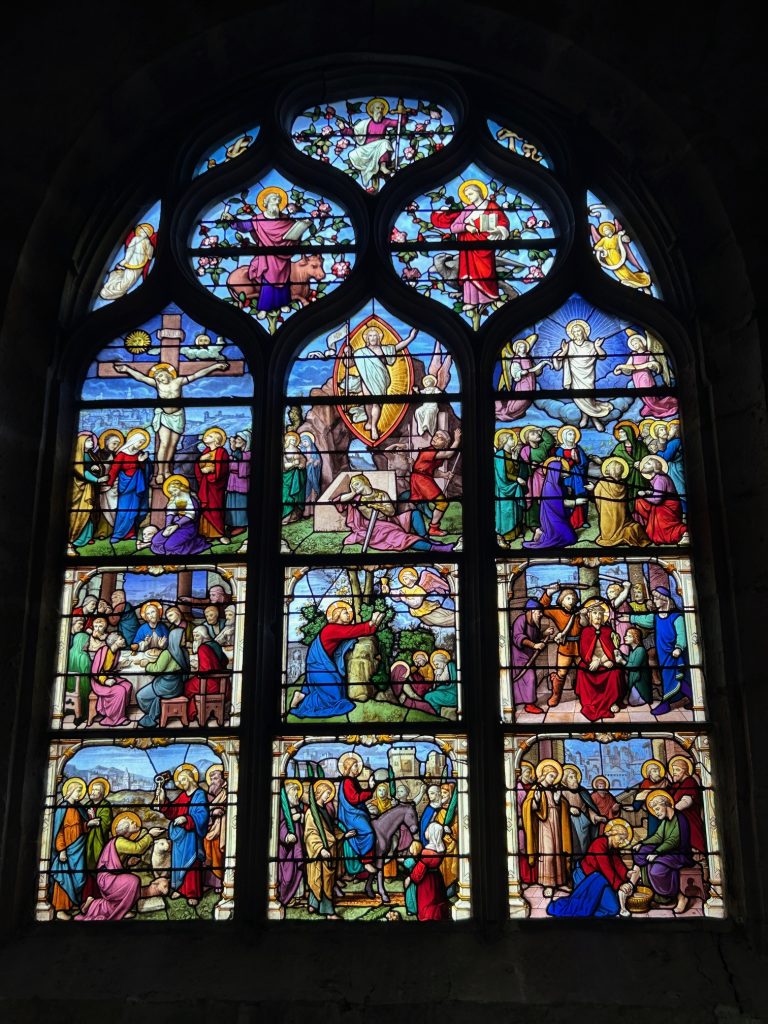
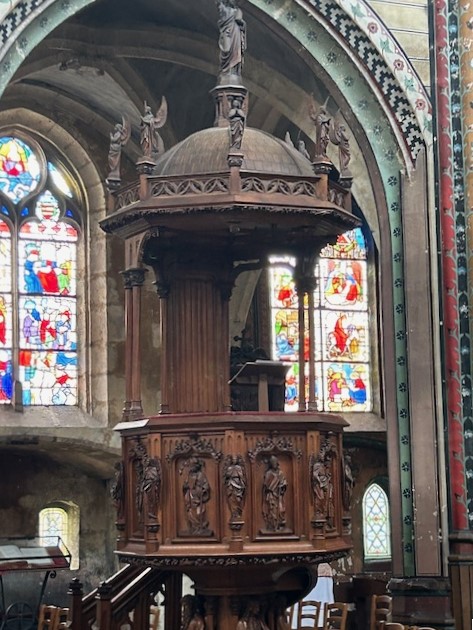
This 16th century structure, built on the site of much earlier churches (one of which was standing in 400AD), also lives in the shadow of the cathedral. It is considerably smaller than both the Cathedrale Notre Dame de Chartres and the Eglise Saint Pierre and, whilst not as neglected as the Saint Pierre, it is rather tired. No matter; with it’s painted wooden interior, faded frescos, 16th century stained glass windows (one of which had to be repaired after being hit by an artillery shell during France’s religious wars) and many interesting corners and artefacts, Saint Aignan has real character and is one of the most spiritual and impressive churches I have ever entered. I adore it and when taking photos I sought to capture some of it’s more intriguing aspects.
Clearly, Saint Aignan has experienced it’s fair share of history and no more so than during the French Revolution when a wave of desecrations took place in Chartres. Amongst others, the churches of St Michael, St Hilaire, St Saturnin and St Martin le Viandier were all totally destroyed. Some others, such as the churches of St Andre and Ste Foy, were left mostly in ruins; while others still, including St Aignan, were deconsecrated and their relics desecrated. Saint Aignan was used as a warehouse and then, towards the end of the Napoleonic Wars (in 1814), as a jail to hold Prussian, Russian and Austrian prisoners of war. Finally, it served as a fodder granary until in 1822 it was returned to the city upon condition it be restored as a Catholic church. I’ll say it again, I adore the place. I’ve never been in a church with so much character and atmosphere.
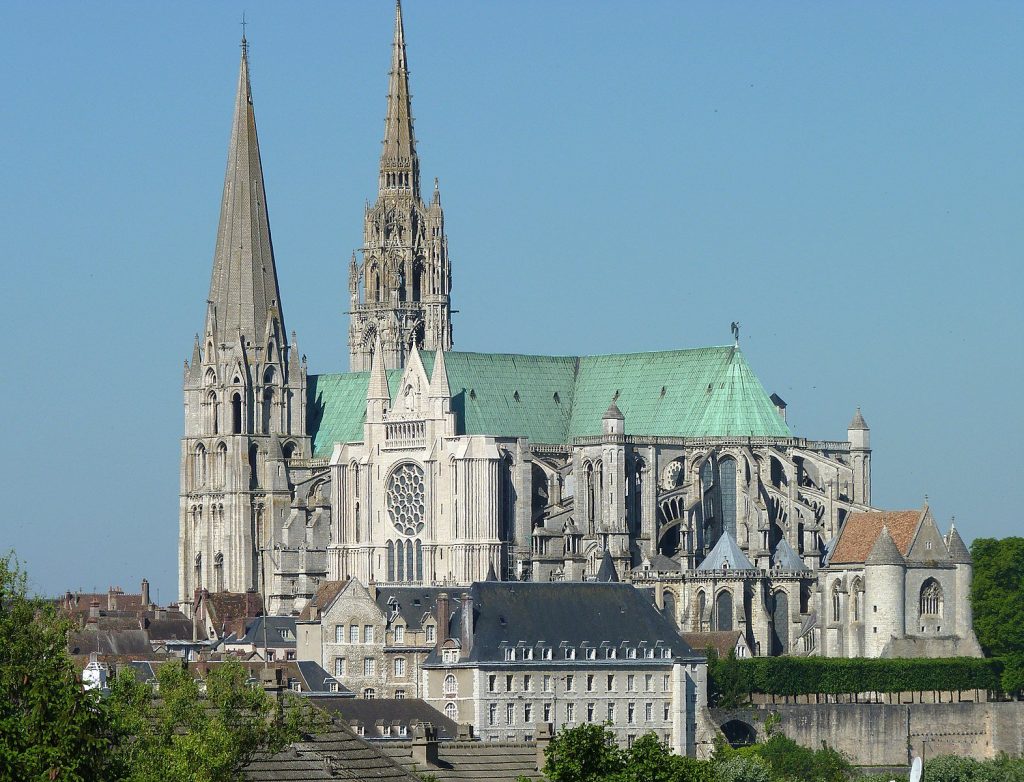
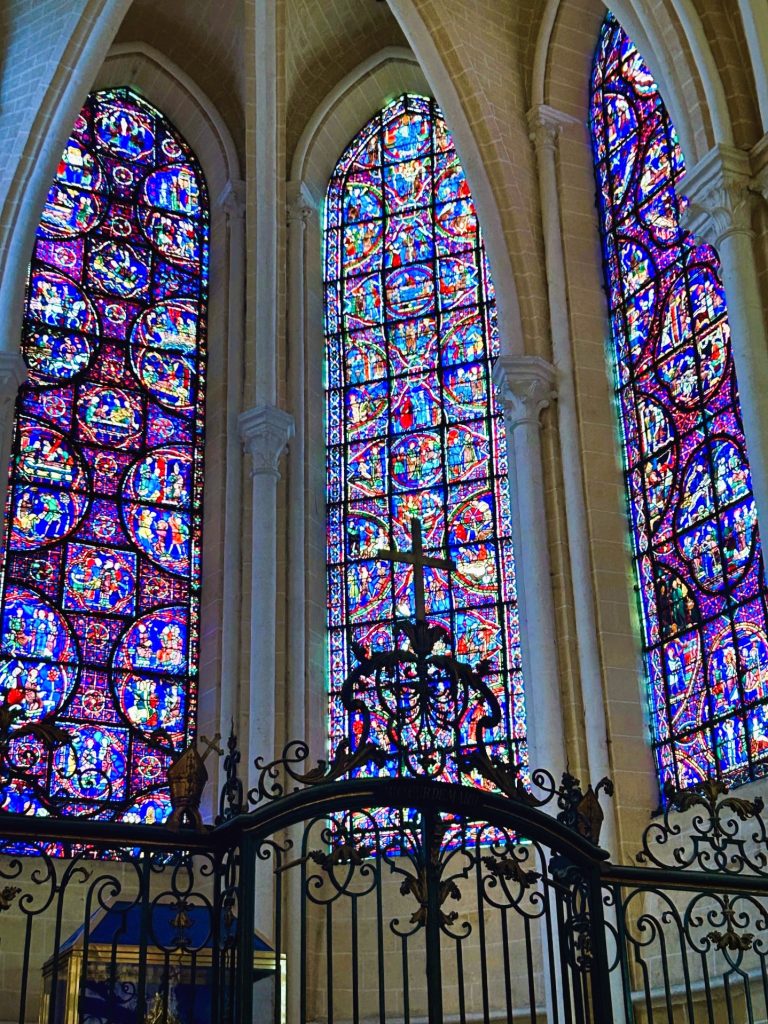
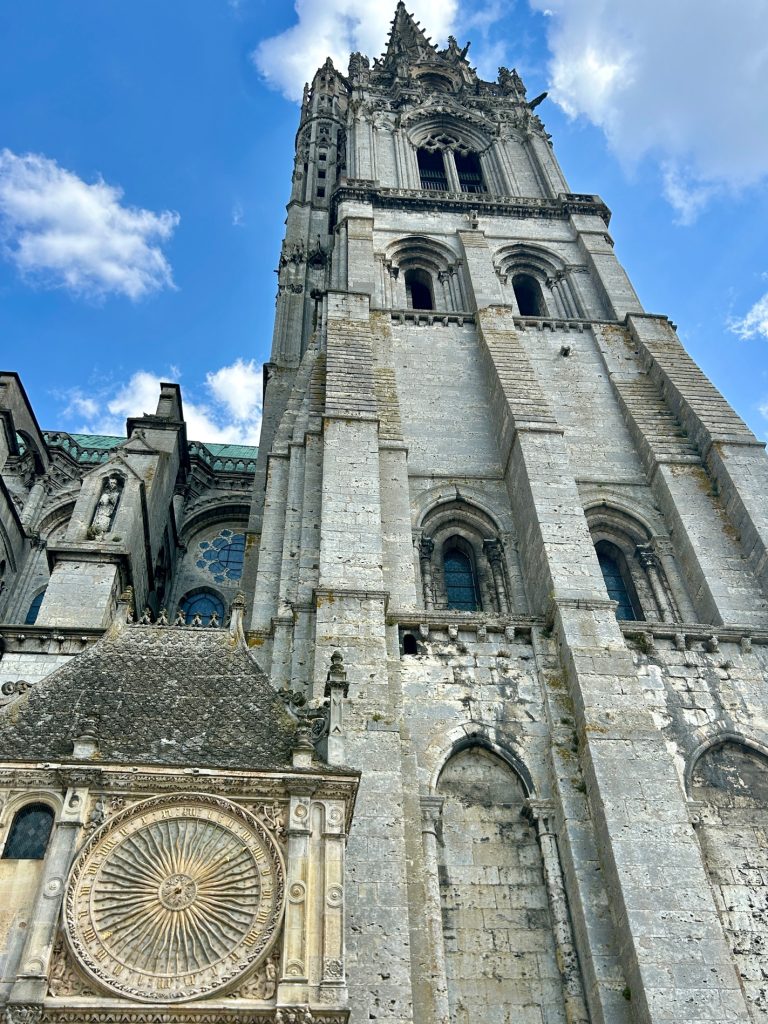
From the Parish Church of Saint Aignan I made my way to the most famous of Chartres’ religious buildings, the UNESCO listed Cathedrale Notre Dame de Chartres. Built between 1190 and 1220 it is a grander version of at least five earlier cathedrals that once stood on this site. It is one of very few cathedrals around the world which remains largely intact from the day it was built. Indeed, most of the stained glass windows date back to when the cathedral was built.
Famed for it’s sheer size and magnificent Gothic architecture, the quality and quantity of it’s sculptures, it’s magnificent blue stained glass windows and a remarkable collection of relics, this most spectacular cathedral was classified as an ‘Outstanding Monument’ at the same time as Mont St Michel, Vezelay Abbey and the Chateau of Versailles. That’s good company to be in.
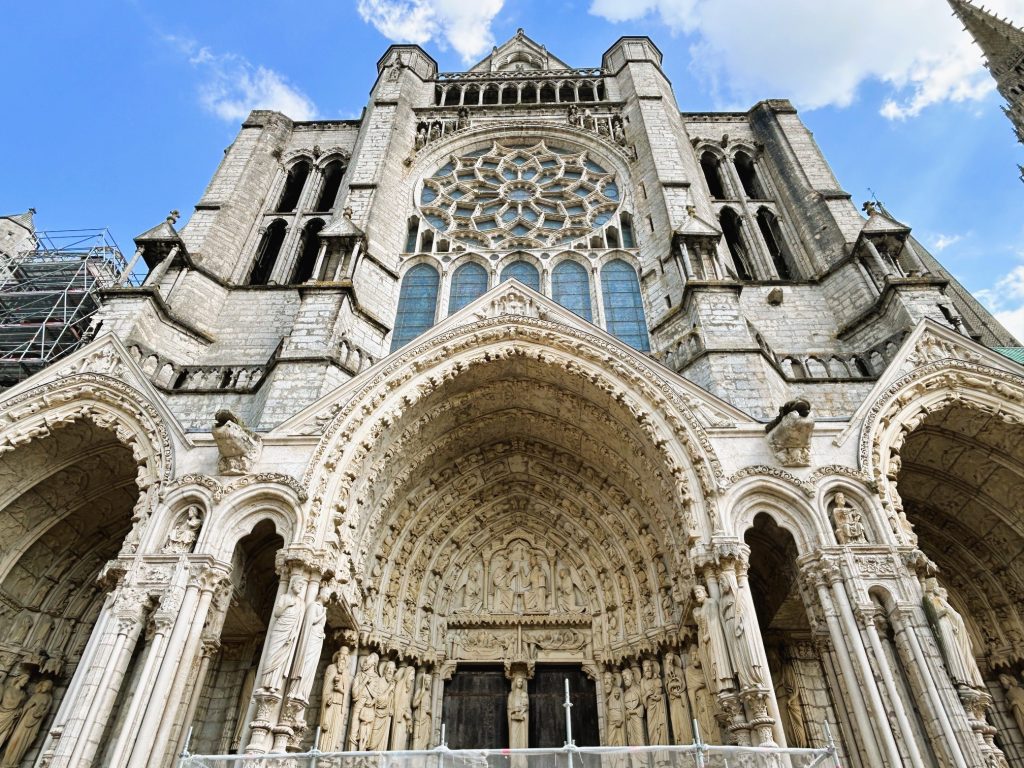
As I arrived at the cathedral there was a service of sorts underway and so I started with a tour around the outside of the building; admiring the two lofty spires at the front of the building (one in the Gothic style and the other Romanesque) and numerous intricately carved flying buttresses at the rear. Most impressive however are the Cathedral’s three portals which are rich in ornate sculptures featuring old testament prophets, relief scenes of Christ’s life, the apostles and various martyrs, etc. The detail on and around the different entrances is incredible.
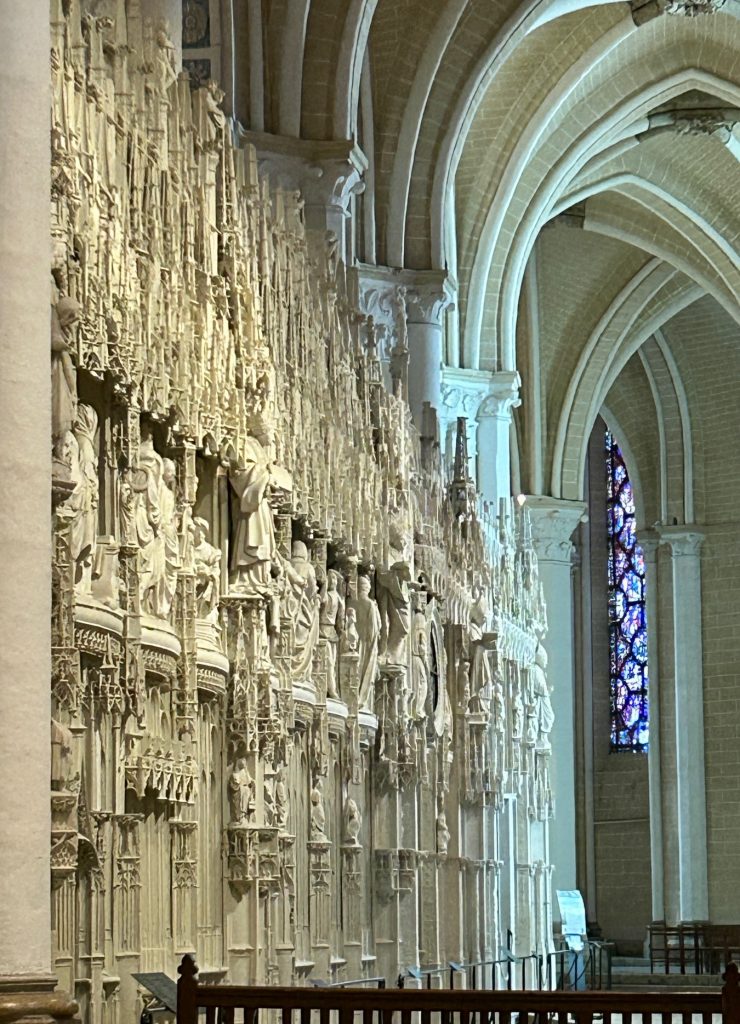
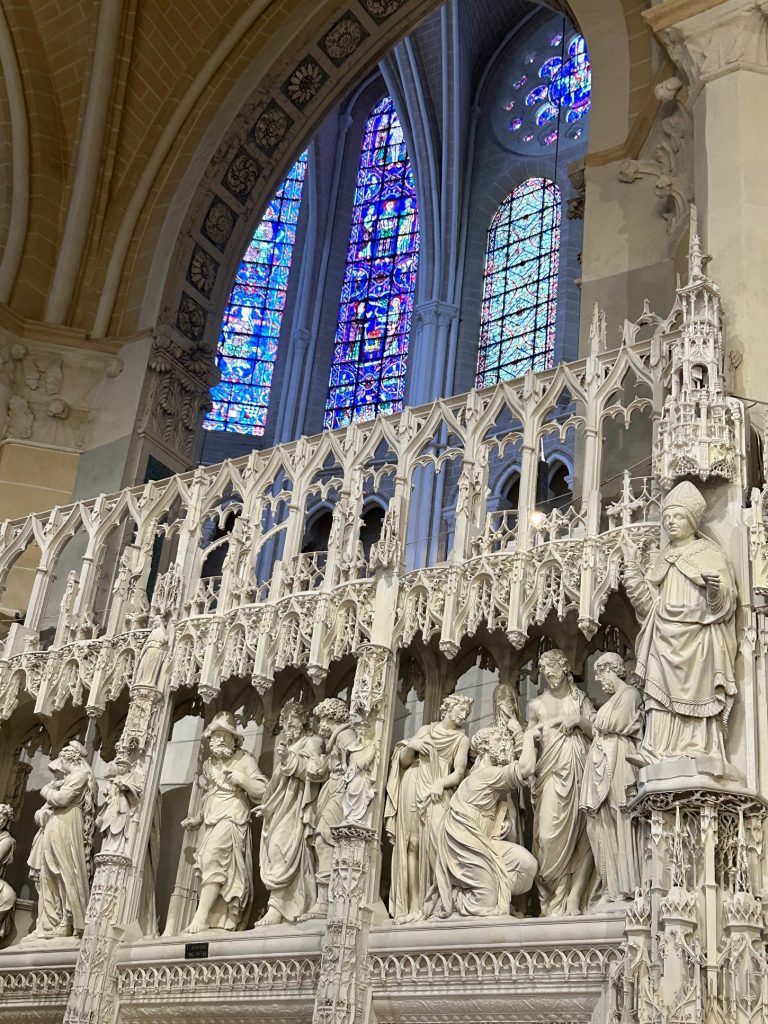
As I entered the Cathedral I realised it wasn’t a regular religious service underway but a choir performing some rousing ‘a capella’. To describe the music as exhilarating doesn’t do it justice; it was glorious. The choir was very good but it was bad timing on my part (the performance was being filmed for for television and neither the choir nor the tv producers would want me wandering the church during the performance). I didn’t have the time to sit and enjoy the show and so I restricted myself to simply walking those parts of the church where I wouldn’t prove a distraction. I didn’t get to see anything of the altar and not very much of the cathedral’s abundant stained glass collection. I missed out too on the Sancta Camisa (which is part of the silk tunic which the Virgin Mary supposedly wore when giving birth to Jesus and which is, arguably, the most historic of all the cathedral’s relics). I did however have the ambulatory almost to myself and was able to spend a fair time admiring the splendid stone screen (the rood) which surrounds much of the chancel. It is a stunning mix of statues which had not long been cleaned and so looked brand new.
What sets this cathedral apart from most others in France is how well preserved it is, even after all the deprecations caused during the French Revolution. The contents were plundered early in the revolution and the Sancta Camisa was shredded by the mob (only two small rectangles of silk remain) but, despite the new government ordering that the cathedral be demolished, it survived after a local architect cautioned that the resulting huge pile of rubble would block all of the roads in the city centre for years to come.
The cathedral again escaped destruction in 1944 (during the Second World War) when it was thought by approaching US forces that a mix of German soldiers (artillery range finders and snipers) had esconced themselves in the cathedral spires. A decision was made to reduce the cathedral to rubble but before the bombardment could begin a US Army Colonel Welborn Barton Griffith Jr, who understood the historical significance of the church, offered to enter the cathedral and check the situation for himself. Finding no Germans, he was able to report that the building was empty and the order to destroy the cathedral was rescinded. The cathedral was saved but tragically, the colonel was killed in action later that same day in a village just two miles north of Chartres.
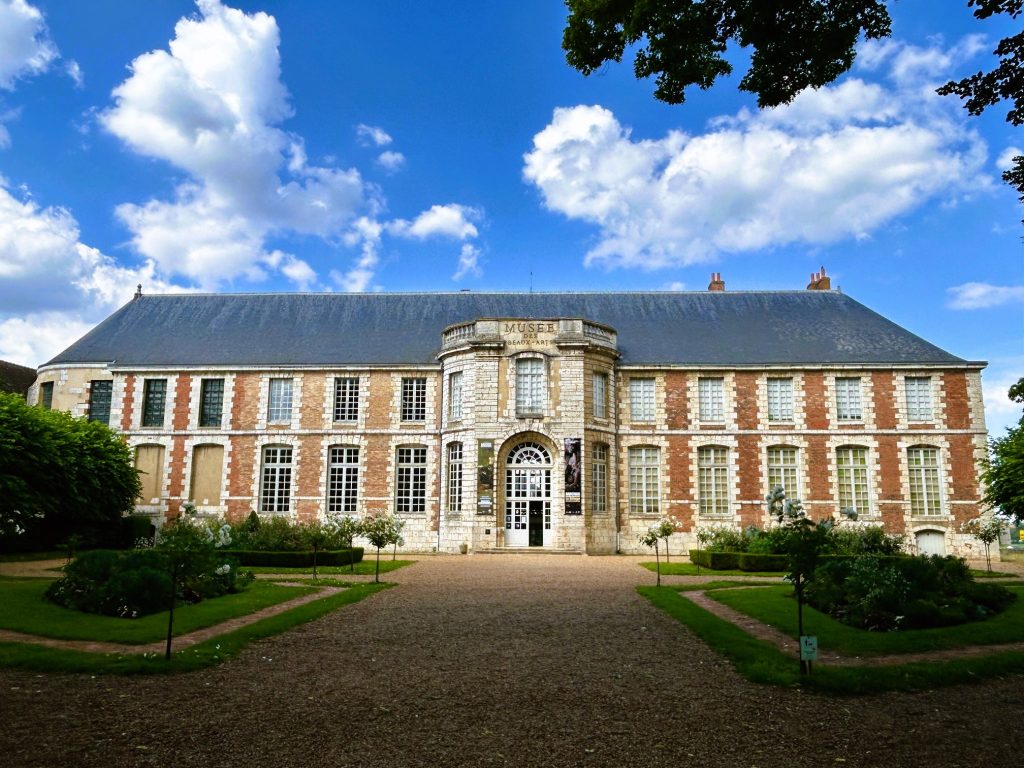
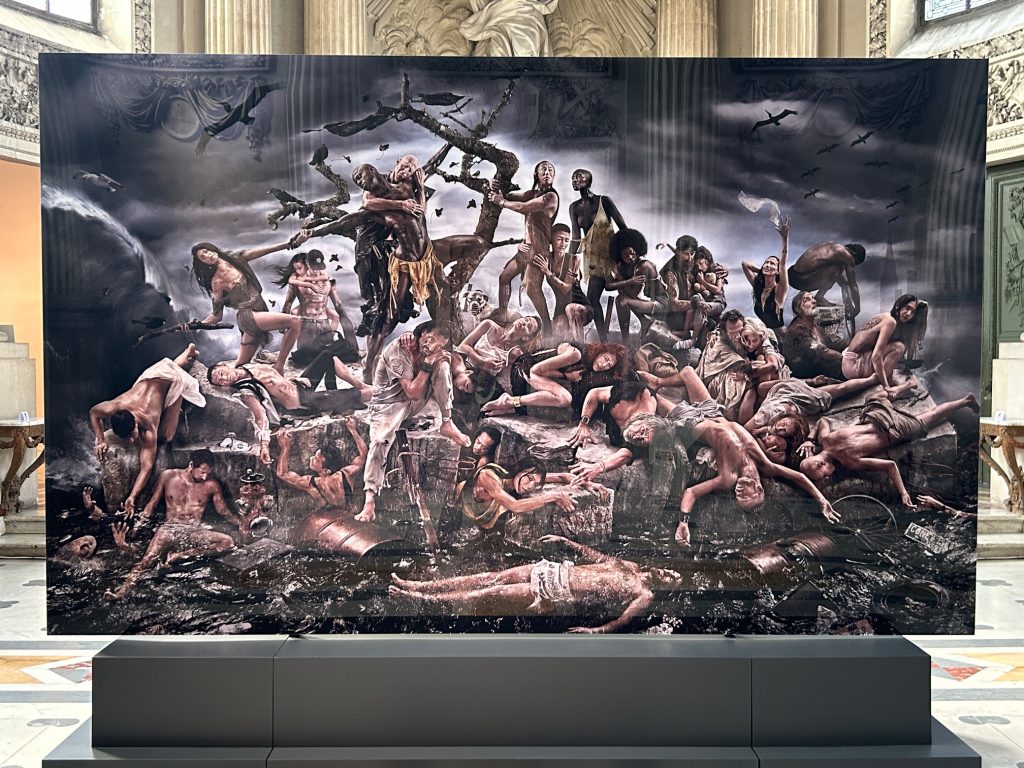
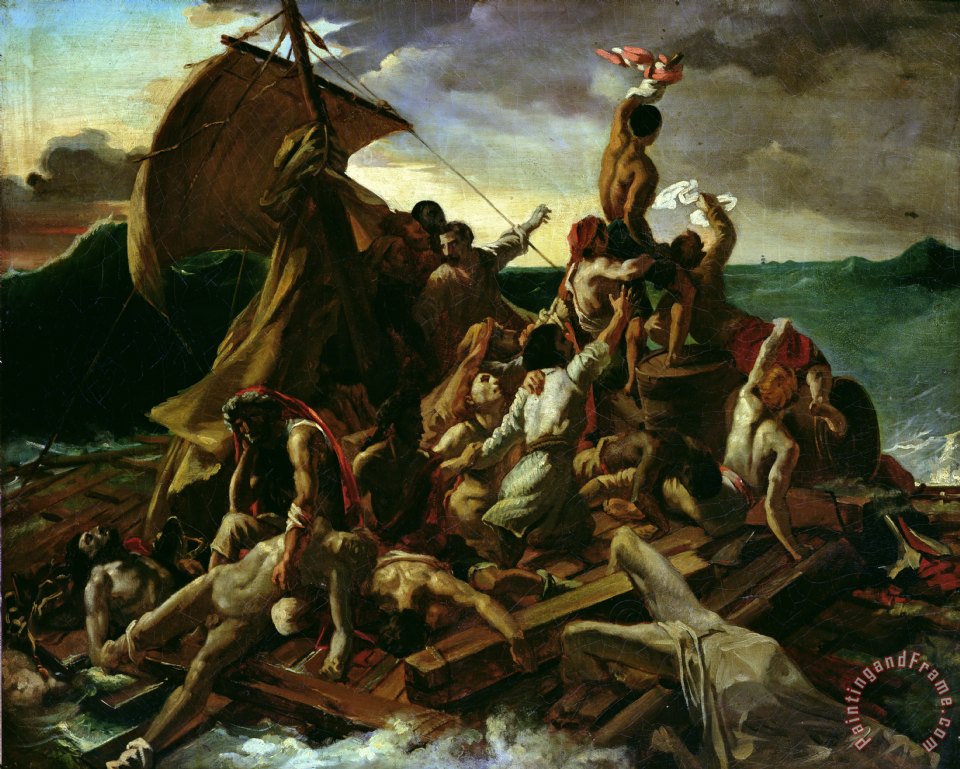
On my back to the Van, I popped in on another impressive and historically significant building which is just behind the cathedral. It is the former Episcopal Palace, largely rebuilt during the 17th and 18th centuries but which hosted the coronation of Henri IV of France (Henri de Navarre) in 1594. It is now a museum (the Musee des Beaux-Arts) and it was holding an exhibition of work by Gerard Rancinan and Caroline Gaudriault; the main feature of which was a monumental photograph called La Deluge (the Flood). It is an impressive piece of work but, for my part, I think the artist has taken one of my favourite paintings, Gericault’s ‘Raft of the Medusa’, as his inspiration.
Musee des Beaux-ArtsLa DelugeThe Raft of the MedusaLeaving the Musee
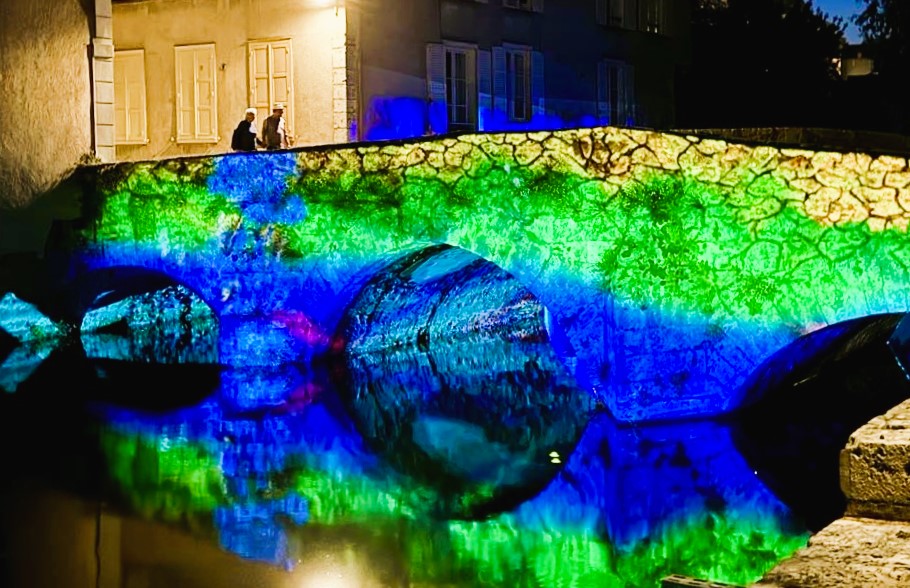
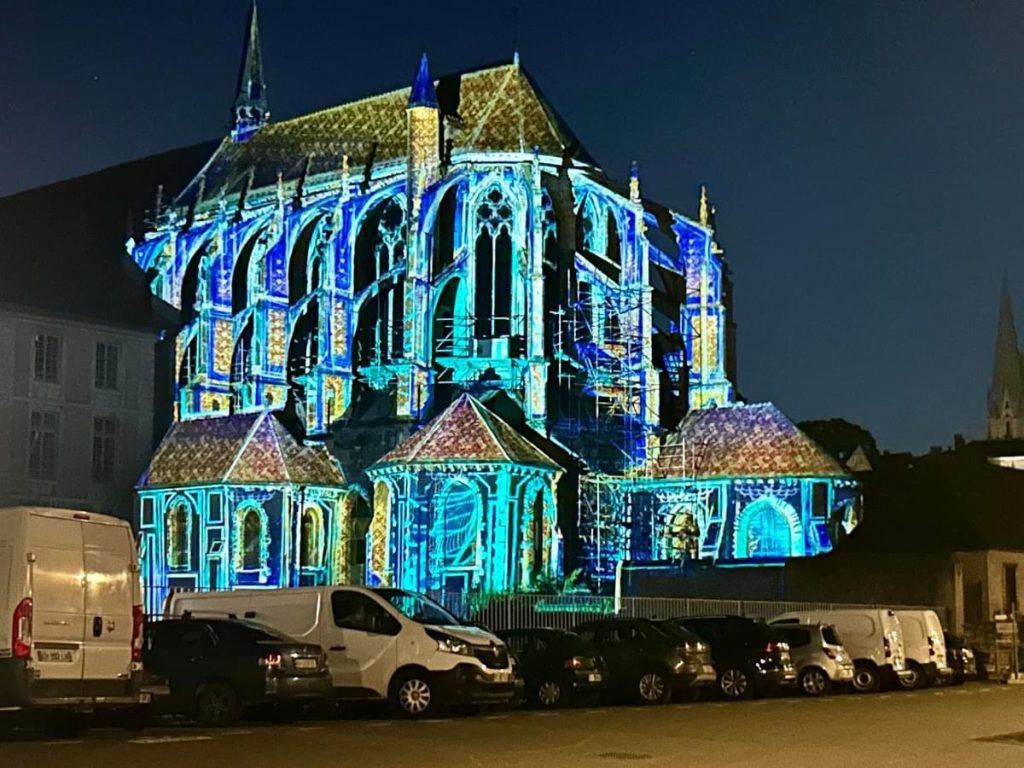
I returned to Chartres later that evening with Vanya (and our two dogs) and showed her those parts of the town which I believed would most interest her but; we were there primarily to see the light and sound show (Chartres en Lumieres). There was no rush; the show couldn’t begin until dusk at the earliest and we therefore had plenty of time to see the sights and enjoy a bottle of wine at the bar I had earmarked earlier on Place Billard.
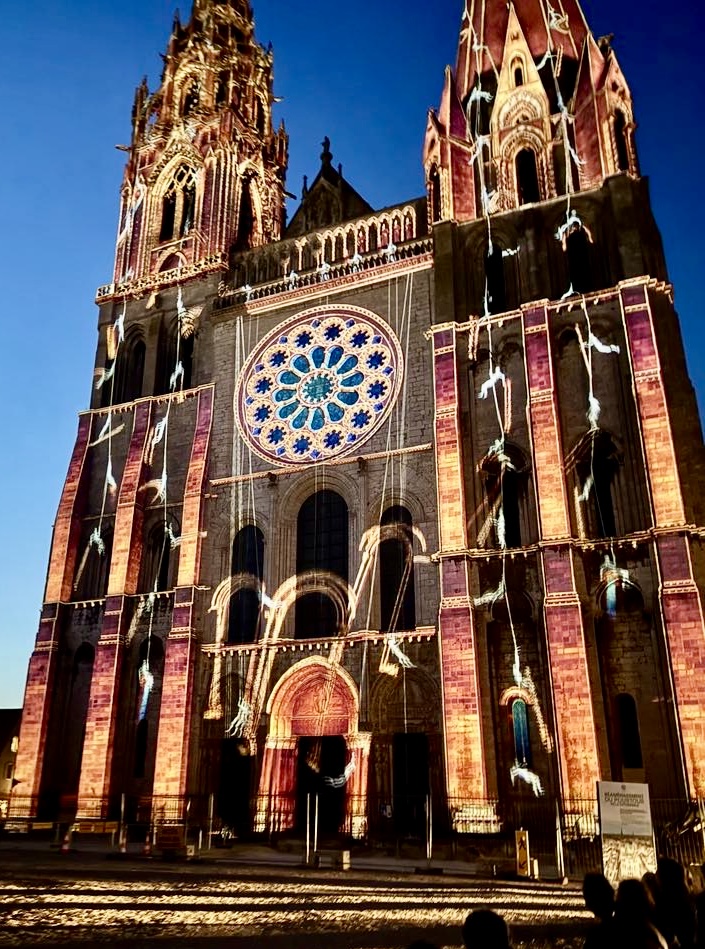
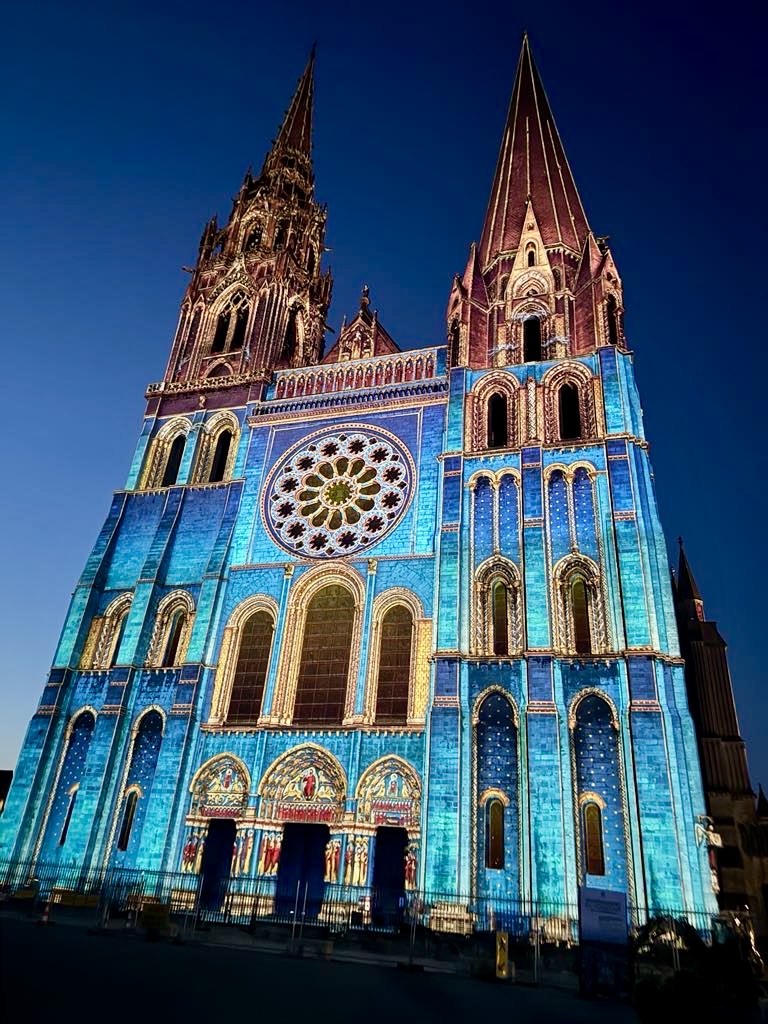
We were at the front entrance to the cathedral at 10.45pm, just as Chartres en Lumiere was starting. Earlier, the tourist information office had issued me with a city map and brochure which identifies start and finish times (they vary according to the season) and lists the 21 buildings which are lit up. You can then plan for yourself which elements you want to see (and when) but, it is recommended you be at the front of the cathedral for the start of the event. We intended to do that and then follow the display down through the old town by the River Eure before finishing at L’Eglise Saint Pierre. That would carry us through to well after midnight.
The show was stunning. I took a few photographs which could never do the display justice but, if I’m honest, I wasn’t interested in taking photos. I simply wanted to enjoy the spectacle. The lights and accompanying music showcased the cathedral so perfectly, I was almost spellbound. Vanya, more wisely, took video; some of which I will no doubt include in my video of this tour when I get round to doing it.
Just one of the small bridges over L’EureChantres en Lumiere…… showcasing the cathedralAn old wash house…… L’Eglise Saint Pierre
We headed back to the Van not long after midnight but the light show was set to continue until about 1am.
Our stay in Chartres was all too short but we had to move on to Normandy. Amongst other things, we needed to get the dogs to our vet in Fecamp for the medical check that would allow them to be readmitted to the UK (and our return ferry was scheduled for early the following week). Before then, we also wanted to return to Yport for dinner at one of our favourite restaurants (Le Nautique) and; in addition to that, Vanya had booked us into a boutique hotel in Pont Audemeyer where we were to celebrate my birthday. Honestly, these tours can on occasion be quite stressful… Lol.
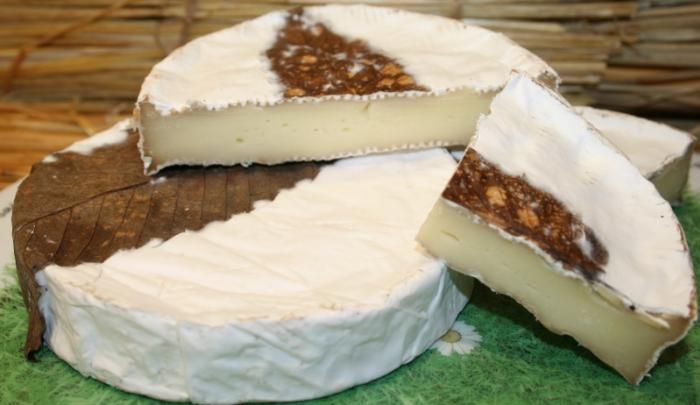
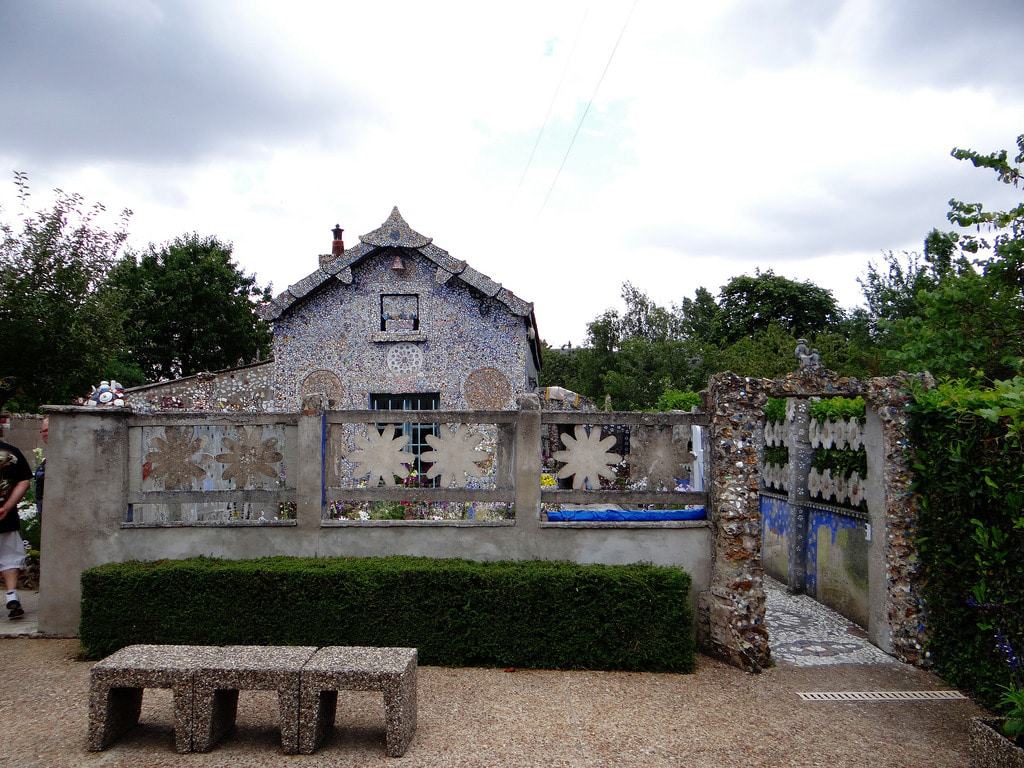
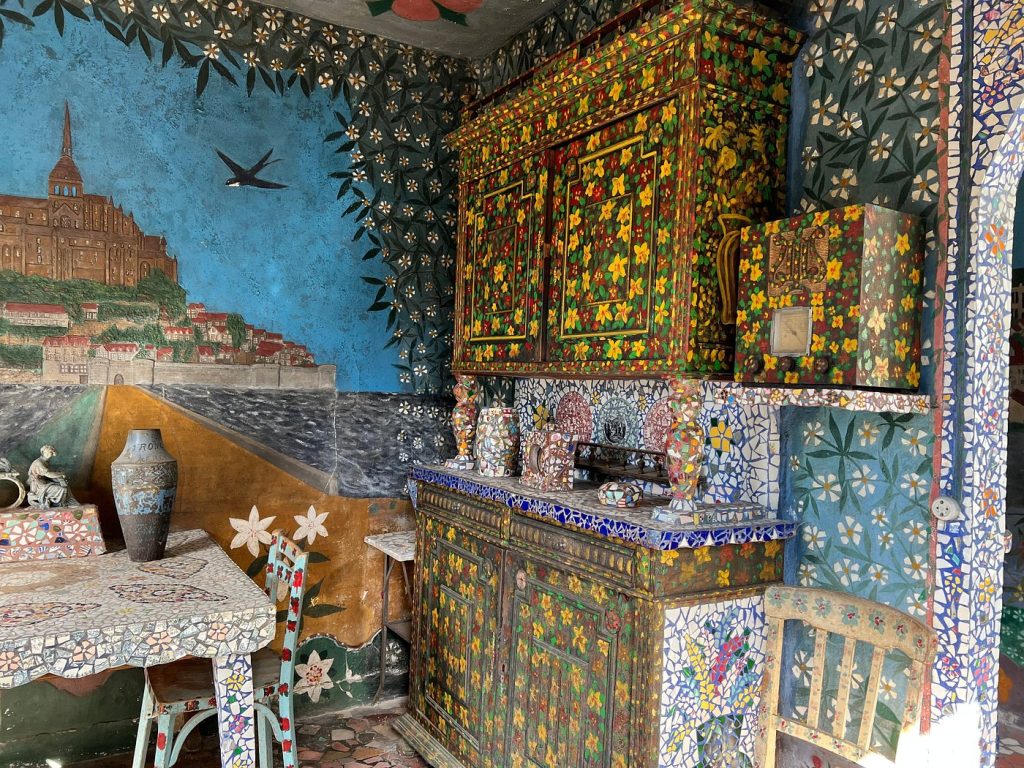
We’ll definitely return to Chartres and, all things being equal, we would stay longer. It’s a beautiful city and I know we didn’t take full advantage of the place. Two things we missed out on are the local cheese (Dreux a la Feuille) and the astonishing Maison Picassiette (built by a certain Raymond Isidore). I’ll not go into detail now. This blog is already long enough but, they’ll be our starting points next time we are in Chartres. Instead, I’ll simply finish with a couple of photos (not mine) so as to provide a taster.
Dreux a la FeuilleMaison Picassiette…… by Raymond Isidore
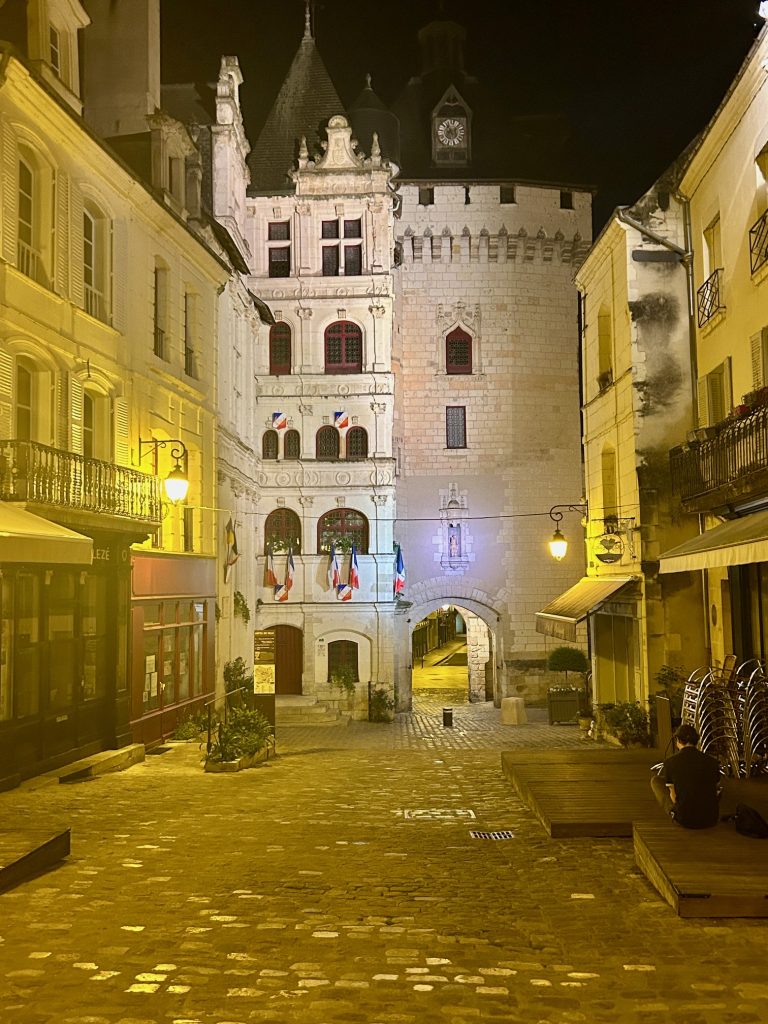
Loches is one of the more picturesque towns in what was once the province of Touraine. You’ll still hear mention of Touraine but the province (along with all the other 33 provinces) was abolished during the French Revolution and incorporated into a series of ‘departments’. Loches is now one of the more picturesque towns in the Indre et Loire Department of the Centre-Val de Loire Region. Doesn’t have quite the same ring, does it?
It is a small town of some 7,000 people on the banks of the River Indre just 25 miles south east of Tours and, in addition to being wholly captivating, it is steeped in history. We decided to stay in the town for two days to properly explore the place and to watch England’s last group stage game of the football (European Championships) against Slovenia. It proved to be one of the more enjoyable stopovers of this tour (but not because of the football although England did make it through to the next round and will play Slovakia next).
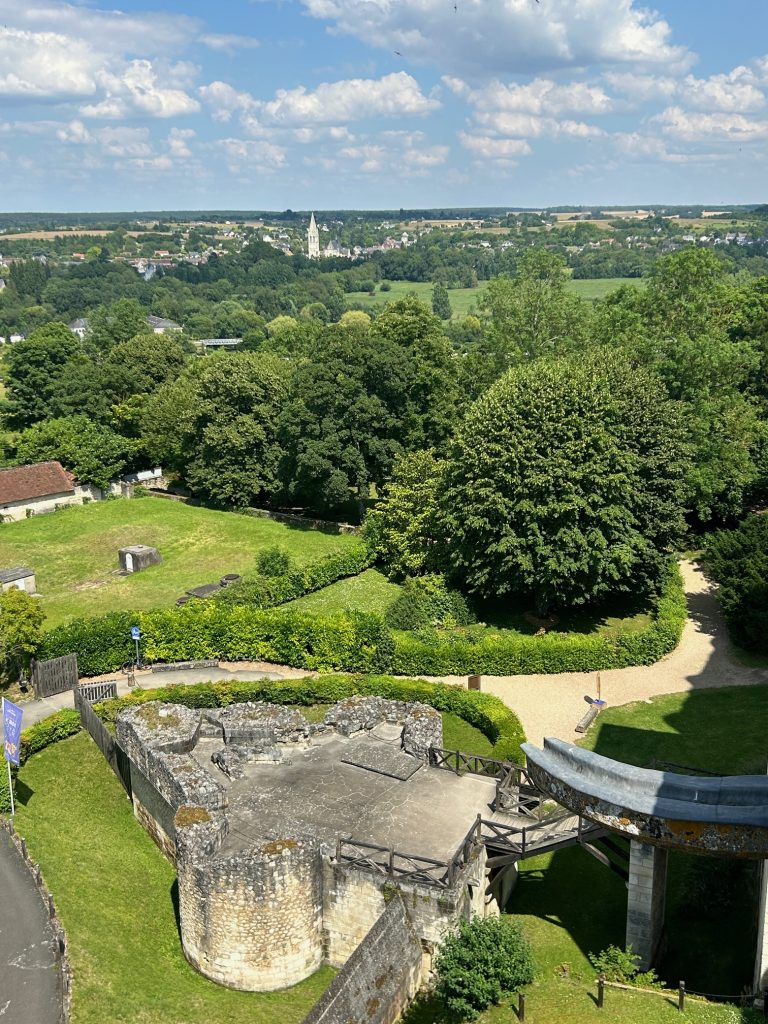
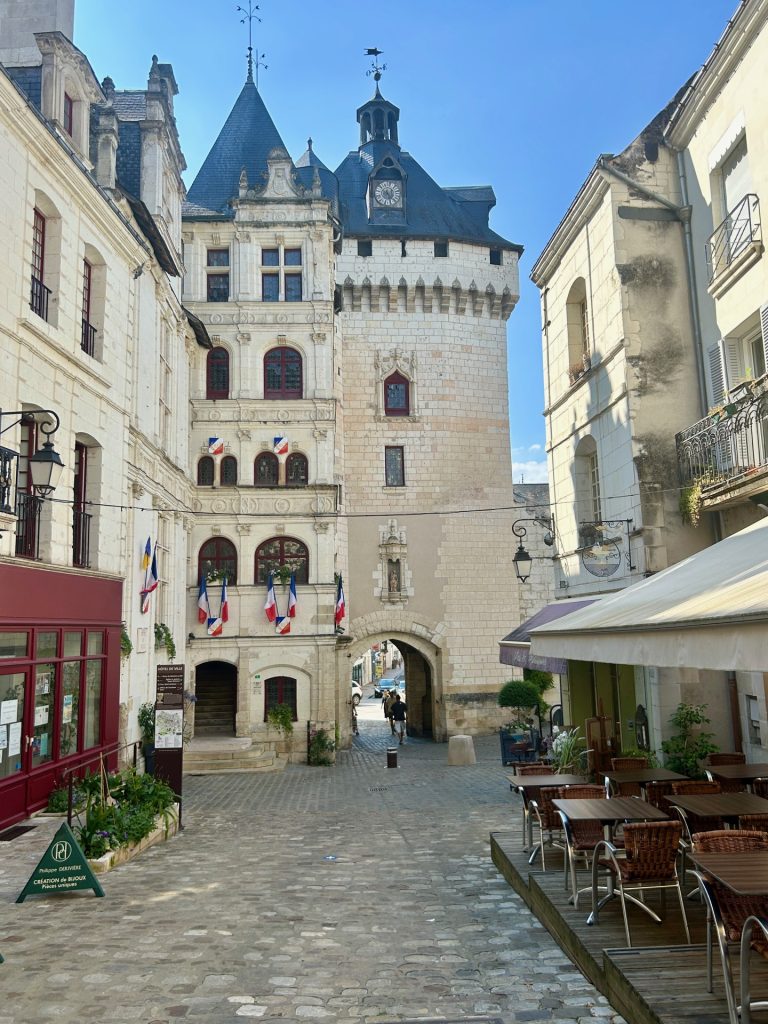
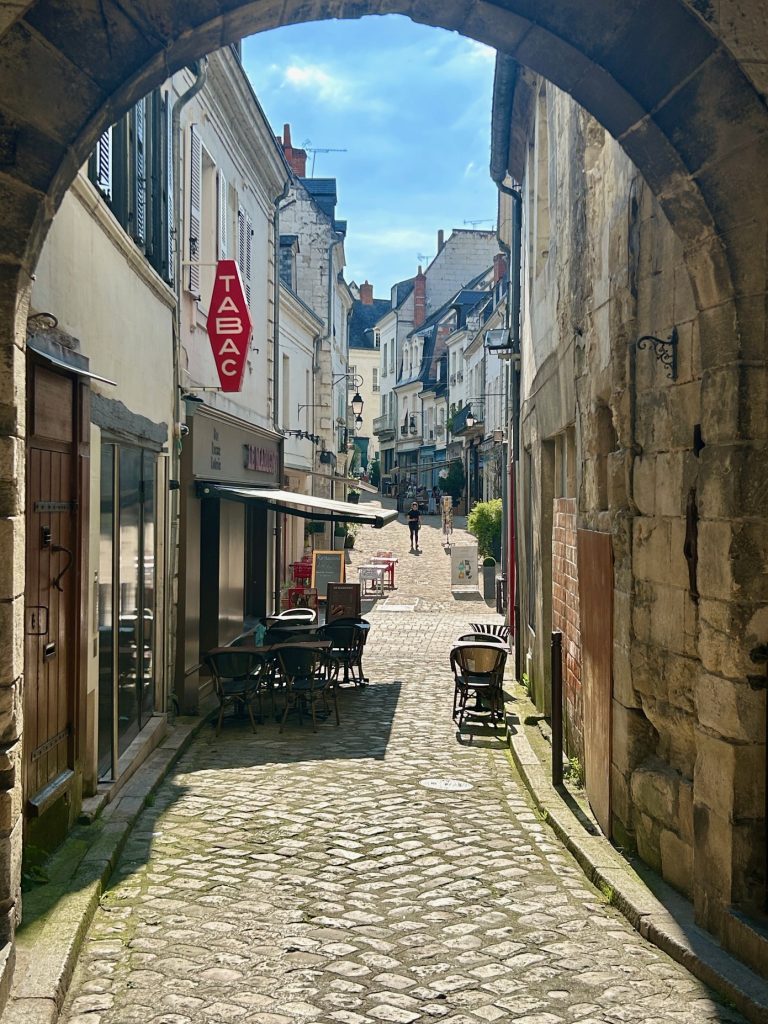
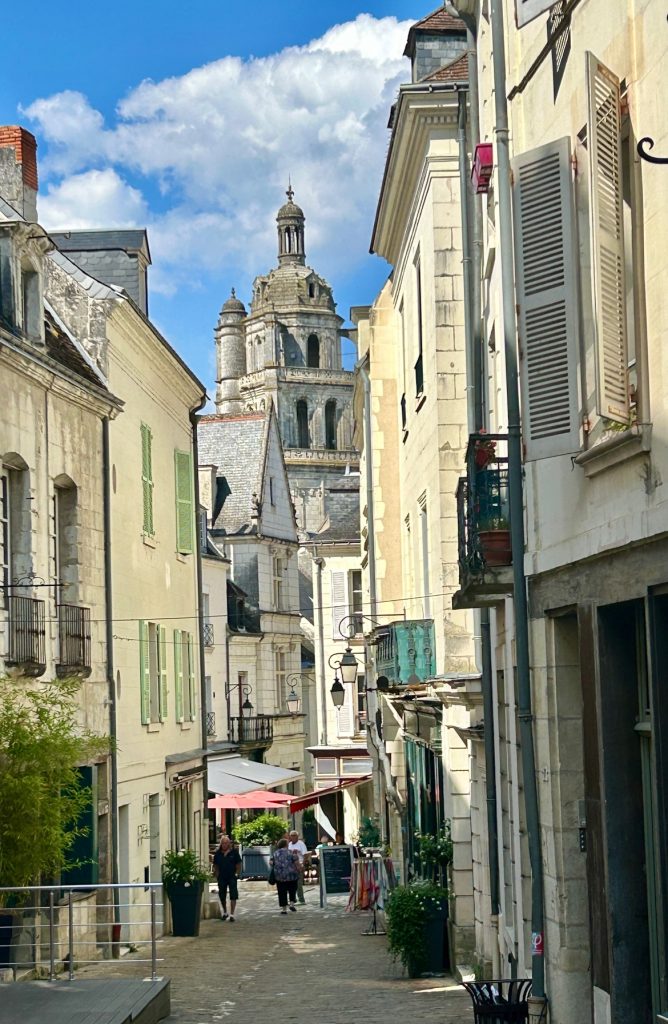
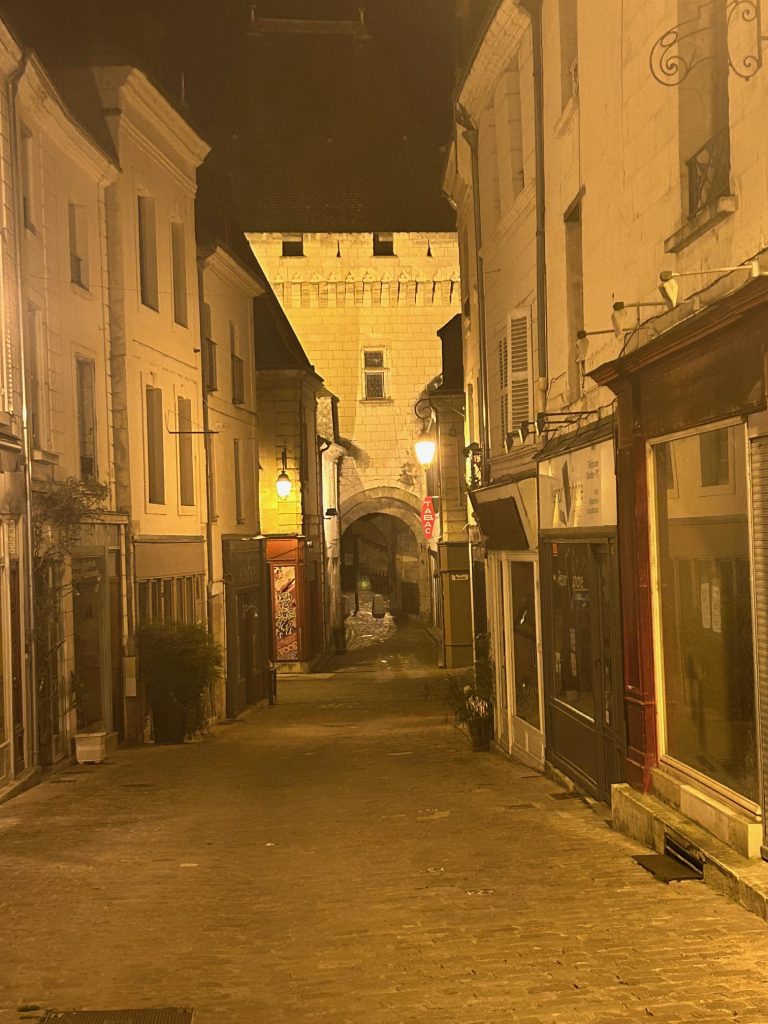
Loches is split into two parts; the old medieval town which sits at the top of a natural rocky spur and is full of sloping cobbled streets and imposing buildings and monuments and the modern more fashionable and dynamic lower part of the town with it’s wide open spaces.
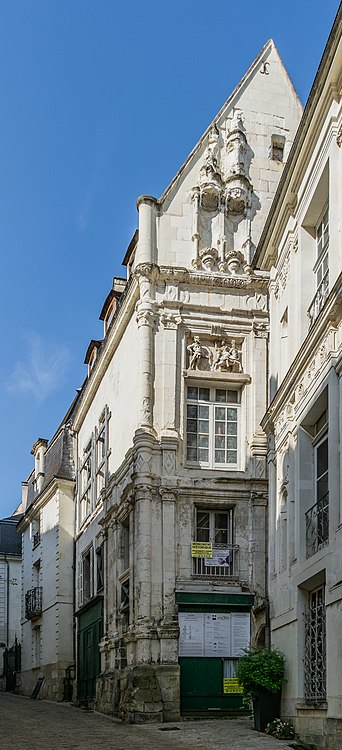
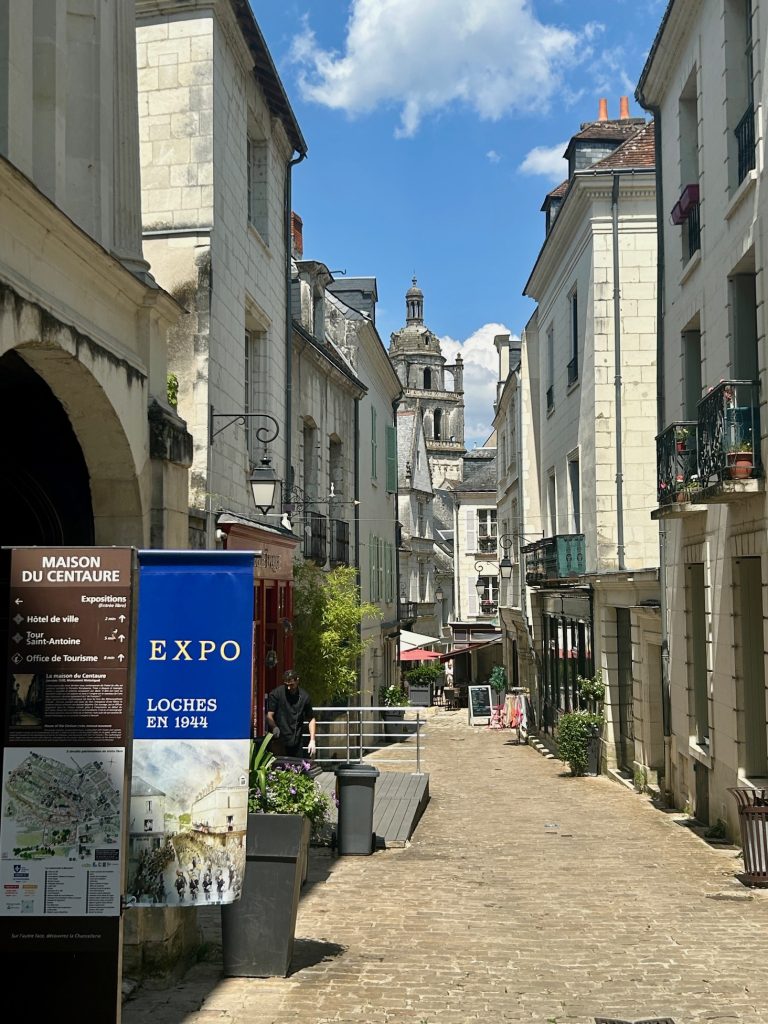
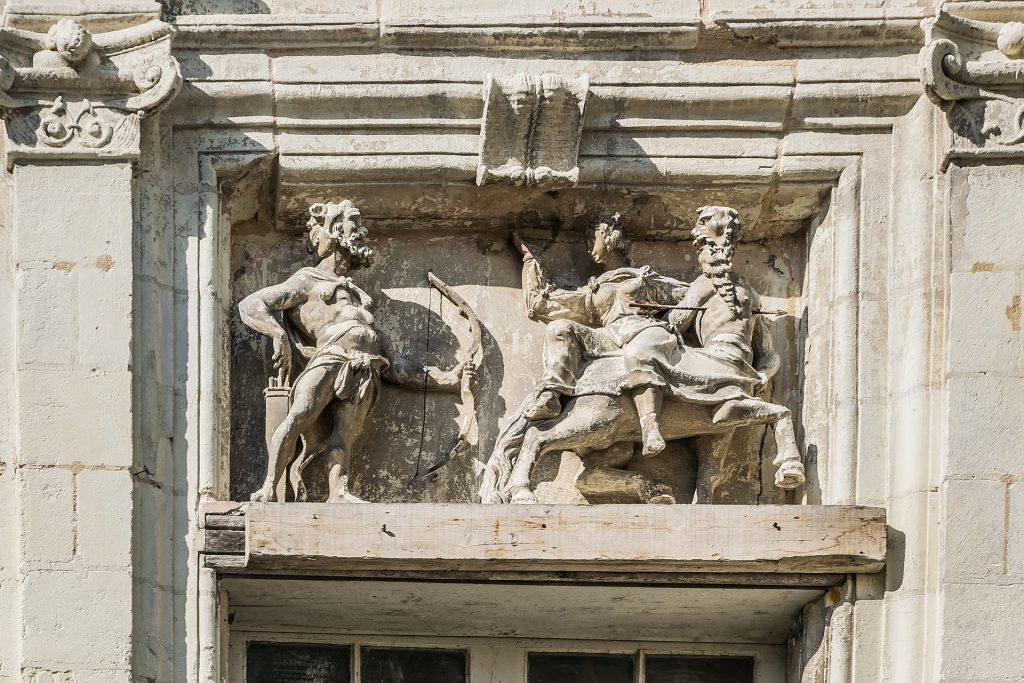
I chose to visit the upper town first and made my way from our campsite (La Citadelle) across the Indre and up into the old town via the aptly named Rue Chateau (given that there’s a castle at the top). On the way I paused at the 16th century Maison du Centaure. This Renaissance style building was originally a private residence (named after a relief on it’s facade of Hercules killing the centaur Nesses) but it is now used to house public exhibitions. There’s a permanent exhibition recounting the story of Loches and, while I was visiting, a temporary exhibition (Loches en 1944) to mark the 80th anniversary of France’s liberation during WWII. I wasn’t very impressed with the latter production which, unless I missed something, failed to make any mention of a shocking event concerning George Dubosq who headed the French Resistance in this area at the time. I’ll not go into detail here but, he was a very unsavoury character who was eventually executed by the French government on 14 May 1946. Bit of an oversight not to mention him, don’t you think?
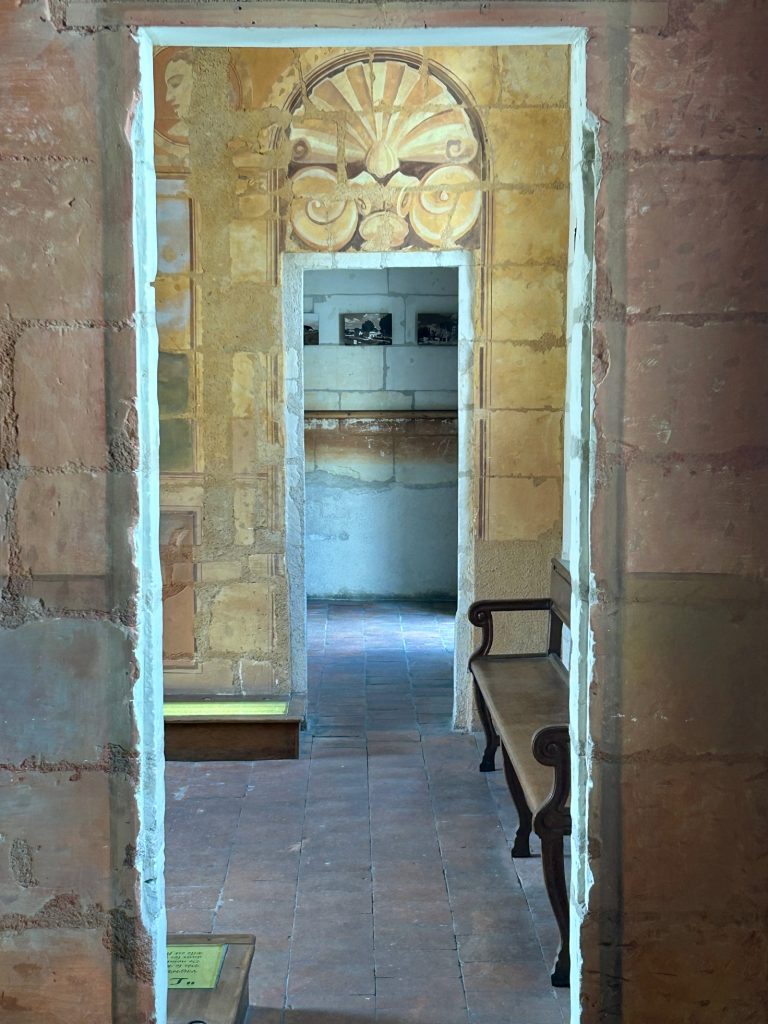
Maison du Centaur……inside……and out.
Reproduced below is a photo of the relief after which the Maison du Centaur is named. Nesses had been caught trying to abduct Hercules’ wife, Deianira, and Hercules had hit him with a poisoned arrow. In case you have forgotten your Greek mythology, the centaur died fom the poison but before expiring he convinced Deianira that his blood had magical properties and would serve as a potion to ensure her husband’s future fidelity. In fact, the blood was poisoned by the very venom which Hercules had tipped his arrow with. Later, when Deianira began to have doubts about her husband’s faithfulness and sought to win him back, she bought him a magnificent shirt which she sprinkled with the potion. Hercules gratefully donned the shirt… and the poison took effect. It began to boil him alive. Hercules could not endure the pain and killed himself. A distraught Deianira subsequently hung herself. Greek tragedies, eh?
Hercules killing the centaur Nesses
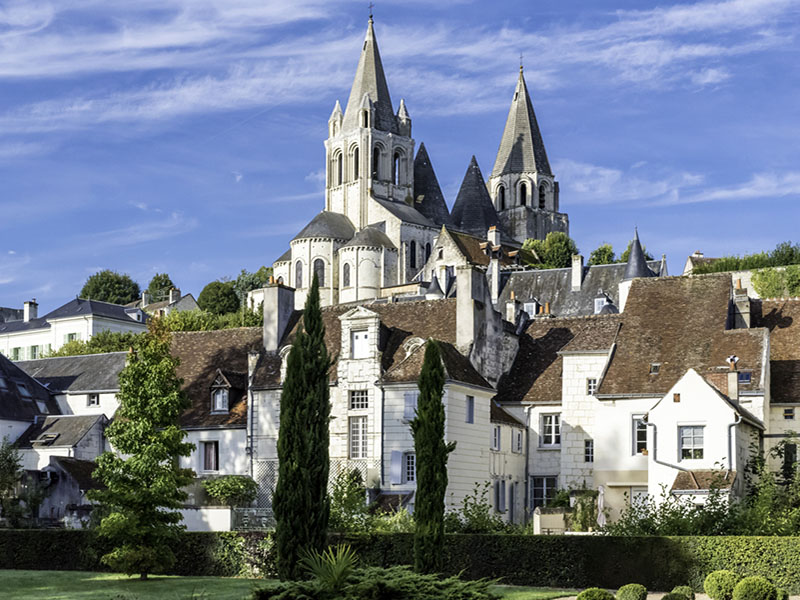
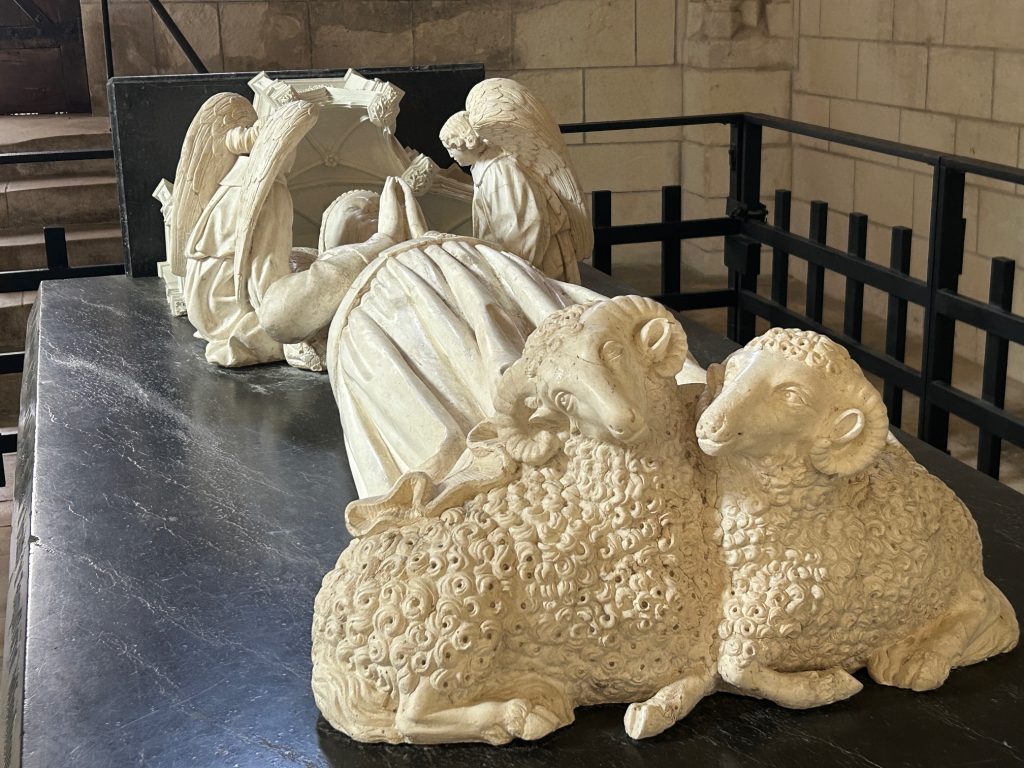
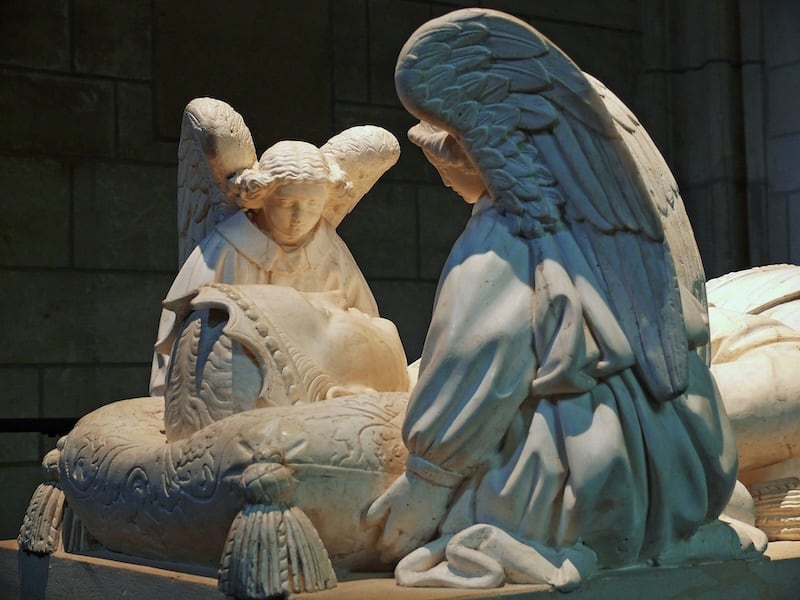
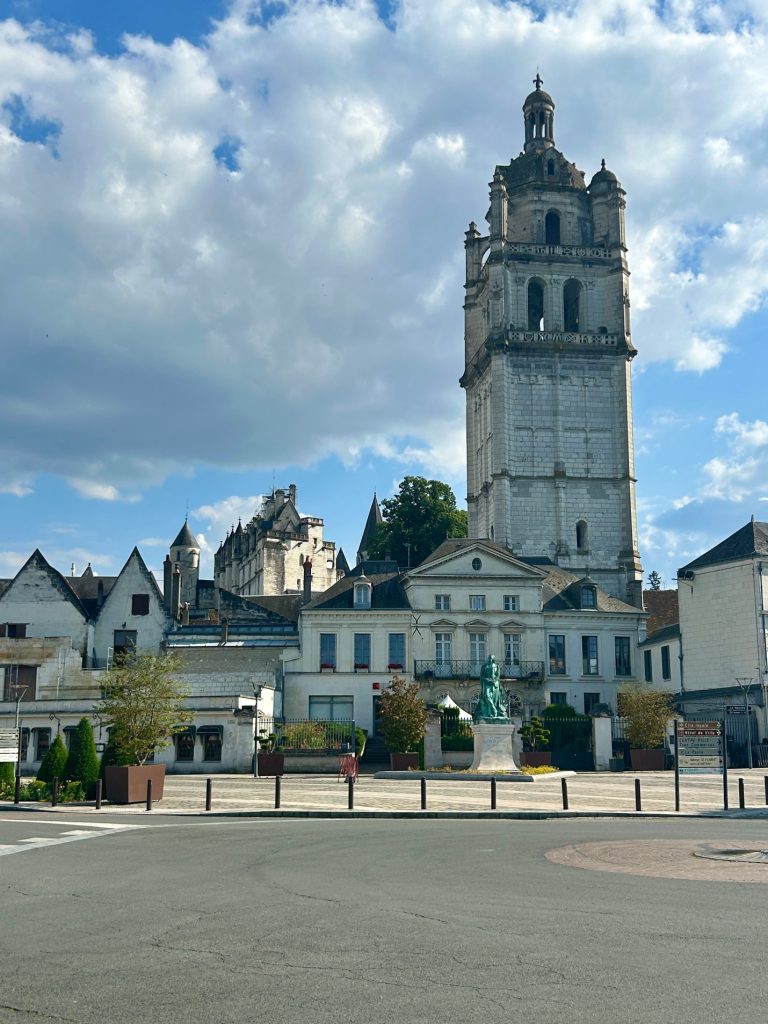
It took no time to walk from the Maison du Centaure up into the old town and my first port of call, the Collegiate Church of Saint Ursus (Saint Ours in French). This 12th century church dominates the town. All the principal buildings across Loches’ old town are built of the beautiful tufa/tuffeau rock I described in my earlier post on Turquant (Tour 9) and this white rock especially when topped with grey tiles is simply stunning. Equally striking, inside Saint Ursus, is the intricately carved alabaster and marble tomb of Agnes Sorel, a young lady who was a mistress to the French King Charles VII and who, during her all too brief lifetime (she died at just 28 years of age), used her position with such great effect to shape the political and social landscape of France.
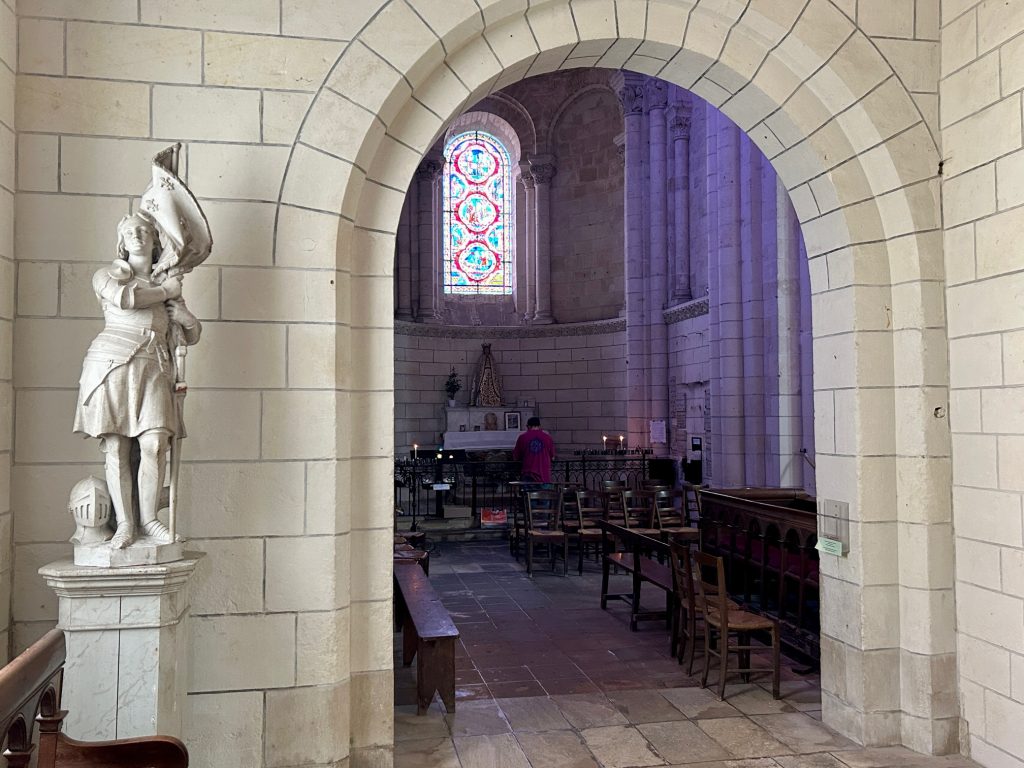
Collegiate Church of Saint Ursus of LochesThe ubiquitous Joan of ArcThe Tomb of Agnes Sorel…… and a detail from the tomb
Agnes Sorel joined the Court at just 20 years of age and her outstanding beauty immediately caught the eye of Charles VII. He was captivated by her ; so much so that at age 22 she was declared ‘maitresse en titre’ (the First of the King’s Mistresses). Charles was besotted with her, even going so far as to declare that he would leave his pregnant wife for this new mistress. He showered her with gifts (including the Chateau and Royal Residence at Loches) and; he was all too easily influenced by her, which aggravated many in the court (particularly the Dauphin, Charles’ son, who would became King Louis XI).
Agnes Sorel further provoked the court by introducing fashion trends which, for the time, were quite outrageous. Starting with low necklines and transparent fabrics, she graduated to going bare breasted (a style which others in the court were encouraged to follow). Worse still she wore diamonds in public which was a privilege afforded only to the king in those days.
There are various views as to how Agnes Sorel came to die at such a young age. Initially it was thought she died in childbirth but with increasing frequency it is being suggested she died from poisoning by the Dauphin who had grown to despise her.
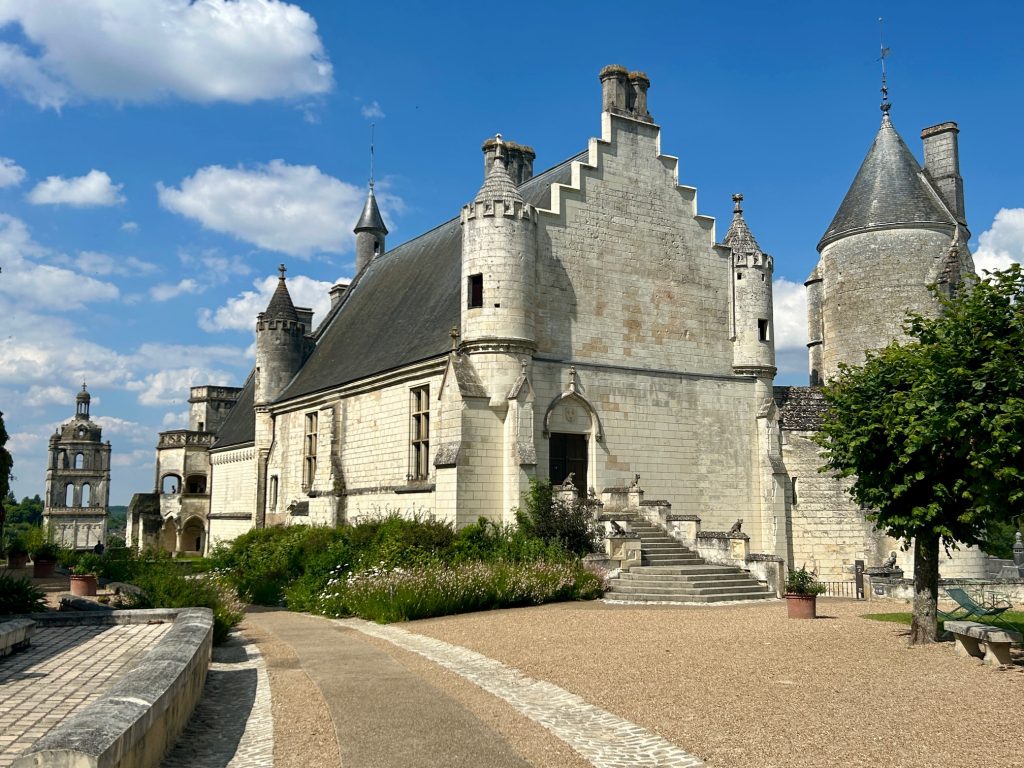
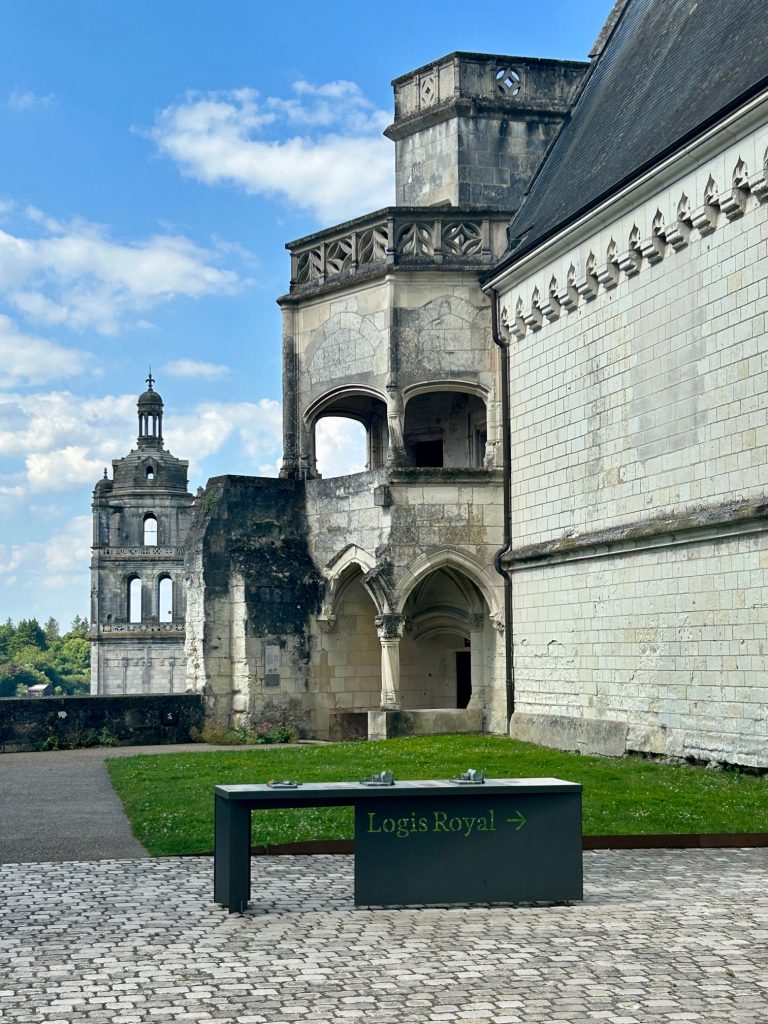
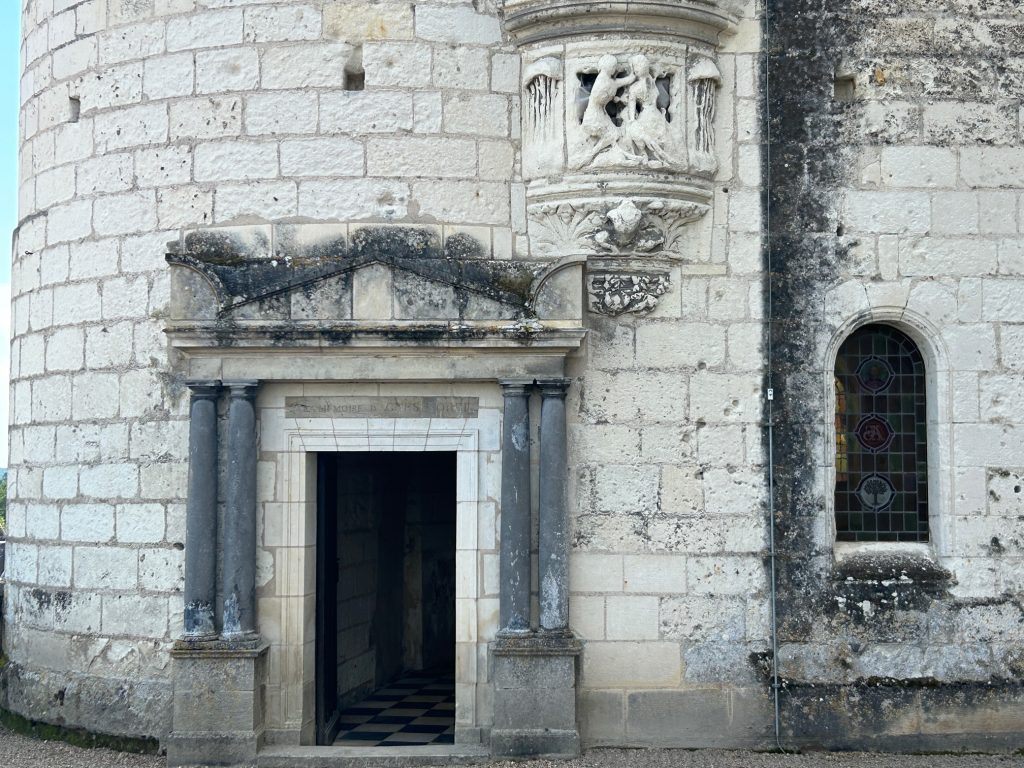
The Royal Logis / The Royal ResidenceThe Great Hallin the Royal Residence
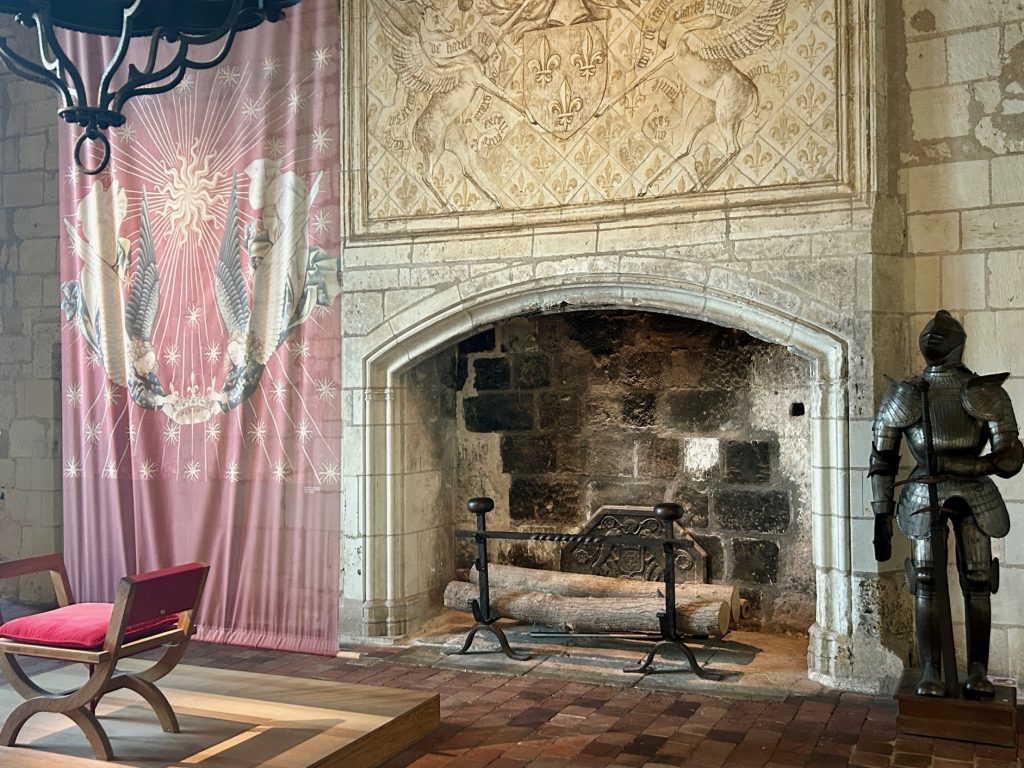
For all it’s size and grandeur (it has been described as an architectural jewel), the Royal Residence in the Chateau complex at Loches has very few rooms but, it has a high place in the history of France. It was the preferred residence of Charles Valois even before he was crowned Charles VII of France and it was in the Great Hall in the Royal Residence of Chateau Loches that Joan of Arc, after raising the siege of Orleans, urged the then Dauphin Charles to enter Reims to be crowned King Charles VII. It would be a long time after this before the 100 Years War was concluded but for many this was the beginning of the end of England’s rule in what is now France. For my part, it felt special (extraordinary even) standing in the Great Hall where Joan of Arc once stood and caused such a celebrated event.
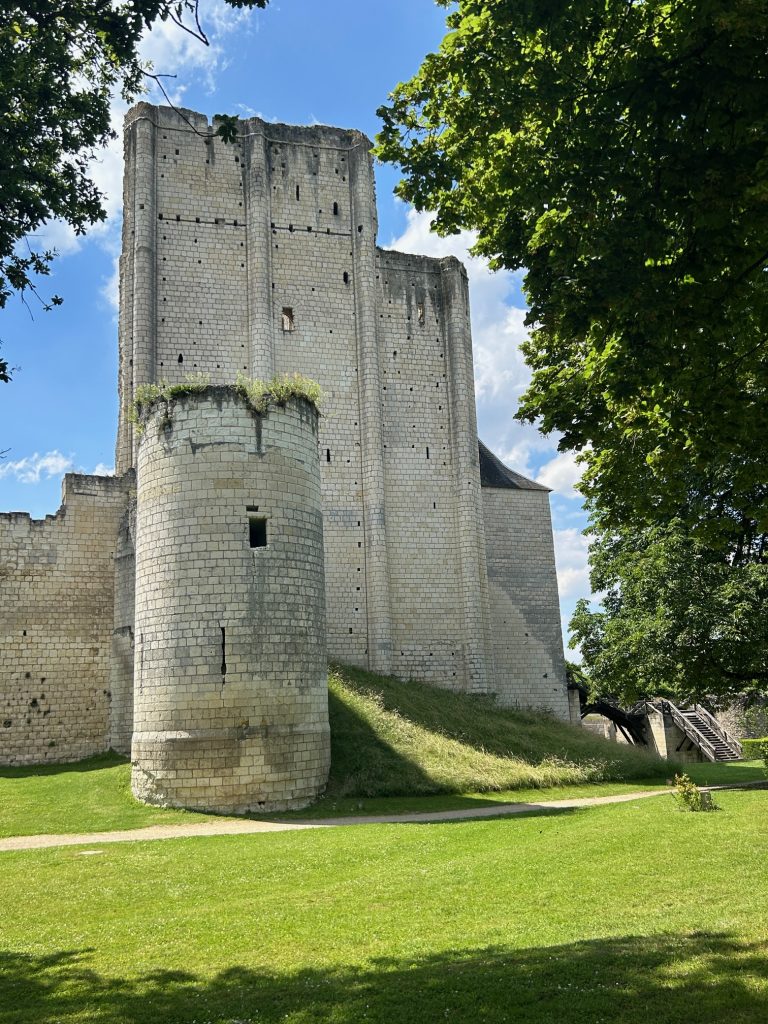
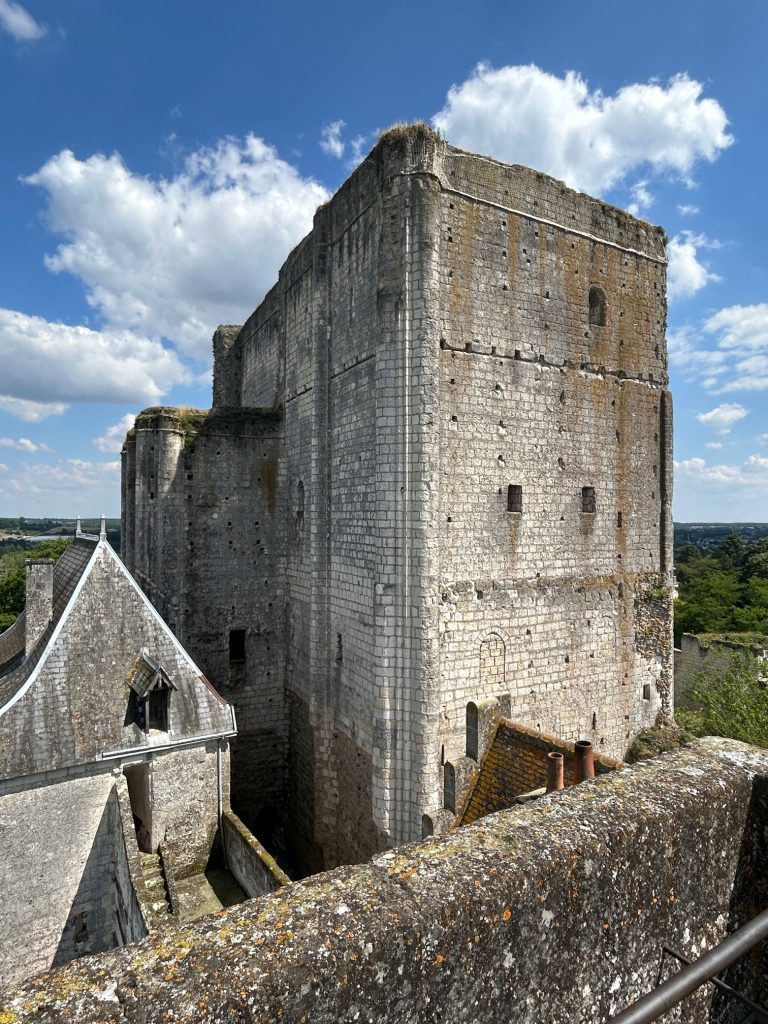
From the Royal Logis I made my way to the most imposing of the buildings in the complex, the 11th century castle keep or donjon, which during the 12th century was occupied and strengthened by Henry II and and his son Richard I (the Lionheart). Later, during the 100 Years War, the donjon and a ‘New Tower’, were converted into a state prison. Indeed, this prison held nobles and senior members of the clergy from late in the 15th century until the 18th century when it was ransacked and partially destroyed during the French Revolution.
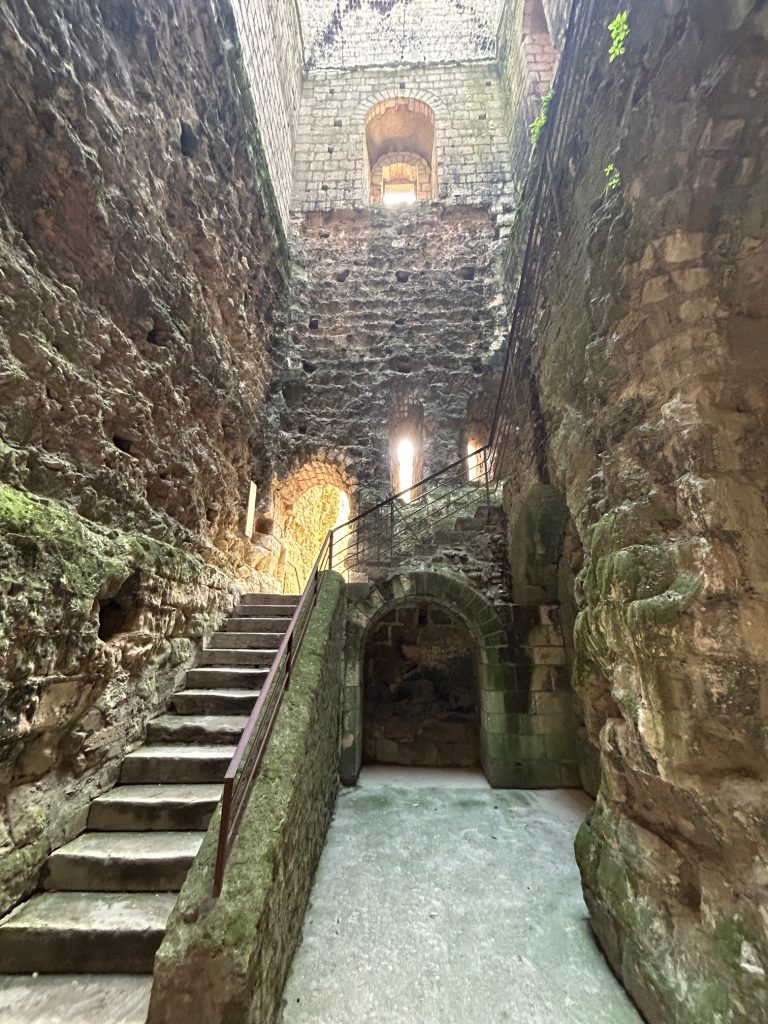
I spent hours wandering this part of the castle complex. A touchscreen histopad was provided with the entrance ticket and with the histopad I could visualise each room, cell, underground passage and dungeon as it may have looked when being used as a prison. This was brilliant because it proved as close an experience of being immersed in history as you can get.
It is a lengthy list of nobles who were held in the prison with, perhaps, the most famous being Ludovico Sforza Duke of Milan who died in Loches in 1508. How he died and where he is buried remains unclear but it is thought he was allowed to starve once his usefulness had lapsed and the search for his body in the castle grounds continues to this day.
The Keep from inside the wallsThe Keep from the wallsInside the KeepThe view from the Keep
From the Castle Keep I made my way back through the beautiful cobbled streets of the Medieval quarter to the new part of the town, passing the Lansyer Museum on the way. I didn’t have time to visit the museum which was once home to the 19th century landscape artist Emmanuel Lansyer but, upon his death in 1893, he bequethed the family home, his art collection and thousands of personal objects to the city of Loches and the home itself was later turned into a museum.
Leaving the old town……heading down… … towards the new town
In the new part of the town where I hoped to find a restaurant-bar which would be showing the England v Slovenia football match that evening, I passed the Tour Saint Antoine and the Saint Antoine Church. Neither were open to visitors but that allowed me time for a beer or two and, on the corner of Mazerolles Square, I found the perfect place to both enjoy a beer and watch the football later in the day. Bless her, the proprietor agreed to reserve a table for me in front of the widescreen television.
Saint Antoine ChurchTour Saint Antoine
The football match was a disaster. Slovenia are currently ranked 57th best team in the world by FIFA but once again, England failed to deliver with the match ending in a 0-0 draw. Although England have made it through to the first play-off round (the Round of 16) and will meet Slovakia next, they continue to play very poorly.
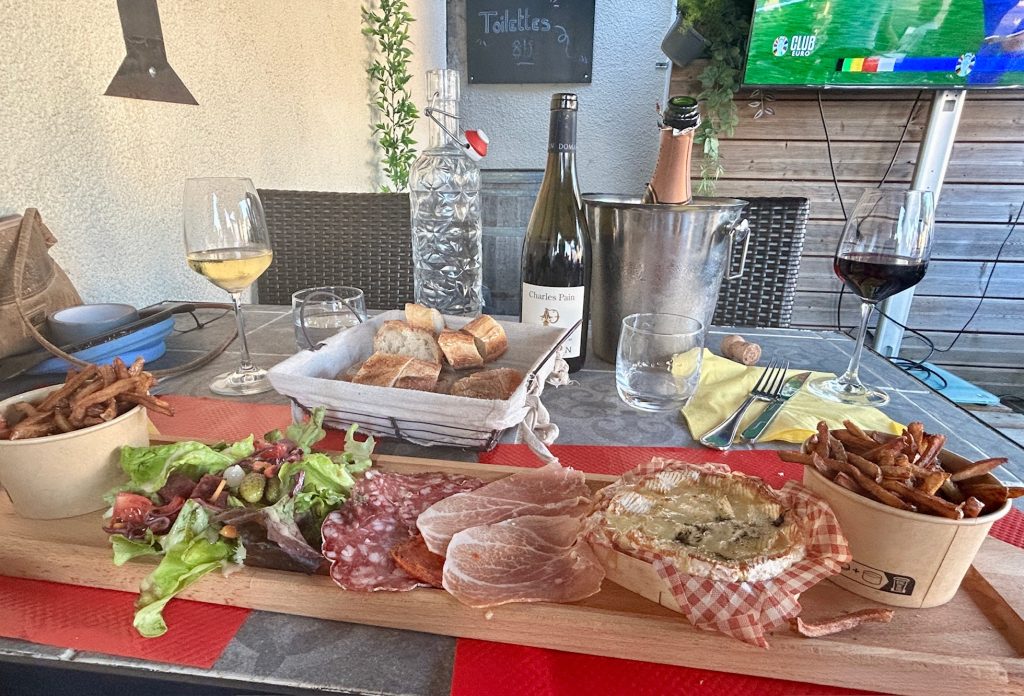
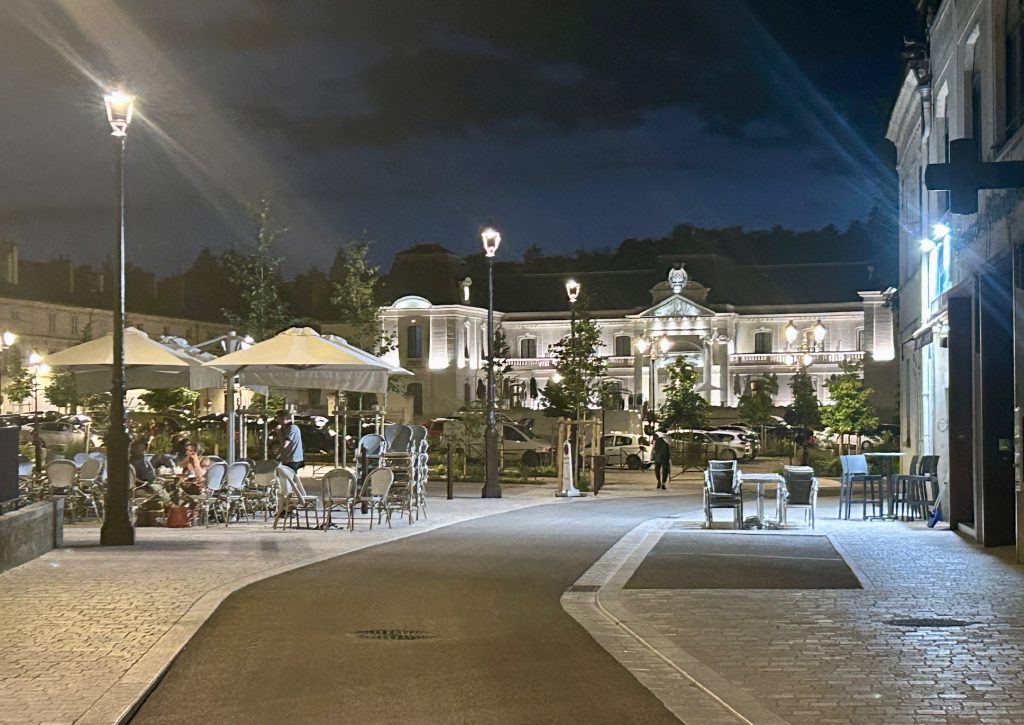
Notwithstanding the above, we had a pleasant evening in the bar where I had reserved a table. The food (a shared platter) was good and the wine (a bottle of Cremant de Loire for Vanya and a bottle of Chinon Red for me) was excellent and everything was very reasonably priced. Oh, and we got to see Loches at night – and very pretty it is too.
A shared platter and some very fine local wine.Mazerolles Square at closing time…… and a last look at the town…… at closing time.
Of course, it didn’t end there. Yours truly left his hat at the restaurant and had to return the next day to retrieve it. It worked out very well because the farmer’s market was in full swing as I arrived back in town and the Loches market is considered one of the best in the area with it’s focus being towards a wide range of farm products from all across the old province of Touraine. The produce of bakers, butchers, cheesemakers, fishmongers, florists, market gardeners and, naturally, wine producers were all in evidence. The real discovery for me during this tour however, has been the Chinon red wines and the market provided yet another opportunity to acquire a couple more bottles.
There’s no doubt we’ll be back to this area and not just for the wine. During this visit we didn’t get to see the nearby town of Beaulieu les Loches (with it’s abbey ruins and church of Saint Laurent) nor the famous flower village of Chedigny (with it’s Michelin Guide restaurant of Clos aux Roses). Next time.
A fair drive saw us move from Fanjeaux in the Region of Occitanie to Saint Jory de Chalais in Nouvelle Aquitaine. We went by way of Excideuil. That’s Excideuil near Perigeuex in the Dordogne, not the one in Charente.
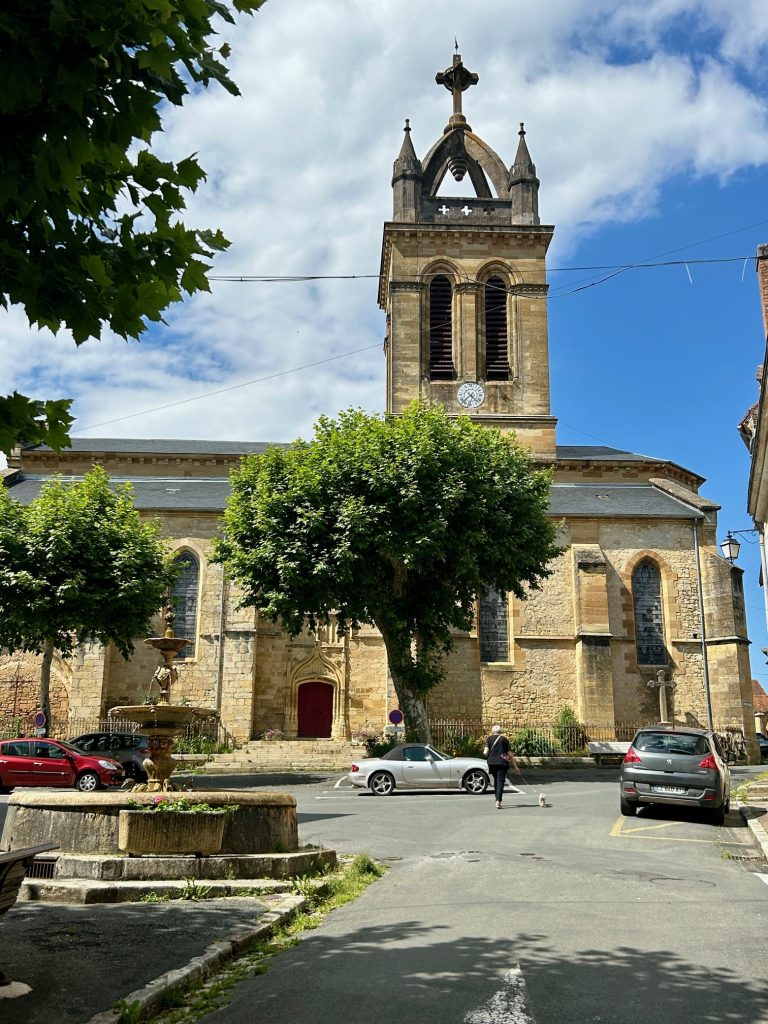
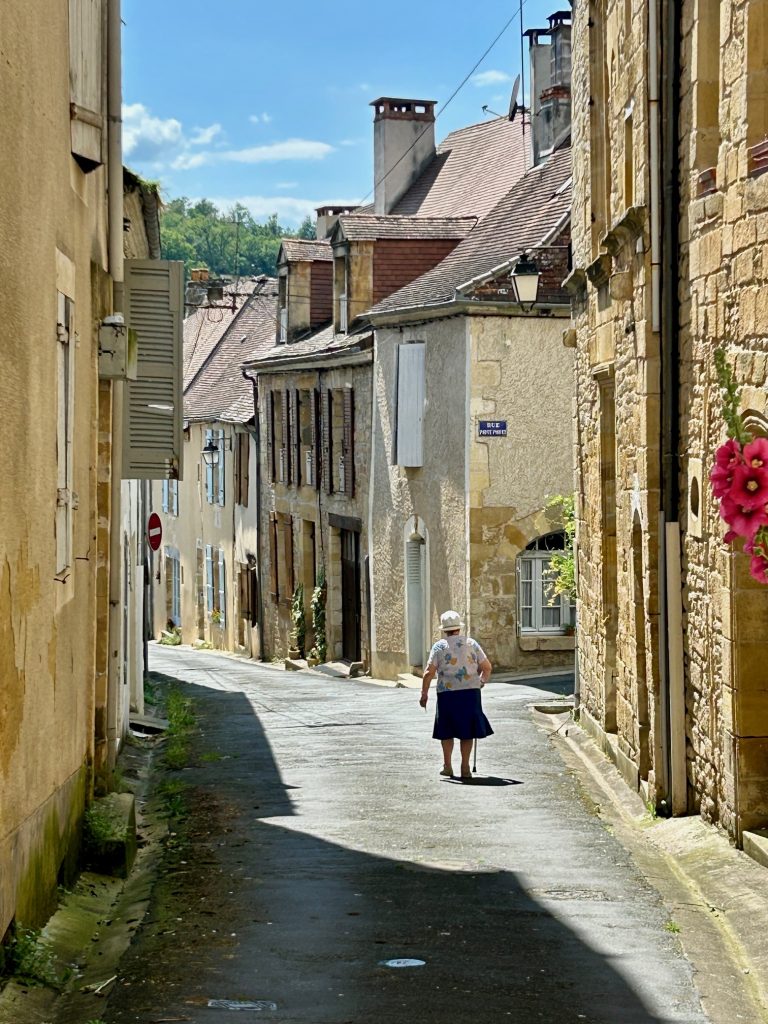
Excideuil is a pretty little market town which grew up around a 10th century monastery by the River Loue. There’s little, if anything, remaining of this monastery (the Abbey of Saint Medard) except, the town’s principal church (L’Eglise Saint Thomas) was constructed on the same site and it is likely some aspects of the earlier religious buildings were incorporated into the new church.
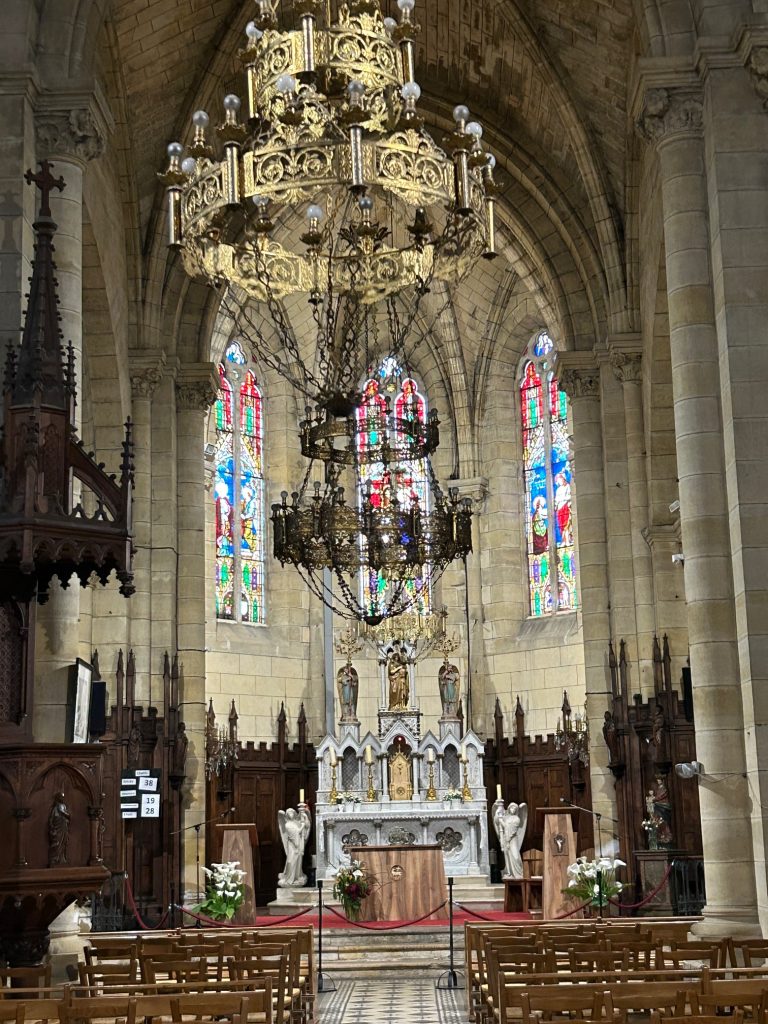
Saint Thomas sits on the market square together with a number of other historical buildings, including the Commanderie des Templiers, the adjoining Commanderie de Sant Antonin and a small covered market area which the local farmer’s make use of every Thursday morning. The doors to the church were open and choral music was being piped around the church. The atmosphere inside was quite special – serene.
Eglise Saint Thomas
Nowadays, Excieuil is a small market town of just 1,100 inhabitants but it experienced a period of great prosperity during the late 15th century after King Louis XI exempted it from paying taxes (in recognition of the many times the town was sacked by invading armies during various wars). This favour by the French king, coupled with a burgeoning mining industry, saw the town’s population and wealth increase exponentially.
Now it is an altogether quieter place.
In front of the CommanderiesTypical Excideuil streetMain Square FountainTimeless…
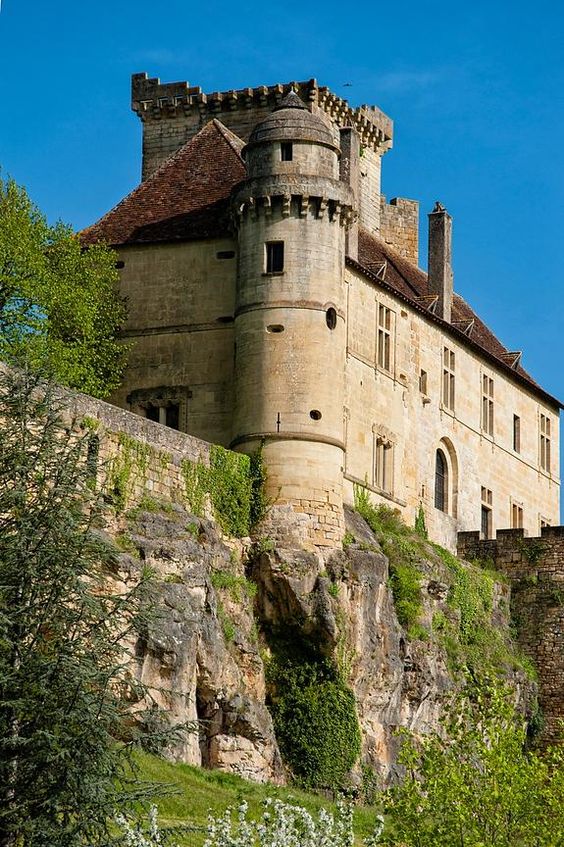
In it’s time Excideuil has witnessed much history and been tested more than most. Leaving aside the town’s Templar connection, there’s a 12th century castle (the Chateau d’Excideuil) on a rise at the edge of the town which has been involved in numerous battles and sieges over the years, particularly during the conflict between Richard the Lionheart and Philip II of France (twice the castle had to fight off sieges by Richard although it fell at his third attempt) and again during the 100 years war when the English twice seized the castle from the French. The castle is now owned by the Naudet family who restored it after 300 years of neglect. I wasn’t able to gain entrance to the castle but I understand that part of it is open to the public notwithstanding that it is privately owned.
This was my second visit to Fanjeaux and Vanya’s first although she didn’t get to see much of this pretty little town. We were in Fanjeaux (just outside at Les Brugues to be precise, parked up on a farm) to catch up with some longstanding friends, Chris & Tessa.
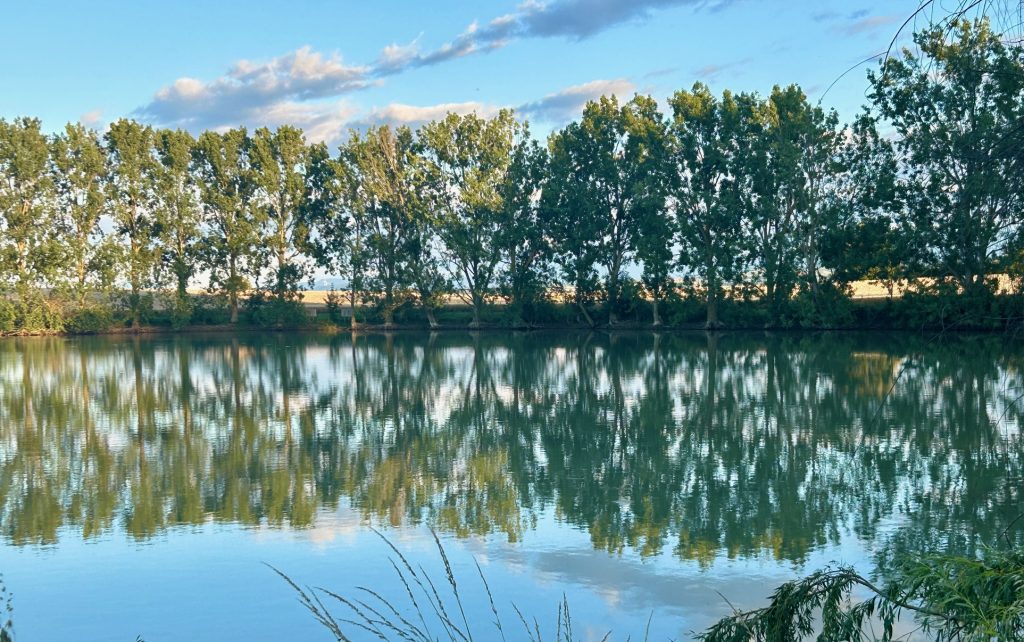
I cooked my Spanish Chicken in the Remoska and we sat by a small carp lake in the warm sunshine eating, drinking and chatting for the best part of 3 hours. We’re five weeks into this tour now and I’m really starting to chill. Sad that we have to head back to the UK.
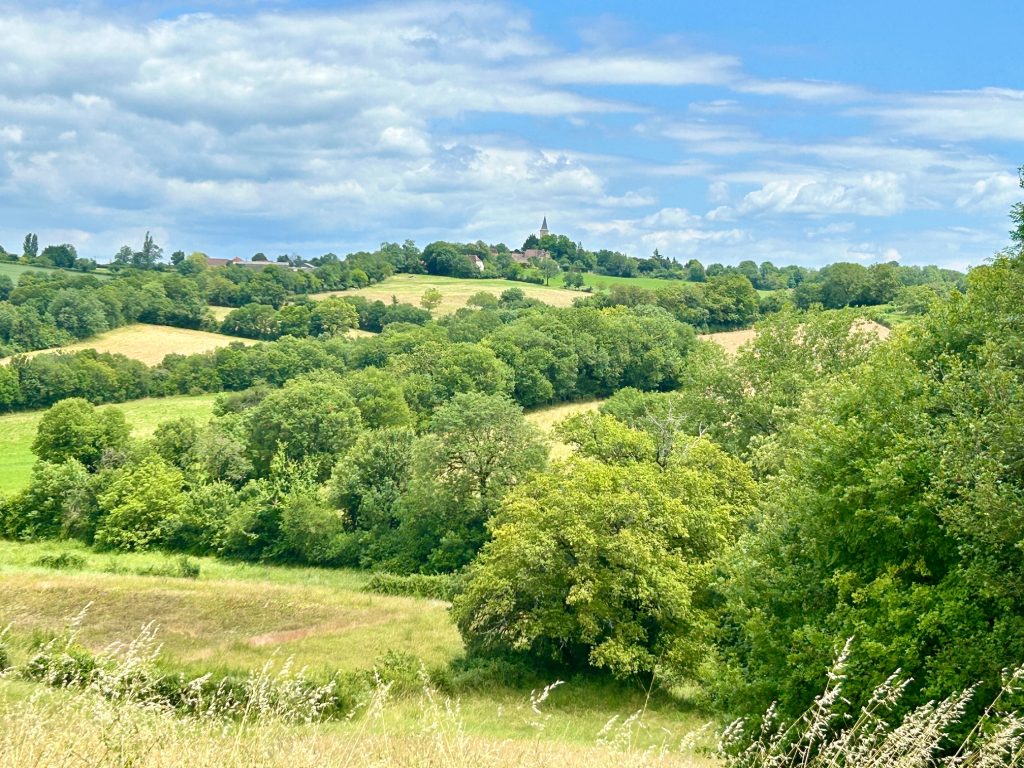
Beautiful Aude countrysideThe view over the lake from our Van…… and another from further along
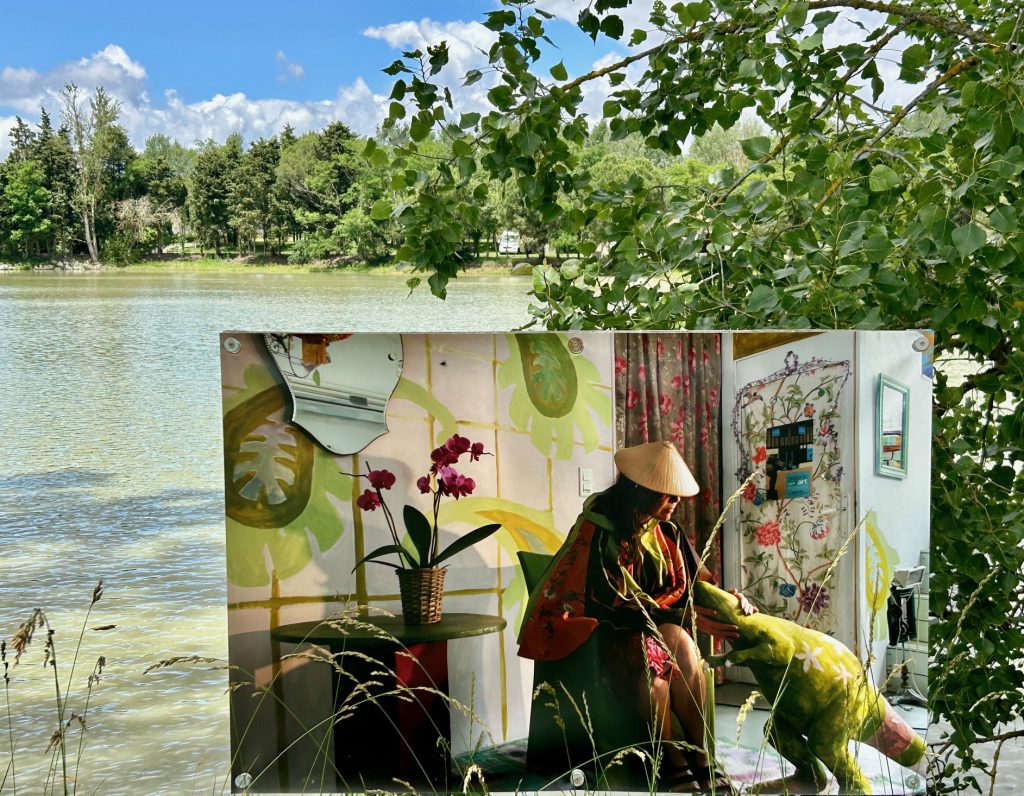
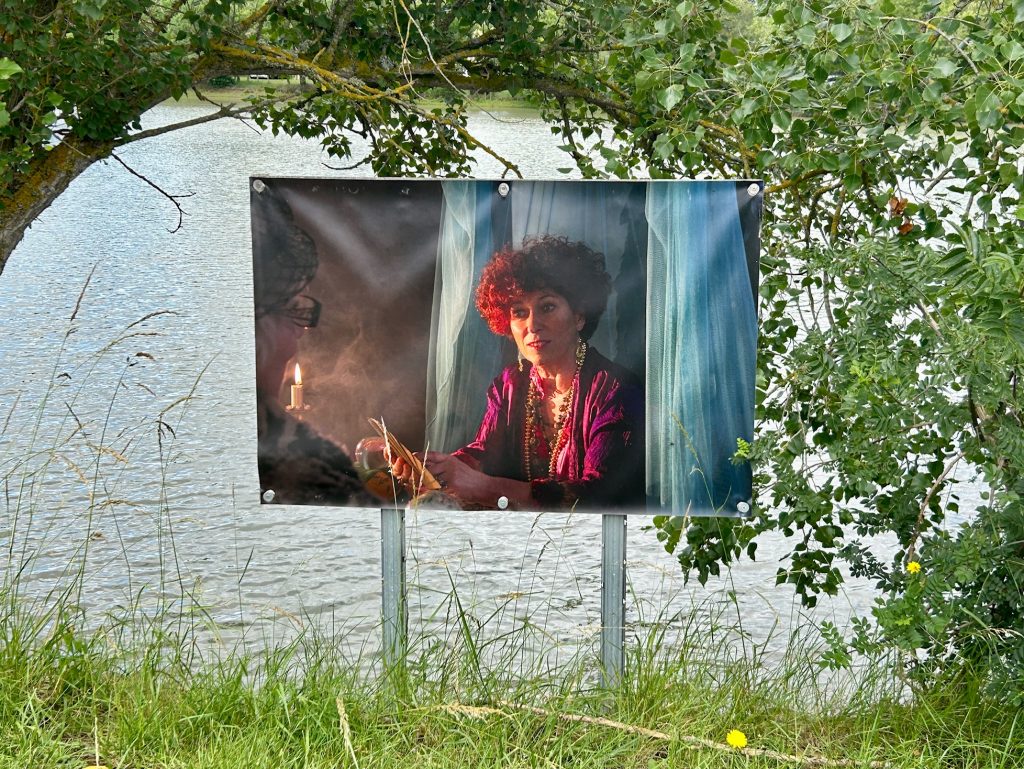
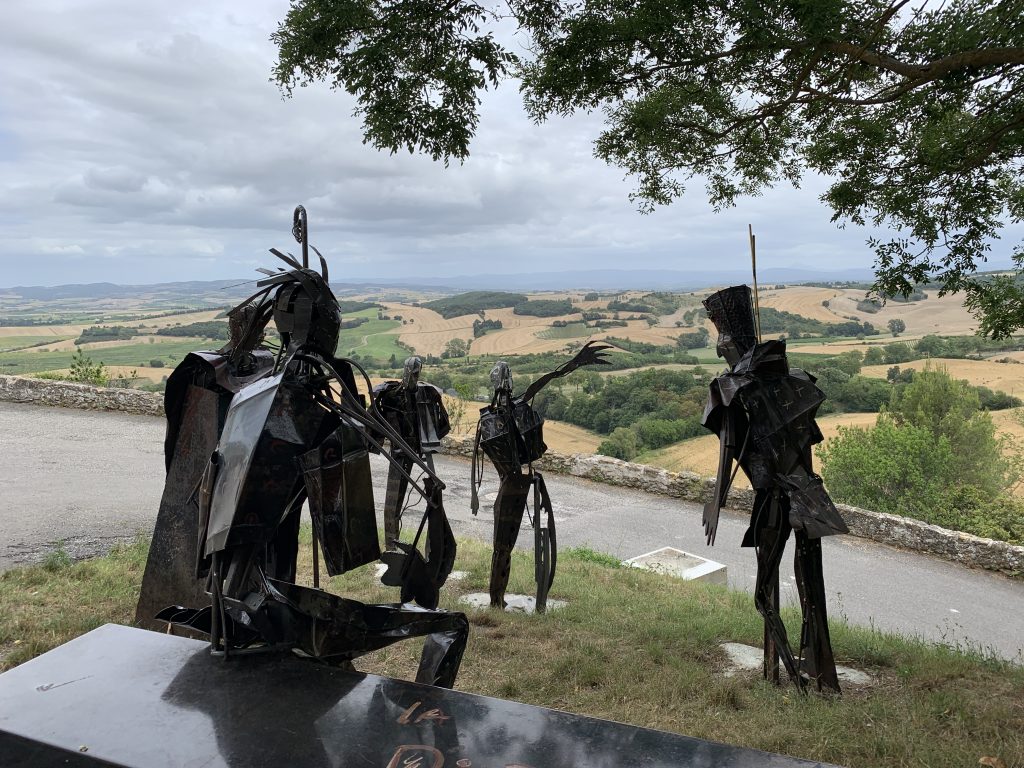
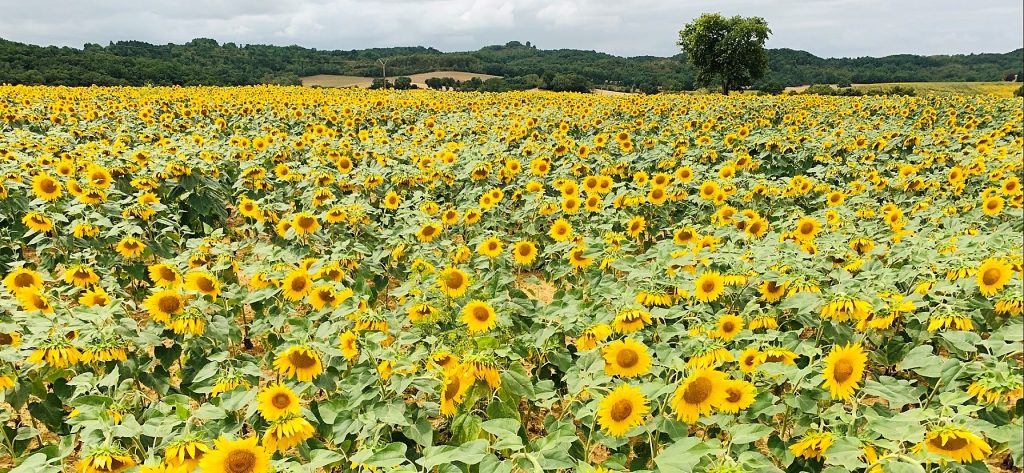
There was a small art exhibition on the campsite and I reproduce below a couple of photos of exhibits around the lake. Below those are two photos from my previous trip to Fanjeaux (during Tour 2) when the weather was altogether nicer and the sunflowers were in full bloom. No matter we really enjoyed catching up with Chris and Tessa. ‘Til the next time!
Fanjeaux SculptureFanjeaux Sunflowers
The plan now is to make our way north to the English Channel but there’s no rush (France has this effect on me). We’ll overnight at Saint Jory de Chalais and take a look at the pretty market town of Excideuil on the way.