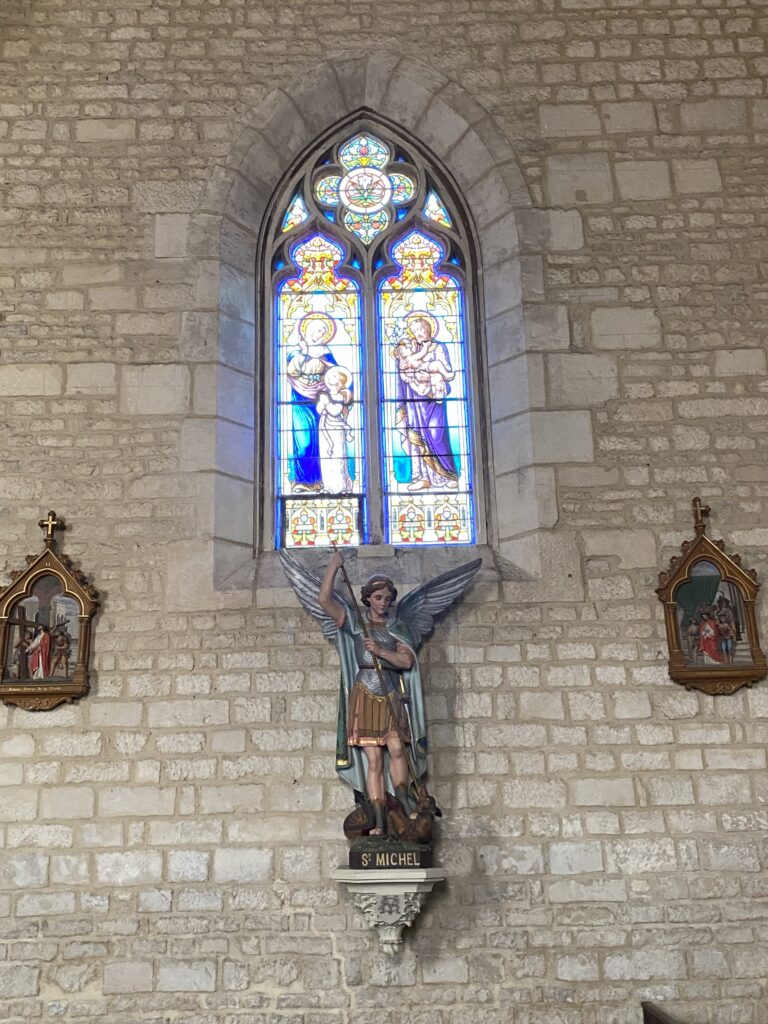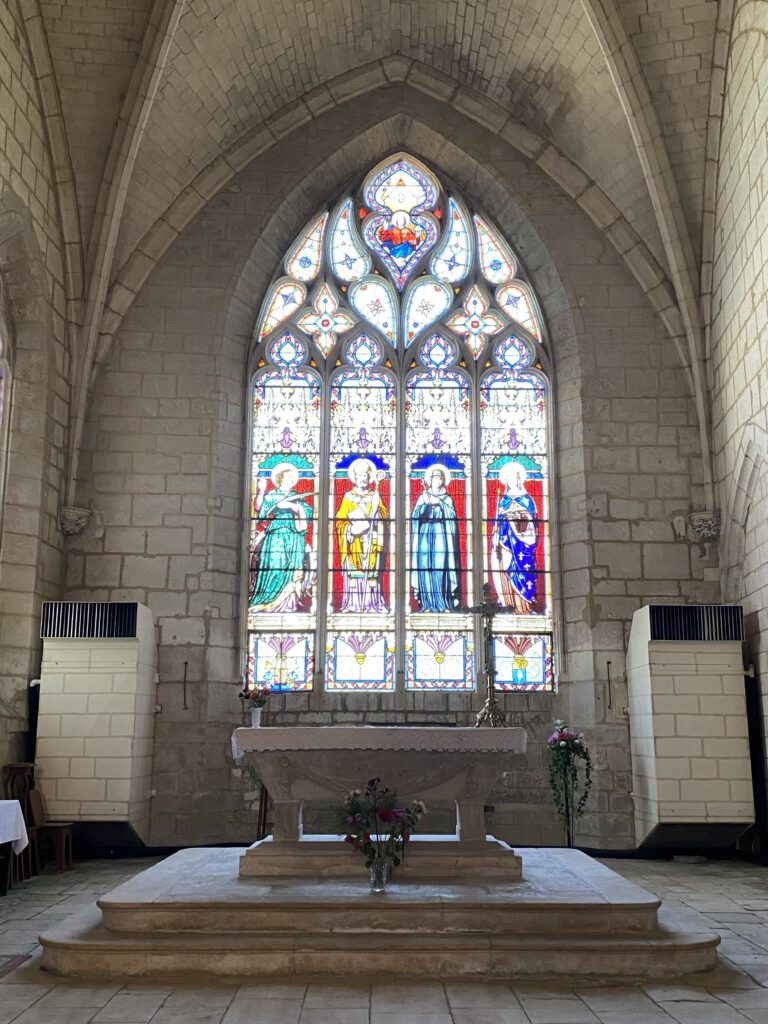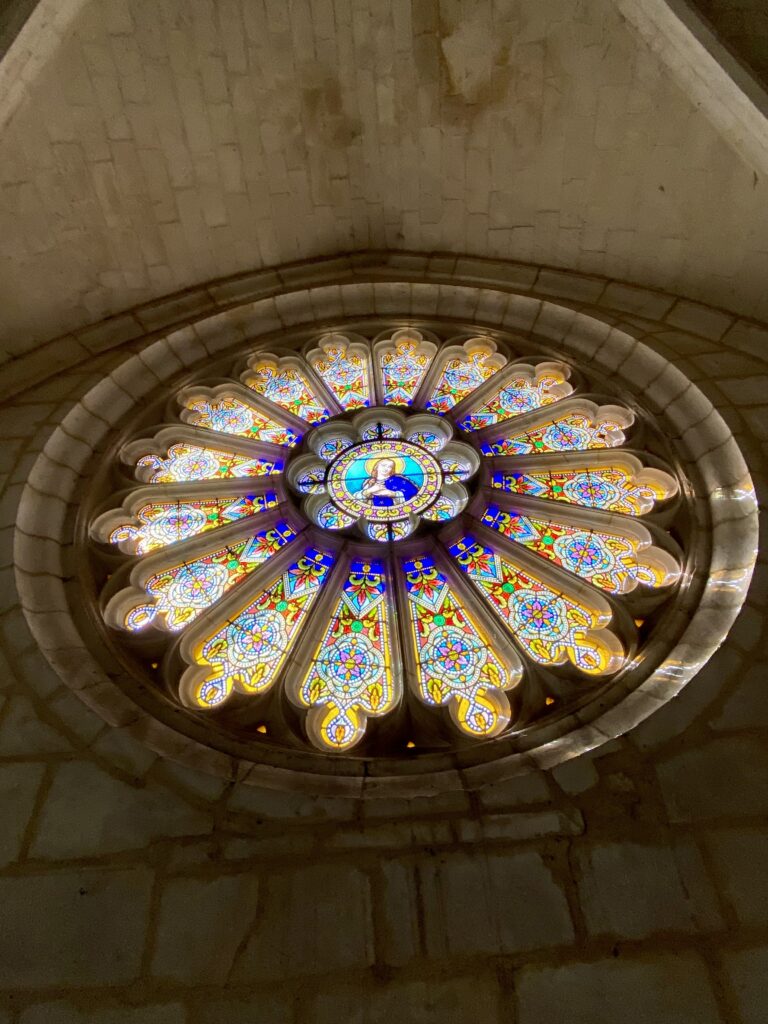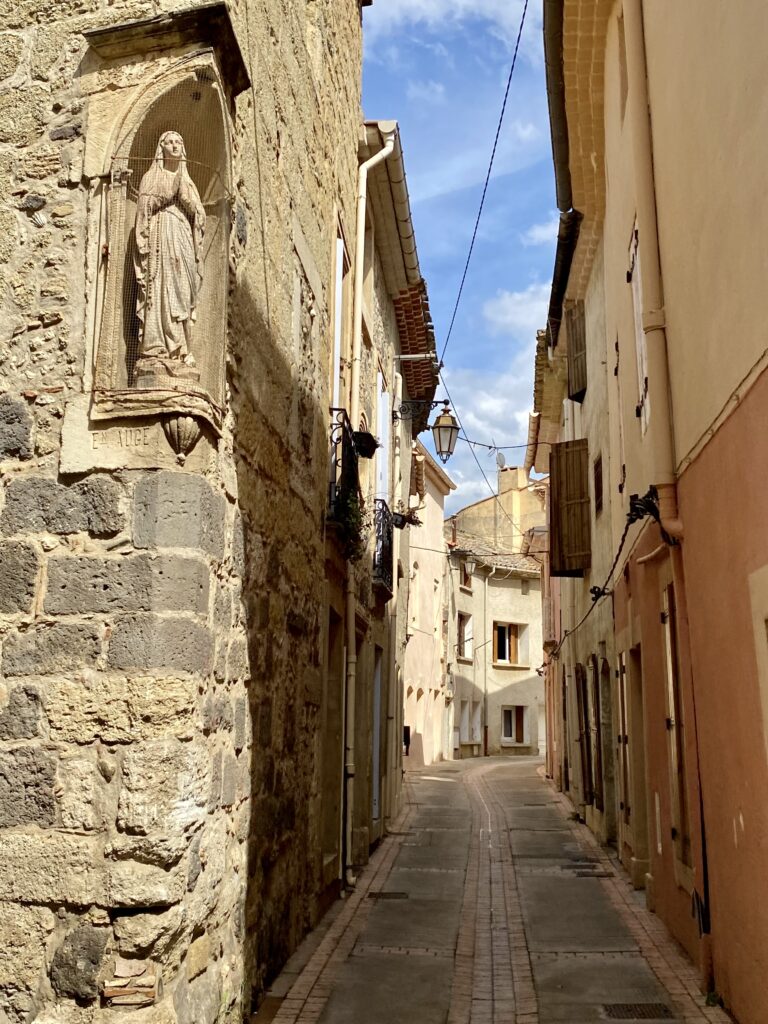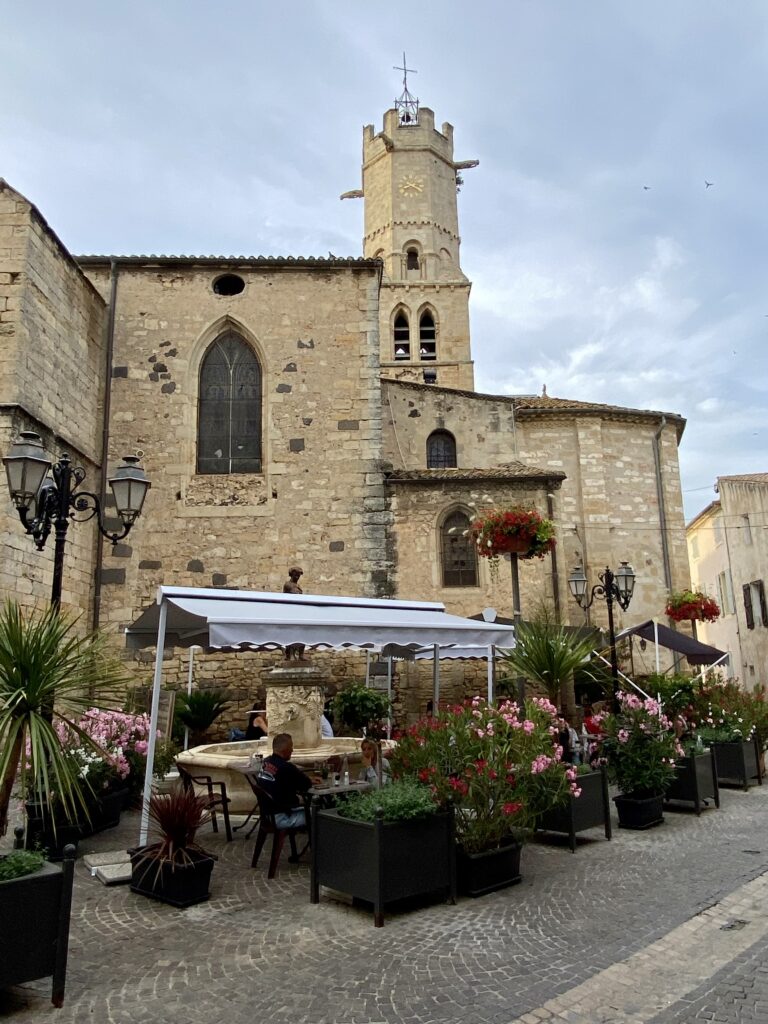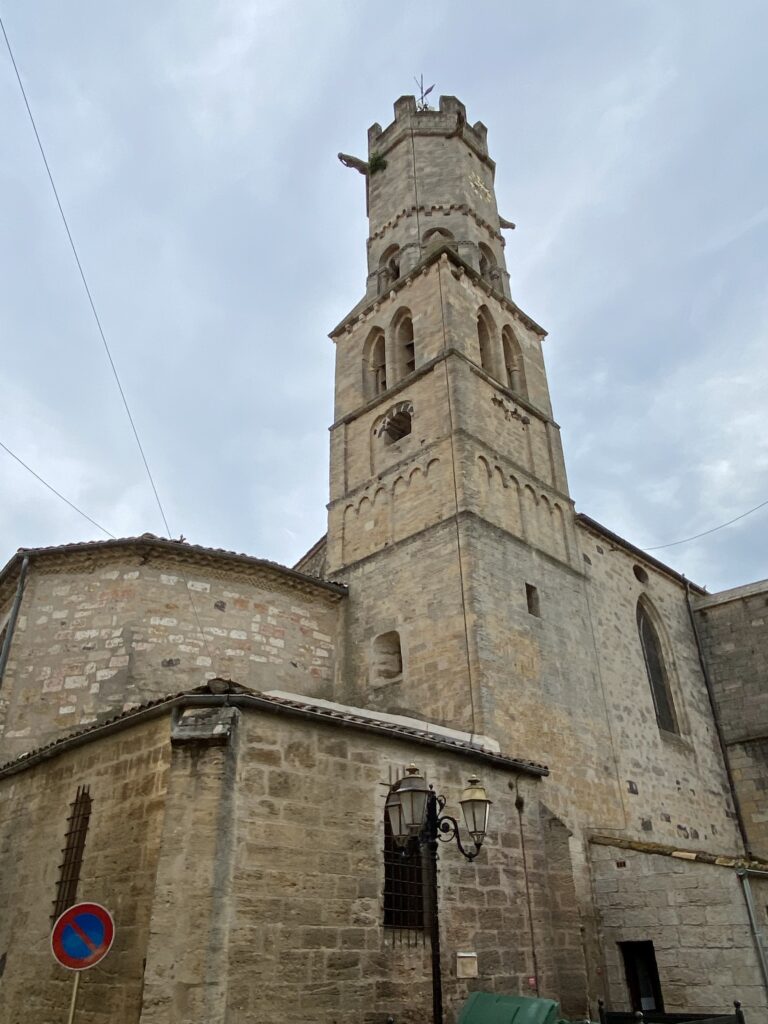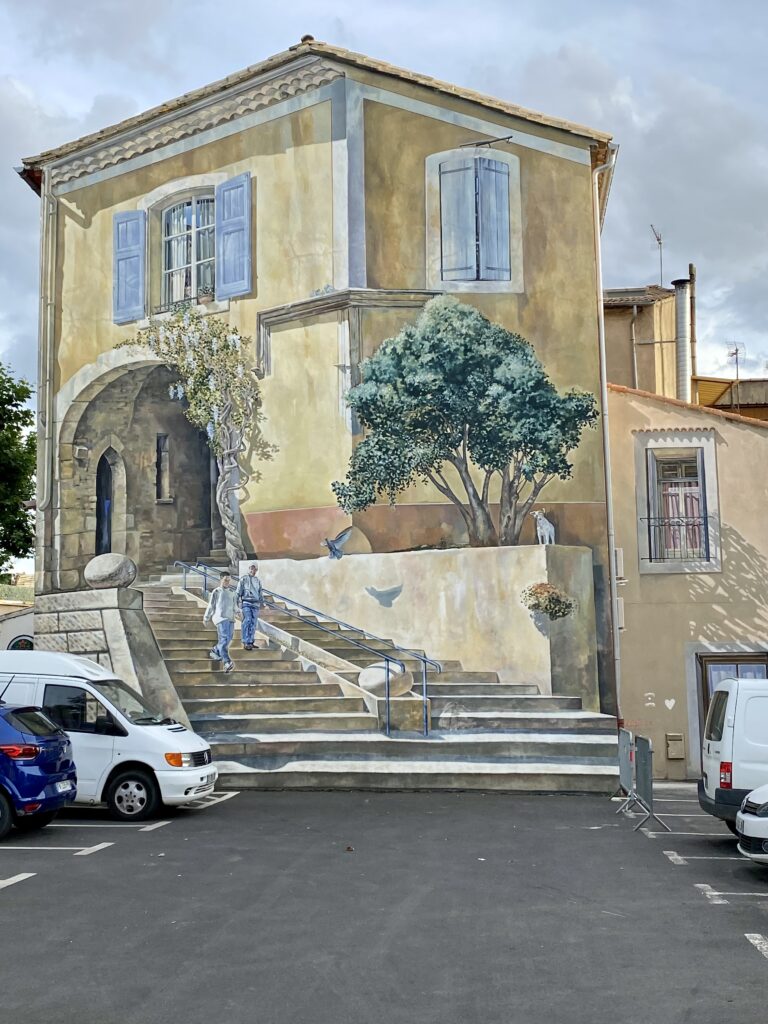
Conleau (Bretagne), France August 2021 (Tour 4)

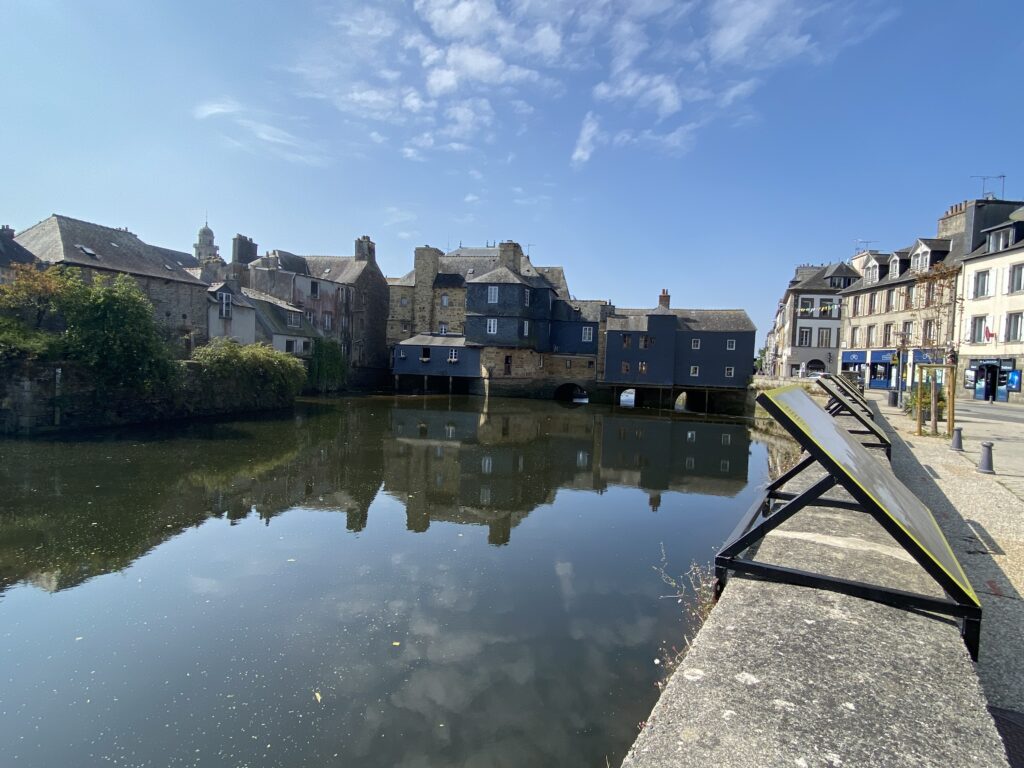
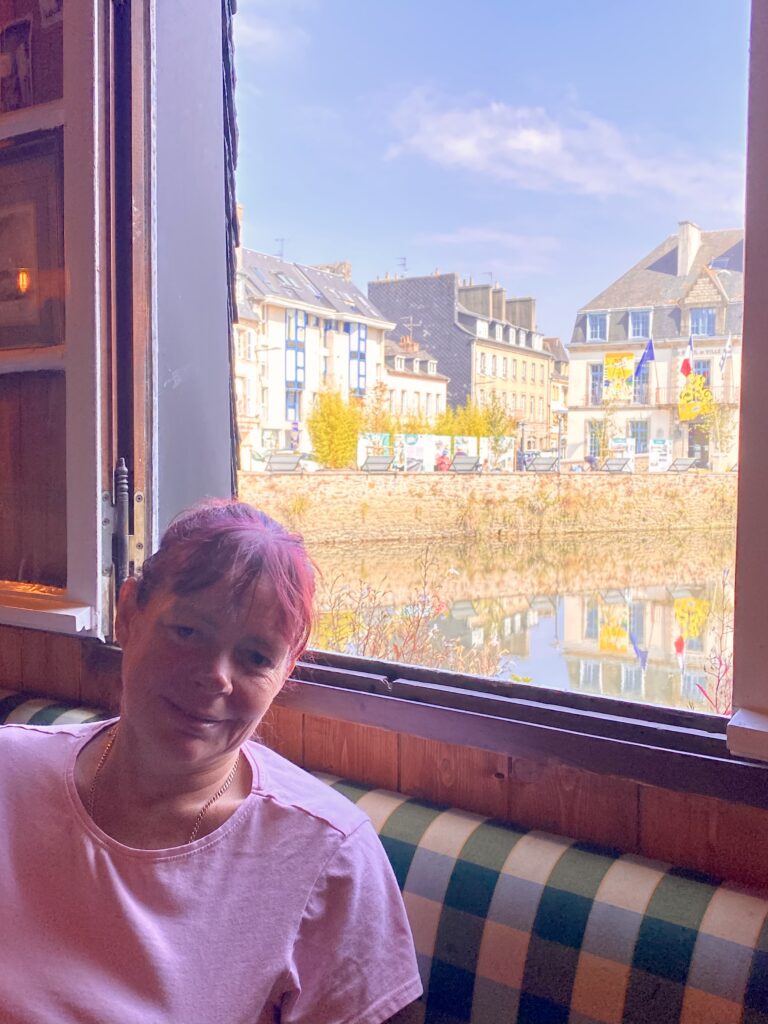
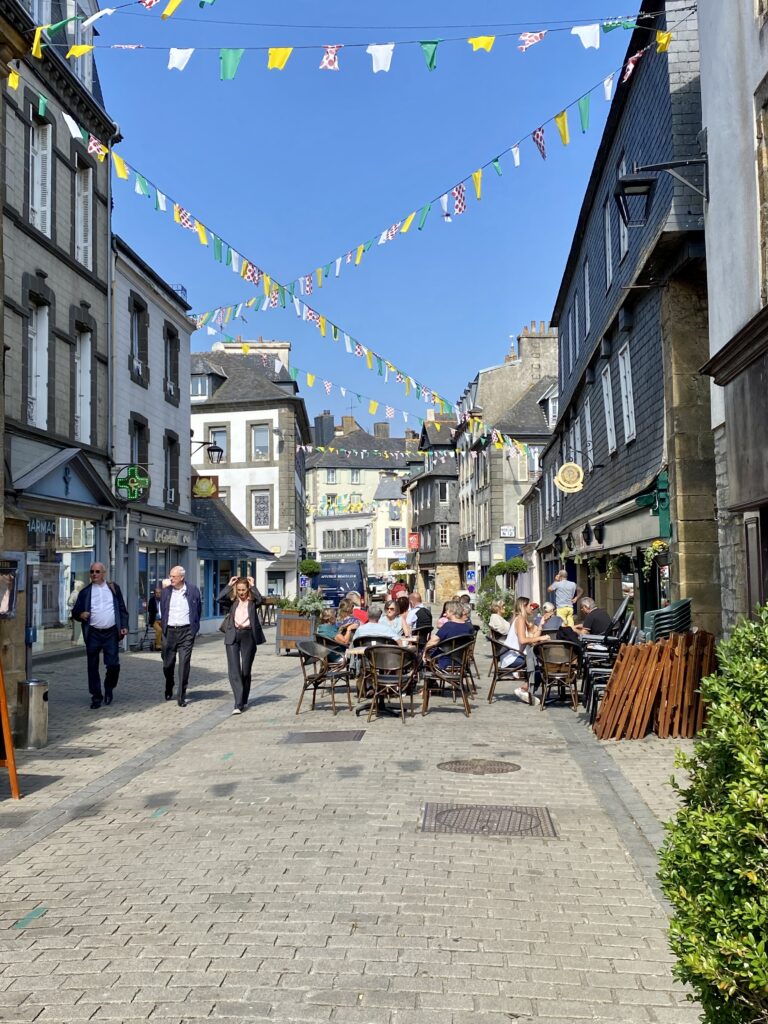
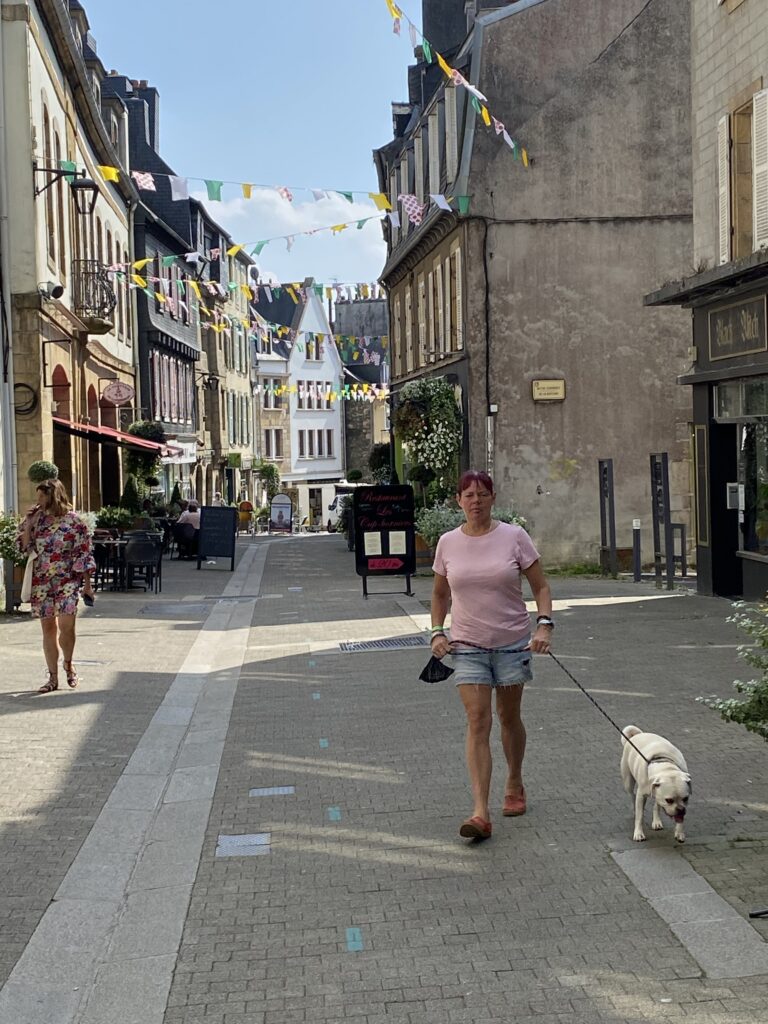
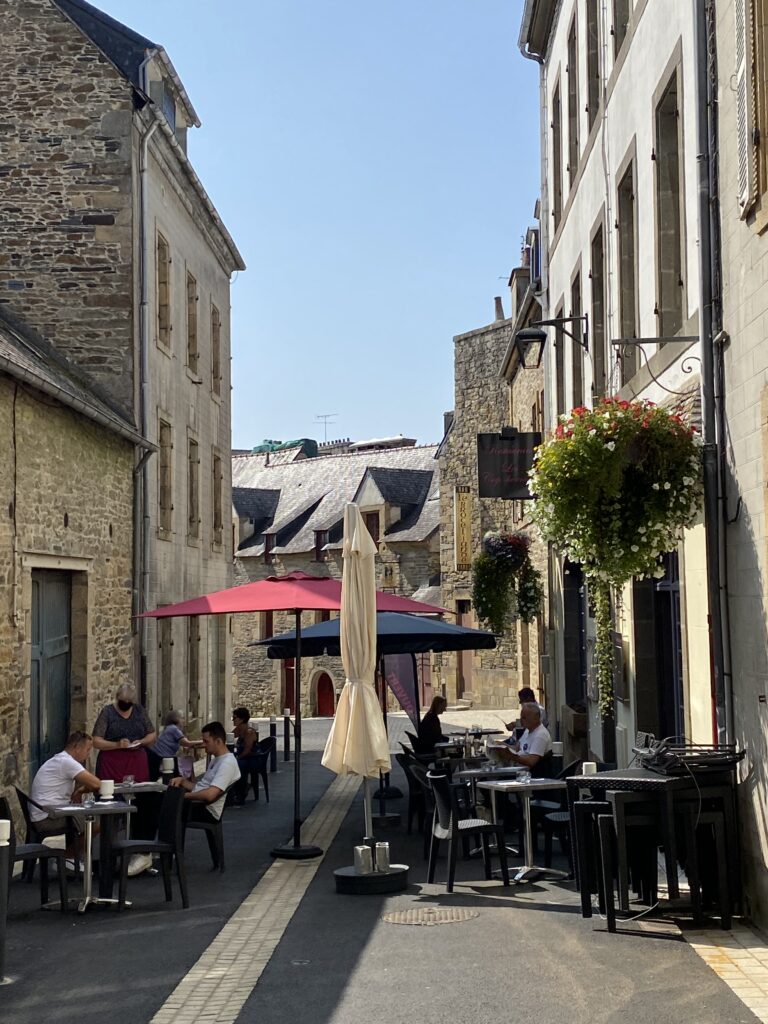
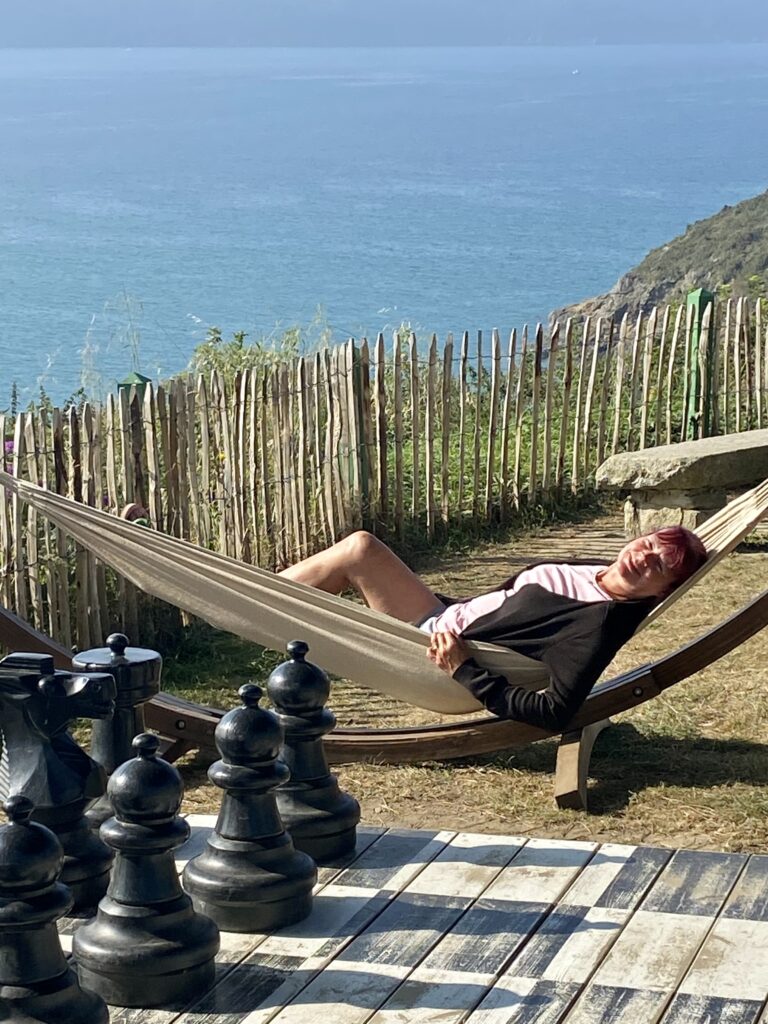
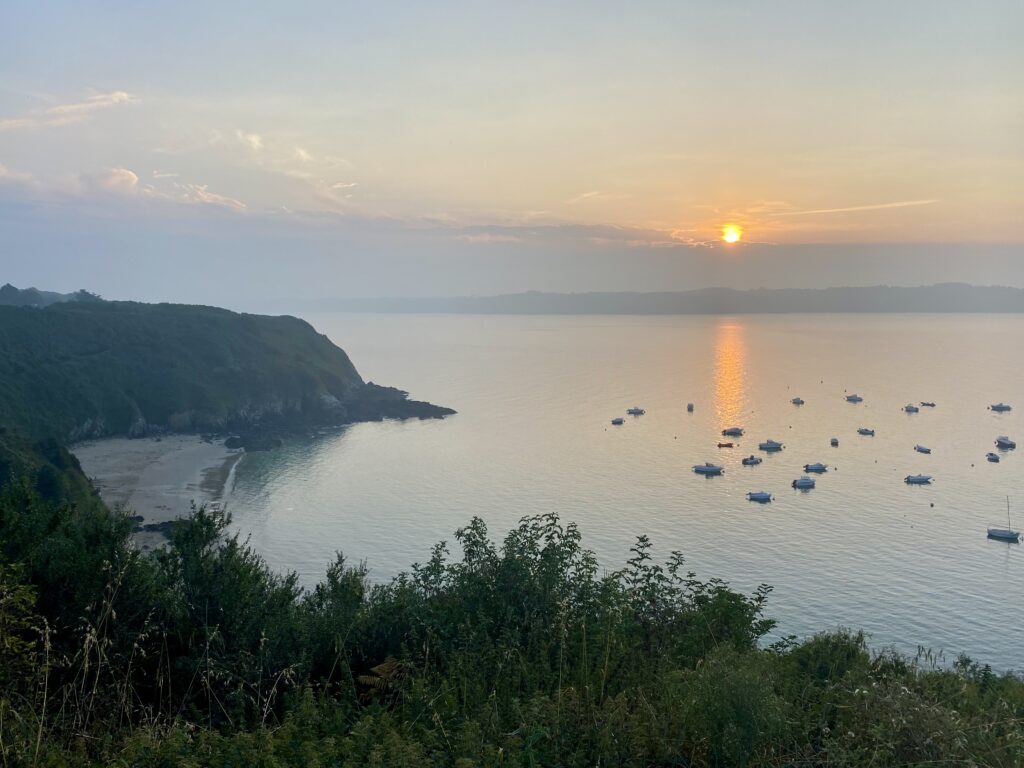
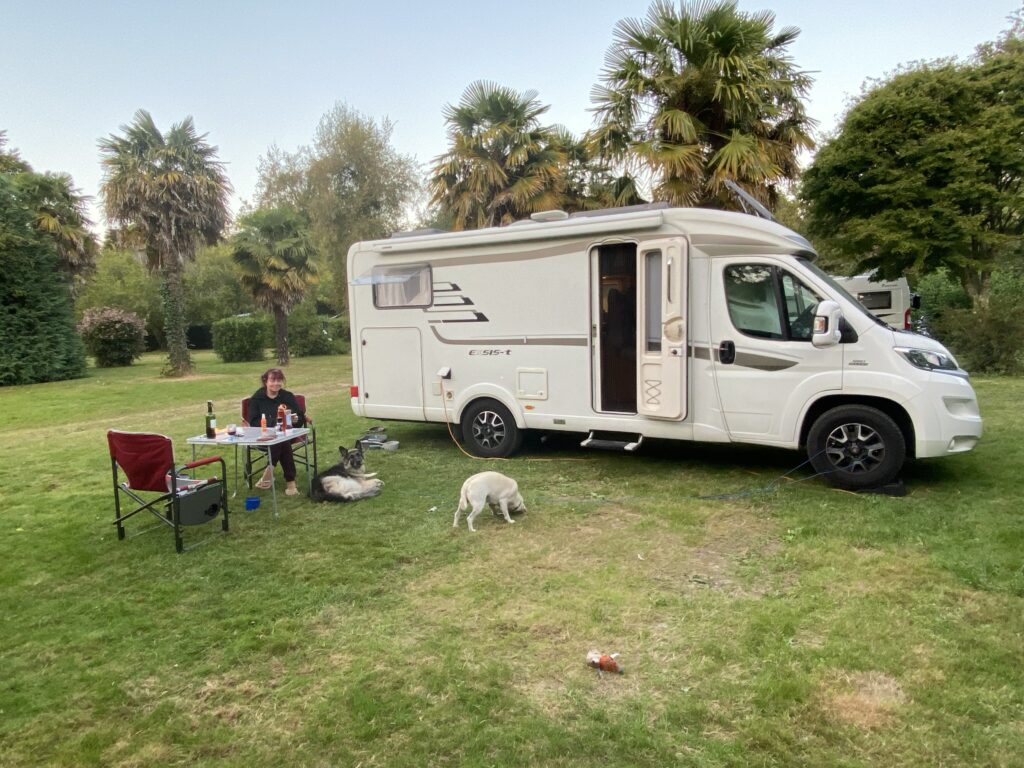
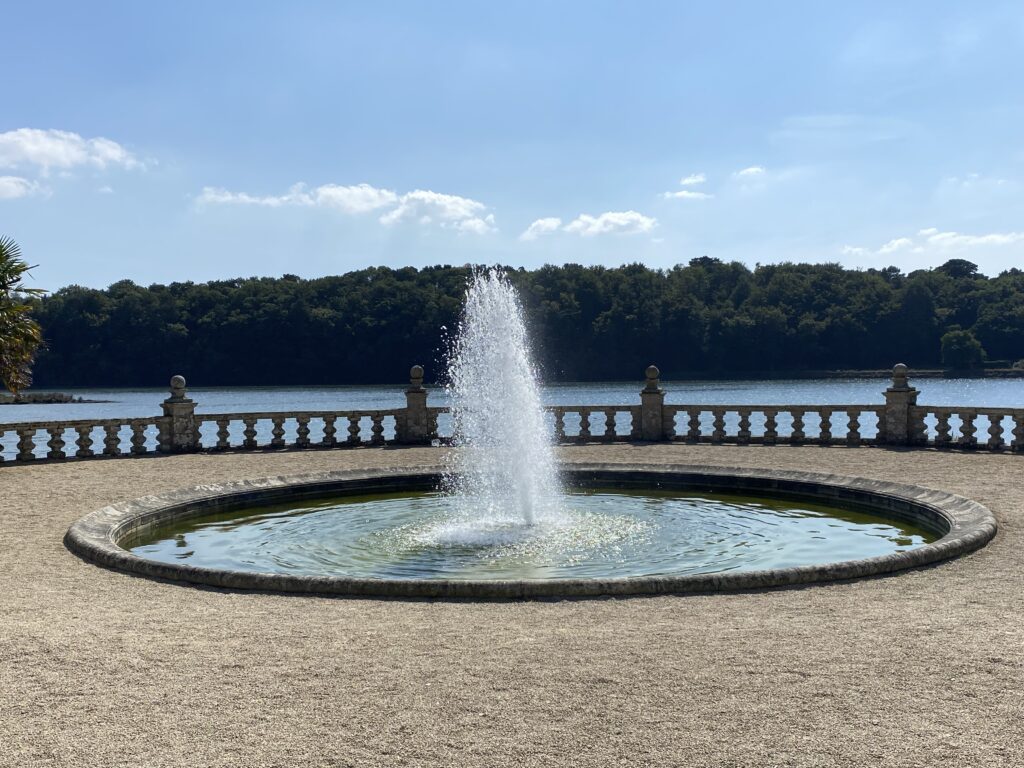
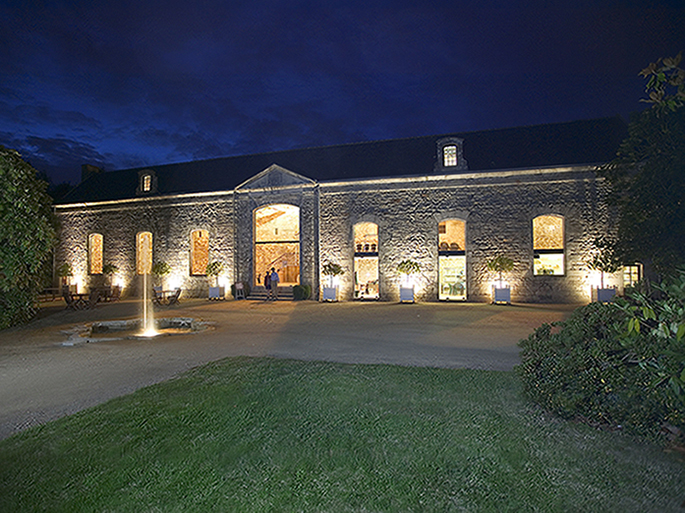
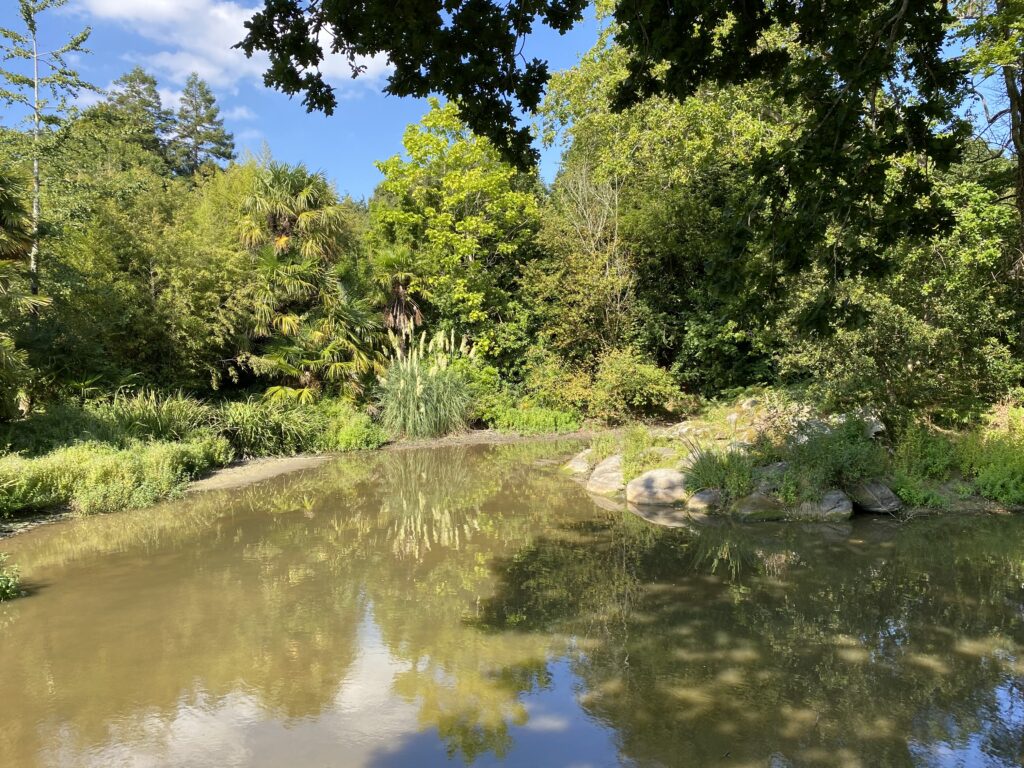
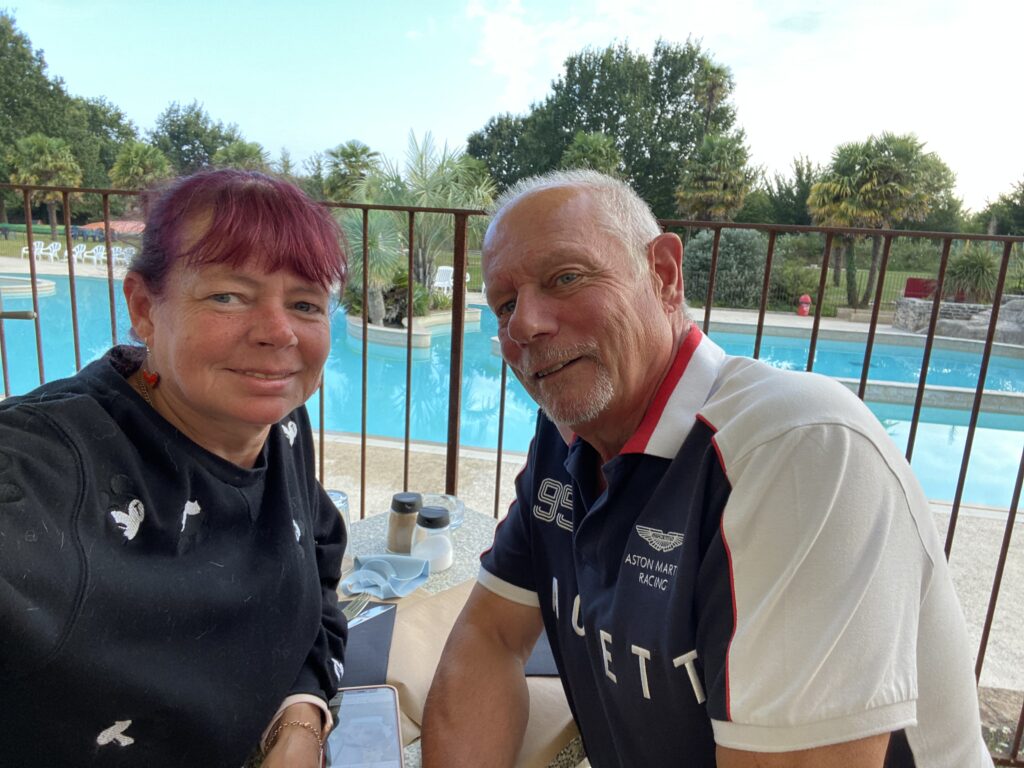
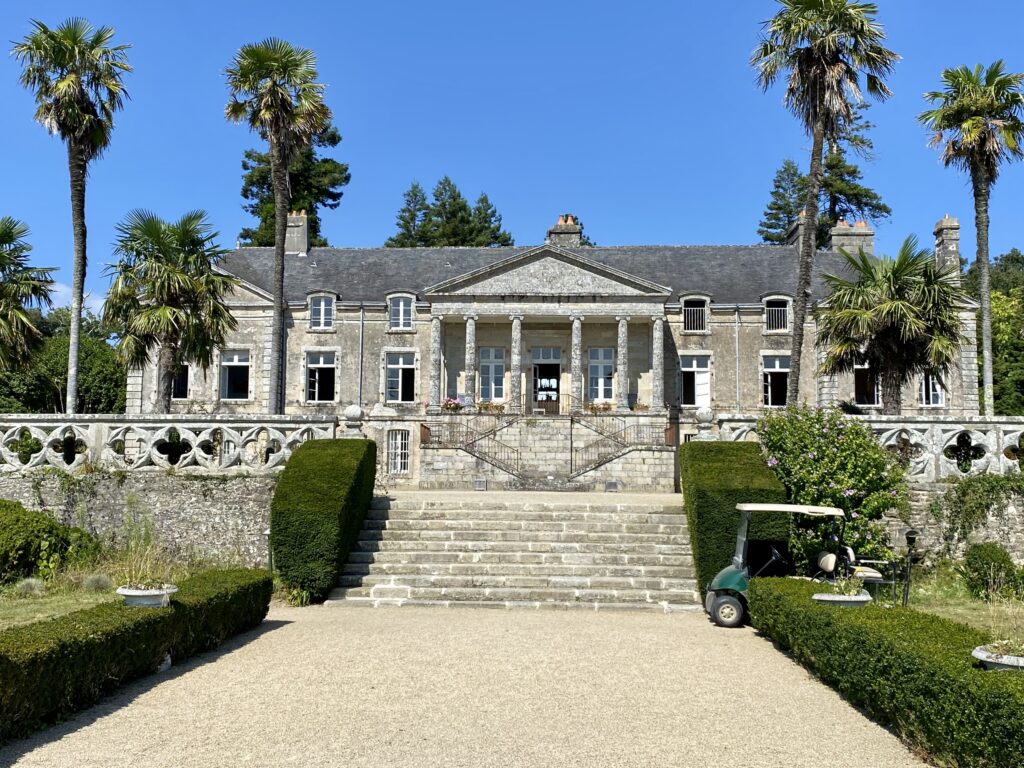
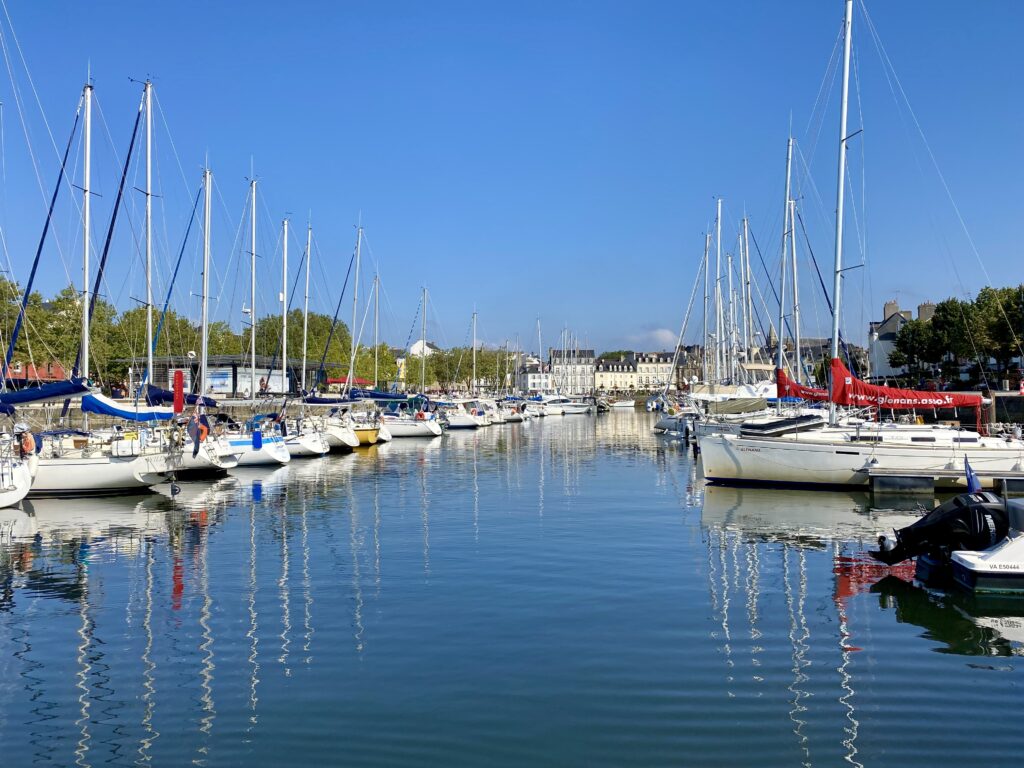
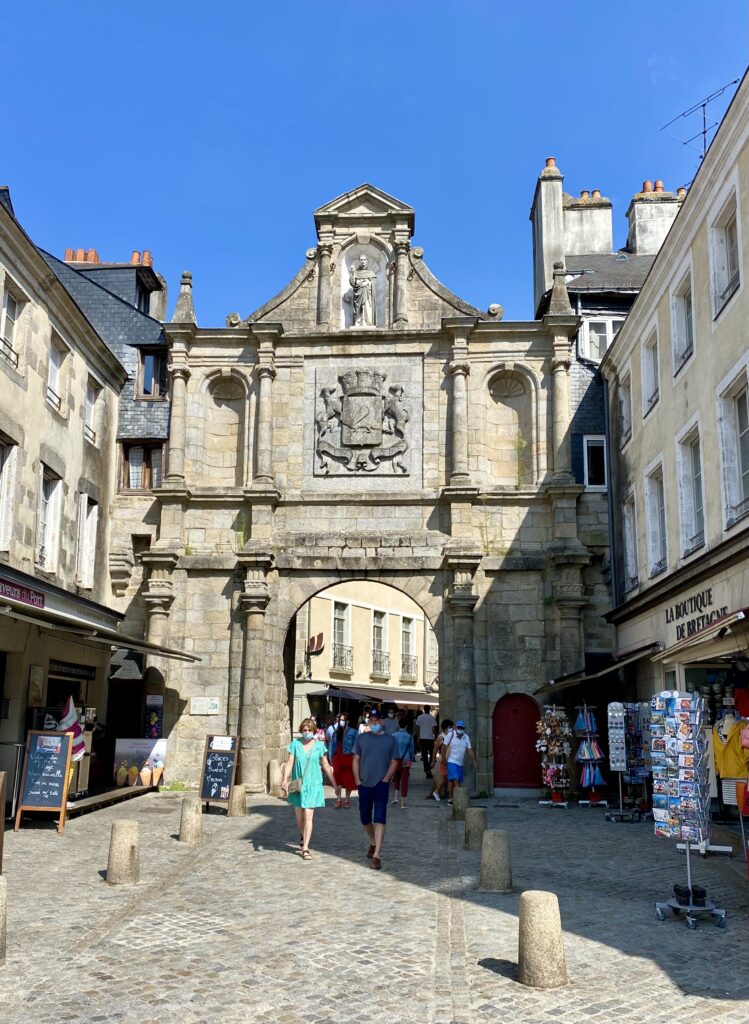
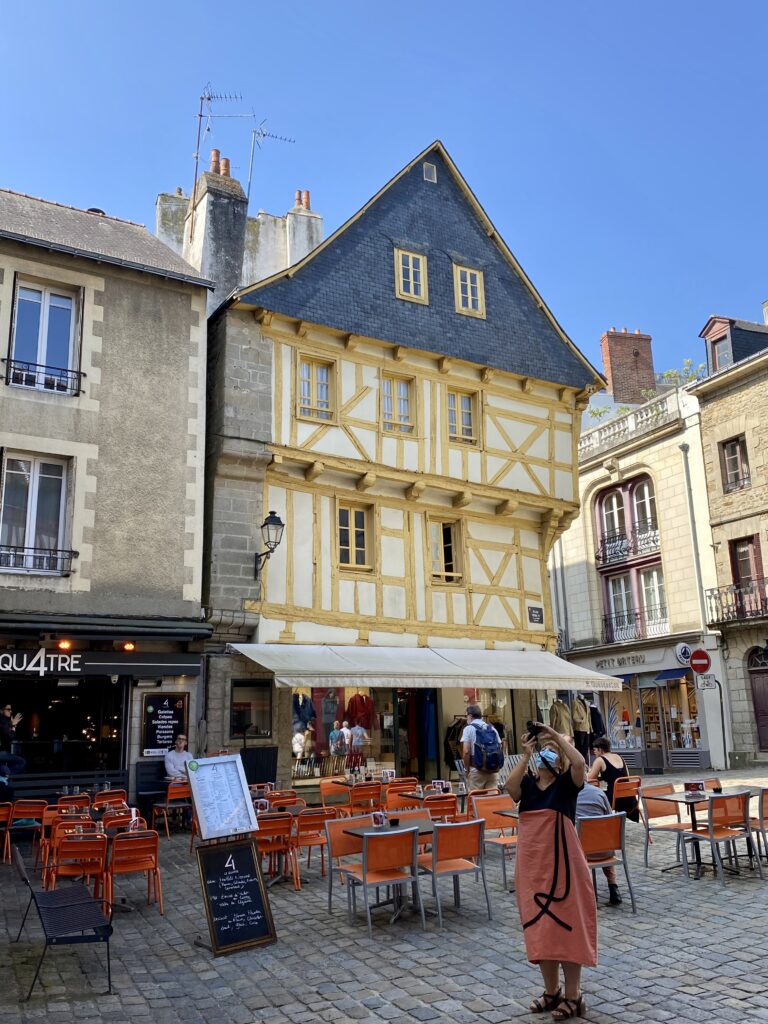
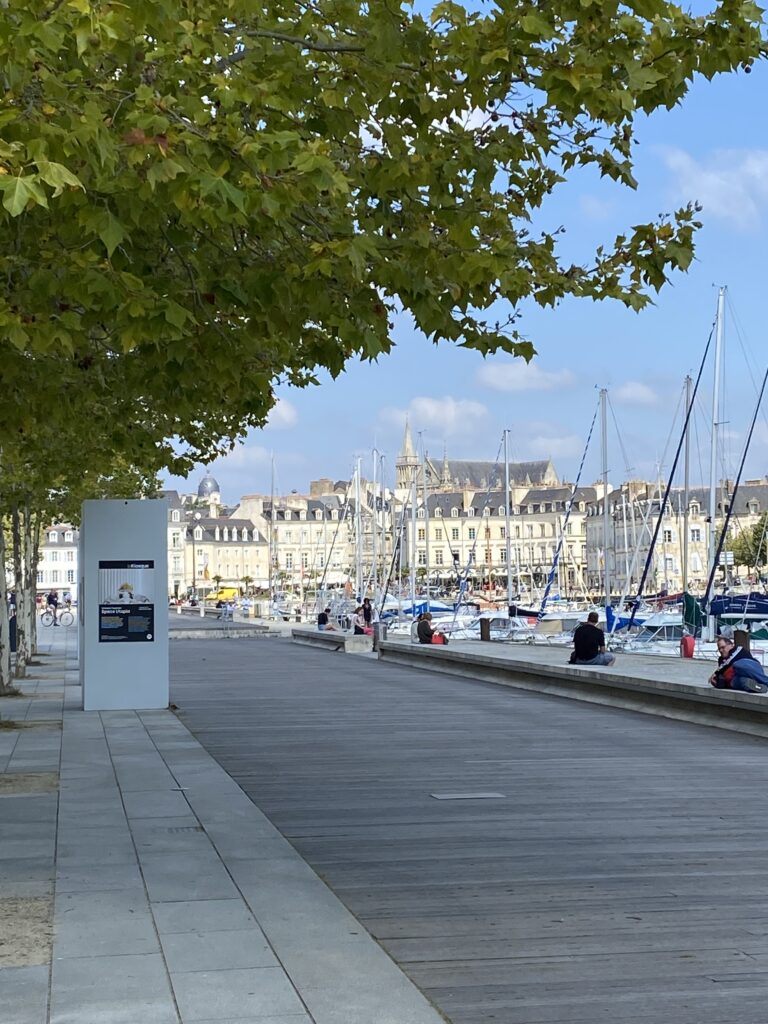
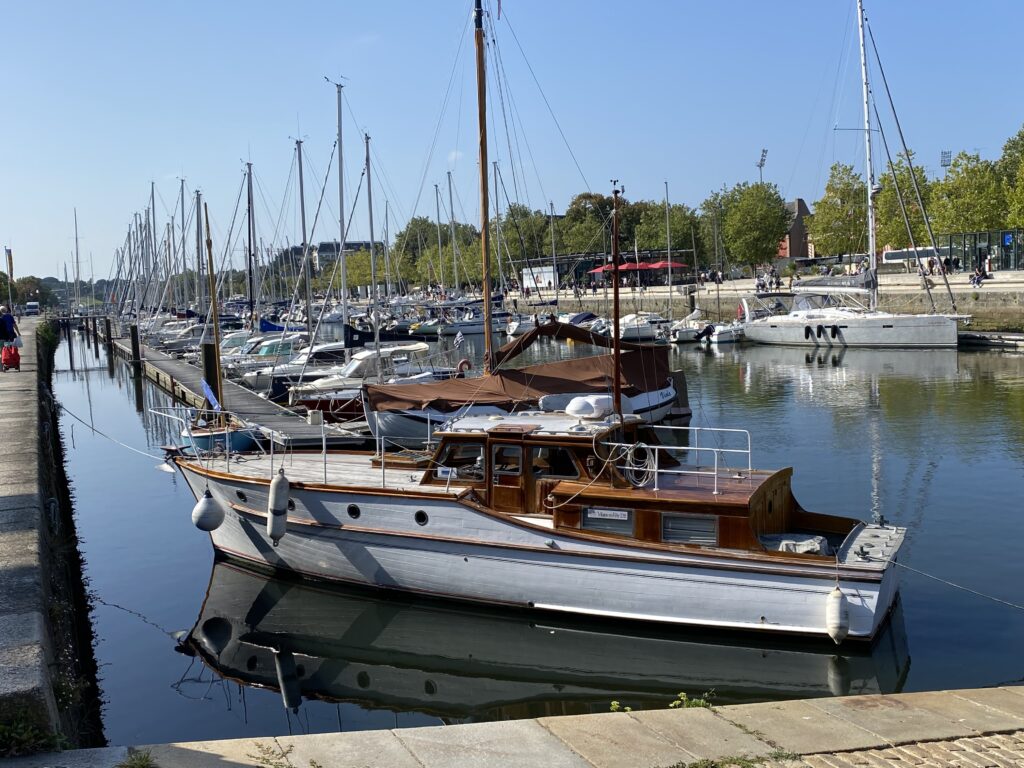
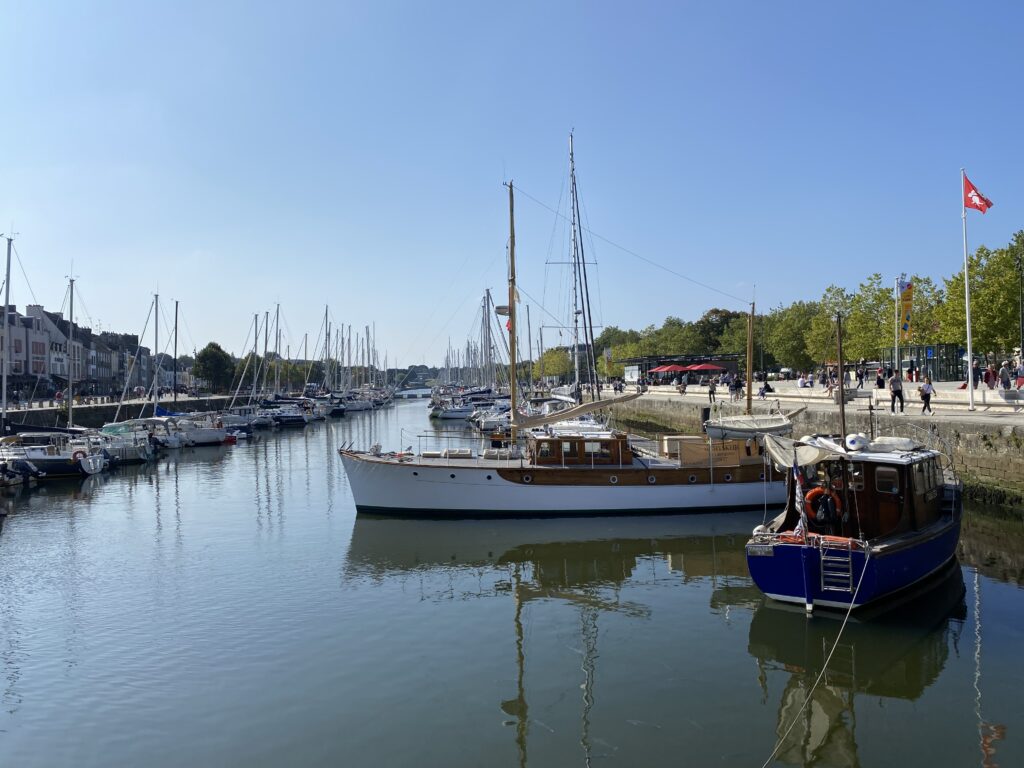
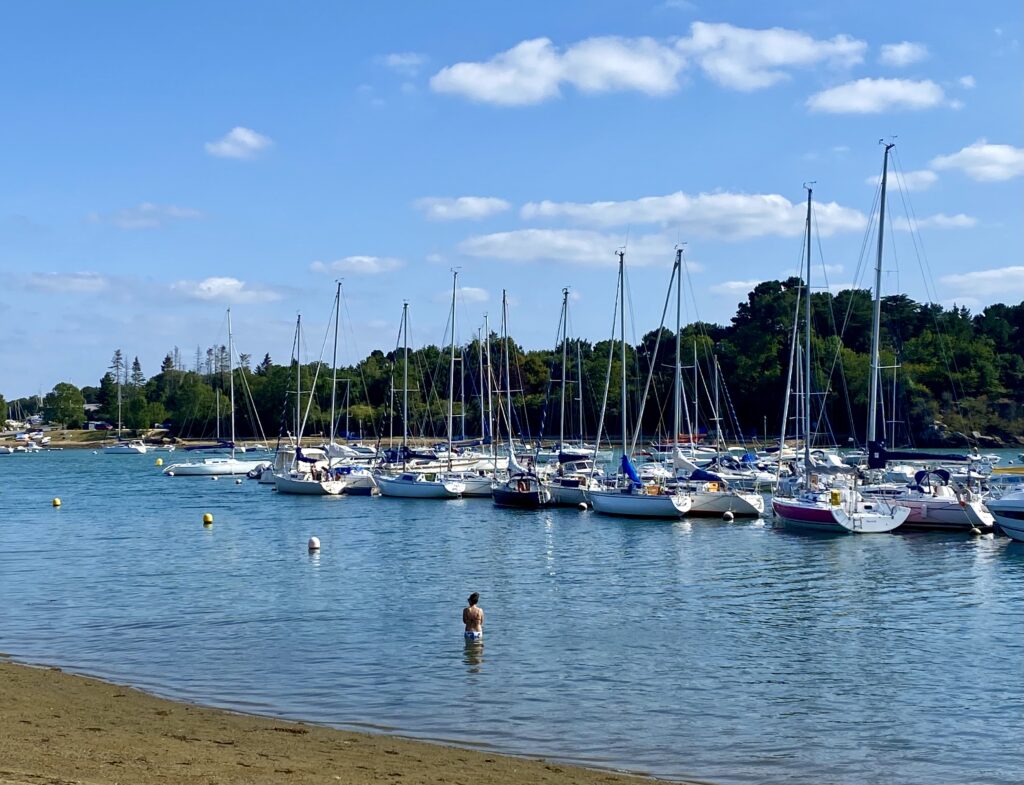
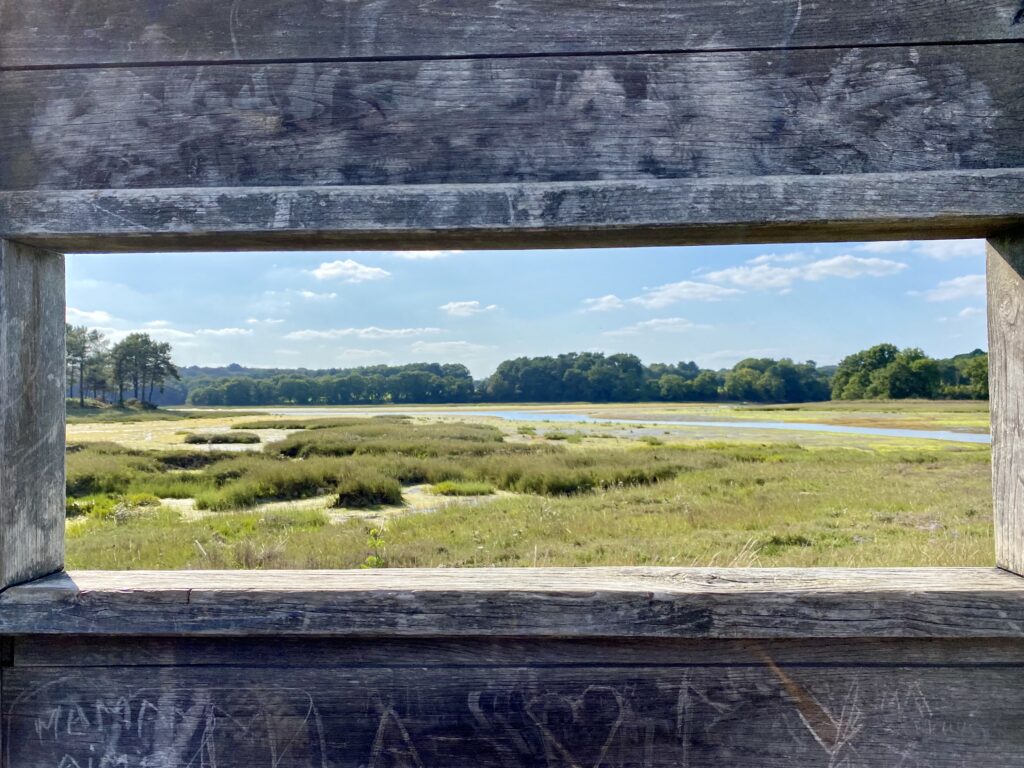
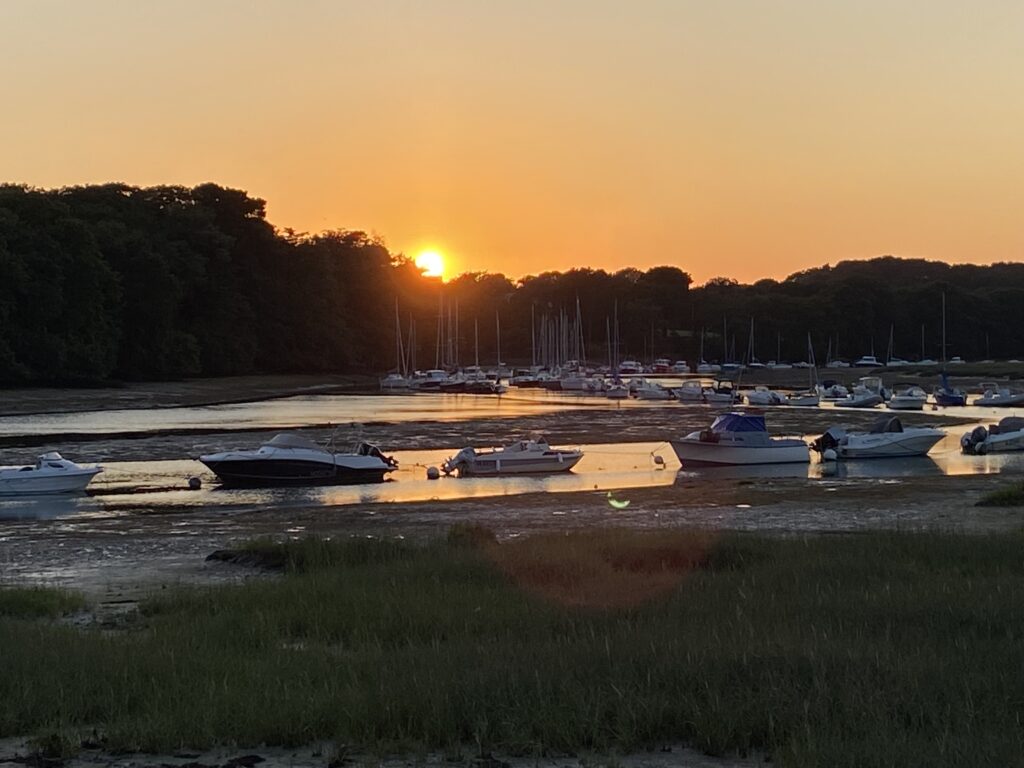
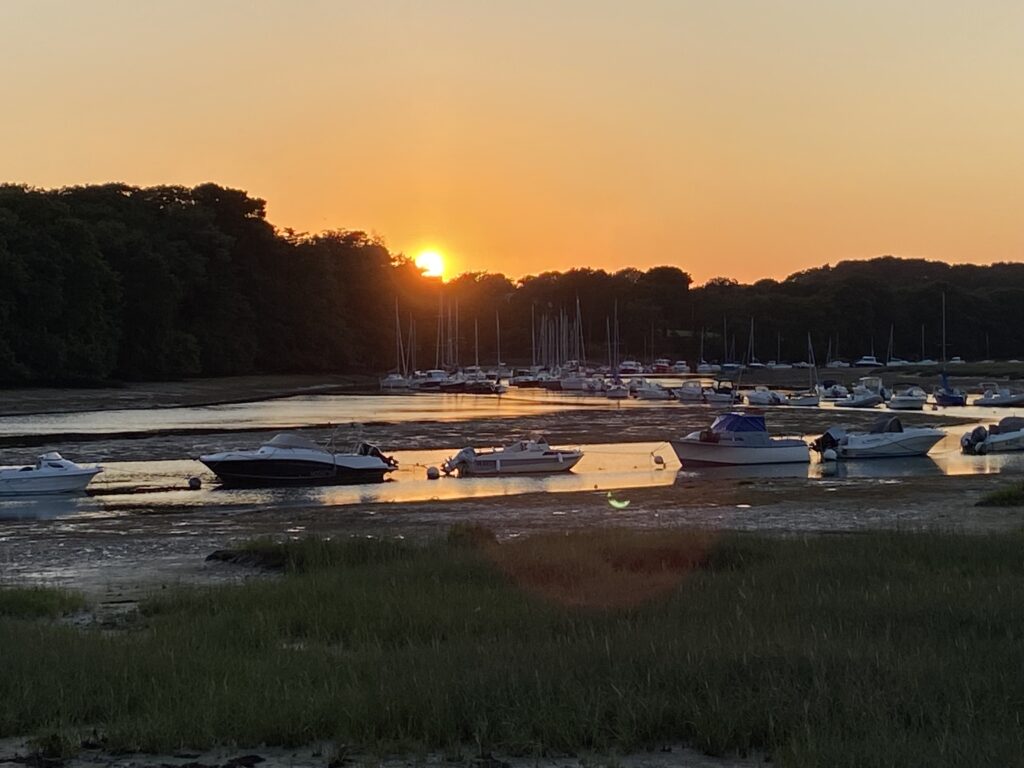
We parked up at Flower Camping Conleau just outside of Vannes for a couple of days. Flower is not a bad campsite chain and staying in Conleau allowed us to both take advantage of the Region’s good weather and visit Vannes.

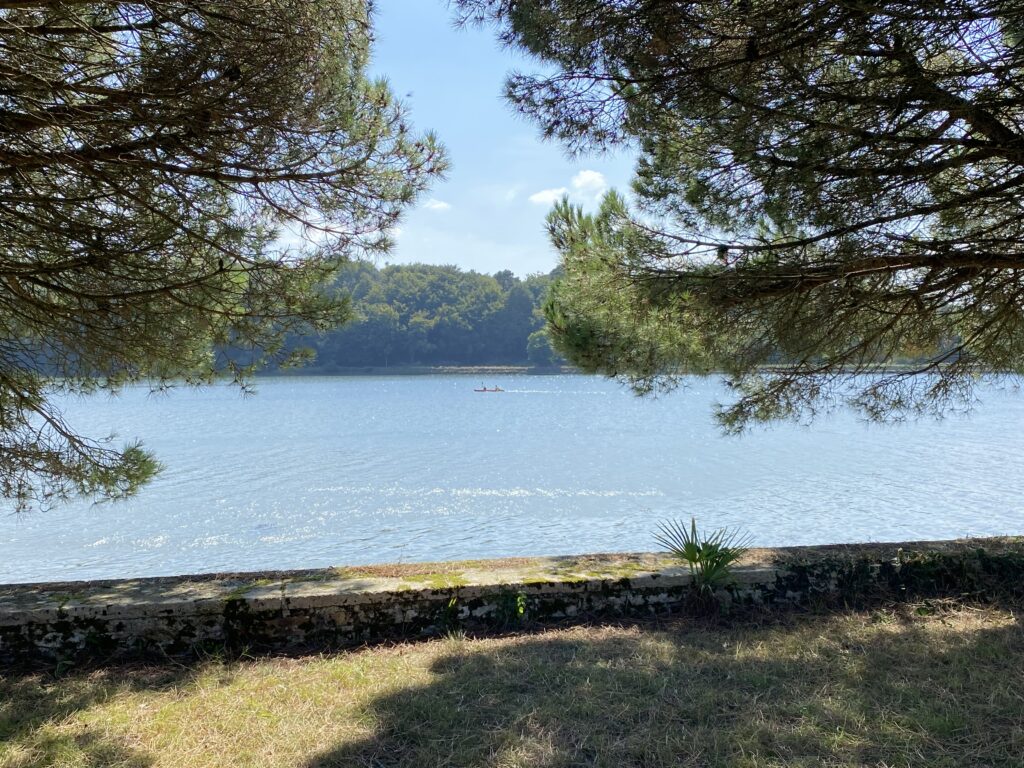
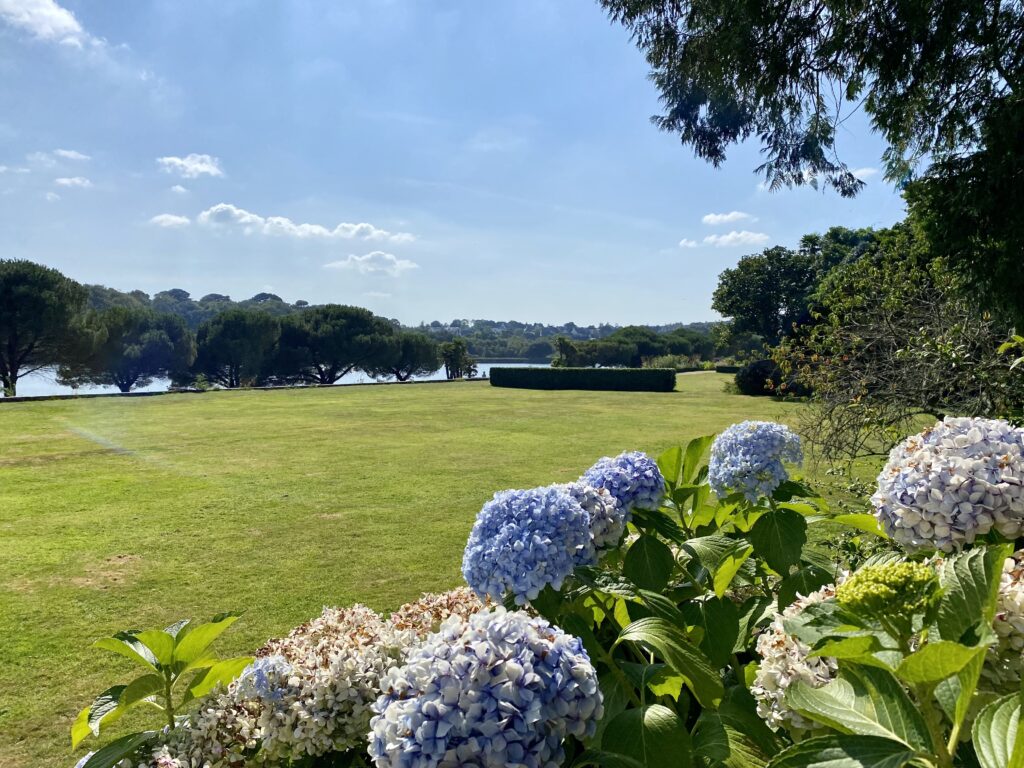
Conleau on the Gulf of Morbihan (Gulfe du Morbihan) is one of Europe’s, if not the world’s, most beautiful bays. ‘Mor bihan’ is Breton for ‘little sea’. It is separated from the Atlantic Ocean by a one kilometre wide bottleneck and yet covers an area of about 100 square kilometres (between Vannes and Auray to the north and Arzon and Sarzeau to the south). In different circumstances we would have stayed longer and taken a boat trip around the forty or so islands and islets which fill the bay. The Gulf is a listed Regional Nature Park and the whole area is beautiful.

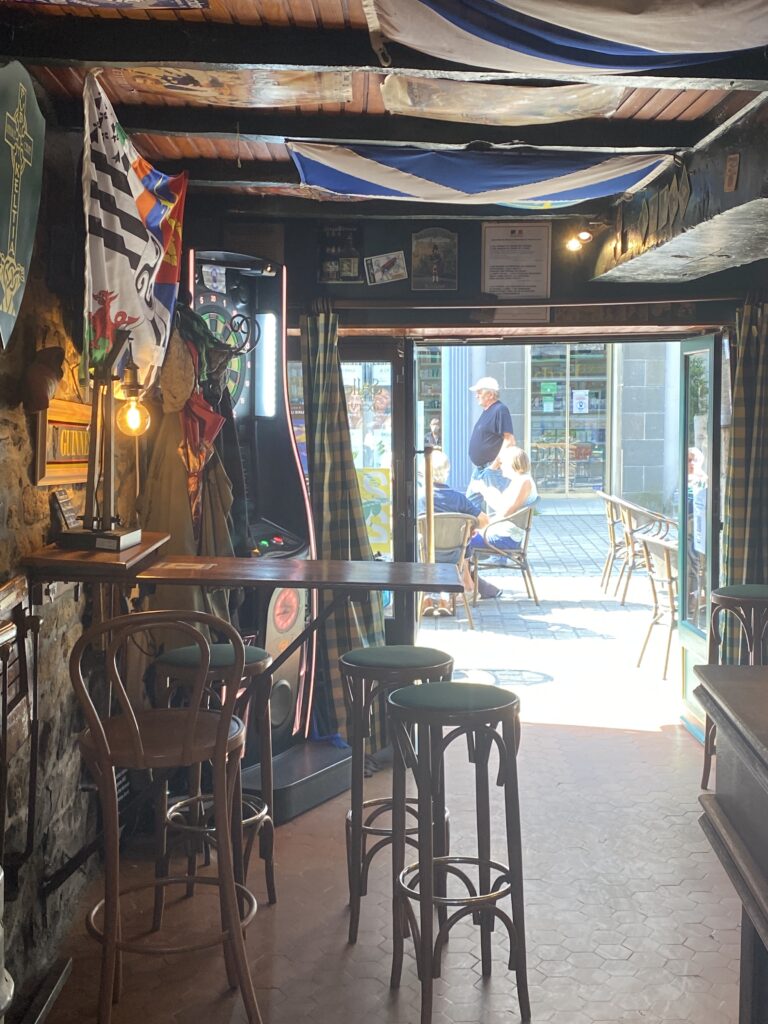
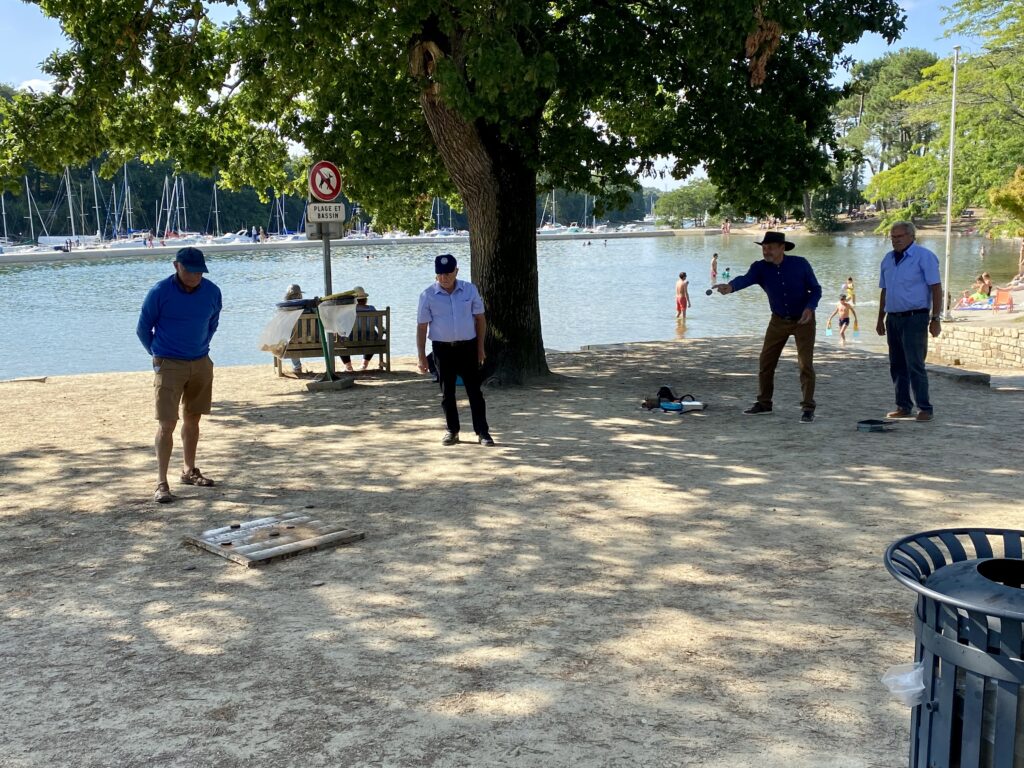
After checking out the small peninsula next to the campsite for a suitable bar or restaurant for the evening (easy – there are only two and one had shut down because of Covid), I paused to watch a game of Palet Breton that four local guys were playing. The game is played with contestants taking turns to throw cast iron palets (discs), from a distance of 5 metres, at a maitre or jack which sits on a poplar board (measuring 70 cms x 70 cms). The individual or team getting closest to the maitre wins the round and receives one point for every palet which is closer to the maitre than their opponent(s). First to 12 points wins the match. This is not an easy game to play but these guys were seriously good, hardly ever missing the board. Could be a great lockdown game.

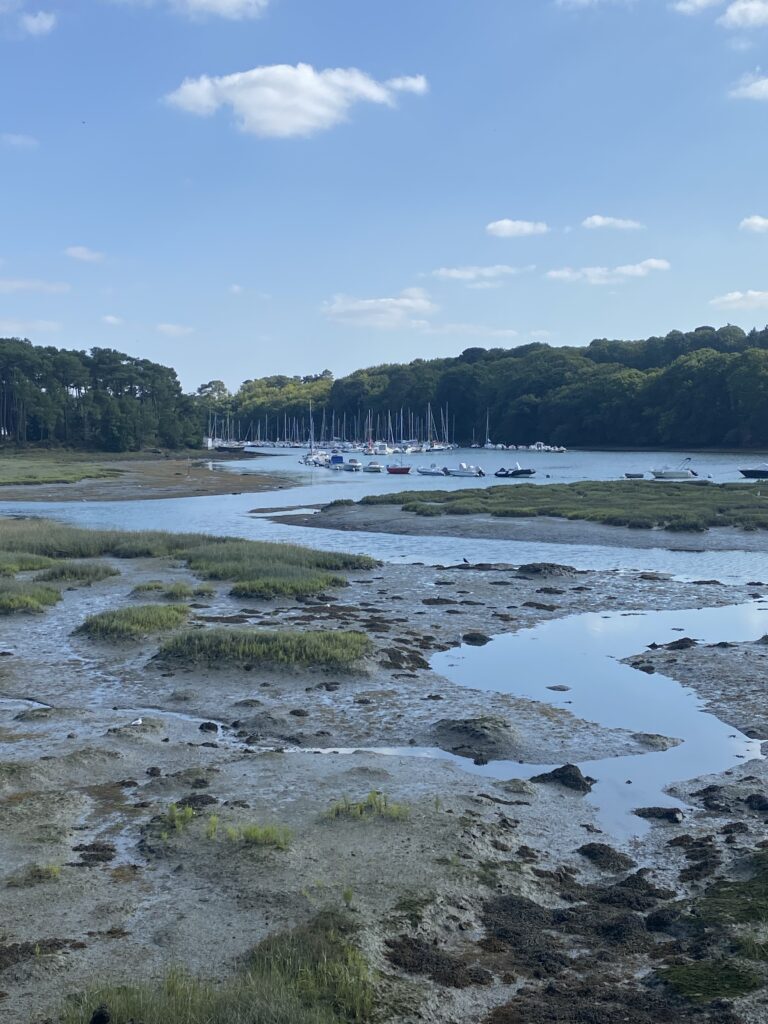
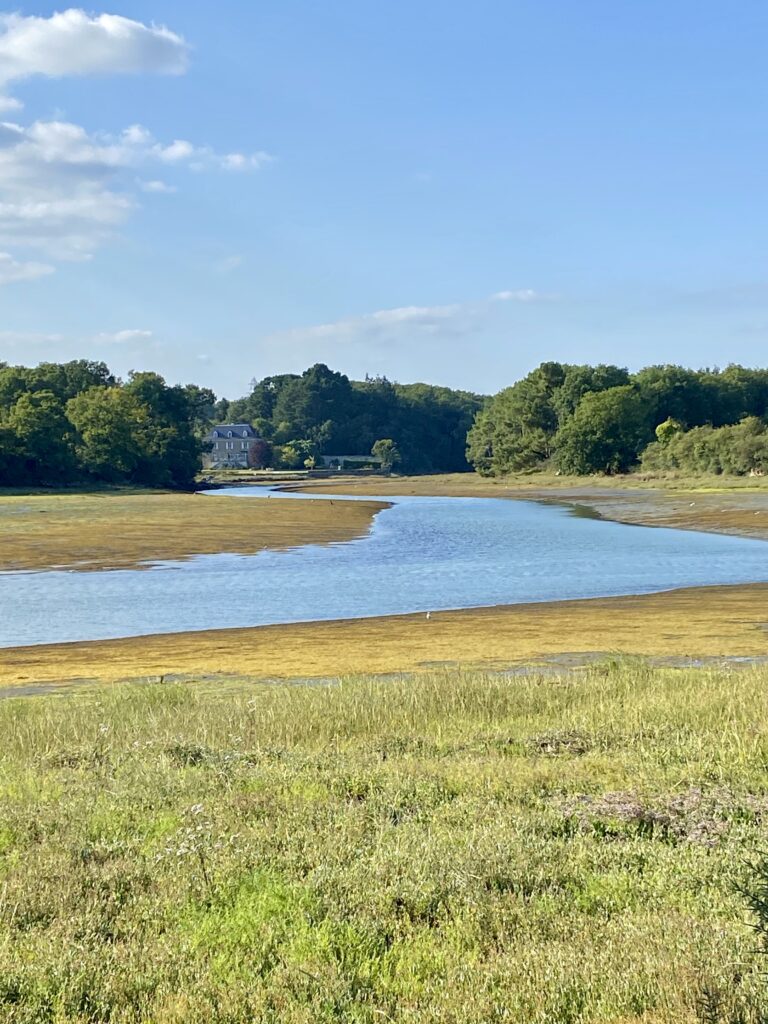
Having been suitably impressed by the Palet Breton players I decided to work up a thirst with a long walk. The area is full of walks and the one I chose took me through some beautiful marshland along the banks of the River Vincin almost all the way into Vannes (and back). This is an area of incredible natural beauty full of assorted plant and animal life, especially birds.

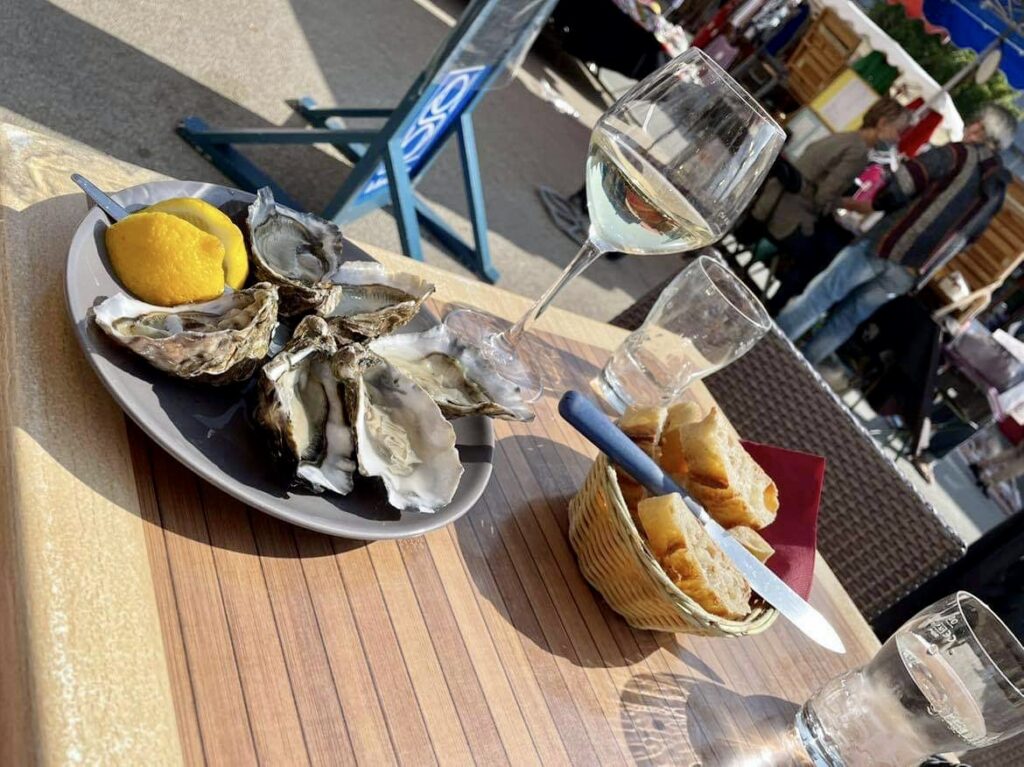
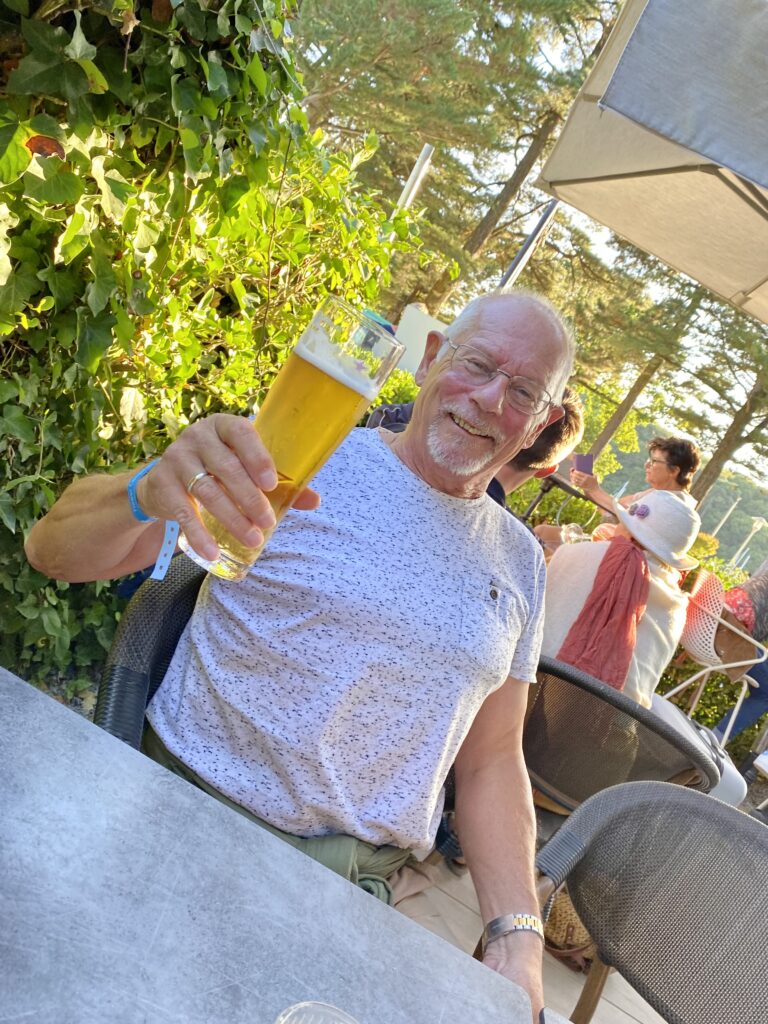
That evening we enjoyed a couple of drinks at the restaurant I found earlier in the day but we didn’t eat there – they had run out of oysters! No matter, we drank and reserved a table for the next evening, leaving specific instructions with the “Maitre D” to keep some of the local oysters back for me.

I take Van in the Van to Vannes tomorrow…

Coulon (Nouvelle Aquitaine), France August 2021 (Tour 4)

Today was about going north (we want to get back to the UK to attend Dave’s funeral) and we decided to drive 3 hours or so to a place called Chauvigny. Then, some time well into the journey, it dawned on us that we had stopped overnight at Chauvigny when going south just a few weeks ago. Ordinarily, Chauvigny would be well worth revisiting but it was too fresh in our minds and we therefore sought an alternative. Vanya found a place just west of Niort called Coulon, on the edge of the Poitevin Marsh (National Park), which looked worth a visit. It was a few miles back the way we had come but, she had also found a half decent looking camp site just a couple of miles short of Coulon in the small town of Magne and; to cap it all, she discovered Magne has a supermarket. Back we went, passing through Niort on the way (Niort could be worth a visit next year).

Having established ourselves at Camping Kingfisher (aka Camping Martin Le Pecheur) I went off to explore the area. It didn’t take me too long to walk the length and breadth of Magne and, yes, there is a Super U store (and there is just about every other type of shop you might need) BUT there is only one bar restaurant (the crepery looks to have shut down long ago) and it shuts early on Mondays! Indeed it was shut by the time I got there.

So off I walked to Coulon to seeif it would be worth a drive there in the evening.

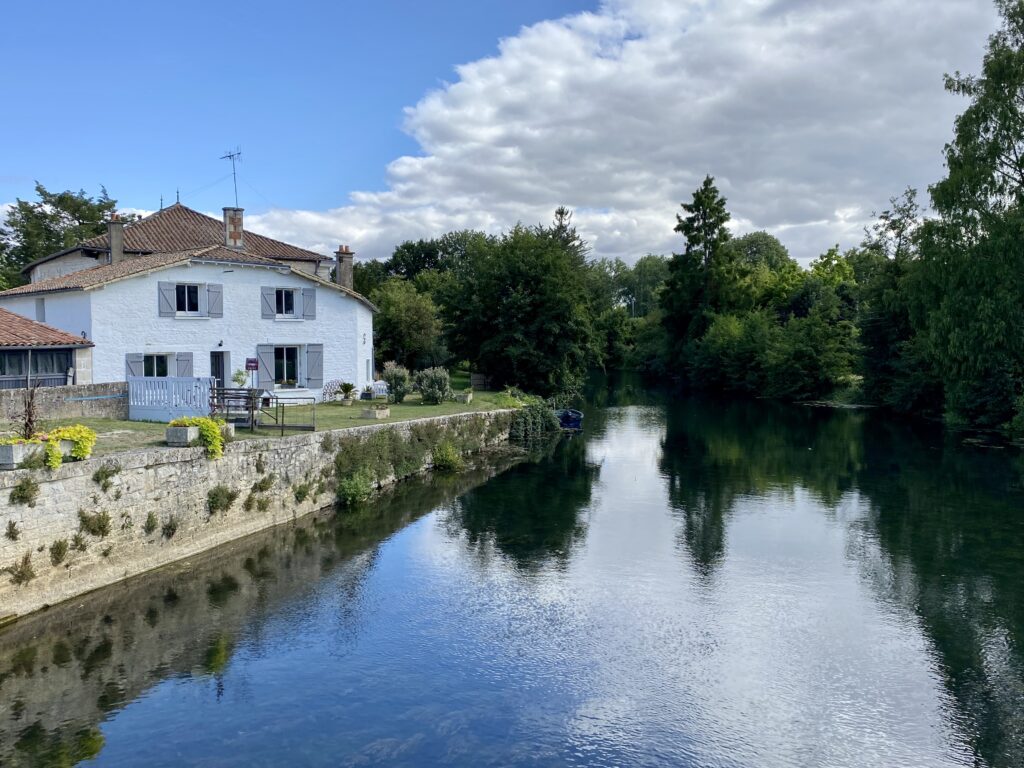
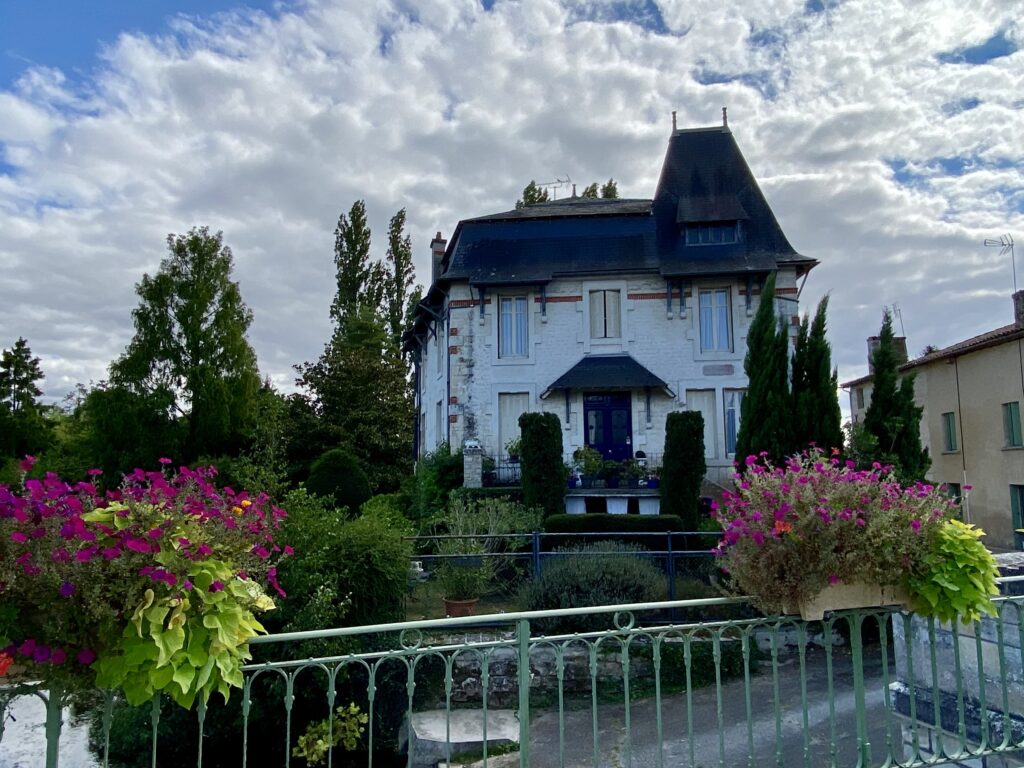
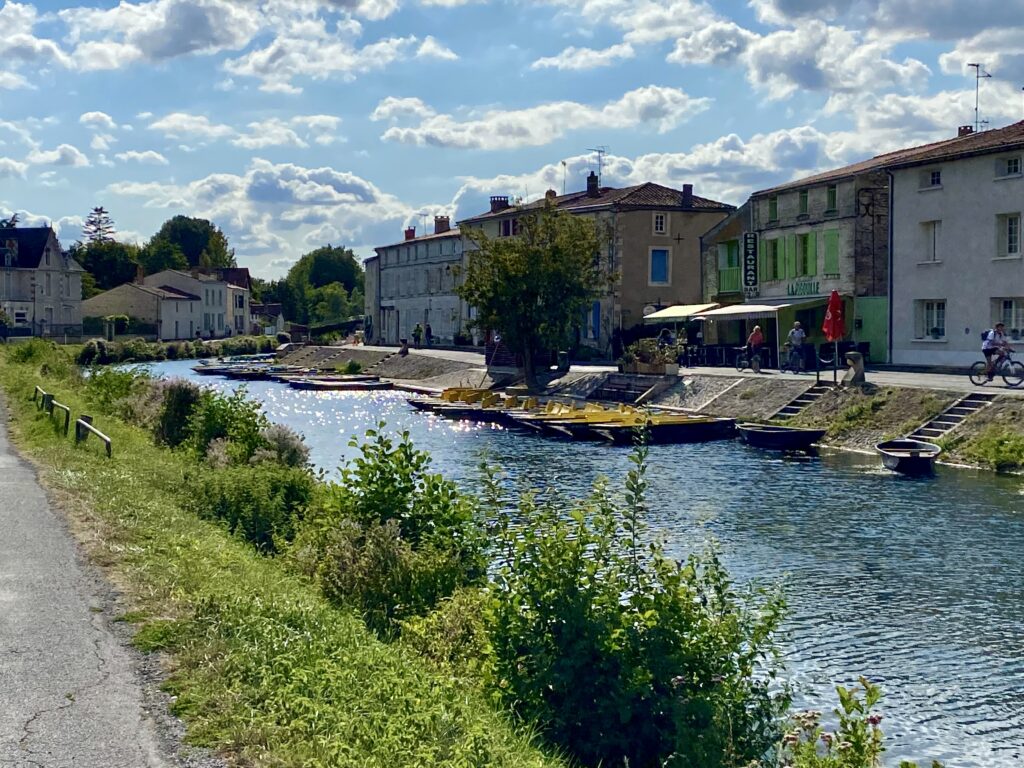
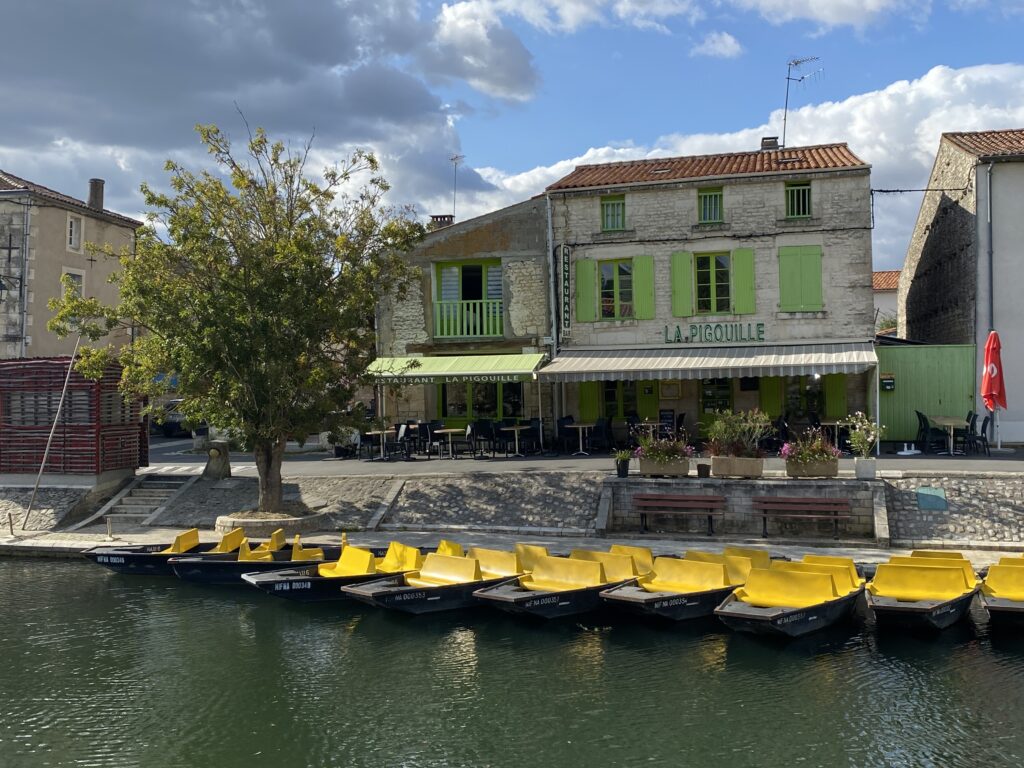
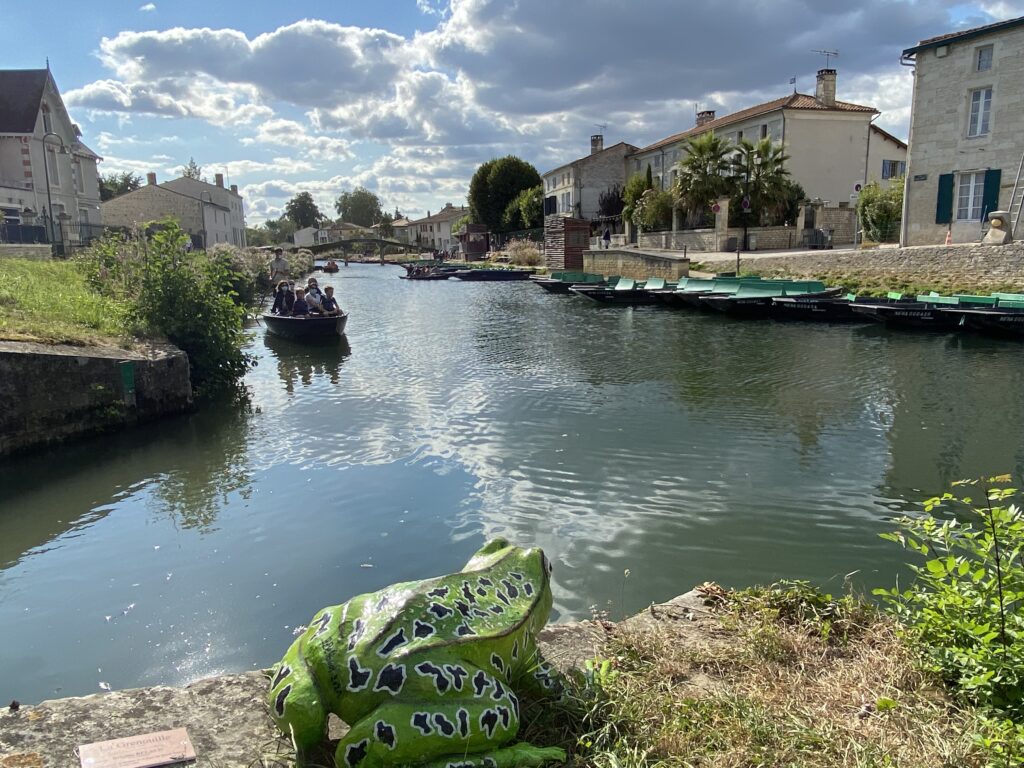
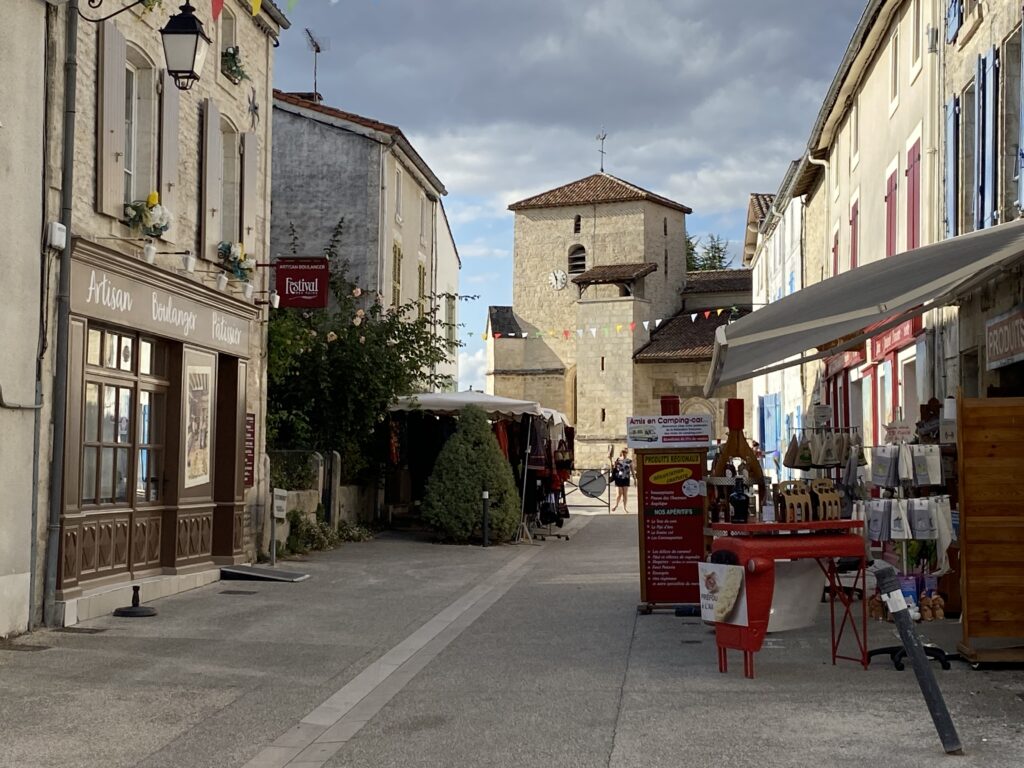
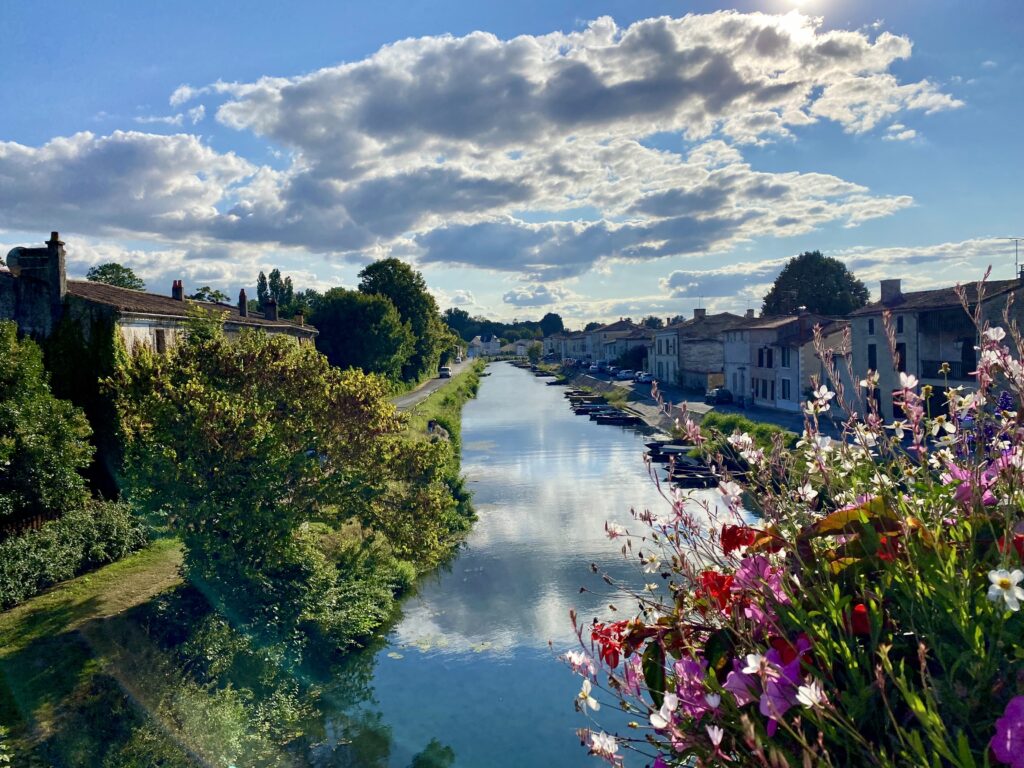
This little village of some 2,000 people is situated on the banks of the River Sevre in the Marais Poitevin (Poitevin Marsh) National Park and is designated one of France’s ‘plus beaux villages’. The riverbank is full of boat rentals (canoes and flat bottom boats that can be rowed, paddled or punted) and for such a small village it has a surprising number of souvenir shops, boutiques, restaurants etc. Unfortunately, it also has a tourist train.

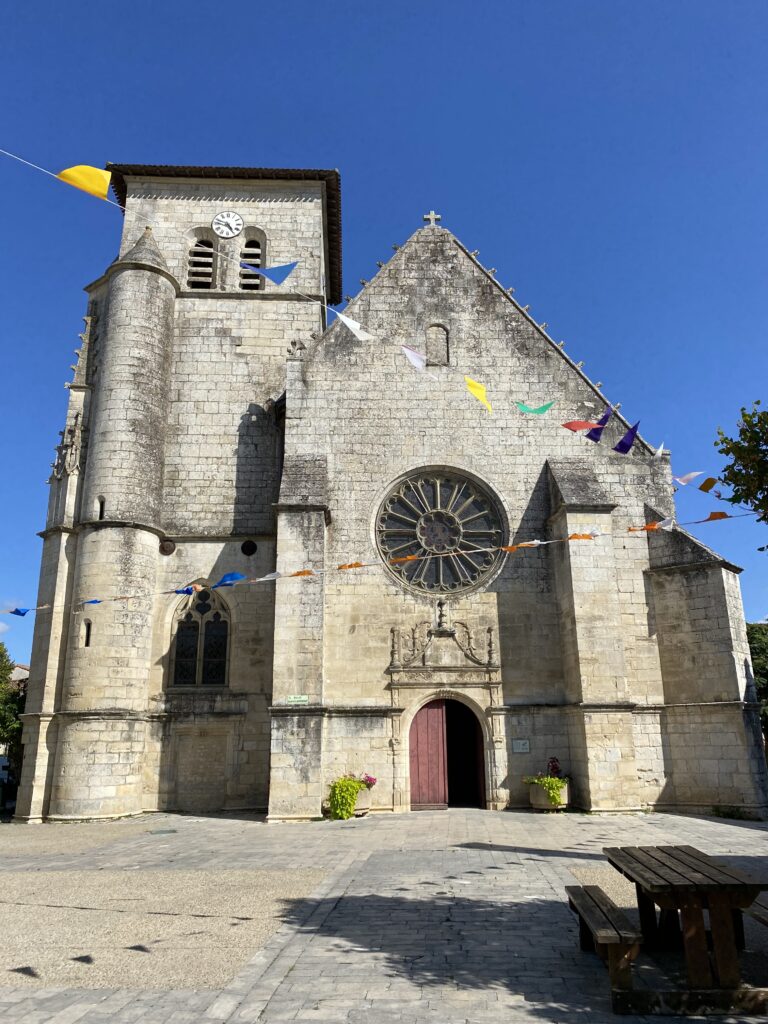
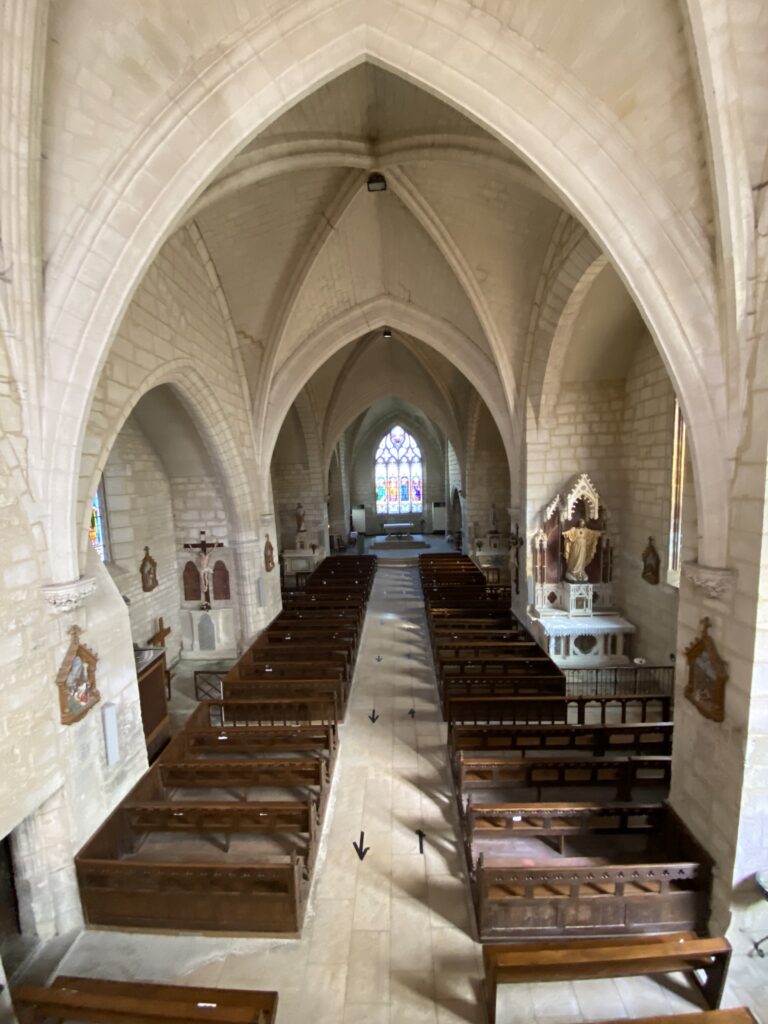
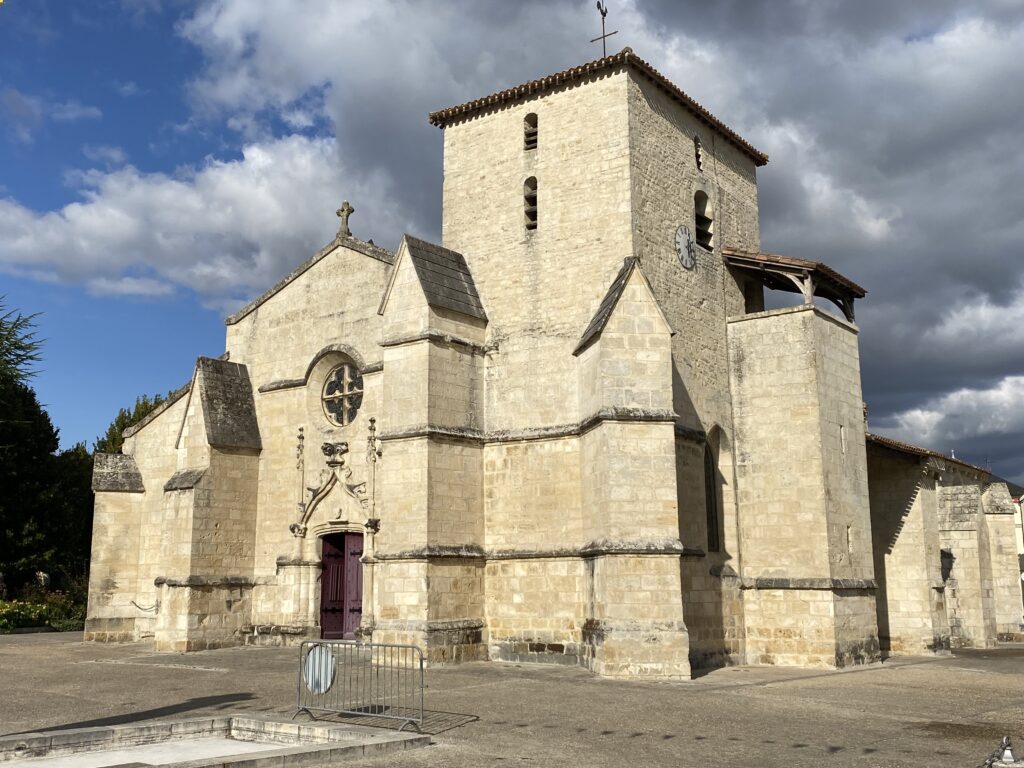
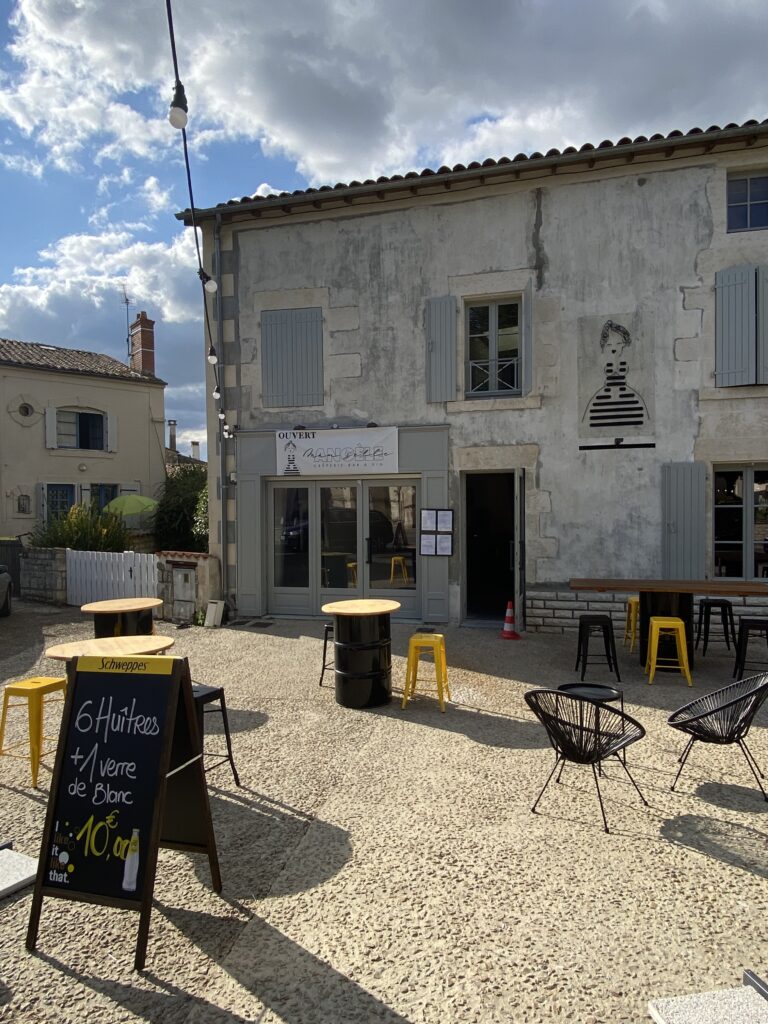
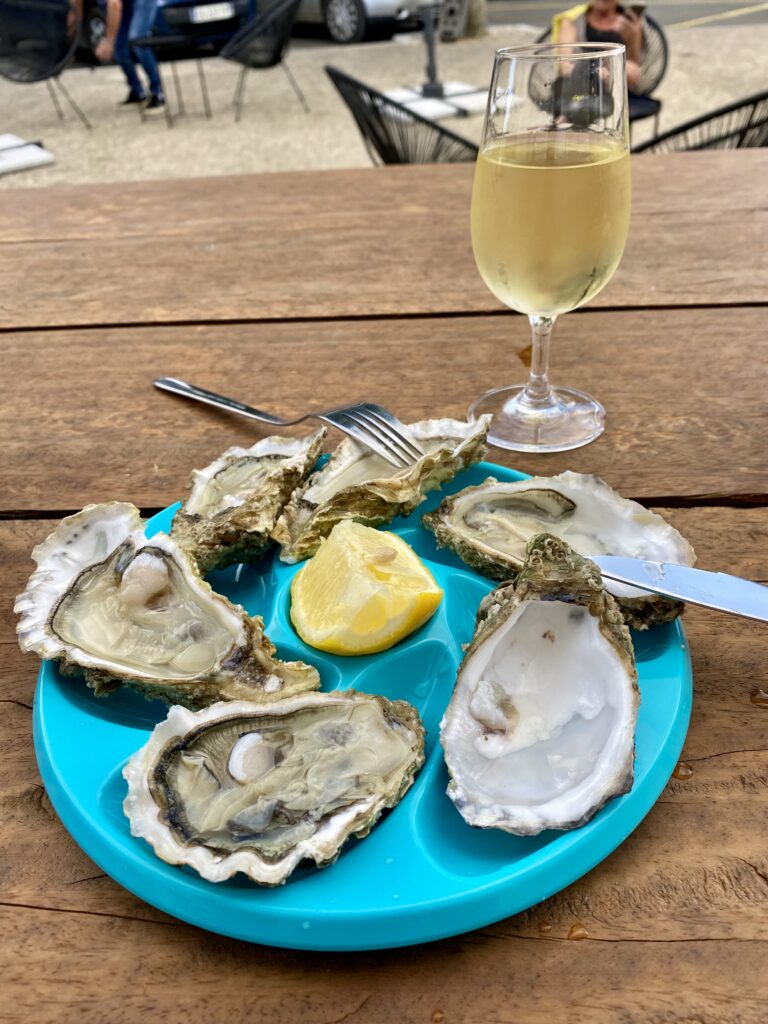
The train did it! I took myself away fron the water to the main square (where there is a nice looking church – the Church of Saint Trinity) and found myself a small bar restaurant that was serving half a dozen local oysters and a glass of wine for 10 euros. Costs really have risen in France during the last 3 years.

Then it was time to walk back to Magne. Coulon is not a bad place to visit but the menus I looked at would not impress Vanya.

Blaye (Aquitaine), France August 2021 (Tour 4)

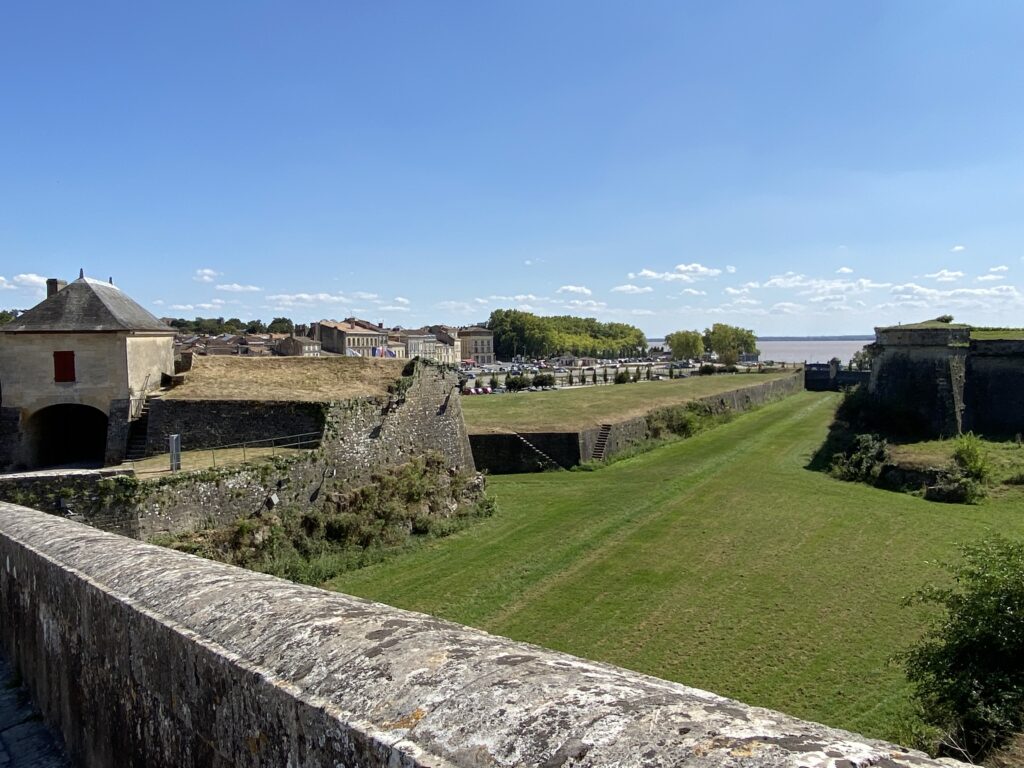
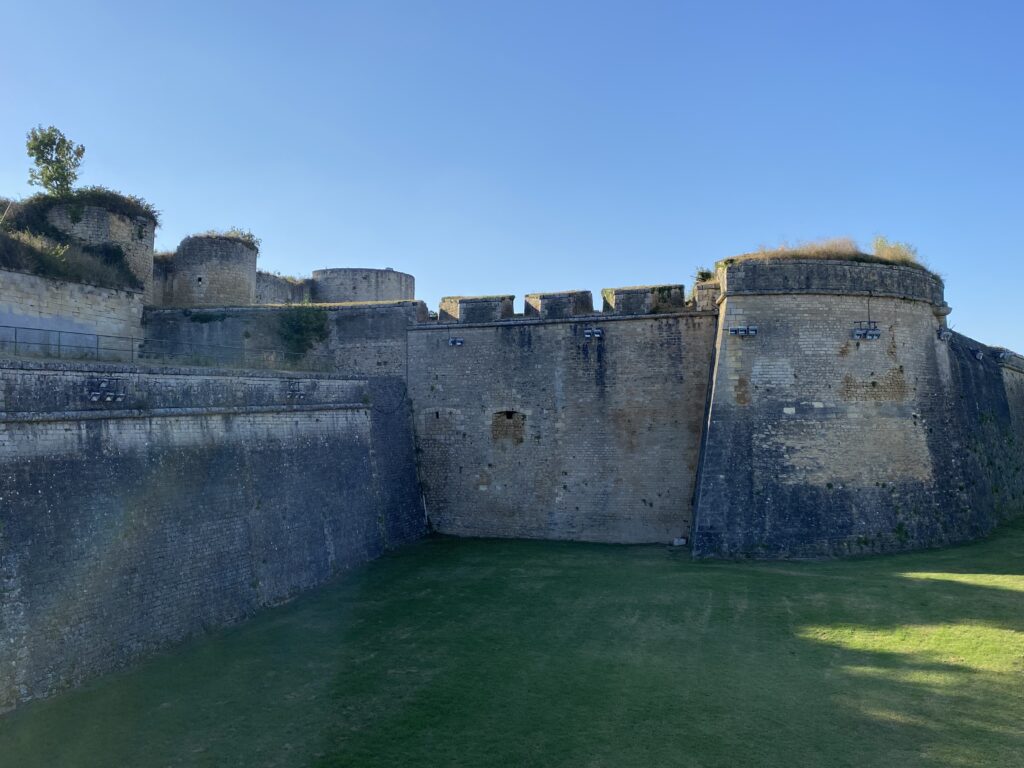
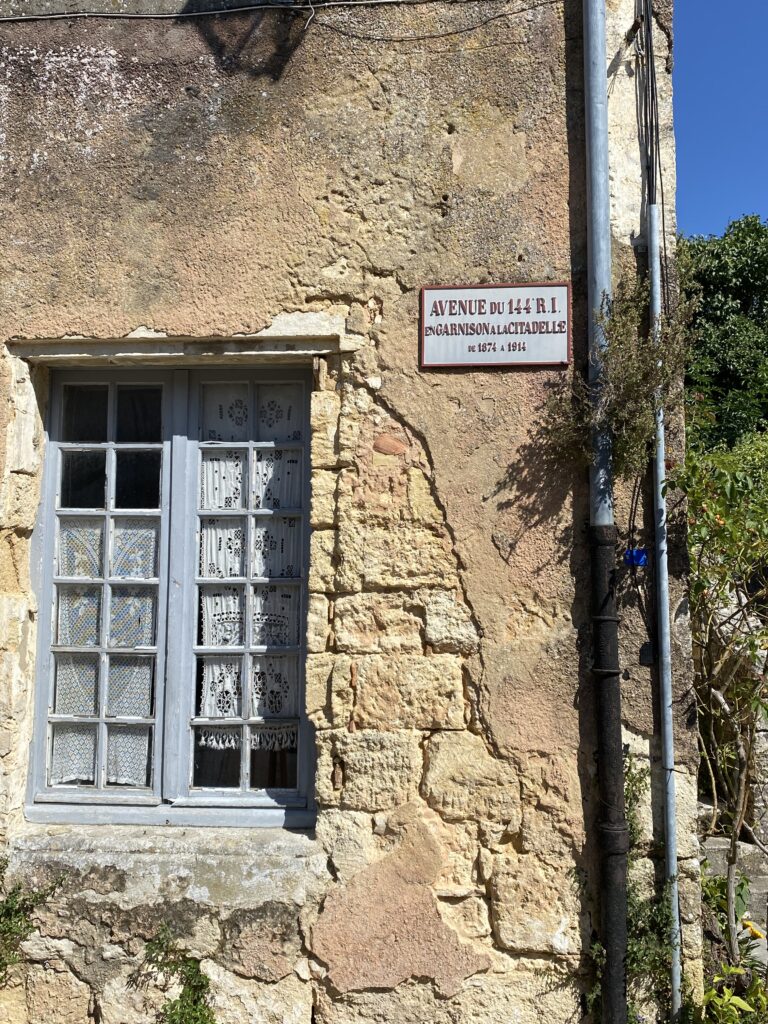
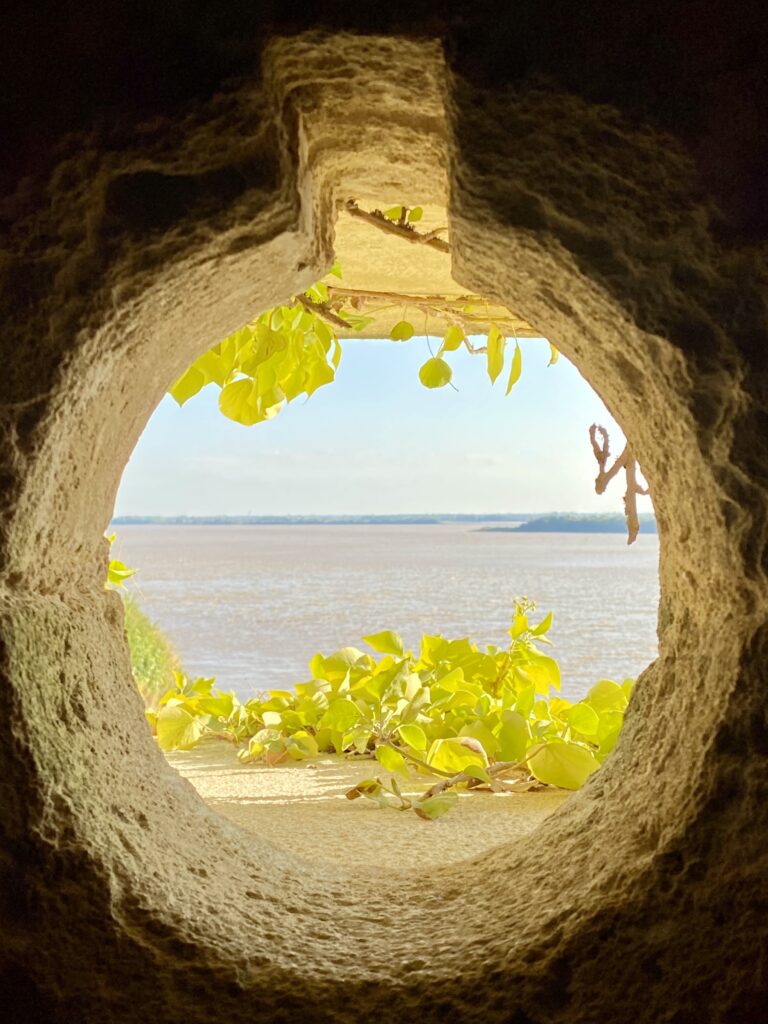
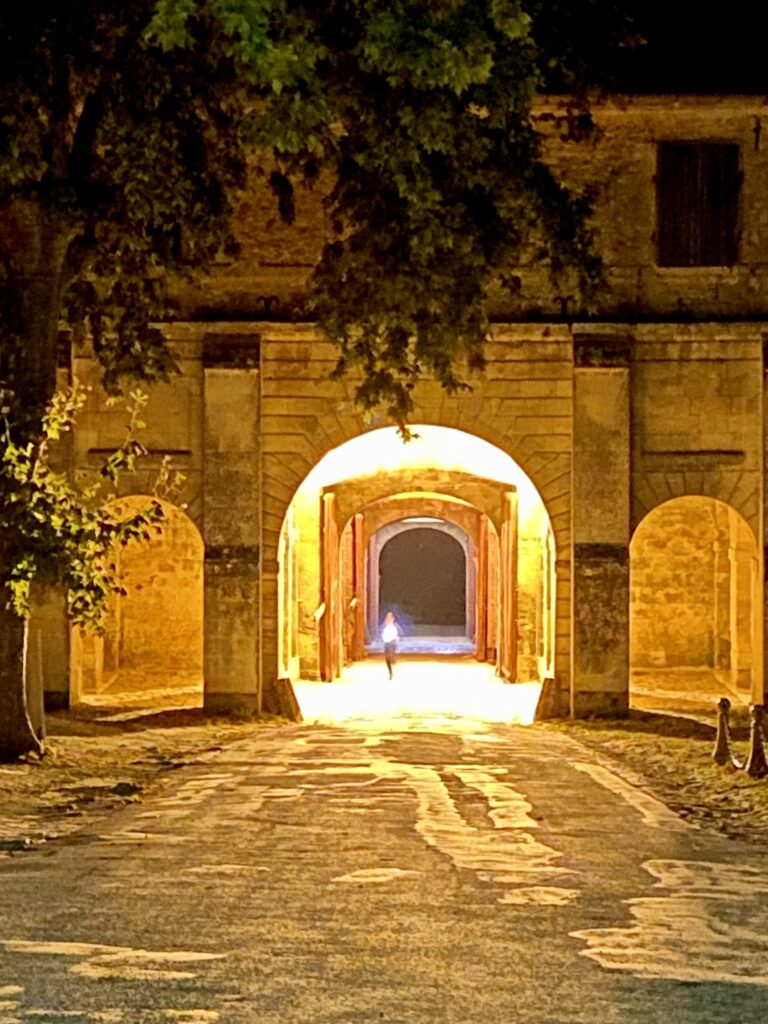
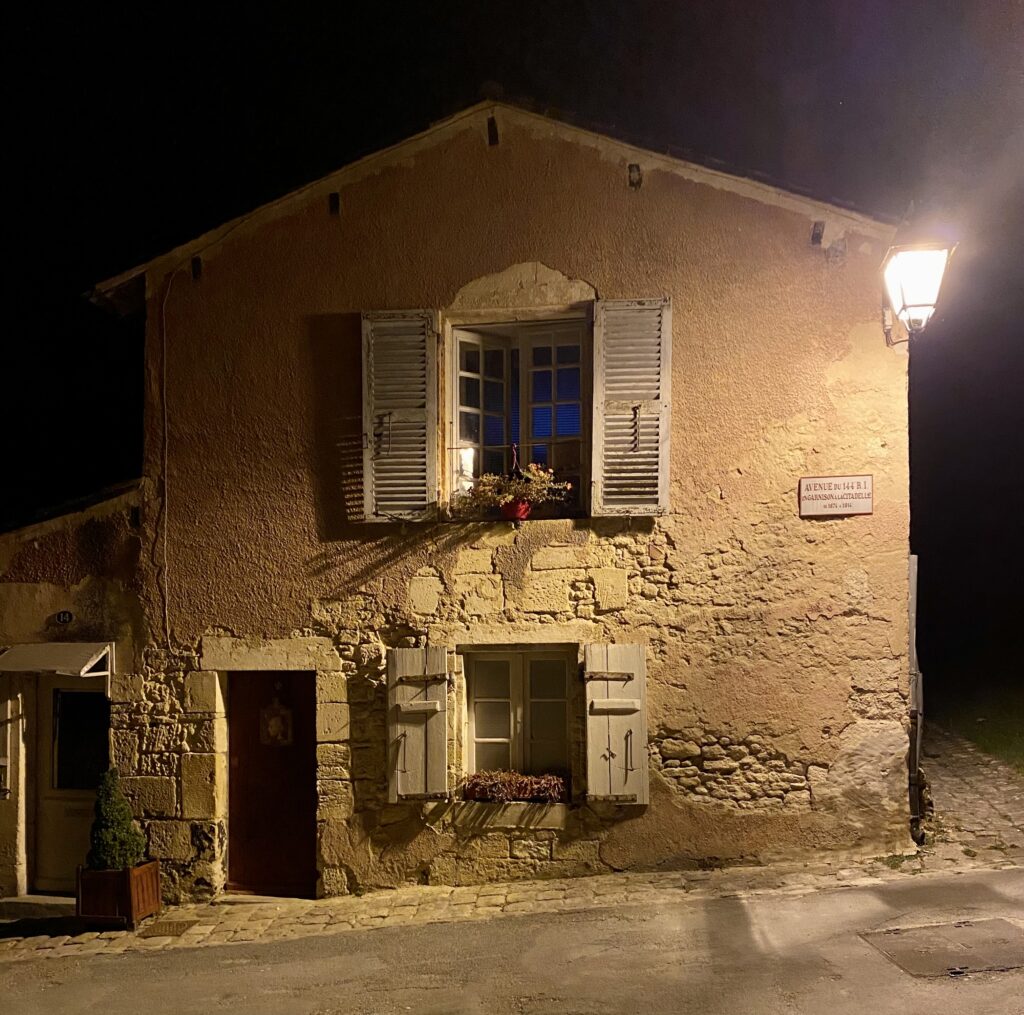
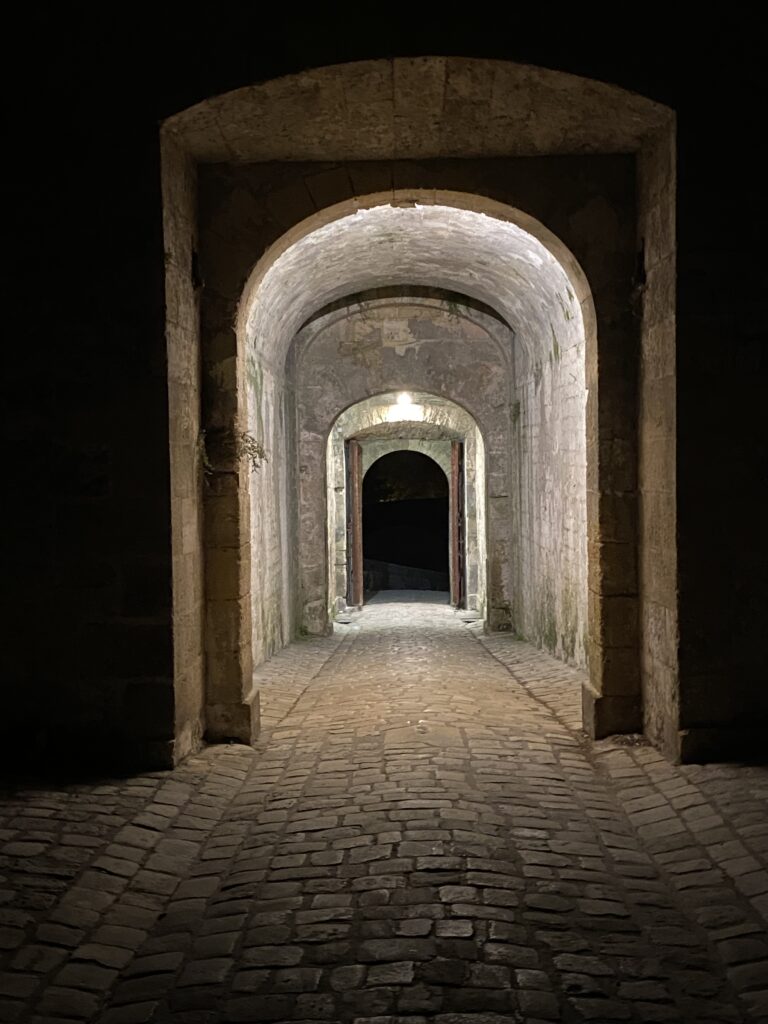
If Blaye is worth visiting it is for it’s amazingly well preserved citadel and the municipal campsite inside the Citadel. Great find Vanya!

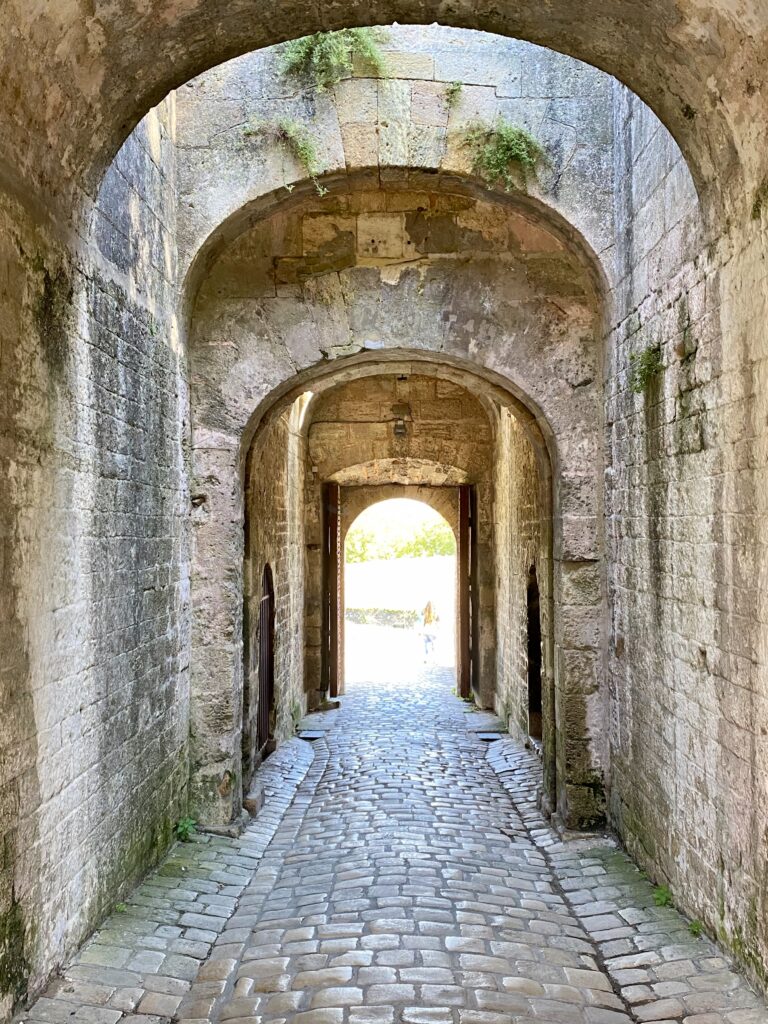
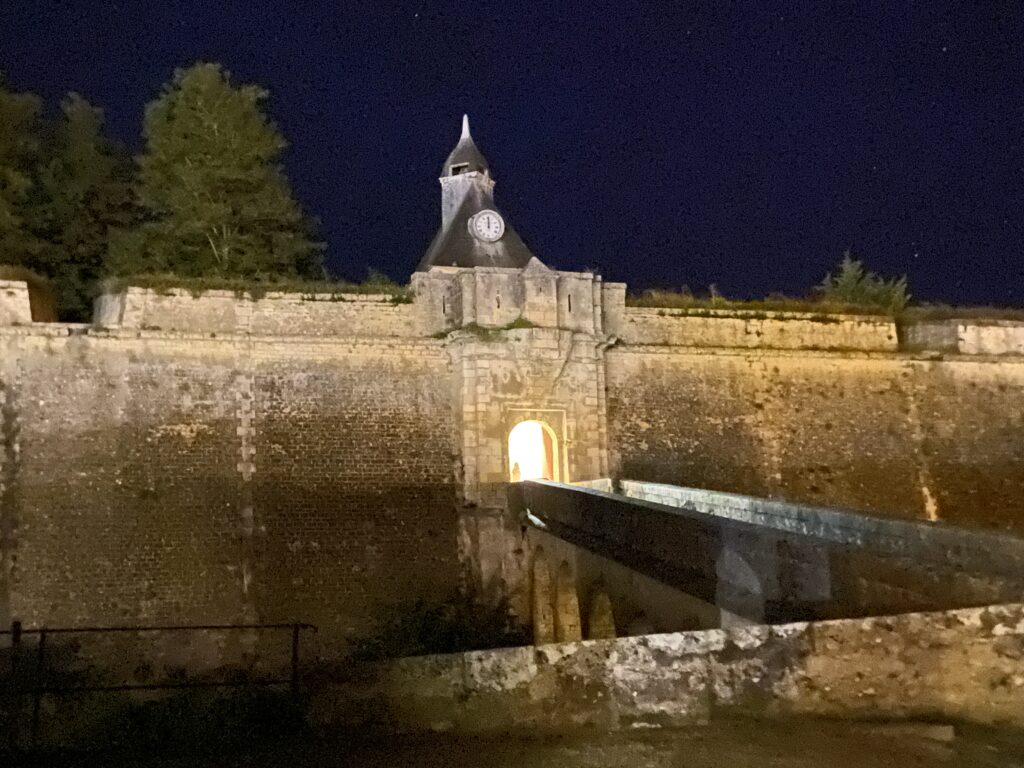
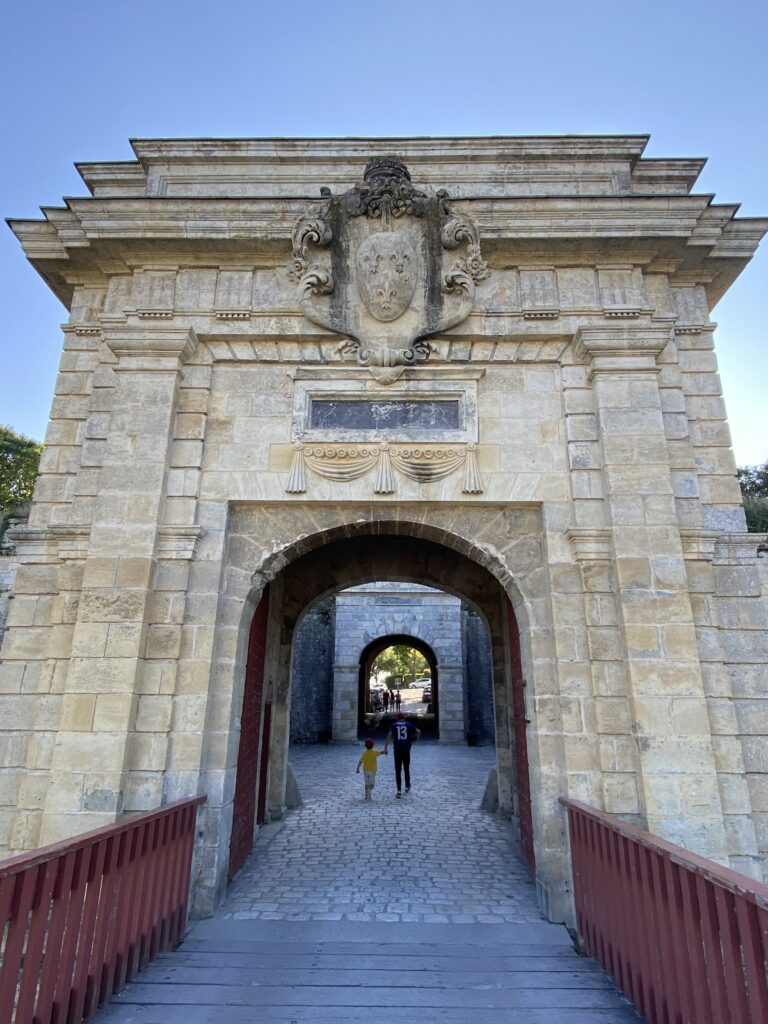
The Citadelle de Blaye is the largest of three fortifications (the Citadel itself, Fort Pate on an island and Fort Medoc on the far bank) protecting the Gironde Estuary and the city of Bordeaux. It was designed by Vauban and built on the site of an already established castle (the Chateau des Rudel ) during the period 1685 and 1689 at the behest of Louis XIV. It has two entrances the Porte Dauphine to the south and the Porte Royale to the east. We drove into the campsite via Porte Royale.

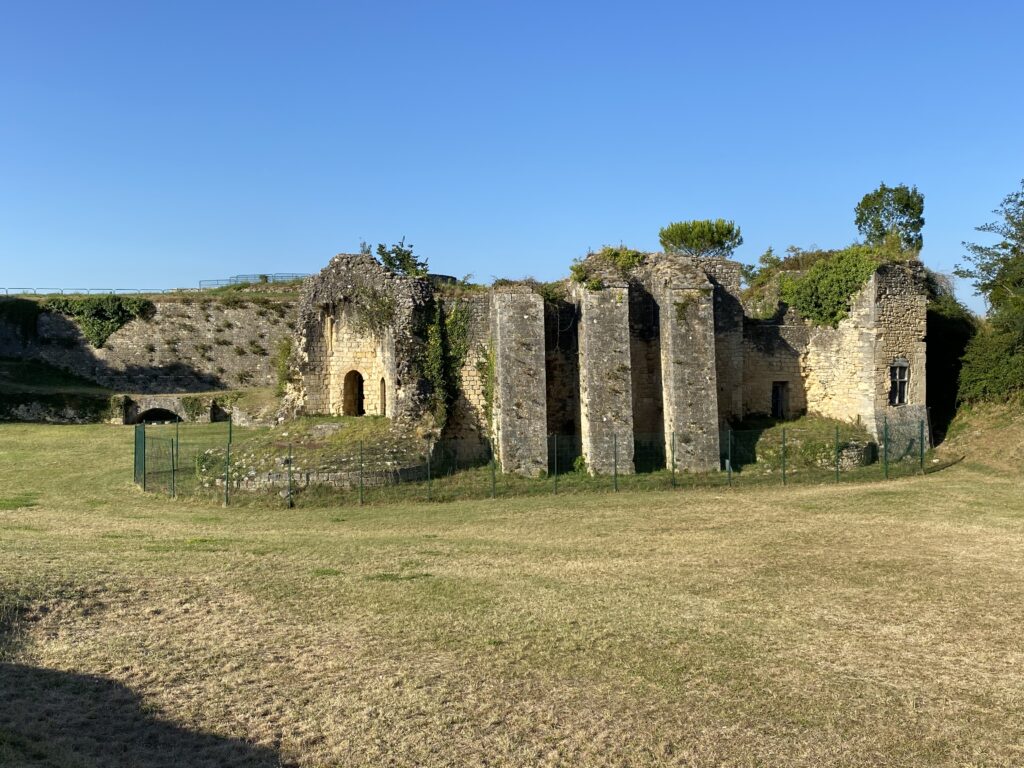
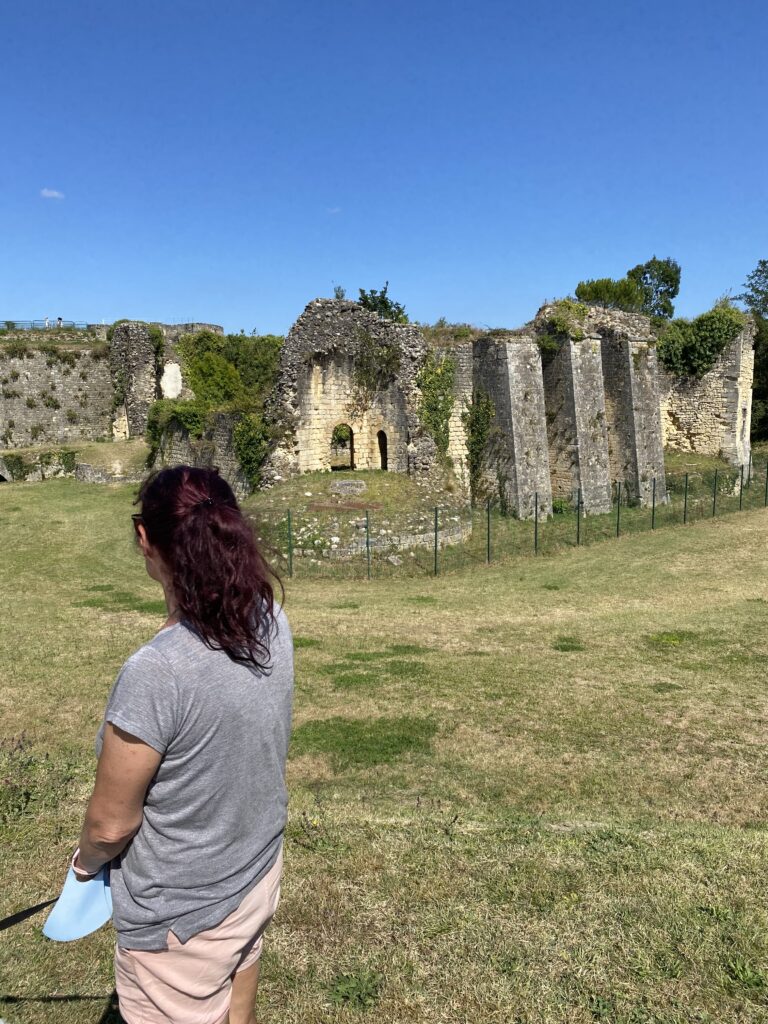
With it being lunchtime and a municipal site we were unable to check in until after 4pm (Vive la France) so; we went for a good wander around the citadel. As mentioned before, the citadel is in excellent condition. The only exception is the 12th century ruin, Chateau des Rudel, which featured in Vauban’s original design and was used as the governor’s residence to start with. It had it’s towers removed much later (in the early 19th century when it was thought they would interfere with artillery fields of fire) and then fell into ruin.

The Duchess of Berry was incarcerated in the citadel for a while. I need to be more precise; Maria Carolina, Duchess of Berry (born in 1798) was held prisoner here; not Louise Elisabeth, Duchess of Berry (born in 1695). Louise Elisabeth’s story is a real tragedy and perhaps of greater interest but for all the wrong reasons. Maria Carolina’s story is of more historical interest. Maria Carolina gave birth to a son, Henri, very shortly after her husband (the fourth son of the then king of France) was assassinated in 1820. Various other deaths followed and Henri should have become King Henri V after Maria Carolina’s’s father (King Charles X of France) was forced to abdicate but; Louis Philippe allowed himself to be crowned king of France instead. The Duchess considered Louis Philippe a usurper and claimed her son was the legitimate heir to the throne. It didn’t happen – she was exiled by Louis Philippe. She returned to France in 1832 to organise a rebellion but was discovered and imprisoned in the Citadel of Blaye. Whilst there she gave birth to another son (fathered by an Italian Count Lucchesi-Palli whom she had secretly married) and her credibility with the “legitimists” was thus destroyed. She was labelled a fallen woman and removed to Sicily, no longer being considered a threat to Louis Philippe.

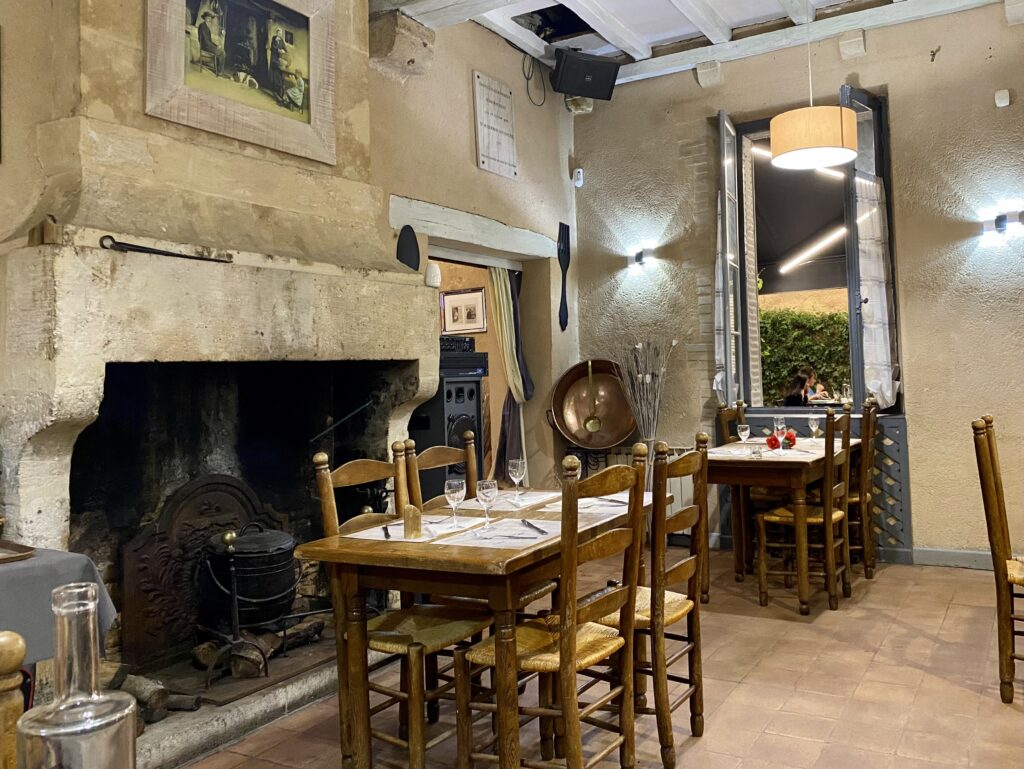
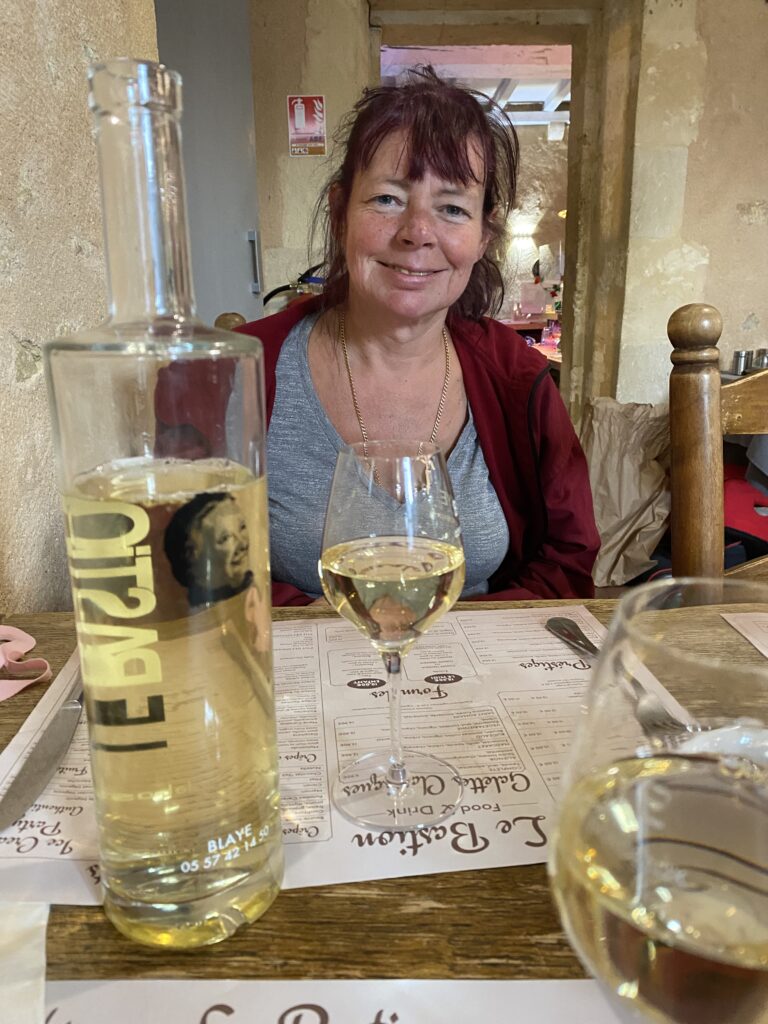
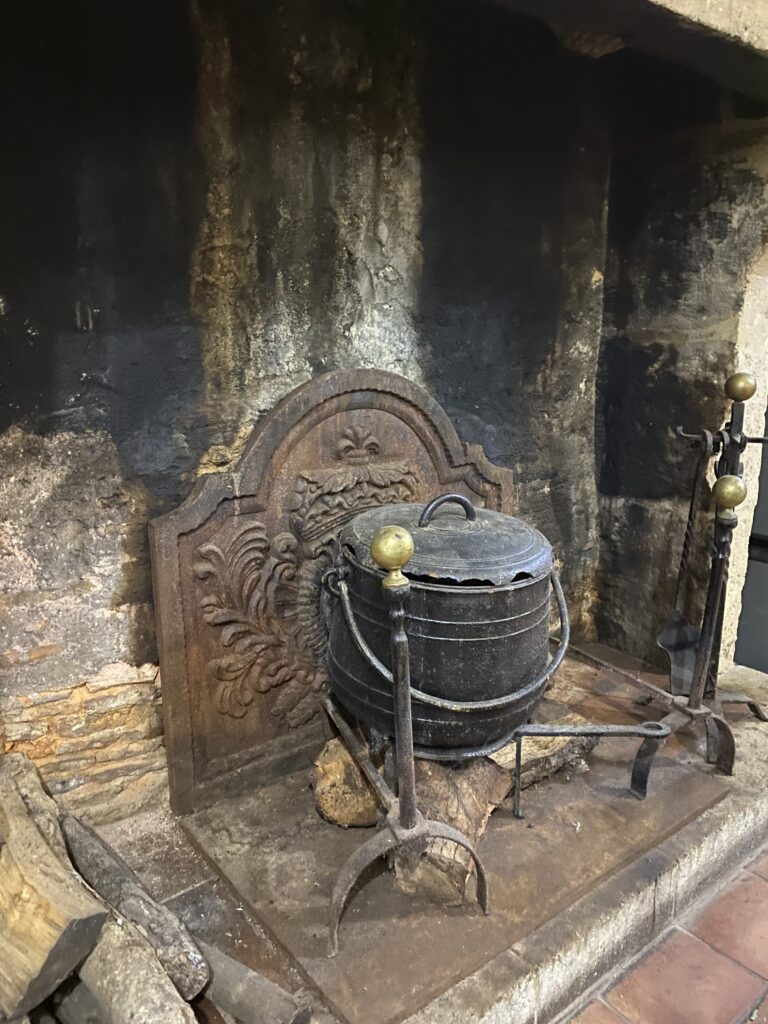
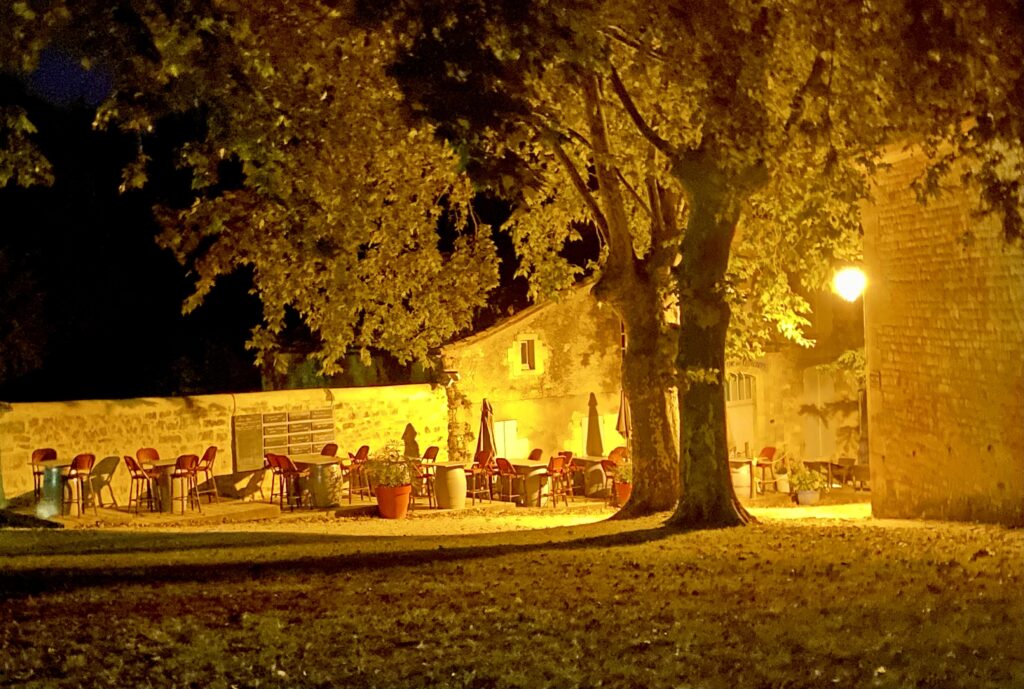
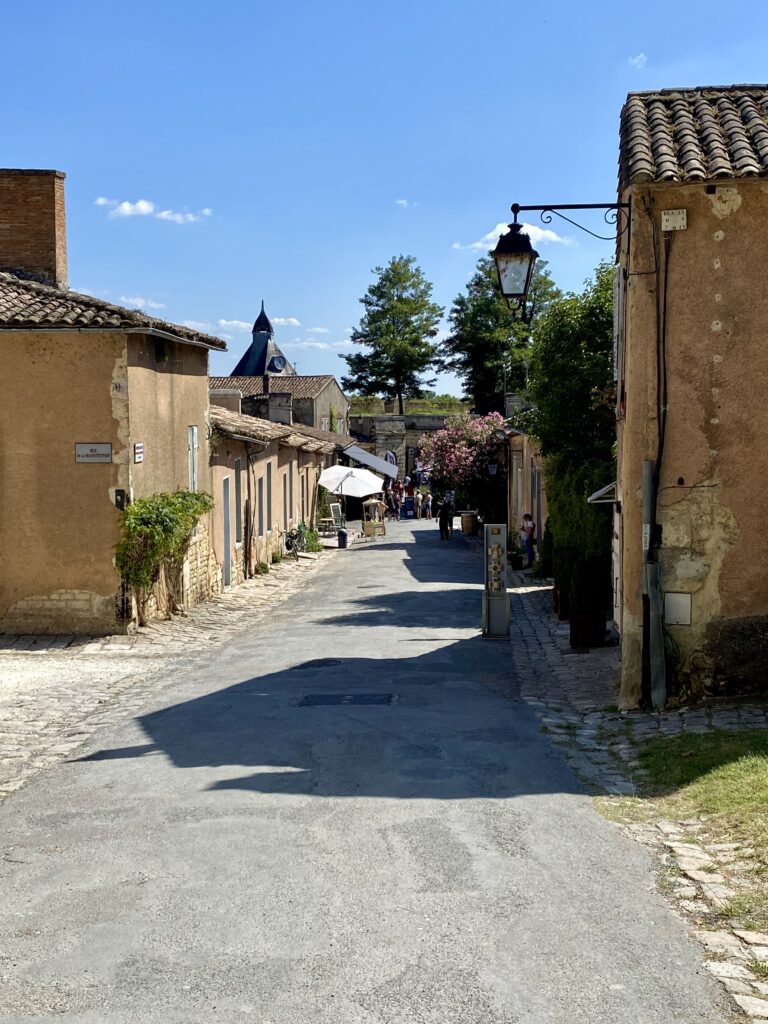
Moving on, that evening, we found ourselves a table at one of the restaurants inside the Citadel. We believe it was the old officer’s mess where we actually ate and it was quite surreal sitting eating a good galette and drinking wine in a room where more than 200 years before there would have been Napoleonic soldiers standing at the fireplace doing exactly the same. The galette wasn’t the best we have ever had but the wine, Le Bastion (made using the Citadel’s own grapes) was fine.

I took the dogs for another brief walk around the fortress before retiring for the night (as much to take some more photos as anything). What an unusual place!

And the town of Blaye? Not really worth the time I spent walking round. It is very plain and very tired…

Ascain (Aquitaine), France August 2021 (Tour 4)

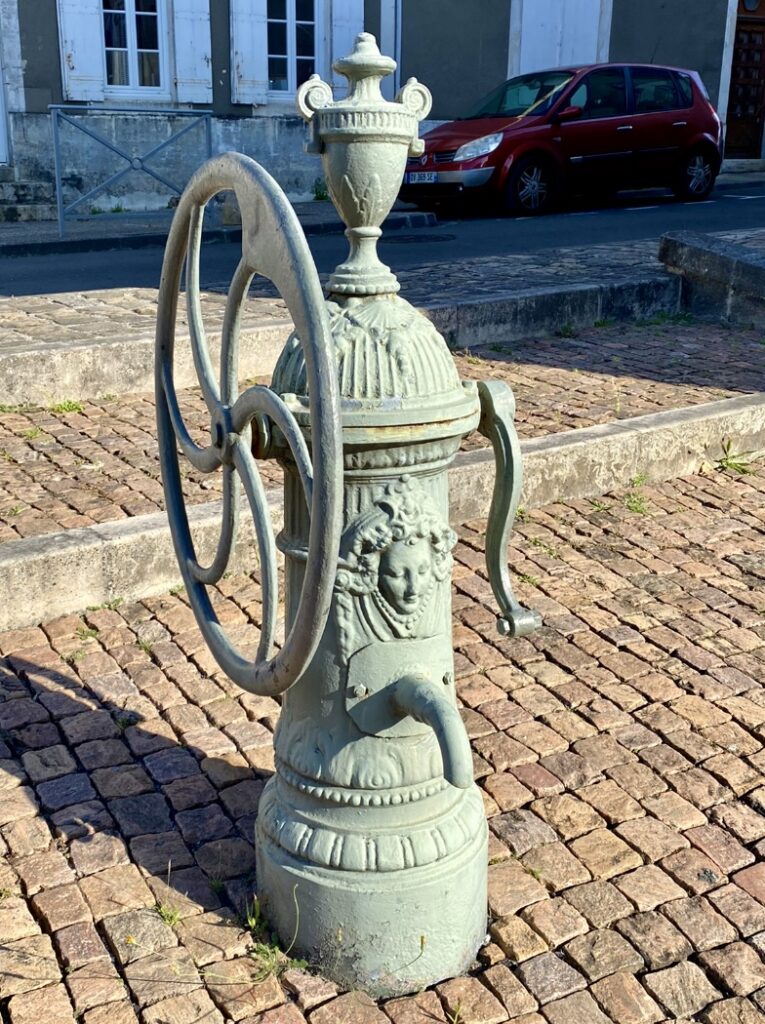
Ascain is a very pretty small town (or is it a large village?) besides the River Nivelle on the French side of the Pyrenees. It sits under the 905m Pyrenean summit of Rhune, just a few kilometres from the Atlantic coast, in the former Basque Region of Labourd, now referred to as the Pyrenees Atlantique Department of Nouveau Aquitaine. I prefer Labourd.

If you are so inclined, there’s an easy walk up to the summit of the Rhune or there is a 35 minute train ride up. I’m told that at the top you can sit outside a cafe and take in splendid views over Bayonne and Hendaye. Anyone who knows me will also know that I wasn’t going to waste my time with such a trip. I don’t care how good the views are; I cannot stand trains and cafes on hills. It is probably the one thing I hate more than bloody wind farms.

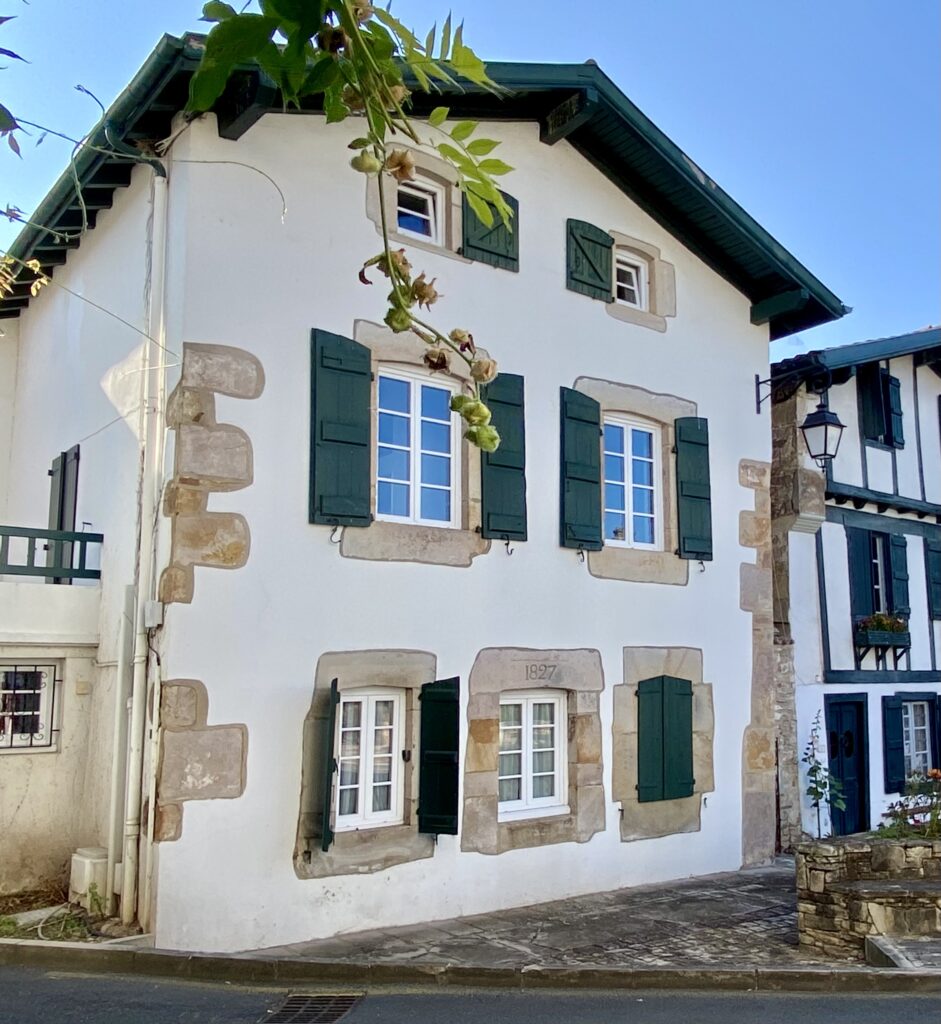
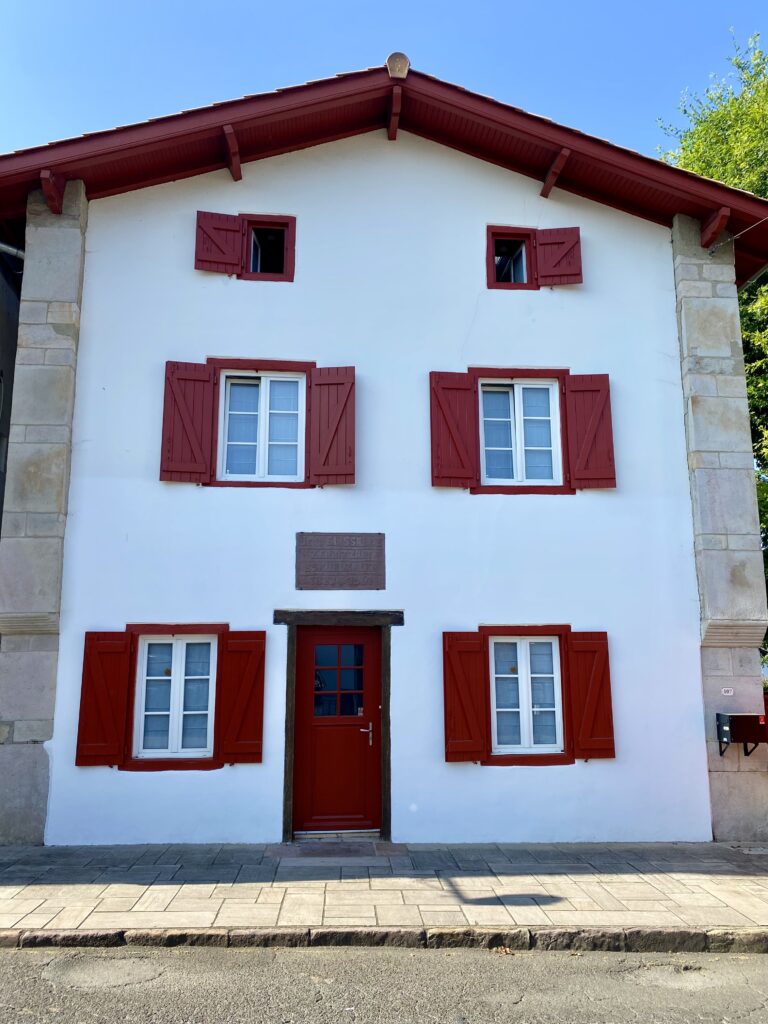
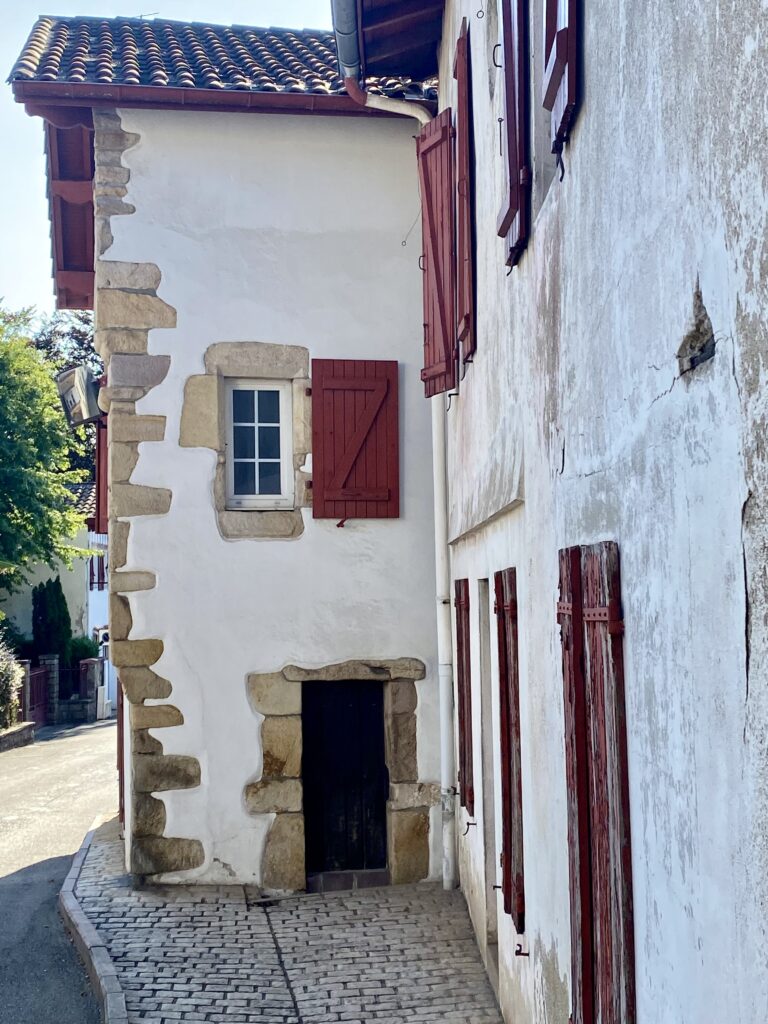
No, I spent the afternoon at something approaching sea level exploring the wonderfully picturesque ‘village’ and checking if my newly acquired Covid Sanitaire QR Code Pass would be accepted in the local bars. Dealing with those points in reverse order, two bars were quite happy to serve me alcohol after checking my pass. As for the village, it is lovely. Almost all of the houses are typical low roofed, half timbered properties with stone lintels and almost all are painted in the Basque colours of white, red and green. They are very proud of their Basque heritage here.

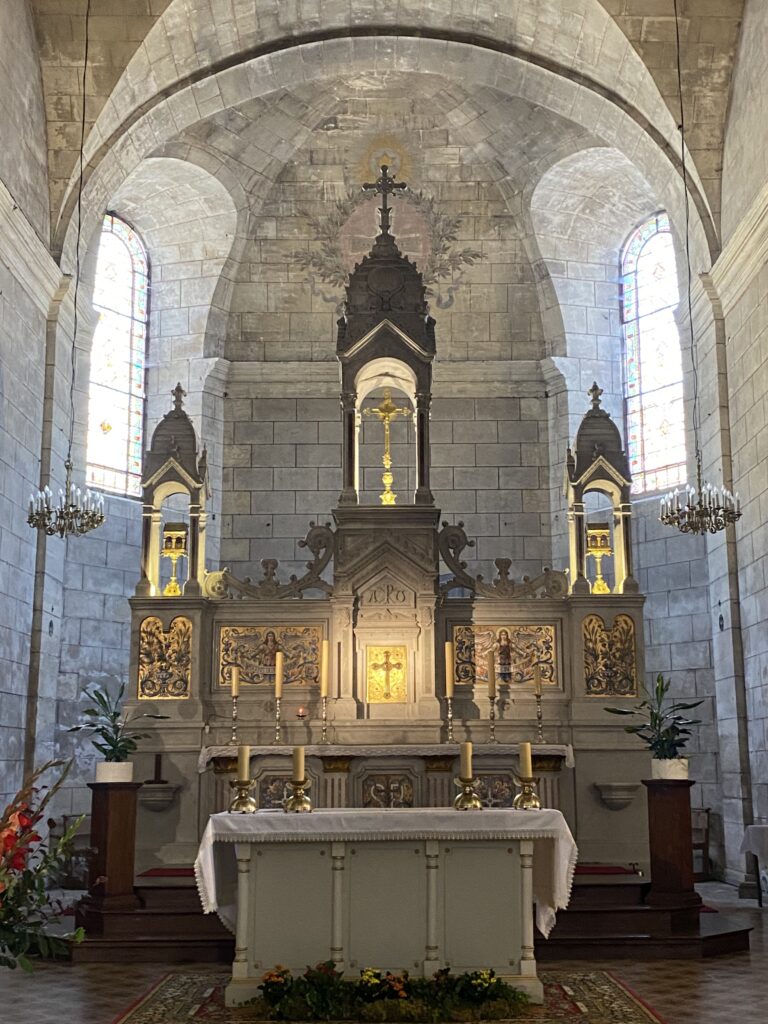
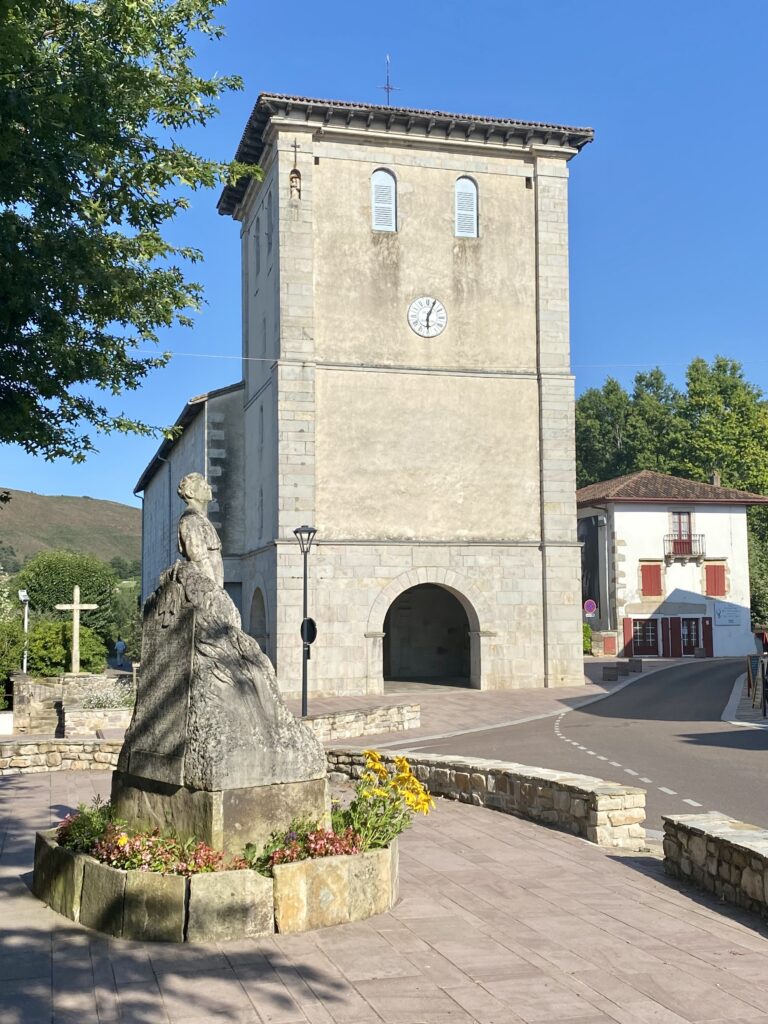
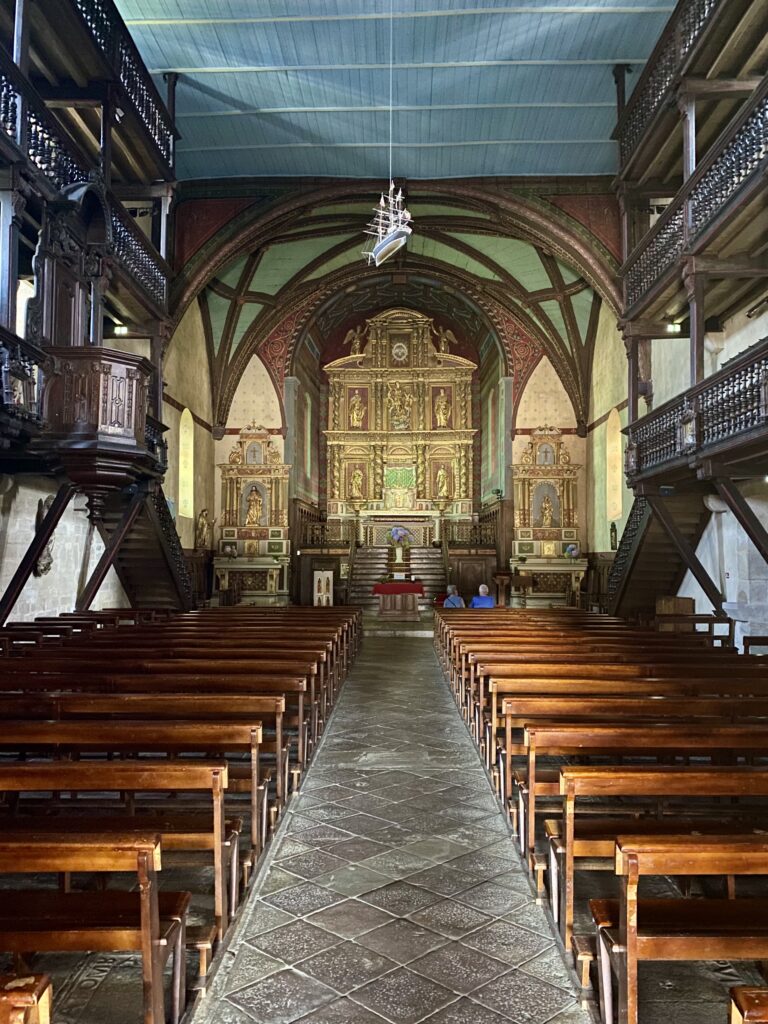
In villages such as this the main square is more often than not dominated by the local church but in Ascain the honours are shared between the church and a Basque Pelota Court. More about Pelota later. The Church of our Lady of Assumption doesn’t look particularly impressive from the outside but inside it is a wholly different matter and the place has some history. Parts of it date back to the Middle ages (and in 1609 the local priest was degraded and burned as a sorcerer by order of the infamous Pierre Lancre who despised anything Basque) but, the church received significant makeovers during the 16th and 17th centuries and was inaugurated in 1626 by no less a personage than Louis XIII. Leaving all that aside, I like to see wooden galleries in a church (they are quite common in this part of the world) and this particular church has three levels of galleries. It is beautiful inside.

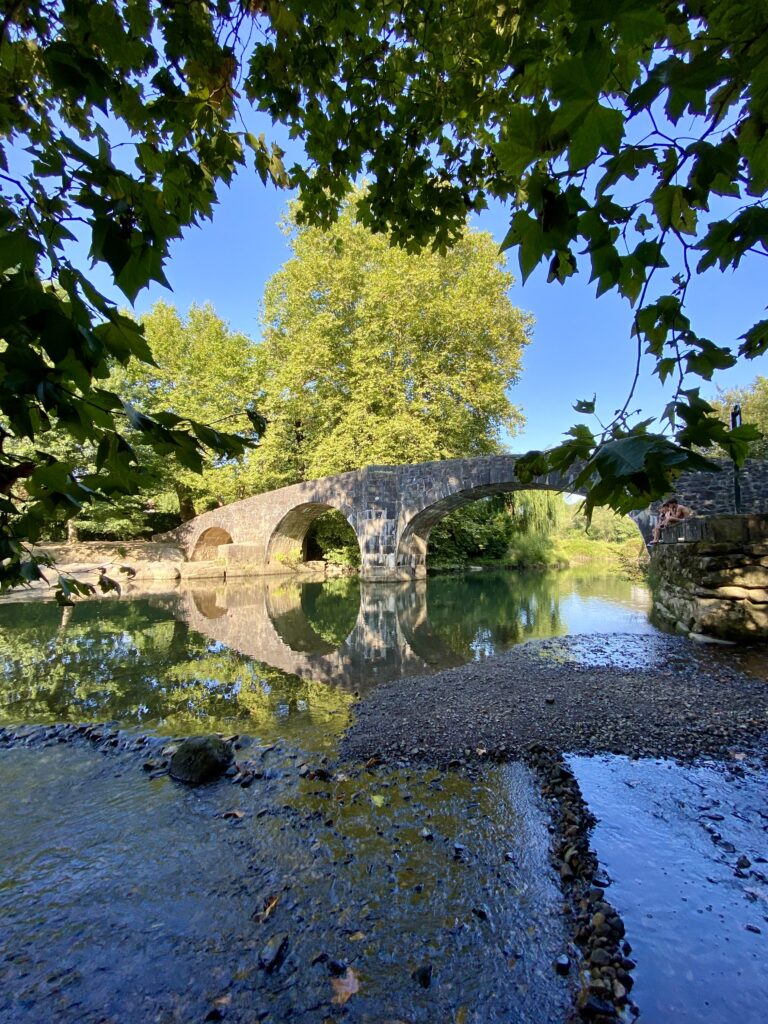
Another place I visited in between testing my Covid Sanitaire Pass was the Roman Bridge. It’s not really a Roman bridge although there may well have been one on this site back in Roman times. No, the so called Roman Bridge was erected in the 15th century in the Roman style and then totally rebuilt (in the same Roman style) in the 1990’s after being destroyed by a flood. I think the bridge needs renaming.

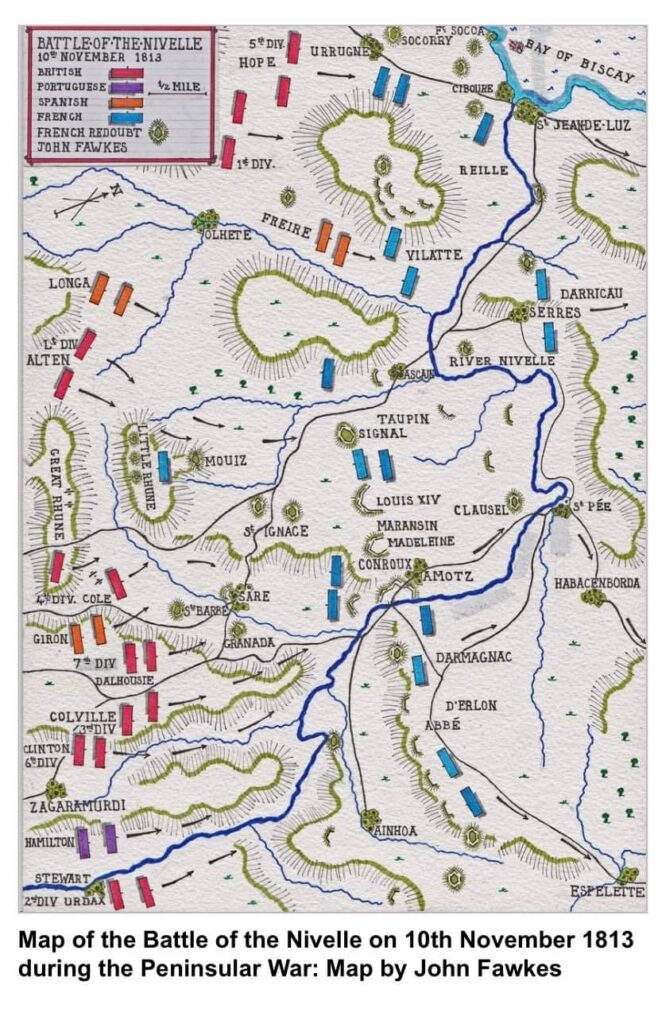
What really excited me about this bridge (the 15th century one) is that it was of strategic importance during the French retreat from Spain during the Peninsula War. I’ve long been interested in Napoleonic history and the Battle of Nivelle took place here on 10 November 1813 with the Duke of Wellington decisively beating Marshall Soult. Ascain was, at the start of the battle, the centre of the French defensive line and Taupin’s Division held the village until the British Light Division routed them. You wouldn’t believe it to look at the place now. It is so quiet and peaceful.

Covid Sanitaire Pass working and with me having gained a good lay of the land, it was time to collect Vanya and the dogs and find somewhere to eat.

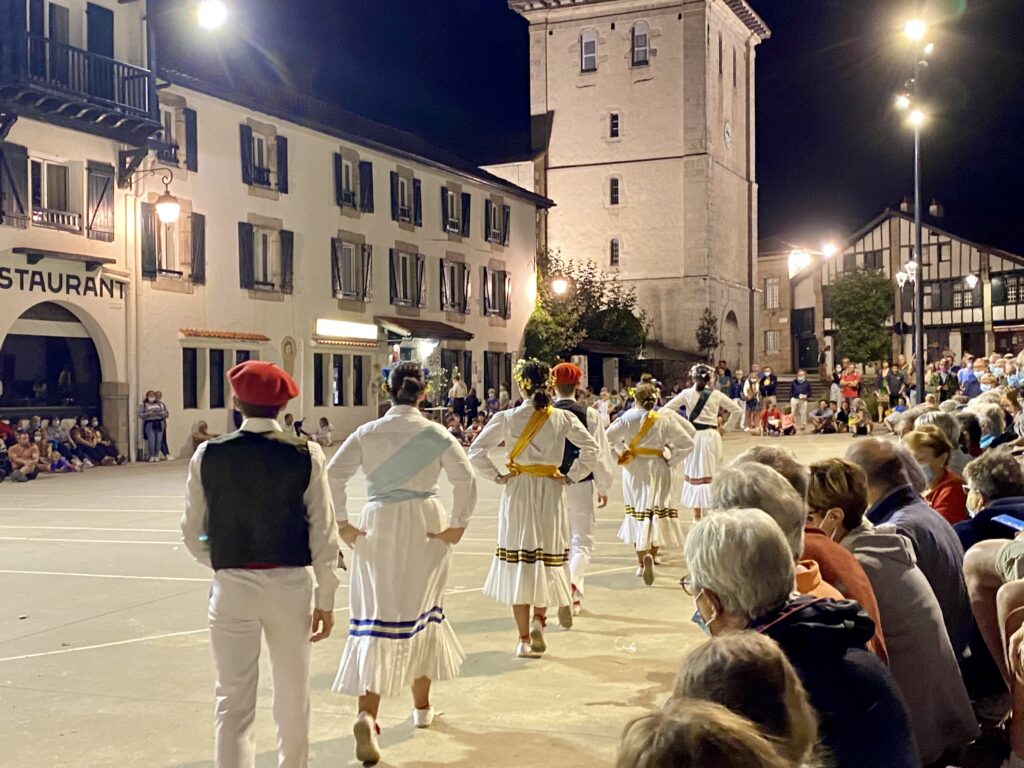
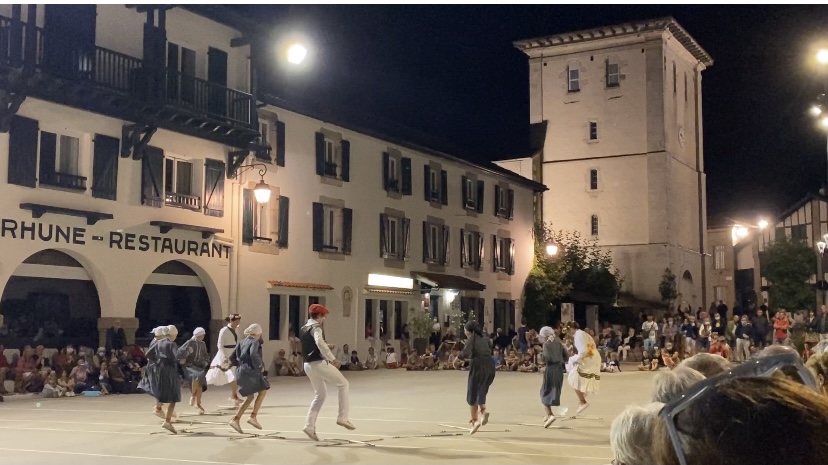
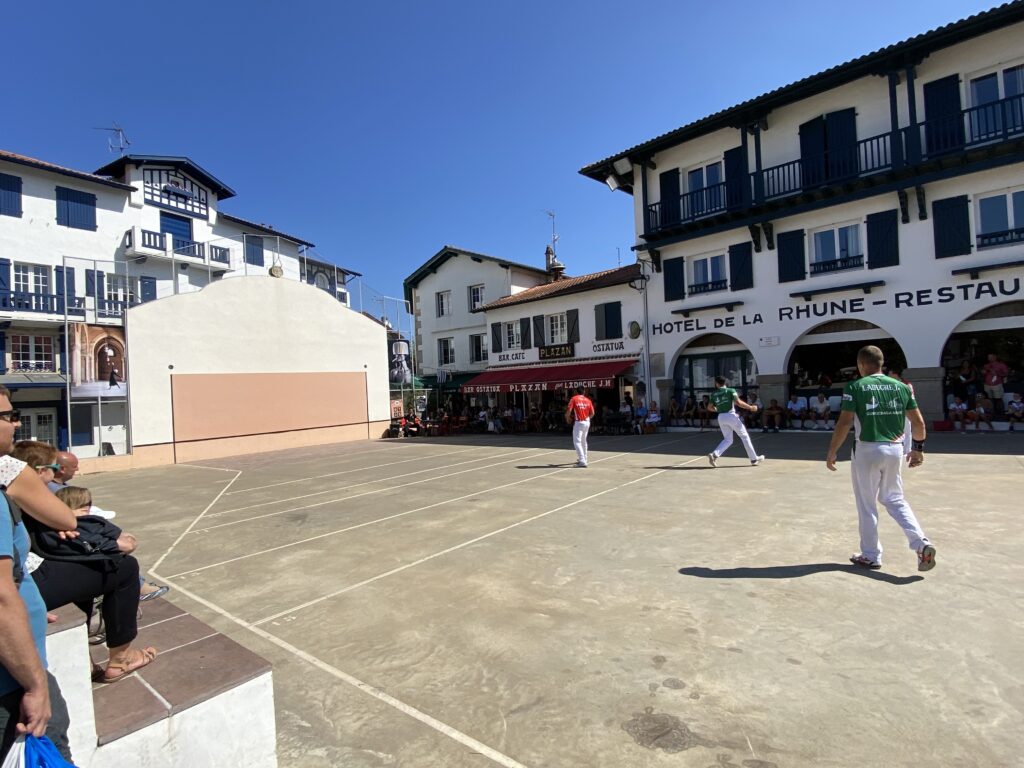
We timed our arrival back into the town centre perfectly. Indeed, we arrived as the village youth started dancing to traditional basque music in the town square. There was a real carnival atmosphere about the place which continued on into the next day with the annual Pelota Tournament also taking place on the town square.

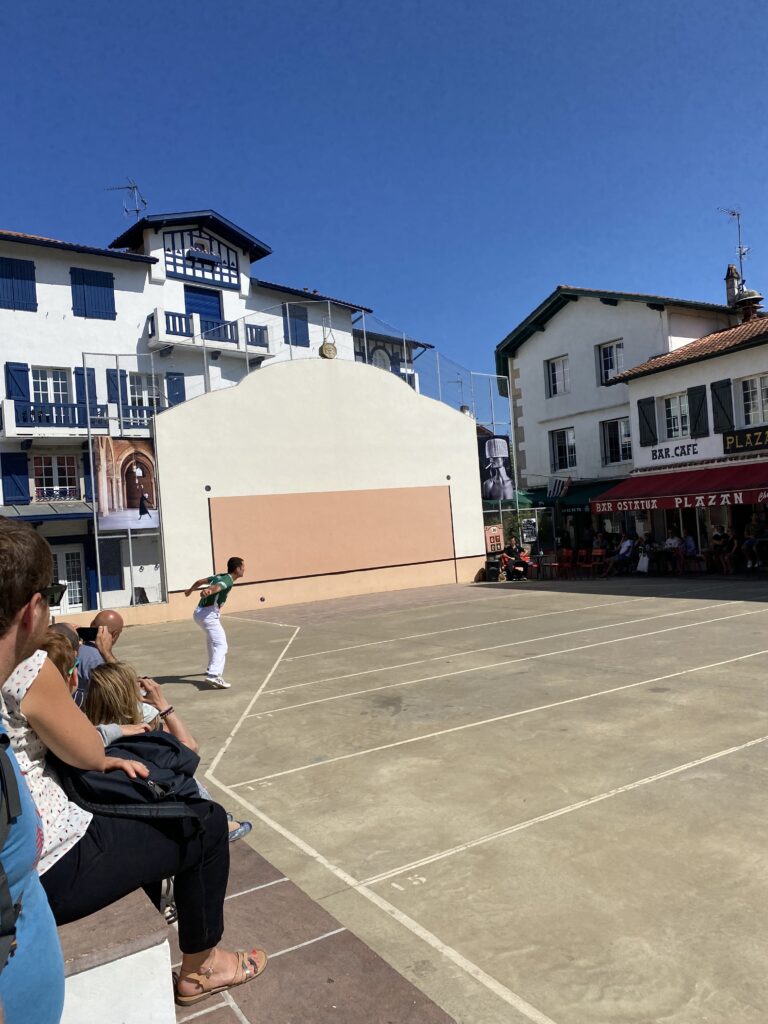
For the uninitiated (and I had to look this up) Basque Pelota involves players hitting a heavy tennis sized ball against a wall, the frontis, with an open hand (although I understand the game can also be played over a net using different types of rackets) such that his opponent is unable to return the ball. It is the forefather of most racket sports and is played fast and hard. Some aspects of the game are like squash but Basque Pelota is played on a court which is 30 metres long and 10 metres wide and with the winner being the first player or team to score 22 points. I watched the final of the seniors doubles (they were playing first to 30 points) and it looked to be great fun but physically demanding.

So what else is there to say about Ascain. We love the place. So too did Winston Churchill who came here to paint.

Sad thing is, early the next day we learned one of our best mates has died. RIP Dave. Missed but never forgotten. 27 August 2021

Villeneuve les Beziers (Languedoc Rousillion), France July 2021 (Tour 4)

Our current plan is to be in Spain for when Spain play Italy in the first of the two European Championships Semi-Finals. There was time therefore for one more overnight stay in France before we crossed the border. We settled on the small town of Villeneuve les Beziers which sits on the Canal du Midi and is within walking distance (4.5 miles) of Beziers.

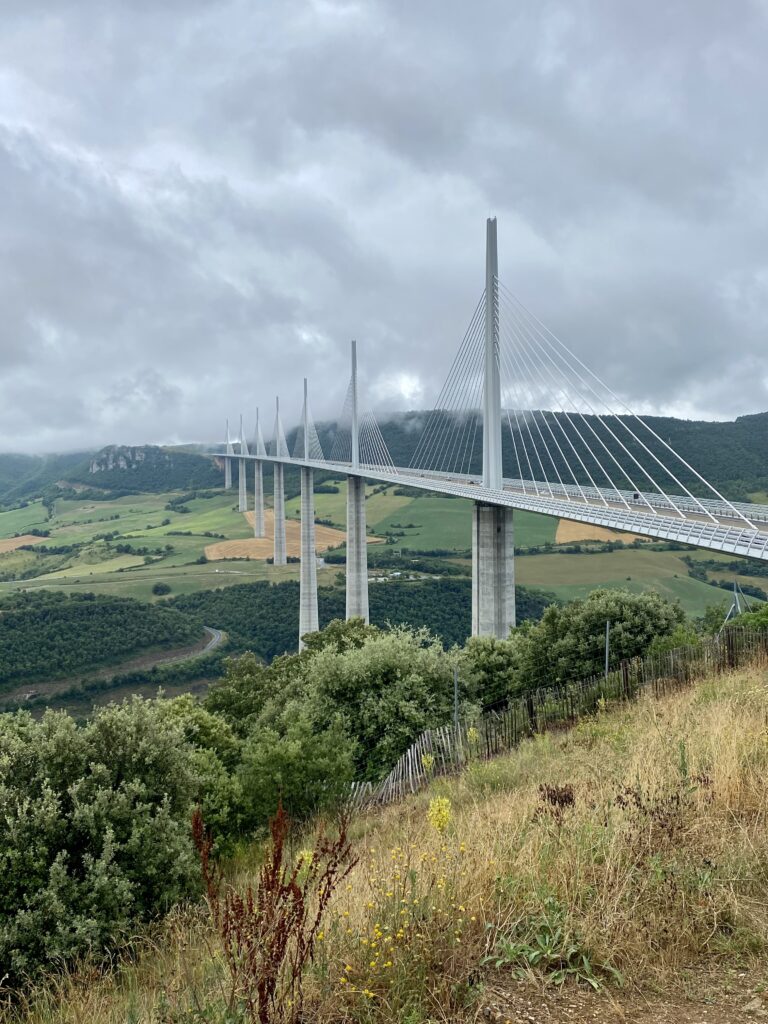
I didn’t know it at the time but the drive south would take us over the 2.4 km Millau Viaduct which spans the Tarn Valley. Designed by Norman Foster and completed in 2004 it was, and perhaps still is, the tallest bridge tower in the world at over 1100 feet and it has the highest road bridge deck in Europe at 890 feet. It’s an incredible feat of engineering and quite beautiful although Vanya wasn’t in the least impressed as we drove over it – that is her acrophobia at work again.

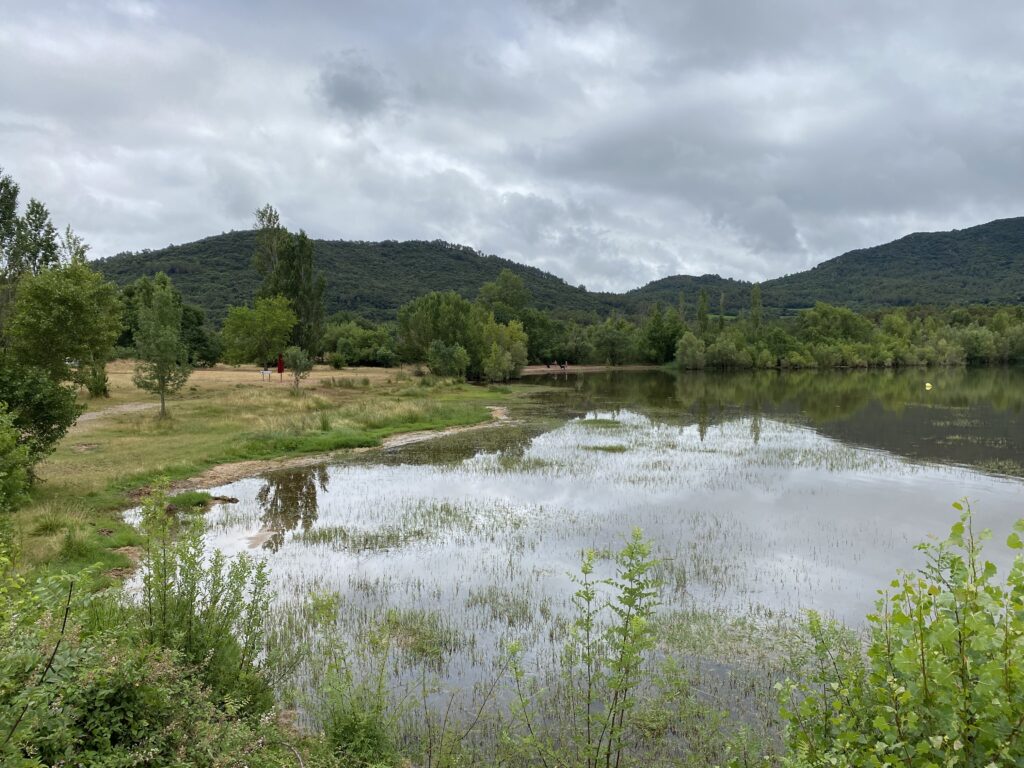
Shortly after crossing the viaduct and with the weather still bad, but getting brighter all the time, we pulled off the motorway at Clermont L’Herault with a view to having lunch at one of two nearby beauty spots; either the Cirque de Moureze (with it’s strange rock formations) or the supposedly pretty Lac de Salagou, whichever we reached first.

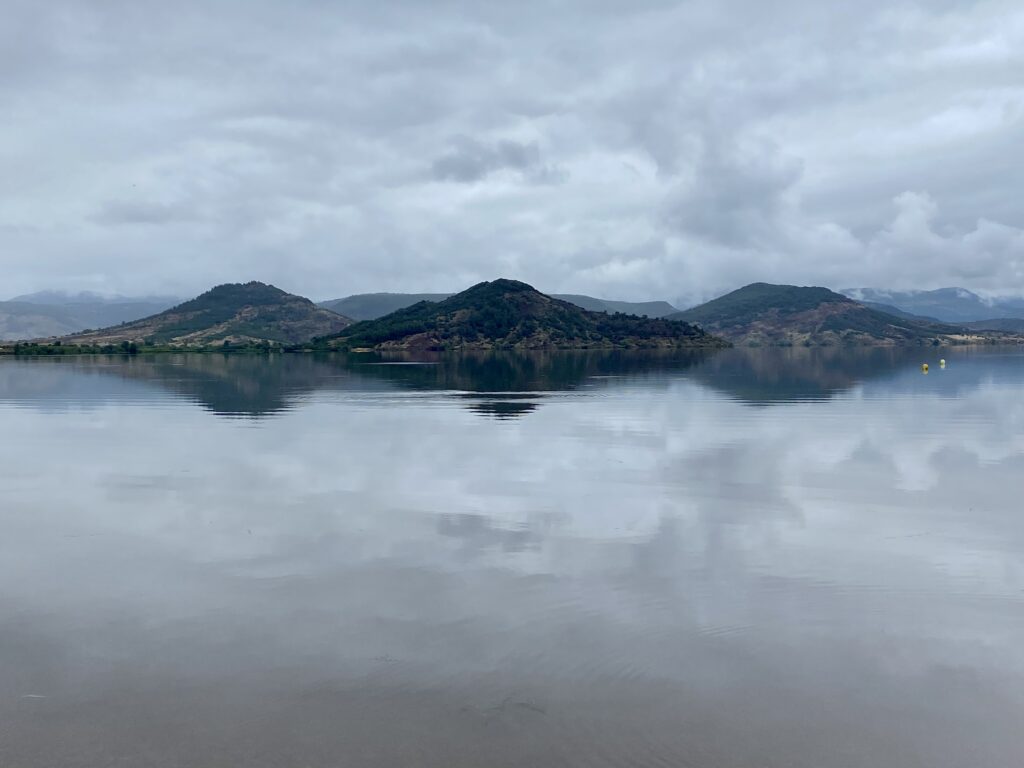
Clermont l’Herault itself is a really quite unremarkable little town but from there Lac de Salagou was well signposted. Lac de Salagou was not that much more interesting and is best remembered for the unbelievably loud noise made by the cicadas (cigales in French) as the rain finally ceased and the sun came through. Honestly the sound was almost deafening. The other thing about the place is the strange red soil in the area which days later is still coating the Van.

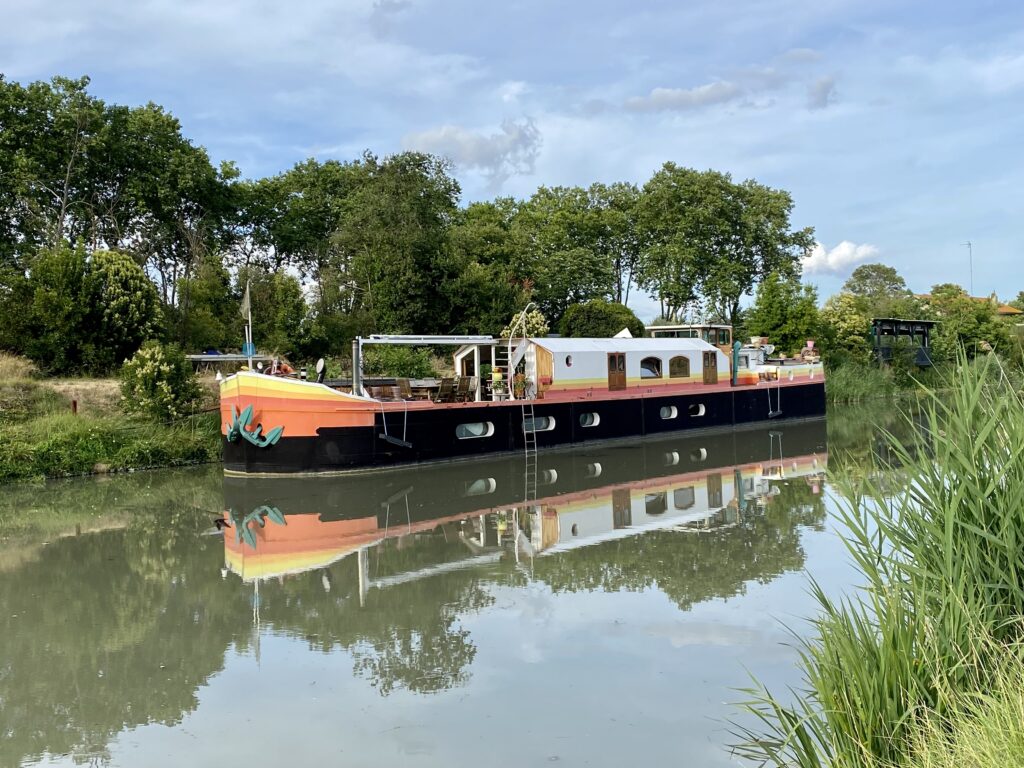
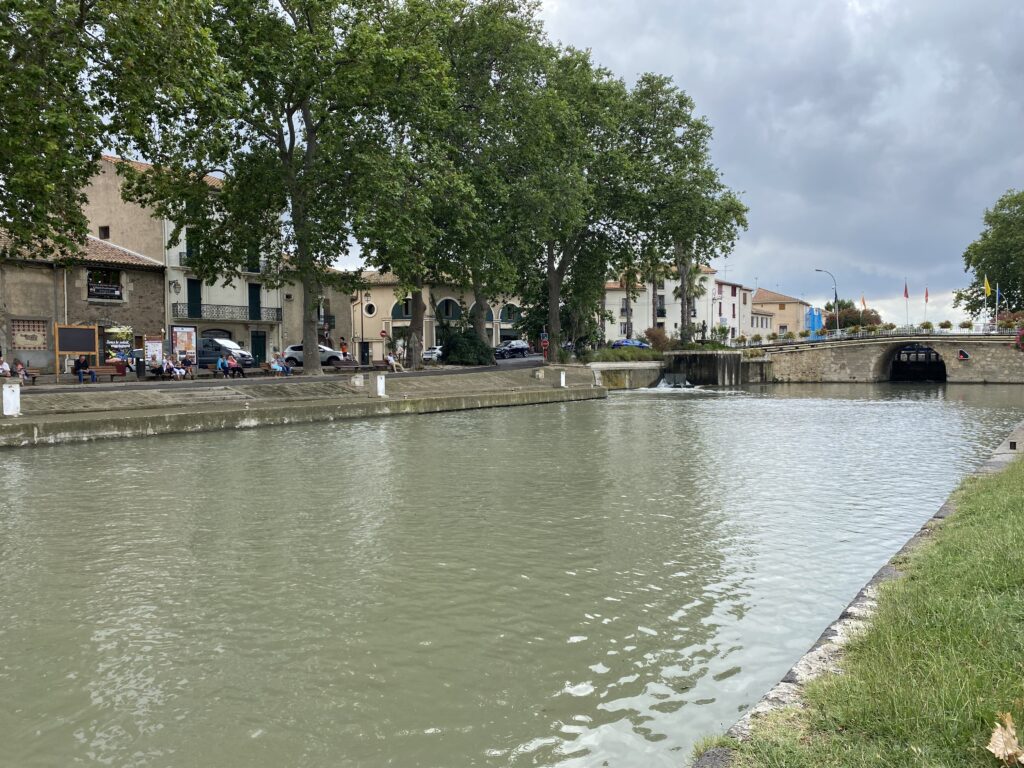
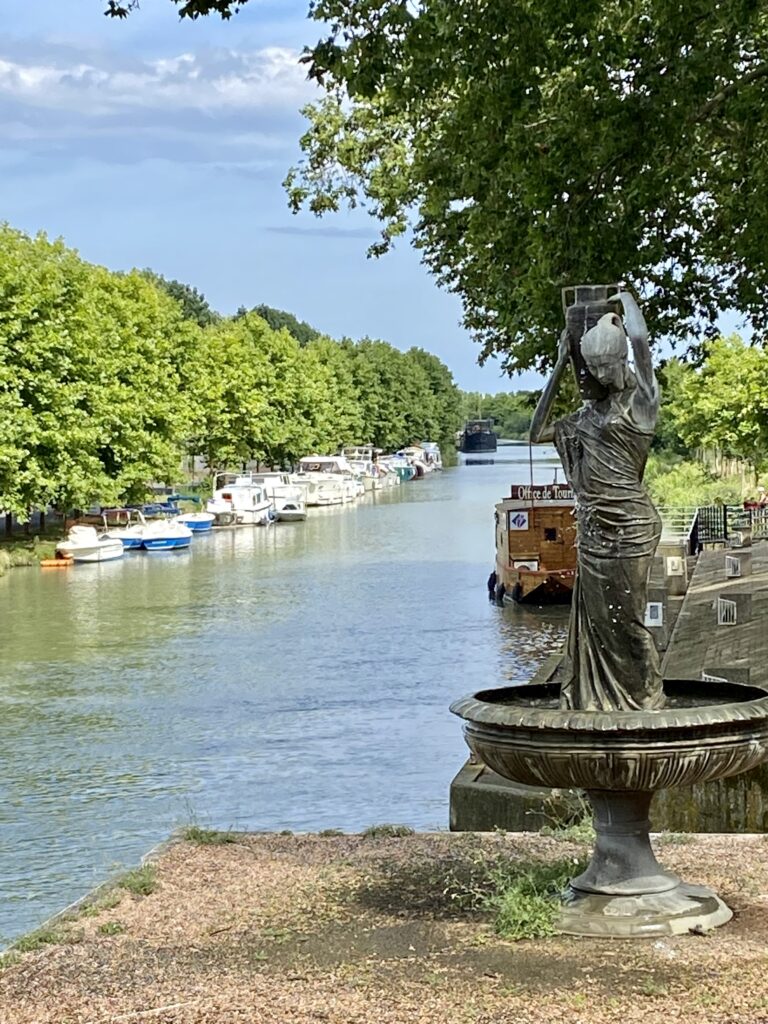
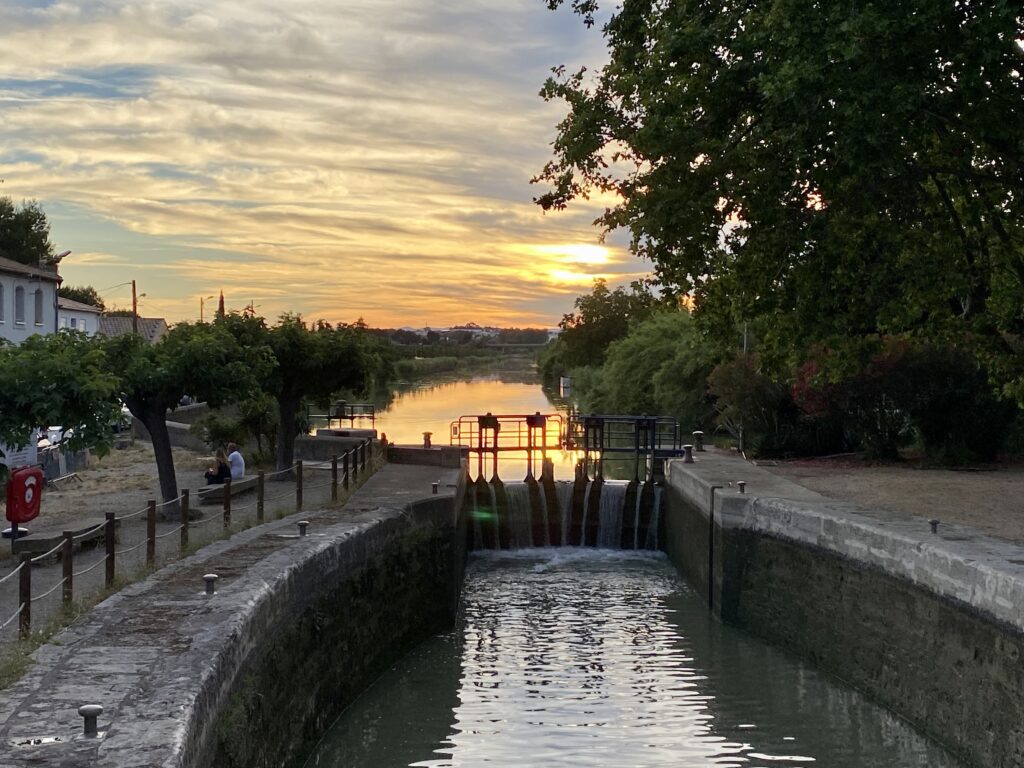
We reached Villeneuve les Beziers soon enough and the sun was still shining as we parked up in a small campsite, Les Berges du Canal, which sits right on the Canal du Midi. The Canal is another engineering marvel stretching as it does some 240 kilometres from Toulouse to the Mediterranean Sea. It was built during the reign of Louis XIV (between 1667 and 1681) and connects the River Garonne to the Etang de Thau thus enabling canal boats to travel all the way from the Atlantic to the Mediterranean. Many of those canal boats have since been converted into really comfortable living accommodation…

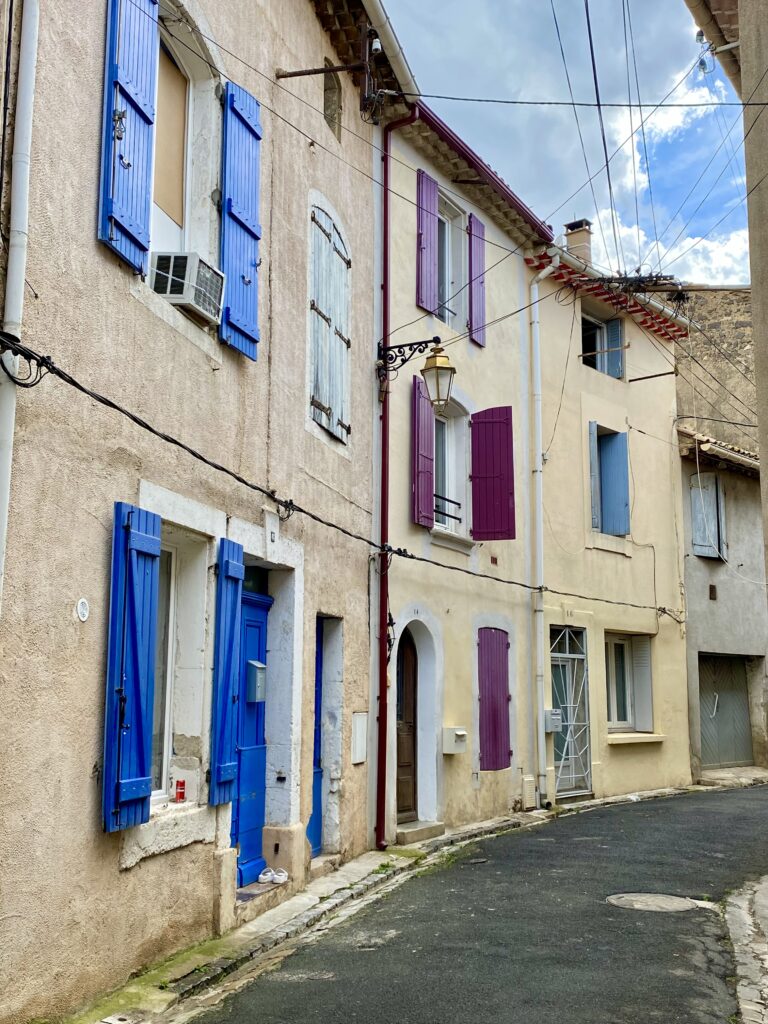
Villeneuve les Beziers has a very pretty and surprisingly large old town. The 1oth century church of St Stephen is surrounded by narrow streets and lanes which in all likelihood haven’t changed much since the French Revolution. We had just missed the town’s annual Latin Festival with it’s concerts and salsa and flamenco dancing but were happy enough to simply wander the old town and stop for drinks in a local backstreet bar.

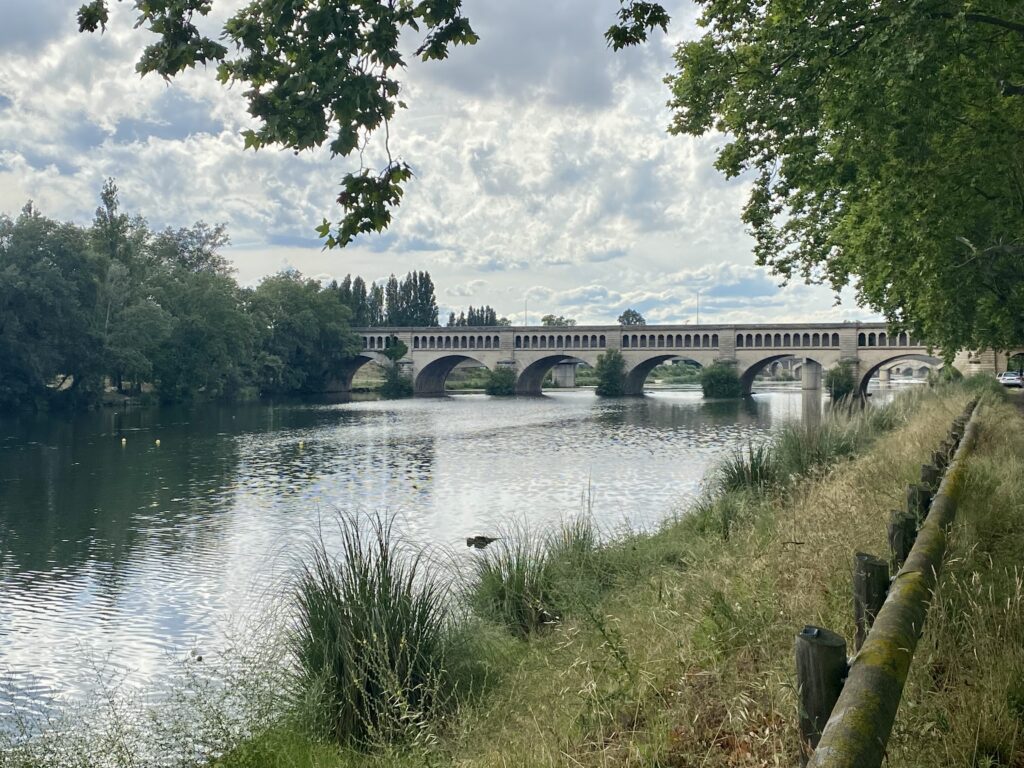
After exploring Villeneuve I left the dogs with Vanya and set off westwards along the Canal to Beziers which is, I am told, the major tourist attraction in this region. There was never going to be time for me to see all that much of Beziers but, sad person that I am, I was delighted to stumble upon the Beziers Aqueduct which takes the Canal du Midi over the River Orb. Another fine piece of engineering but also visually impressive with it’s arcaded walkways under the canal itself. Unfortunately, those walkways are closed to the public but one can walk the tow paths at the top. The aqueduct took 4 years to build and was completed in 1858 but the Chief Engineer died a few weeks beforehand and it had to be finished by his son.

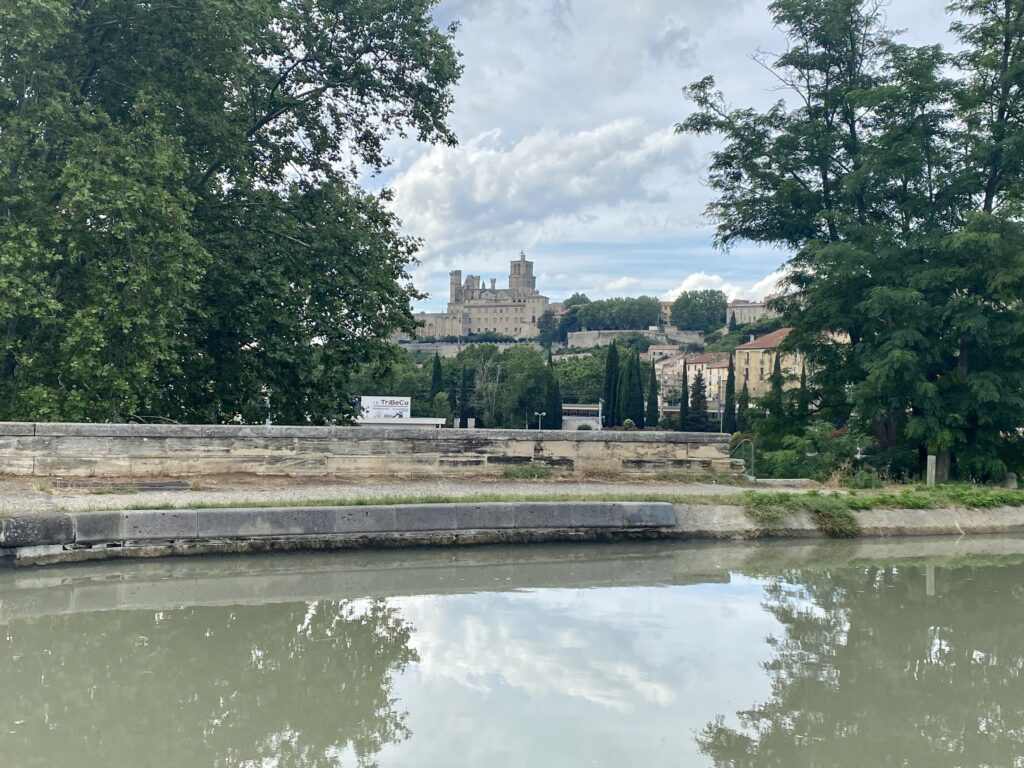
The view from the aqueduct over Beziers and towards the Cathedral of Saint Nazaire is impressive. The cathedral is unusual in that it looks more like a castle than a church. It was built that way to impress upon the Cathars the might and power of Catholic Rome – not that there would have been many Cathars left in Beziers after the 1209 massacre which initiated the Albigensian Crusade.

By the time I got back to Villeneuve I was ready for a few beers (the round trip amounted to some 12 miles of walking) and Vanya and I found a real local’s bar where we enjoyed the cheapest beers of the tour so far.

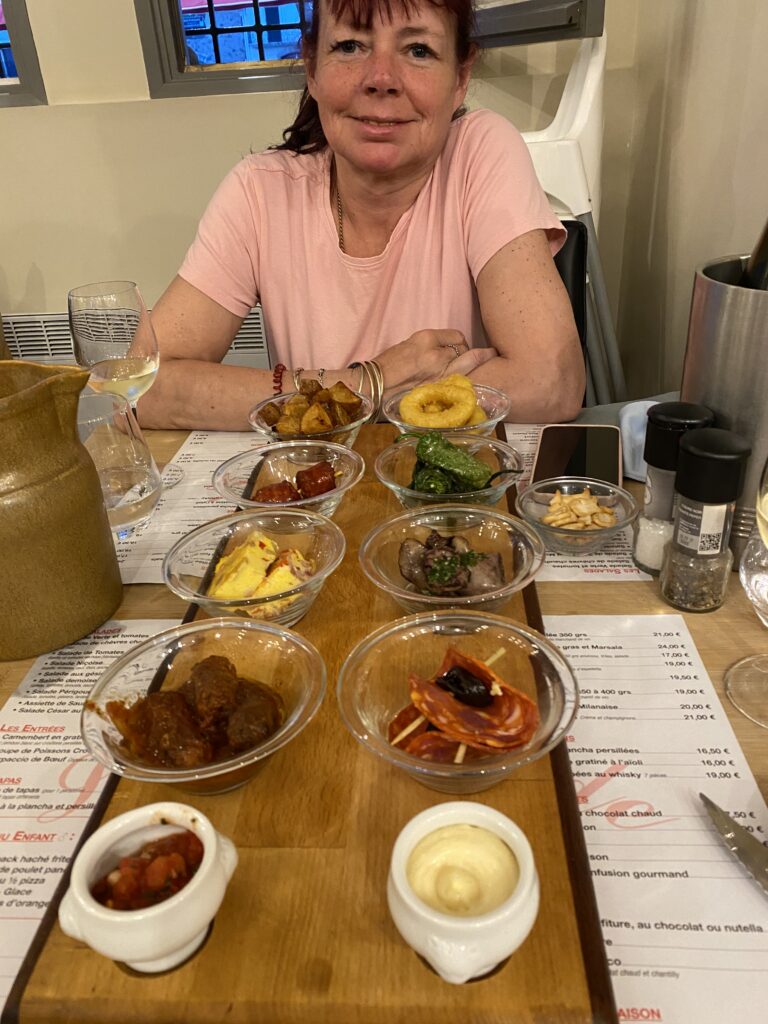
Dinner followed at a fine restaurant on the canal front, with the restaurant owners once again being very accommodating so far as our dogs were concerned. We ordered a mixed tapas followed by a particularly salty pizza (far too many anchovies for me) to share. The tapas were great except for one dish, which I thought were mushrooms but proved to be duck hearts – uugghh!!

Canet de Salars (Occitaine), France July 2021 (Tour 4)

Canet de Salars is a small commune in the Aveyron department of Occitanie just 90 miles south east of Rocamador. Vanya chose the place on the strength of a supposedly good campsite, Camping Le Caussanel, which sits on the banks of the Lac de Paraloup. The idea was to move south east instead of south west because the weather forecast was slightly more promising in the east but, most important, the campsite looked a good place for us to watch the European Championship Quarter Final match between England and Ukraine.

We arrived at the campsite early afternoon even after a prolonged stop at one of the motorway service stations where we had tucked into a selection of French Cheeses bought at a huge Leclerc Supermarket earlier in the day. Whereas last year was very much about sampling Cremant wines, this year it is about French cheeses. Today’s unanimous winner from a selection of Savoie cheeses was Reblechon, a semi-soft mountain cheese made from unpasteurised cow’s milk and best eaten with nuts or dried fruit. It is also the principal ingredient in a Tartiflette which skiers in the French Alps will be well familiar with (or so Vanya tells me).

Reblechon

Most of the afternoon was spent spoiling the dogs. We had the campsite pretty much to ourselves and could indulge them without putting on other residents.

As for the football… what a result! England 4, Ukraine 0 with Raheem Sterling once again the man of the match and England now into a semi-final match against Denmark. We’ll sleep well tonight but it is going to be an early start in the morning. We have decided upon just one more stop in France before crossing the border into Spain. The weather in France is still not great and we both want to be in Spain when the first semi-final, Spain v Italy, is played.

Rocamadour (Occitaine), France July 2021 (Tour 4)

I was here a couple of years ago. It is touristy (and I mean very touristy – fridge magnets and toy trains ferrying crowds of people about) but for all that it is very pretty and one of those places that simply has to be seen. More to the point it is within walking distance of La Foret des Singes (the Forest of the Monkeys) which Vanya was desperate to see.

Rocamadour is a small village, well under 1,000 people, built on 3 successive levels into the side of the Alzou Canyon in the Dordogne Valley. It is stunning, especially if you can visit the place when there are no large crowds.

Already a place of some religious significance, in 1166 it became a “must see” destination on the pilgrimage route from Le Puy en Velay in France to Santiago de Compostela in Spain after a perfectly preserved, long dead body was dug up just outside the local church. No one could identify the body but it was deemed “incorruptible” and assumed to be Saint Amadour (a one time local hermit). Call me a cynic if you like but such an assumption could only benefit the local community which was immediately renamed the Rock of Amadour (later bastardized to Rocamadour) and when, just 6 years later, the local Benedictine monks produced a Book of Miracles (126 properly authenticated miracles) – well, the place was made! It’s popularity as a pilgrimage spot grew further after 1244 when King Louis IX (later Saint Louis) visited and, despite all kinds of problems during France’s long and bloody Religious Wars (which amongst other things saw the Huegenots burn the long dead body of Saint Amadour), it is now one of France’s most popular places to visit although nowadays there are many more tourists than pilgrims. Rocamadour is not just about Saint Amadour. There are plenty of other extraordinary events associated with this town – even leaving aside those associated with the Black Madonna (supposedly carved by Amadour) and the Miraculous Bell which rings without human intervention whenever the Madonna saves someone’s life anywhere in the world. There is, for instance, the story of the famous Durandel Sword (a bit like Excalibur) which Roland threw away (so the Saracens couldn’t claim it) as he lay dying at the Battle of Roncevaux. It seems he threw the sword so hard it landed 160 kilometres away in the rock wall at Rocamadour. Now there may be some truth to this legend because I have actually seen the sword which is stuck into the rock wall at Rocamadour!

I mentioned that Rocamadour is split into three levels. The lowest level sits against the cliff face at the bottom of the Alzou Canyon and comprises a single street of medieval stone houses now, sadly, almost entirely given over to tourist shops and bar-restaurants. Cut into the side of the canyon directly over the houses, the second level is the religious heart of Rocamadour and comprises various monastic buildings (churches & chapels) the principal ones being the Sanctuaire Notre-Dame de Rocamadour and the Basilique Saint-Sauveur. Towering over everything and perched at the top of the gorge is the Chateau or castle which was built to protect visiting pilgrims.
The edge of the plateau above Rocamadour, where L’Hospitalet used to be, is predominantly modern and now filled with tourist shops and bar restaurants. Nothing too wrong with that; tourists have as much right as pilgrims to visit such a beautiful place. It is just a shame the tourist shops and restaurants are not confined to this upper part of Rocamadour and that the medieval part is not left as was for visitors (pilgrims and tourists alike) to enjoy.

There are a few places up on the plateau, along with the Chateau, that deserve special mention. The first is the very prominent Chapelle de l’Hospitalet which sits in the ruins of the old hospital which was built way back to tend sick or dying pilgrims.

Also on the plateau is the Grotte des Merveilles with its stalactites, stalagmites and Paleolithic drawings which go back 20,000 BC. It is a very small grotto with a handful of primitive drawings and it in no way compares with the Lascaux cave system and drawings (also to be found in the Dordogne) but, the 45 minute guided tour through the grotto does provide some temporary reprieve from the midday sun.

One of the best places to visit up on the plateau and less than a kilometre from L’Hospitalet is La Foret de Singes (The Monkey Forest) which is a wonderful park of some 50 acres where three troops together comprising 150 Barbary Macaques roam freely. With less than 8,000 living wild (there were 23,000 in 1978) Barbary Macaques are a seriously endangered species. La Foret des Singes provides a wonderful habitat both for the monkeys to thrive and for researchers to study their behaviours. Moreover “La Foret”, in conjunction with three sister parks (one of which is Trentham Monkey Forest in England), has successfully returned entire troops of Macaques totalling some 600 monkeys back into the wild. Our walk through the park lasted just over an hour but it is not a long walk. We enjoyed frequent, sometimes extended stops through a beautiful setting and would have stayed much longer except we were never going to leave the dogs for more than an hour or so.

To end this particular blog I enjoyed two firsts in terms of food during this trip – One was Rocamadour Cheese (Cabecou), made from unpasteurised goat’s milk presented in the shape of a small disk and eaten warm on a slice of walnut bread and with a crisp salad. The other was the king of pates, Pate Foie Gras, made from duck liver specially fattened by gavage. I loved them both. Vanya was not keen on the pate.

Chilling in the pool this afternoon. Not sure where we are heading next. We’ll talk about it over a wine or two later this evening. One thing for sure, it will be hot and sunny.

Chauvigny (Nouvelle-Aquitaine), France June 2021 (Tour 4)

Chauvigny is a small town of some 7,000+ people in the Vienne department of Nouvelle-Aquitaine just 70 miles or so south of Saumur. There has been a distinct improvement in the weather over the last couple of days (although we are still experiencing the occasional heavy shower) but our plan remains to keep heading south until we hit warm weather without showers. We would have driven further south than Chauvigny but England play Germany this evening for a spot in the last 16 of the European Championships and we want to be settled in good time to watch the match.
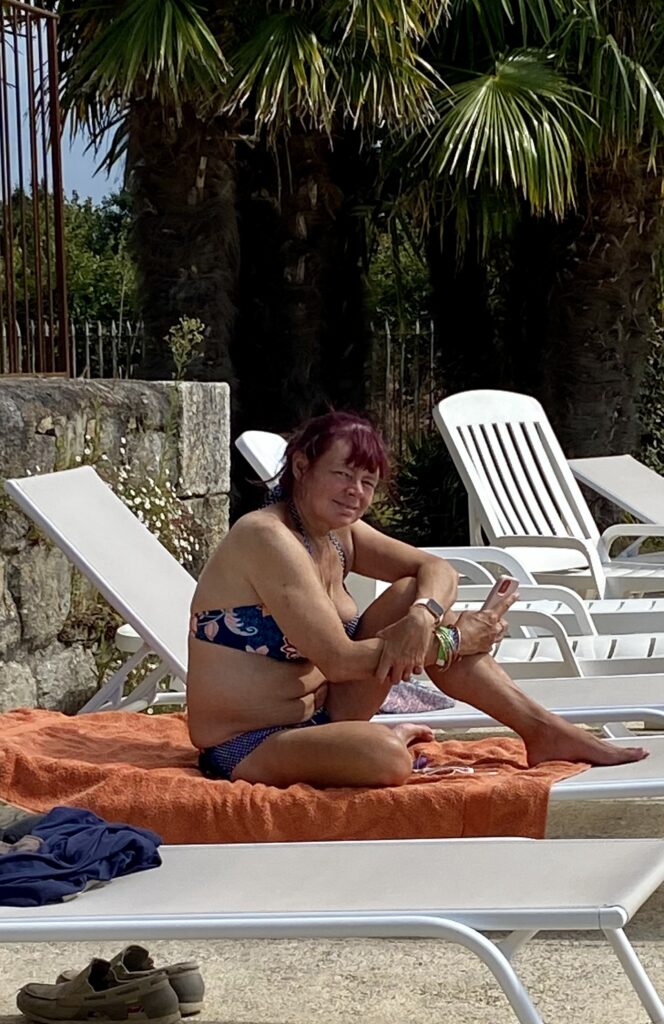
Jump forward and we have watched the football and England won 2-0 (Yaaay!!) with Raheem Sterling playing a blinder. Well done England (although others in the team are going to have to start pulling their weight if we are to progress further). By the way, well done Vanya for fixing it such that we could stream the match live xx
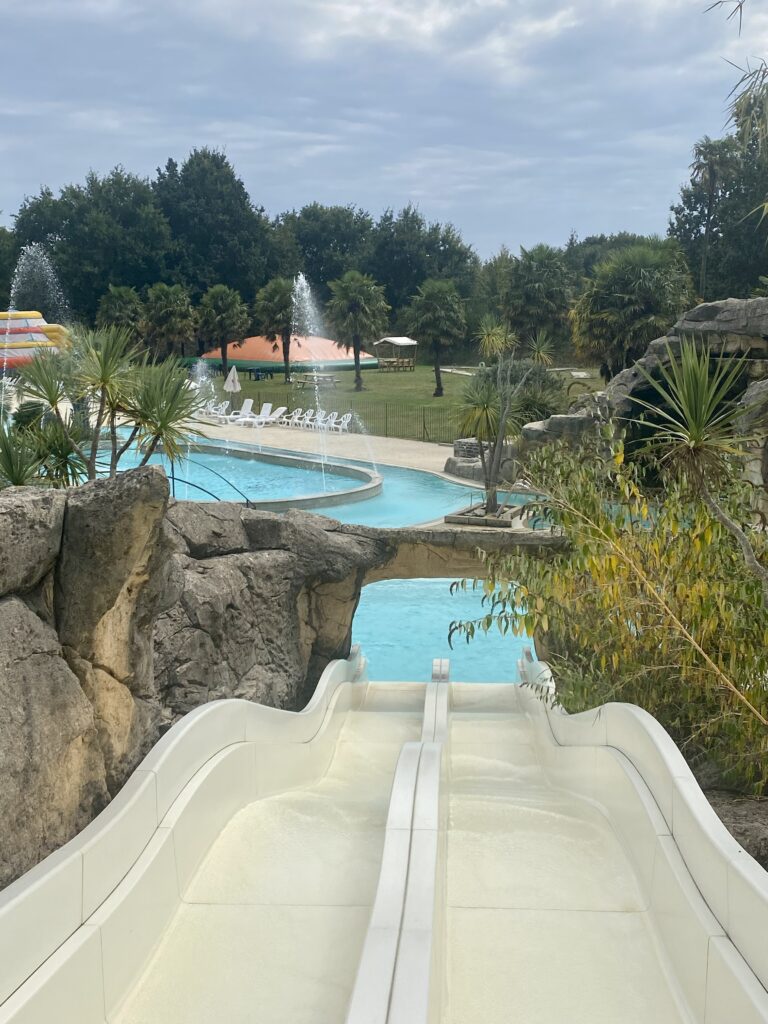
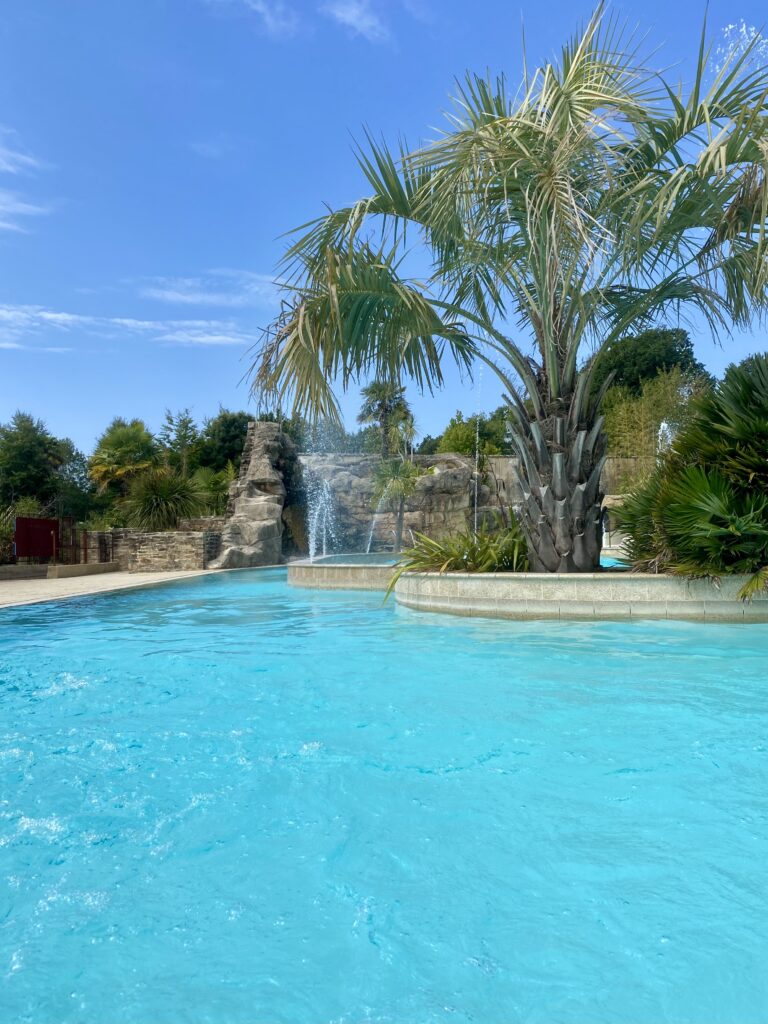
We didn’t stay long in Chauvigny (just the one night) but the place is worth mentioning on a few counts. Firstly, Camping De La Fontaine, which sits by a lovely little park just under Chauvigny’s old town, deserves special recognition. For a two star campsite it was excellent. Welcoming, well organised, clean, tidy and quiet are just a few of the adjectives which I would use to describe the site. Add that the shower block, toilets and washing areas were spotlessly clean and that the overnight price was the lowest we have experienced in France this year and, no two ways about it, Vanya found a gem.

As for Chauvigny, we were not overly impressed with the newer lower parts of the town (it didn’t help that we couldn’t find a bar there showing the England match) but we loved the upper (medieval) town (Cite Medievale).

The ridge on which the old town sits is short and narrow and comprises five main buildings in various states of repair. Four of the five can be clearly identified in the above photo and all are open to the public to some degree or another. Left to right in the photo are the ruins of the Chateau Baronnial often known as the Chateau des Eveques de Poitiers, the Chateau de Harcourt, the Romanesque Church of Saint Pierre and the Donjon de Gouzon a Chauvigny. It is the ruins of the Chateau de Montleon that are not clearly visible.

Next stop Rocamador…

Saumur (Western Loire), France June 2021 (Tour 4)

Saumur is an ancient town of some 27,000 people on the Loire River in Western France in the area historically known as Anjou. It’s a pretty town, overlooked by the very prominent Chateau de Saumur, and built almost entirely of an attractive cream coloured stone (Tuffeau) which was mined here throughout the Middle Ages. The miles of caves resulting from that mining have since been converted for wine storage (the renowned Saumur wines and especially Cremant de Loire) and mushrooms (80% of France’s button mushrooms are grown in these caves).

We arrived fairly late in the day and, after parking up at the Flower Camp Site which sits on the L’Ile d’Offard in the middle of the Loire River, walked across the Pont Cessart for a quick look at the old town and something to eat. We found somewhere on the Place de Saint Pierre and spent a delightful evening eating French tapas and drinking Cremant de Loire.

The next day was about exploring the town and my first destination was the Chateau de Saumur fortress which dominates so much of the town. It was first built in the 9th century to deter Norman invaders and considerably developed over the next hundreds of years (particularly by the English King, Henry II) but it’s current fairytale shape and style is 15th century and down to Louis I and Louis II of Anjou who wanted rather more of a palace than a fortress. Up close the chateau is not as impressive as when seen from a distance with many of the walls crumbling and in need of repair. The good news is that it is happening. The place was crawling with stonemasons hard at work. I arrived too early in the morning to go into the chateau which is now a museum.

A significant military presence is evident across Saumur. France lost almost all of it’s cavalry during the Napoleonic Wars and a decision was made to rebuild that arm of the military in and around Saumur with the establishment of the Ecole Nationale d’Equitation. The Cavalry Academy is now home to the Cadre Noir, an elite corps of black clad cavalry instructors who have made up the teaching staff at the school since 1828. During the Summer months the Cadre Noir put on a series of ballet like galas to showcase the skills of horses and riders and the riders have often taken gold in eventing, dressage and jumping at the Olympic Games. Unfortunately, Covid put has paid to any such gala this Summer.
With cavalry having long given way to tanks it is perhaps not surprising that Saumur is also home to the Musee des Blindes which is one of the largest tank museums in the world with 800+ armoured vehicles (200 of which are driven in a military tattoo every July). I suspect that too will be cancelled this year.
With Saumur being home to Cremant de Loire (currently Vanya’s favourite tipple) it was inevitable that Vanya and I would want to go on a local wine tour and tasting session. We were spoilt for choice here with so many producers based alongside of each other on the Rue d’Ackerman. We finally settled on the Langlois Chateau and we were not disappointed. Between us we have previously partaken of many wine tours and tasting sessions but none as enjoyable and as informative as the one at the Langlois Chateau. It was a private tour, just the two of us, and; it involved going back into a classroom to learn more about grapes, bloom & sediment and; our walking some of the their 3 kilometres of caves and; well, it was simply brilliant. We learned so much of real interest. And the wine? Vanya now has a new favourite Cremant and we have a case of it in the back of the Van.

I walked more than 15 miles of the town that first day (getting a little lost more than once) and there is so much more I could write about but we need to move on to our next destination so I will quickly write about our last night in Saumur and leave it at that.

We had the good fortune to be in Saumur during the evening that France were playing Switzerland in the first knockout stage of the European Championship Finals. That being so we found a small bar, La Verriere, showing the match out on the main square in the centre of town and ordered an early meal so as to gain the best seats. We had a fantastic evening. France lost but there were sufficient goals (3-3 after extra time and then the match went to penalties) to keep the neutral supporters well entertained and the atmosphere was electric. Oh and the food and wine was great.

It was a late, late but great night

Mont St Michel (Normandy), France June 2021 (Tour 4)

The weather in Bayeux stayed fine long enough for us to take a leisurely stroll around the Saturday morning market but by noon we had started on the 90 mile drive to Mont St Michel. It was fifty-fifty as to whether or not we made the trip to MSM because the weather forecast for the north west of France was not good – thunder storms over the next four or five days. I was in Mont St Michel some two years ago and, nice as the place is, I was all for driving south for the better weather but Vanya really wanted to visit the place and so we went – and very pleased I was too. The weather wasn’t good but it wasn’t as bad as predicted and it stayed dry most of the time we were outside and, more importantly, we had the place almost to ourselves.

We didn’t stay long because the weather was closing in on us all the time but there was always going to be time for me to look in on the St Michael Chapel…

… and walk some of the outer walls..

Then it was time to head back. Thankfully, because it started pouring with rain, we had parked up inside the MSM complex (well worth the nine euros charge) and it wasn’t too far back to the Van.

One final thing, I’m often asked about tide times here. Some people want to visit the island at high tide and others at low tide. Some, like me, want to do both. I reproduce below a tide table downloaded from tideschart.com. One word of warning, if you want to walk around the island, don’t wear shoes (you can easily sink up to your ankles in the sand) and do take a small cloth to wipe your feet afterwards.